MY NEW FAVORITE TOMATO SAUCE

Strange things happen in my kitchen.  Countless recipes wait in an imaginary line,  that most will stay in for years, until I finally get around to making them.  But occasionally a recipe casts a spell on me, forcing a menu change, a search for exotic ingredients, the abandonment of seasonal cooking, and my personal resolve to drop everything else and cook it right away, as soon as humanly possible.  I bring this up because it happened last weekend, when the  Barefoot Contessa’s guest chef, Joseph Realmuto,  shared the recipe for his restaurant’s favorite tomato sauce (for the past 22 years).  It involved vodka,  slow roasted tomatoes and onions, and was finished with heavy cream.   I stopped in my tracks, slowly turned, headed  to the kitchen,  and made it.  And that, my friends, was the right move… 😉


PENNE A LA VECCHIA BETTOLA

(adapted from Joseph Realmuto, original recipe from La Vecchia Bettola, Firenze)

1/4 cup olive oil
1/2 yellow onion, diced
1 clove garlic, diced
1/2 T dried red pepper flakes
1 T dried oregano
1/2 cup vodka
1 can best quality whole tomatoes (28 ounces)
salt and black pepper to taste
1/4 cup heavy cream
fresh herbs of your choice (oregano, basil)
parmiggiano reggiano cheese, grated

Heat the oven to 375 F.

Heat the olive oil in a skillet, add the onions, cook for about 8 minutes over medium heat, add the garlic, red pepper flakes, and dried oregano, and saute for a couple of minutes, mixing constantly. Add the vodka and simmer until the mixture is slightly reduced. Drain the tomatoes and add them to the skillet, crushing them slightly with your hands or a large wooden spoon (careful, they will splatter!). Season lightly with salt. Cover the skillet and place in the oven for one and a half hours. Remove the skillet from the oven, let it cool for 15 minutes, then place the contents in a blender. Puree until smooth.

While you cook the pasta in plenty of salted boiling water, finish the sauce back in the skillet, setting over medium heat, and adding heavy cream. Adjust seasoning with salt and pepper. Simmer for about 5 minutes, add the cooked pasta, and allow them to gently simmer for a few more minutes. Add fresh herbs and parmiggiano cheese right before serving.

ENJOY!

to print the recipe, click here

Comments: In this day and age it’s hard to believe I’d even bother with another recipe for tomato sauce.   I usually alternate between my two favorites: the first involves a quick saute of onions in olive oil, a can of tomatoes, salt, pepper and some herbs; the second is a   very popular recipe from Marcella Hazan, worth all the butter it calls for.  😉

With the addition of this recipe I have my own tomato trilogy. It’s a breeze to prepare, but the combination of vodka and slow roasted tomatoes makes it taste complex. I reduced the cream  because 1 full cup of heavy cream seemed excessive;  feel free to do as your heart (and palate) desires. The vodka provides a background of heat that’s perfect with the intense flavor of tomatoes, concentrated by roasting.  It’s a delicious sauce that may be prepared in advance and blended right before finishing.

CROISSANTS: PARIS AT HOME ON A SPECIAL DAY

Today is our 10th wedding anniversary, so to start the day on a wonderful note, I decided to bring a little bit of Paris – the place where we met and later lived for a year – to our home. Even if croissants are not originally from France, they convey its image with every delicious bite. When we lived in Paris, we used to go for long runs on Saturdays that always ended with a “pain au chocolat pour le monsieur, croissant pur beurre pour madame“. With the mandatory coffee or hot chocolate, depending on the weather, and our mood… Wonderful memories!

CROISSANTS DU BOULANGER
(original recipe from The Baker’s Companion, adapted by Ford, from The Fresh Loaf website)

for the dough

2 large eggs plus scalded low fat milk cooled to 90°F to make 2 cups (16 oz.)
1 tsp sugar for unsweetened dough
5 1/2 to 6 cups (23.3 to 25.5 oz.) all purpose unbleached flour
2 1/4 tsp (7 g) instant yeast
2 tsp salt
2 Tbs. (1 oz.) melted butter

for the butter
3 + 3/4 sticks (15 oz.) unsalted butter
1/2 cup (2.1 oz.) unbleached flour
flour for sprinkling

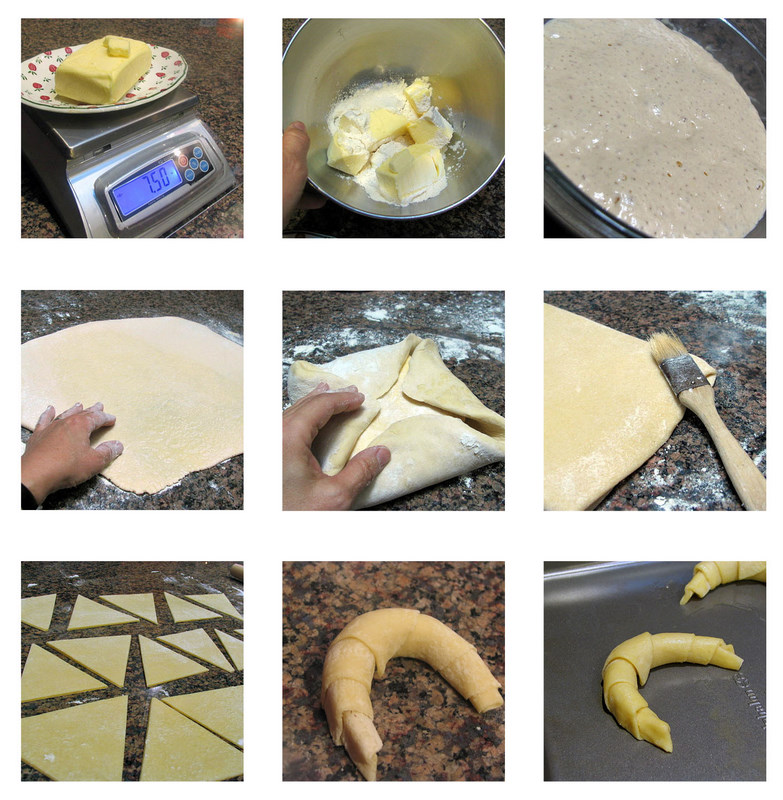
Beat the eggs and milk and 1 tsp 1 tsp of sugar. Beat in the yeast and 3 cups of flour until all is well blended. Cover and let stand at room temperature for an hour or so. In a separate bowl blend the salt, and 2 1/2 cup of flour. Hold until the yeast mixture has doubled in size.

Blend the 3 + 3/4 sticks of butter and the 1/2 cup of flour. Lightly flour a piece of plastic wrap and place the butter mixture on it. Shape the butter into an 8” x 8” square. Wrap it and place it into the refrigerator until the dough is ready.

Back to the dough, add the melted butter and beat well. Add in the flour mixture and mix well to form a rough ball, then knead for 8 to 10 minutes on a lightly floured surface, or knead in an electric mixer, using a dough hook. Cover the dough and place it in the refrigerator for an hour.

Rolling & Folding: Remove the dough from the refrigerator and put it on a lightly floured surface. Gently roll it into a square about 12 inches on a side. No need to obsess about the dimensions, just try to be close. Put the butter square in the center of the dough square but turn it so that the corners of the butter square point toward the sides of the dough square. Fold the corners of the dough over the butter until they meet in the middle. Pinch and seal the edges of the dough together.

Turn the square over and tap it gently with your rolling pin or by hand into a rectangular shape. Make sure everything is still completely, but lightly, floured. Begin rolling the dough from the center, away from and towards you, into a larger rectangle 20 inches long and 10 inches wide. Puncture any air bubble with a toothpick. Keep the dough, the work surface, and the rolling pin well dusted with flour.

When the dough is the right size, fold the bottom third of the dough up beyond the center and the top third over (like a business letter) and turn the dough package a quarter turn to the right so it looks like a book ready to be opened. If the dough is still cold and still relaxed, do another rolling and turning as before. If it begins to feel too soft or wants to resist being rolled, cover it, put it on a small baking sheet, and refrigerate it for 15 minutes or longer (even a day) to chill and relax.

If you’ve successfully rolled it out and folded it twice, you’ve completed two turns. Classic puff pastry gets six; and puffed dough gets four. Continue refrigerating it after each two turns, or more often if necessary, until four turns are completed. Refrigerate the dough for at least two hours or preferably overnight. One recipe is adequate for two dozen croissants.

Making the croissants…

1 recipe of dough above
egg wash

Preheat the oven to 400°F.

Cut the chilled puff dough in half. On a lightly floured surface, roll one half of the dough to a 12” x 18” rectangle. Trim the edges, using a very sharp knife or a pizza-cutting wheel. This removes the folded edges that would inhibit the puffing of the dough.

Cut the dough into three strips lengthwise, 4” x 18”. Then cut these strips in half to give six rectangles 4” x 9”. Make a diagonal cut on each of these rectangles to give a total of twelve triangles. Make a 1” cut in the 4” base of one of the triangle. If you desire to fill the croissant, place a small amount of filling along the base before rolling it. Pull this base slightly stretching it, and then roll the dough toward the apex. Tuck the point on the bottom and bend the ends to make a crescent. Repeat with the other eleven triangles.

Place the croissants on a lightly greased, parchment-lined baking sheet about a half-inch apart. Cover with a greased plastic sheet, and allow to rise until doubled. When fully proofed, about 45 to 60 minutes, brush the croissants with the egg wash. Bake in the 400°F oven until deep golden brown, about 20 minutes. The interior temperature should be 195 to 200°F. Cool the rolls on a wire rack, before eating or storing.

Repeat with the other half of the dough or store it in the refrigerator or freezer for later.

jump for more

IMPROMPTU PASTA DINNER

It was a dark and stormy night… no, not really, but it was a busy day at work and we wanted to go home, get some comfy clothes, kick back and relax.  My night to cook: I pulled out a cookbook, but even browsing for recipes seemed like an herculean effort, so I opened the fridge searching for inspiration. Voila’: half a bunch of asparagus! In the pantry, I spotted a can of Muir fire-roasted tomatoes (love that stuff!).  It was all that I needed.  Dinner took shape in less than 20 min, resulting in two happy humans and an enjoyable evening ahead of us.

PASTA WITH ASPARAGUS COINS and TOMATOES
(from the Bewitching Kitchen)

1 shallot
1 T olive oil
fresh asparagus
1 small can Muir fire-roasted tomatoes
salt and pepper
grated parmiggiano-reggiano cheese
pasta of your preference

Set a large pot with salted water to boil.

Using a sharp knife, cut the asparagus into small coins, trying to get them in similar sizes, about 1/4 inch thick.  Dice the shallot.  Open the can of tomatoes.

Heat the olive oil in a large skillet, saute the shallots until translucent, immediately add the asparagus coins, and cook them in medium-high heat, moving them around. Season with salt and pepper, and try a bite after a couple of minutes.  They should be still very firm.   Add the tomatoes, cook for a few more minutes, adjust seasoning.

Meanwhile, cook the pasta until al dente.  Drain and add to the skillet with the asparagus/tomato sauce.  Cook them together for a minute or so, add parmiggiano on top and serve.

ENJOY!

to print the recipe, click here

Comments: Slicing asparagus in little coins is a fun way to enjoy it.  In Secrets of a Restaurant Chef, Anne Burrell made a salad of raw asparagus cut this way – I’ve been saving the recipe to try it when Spring comes.  Time for a little disclaimer:  we understand that buying asparagus in mid-winter is politically incorrect.  Yes, they traveled a long distance.  But, we needed an asparagus-fix. It might even speed the arrival of Spring!   😉

SWEETENING A RAW DEAL

We have weekly lab meetings, in which one member presents his or her work to the group. This year, to accommodate everyone’s busy schedule, we set the meetings for (ready for this?) 7:45 am on Fridays.

Talk about a tough pill to swallow! 😉

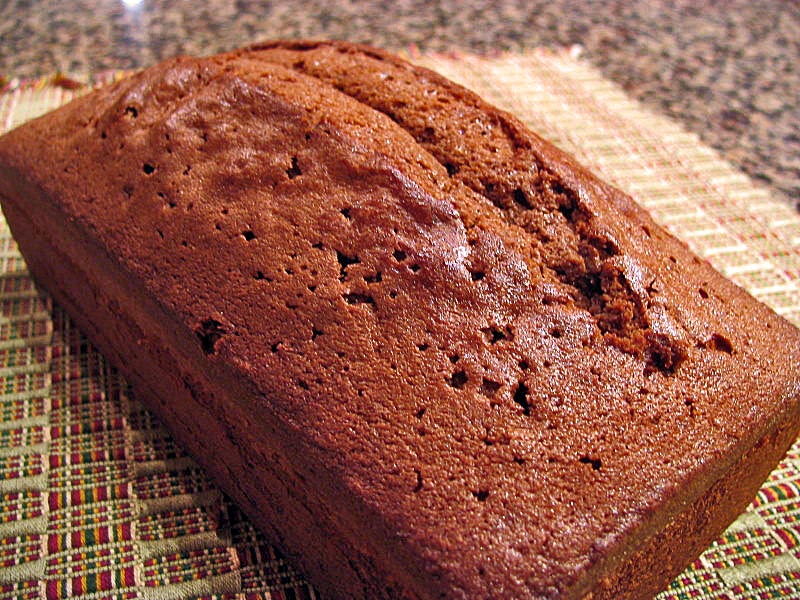
To soften the blow I often bake something for the event, but as a result of my cake-phobia, I usually resort to cookies or breads. However, last week I baked a recipe from (gasp) The Cake Bible. Before anyone who knows me goes into shock, let me clarify that this is NOT a real cake. It’s a much safer chocolate bread. The loaf ended on a happy note, but when I was finished baking my poor kitchen looked as if a herd of  elephants had blasted through. I’m not sure why I can make bread, pasta or savory pies from scratch, and my kitchen remains neat and tidy.  Bake a cake, on the other hand, and it’s indoor tornado season (sigh).

CHOCOLATE BREAD
(from Rose Levy Beranbaum‘s The Cake Bible)

0.75 ounce unsweetened cocoa powder (Dutch-processed)
1.5 ounces boiling water
1 + 1/2 tsp vanilla extract
3 large eggs
5.25 ounces sifted cake flour
6 ounces sugar
1/4 tsp baking powder
1/4 tsp salt
13 tablespoons (6.5 ounces) unsalted butter, softened

Heat the oven to 350F. Prepare a loaf pan (8 x 4x 2.5 inch) by greasing it with butter, covering the bottom with parchment paper, greasing it with butter, and covering the pan with a dusting of flour.

Whisk together the cocoa powder and the boiling water until smooth, then let it cool to room temperature. Mix in the eggs and vanilla extract.

Add the remaining dry ingredients to a large bowl, and mix on low speed for 30 seconds to blend them together. Add half of the chocolate mixture and all the butter. Beat for 1 minute on medium speed to aerate it. Scrape down the sides of the bowl with a spatula, and beat the other ingredients in two additions, beating for 20 seconds each time. Spoon the batter in the prepared loaf pan, smooth the surface with a spoon or spatula.

Bake for 50 to 60 minutes, until a toothpick inserted in the center of the cake comes out clean. (Mine took 60 minutes). If the cake is browns too much, then protect it by covering it loosely with aluminum foil. If you want to have a nice slashed look on the loaf, make a cut with a serrated knife 20-25 minutes into baking time, when the loaf will be starting to form a central split. Make the shallow cut quickly, around 6 inches long.

Once the cake is baked, allow it to cool for 10 minutes in the pan, then remove it to a cooling rack. Dust with powdered sugar.

ENJOY!

to print the recipe, click here

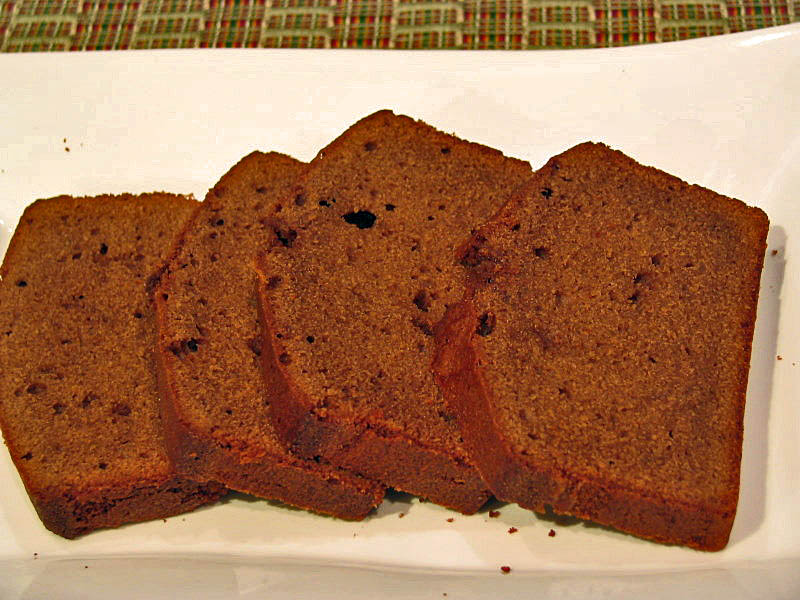
Comments: If you are cake-challenged, this recipe is for you. It’s simple to prepare, and even if it doesn’t look stunning like Johnny Depp, it’s still mighty tasty.  The first bite may seem bland, but the cake slowly dissolves in your mouth – it’s the butter doing the talking – and a very pleasant chocolate flavor warms you up.  The kind of cake that makes you go back for “just another little slice”.  Surely enough,   by 10am on Friday, only crumbs were left over the conference room table.   😉

receita em portugues na proxima pagina

BBA#43: ROASTED ONION and ASIAGO CHEESE MICHE

Photo courtesy of  PJG, thanks!

With this bread, I completed the BBA CHALLENGE!


For a PDF version, click here (breads are ranked from one to five stars)

A big thank you to Nicole for setting up this event, and of course to Peter Reinhart for his wonderful book.  I’ve had it many years, but never imagined that one day I’d say that “…I baked them all!”

ROASTED ONION AND ASIAGO CHEESE MICHE

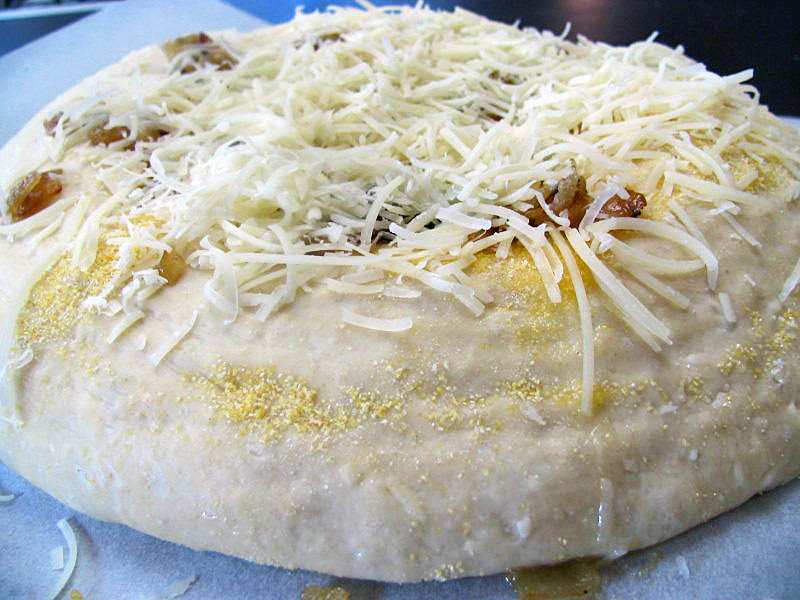
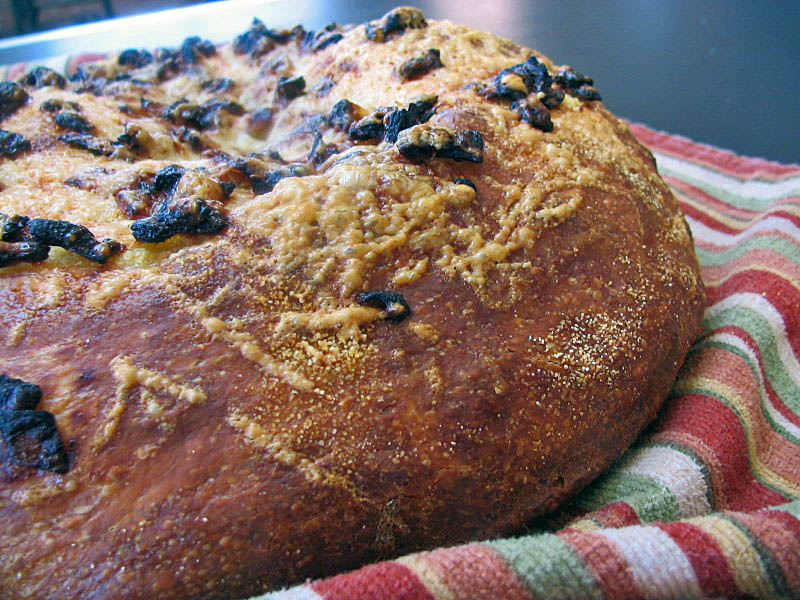
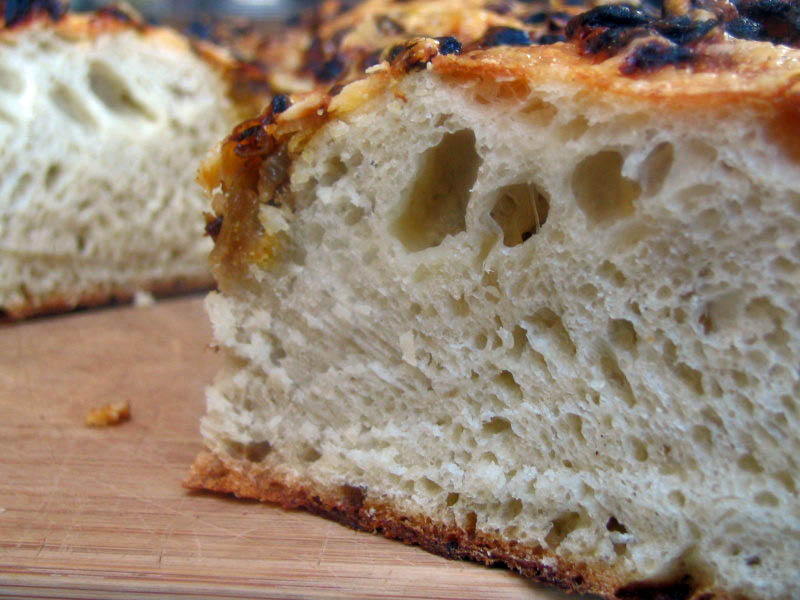
This last bread took 3 days to prepare.  The sourdough sponge, made on the first day, was mixed and shaped on the second day, and  after a night in the fridge it was topped with roasted onions and grated asiago cheese, then finally baked.   I made a half  recipe, which was still  enough for one  big round loaf.

The onions can be prepared the day before…

and added to the bread 30 minutes before baking ….

The dough contains a lot of grated asiago cheese,  so each bite acquires its sharp flavor, mellowed  by the sweet roasted onions.   What a beautiful combination!

You can check the Roasted Onion Asiago bread made by Oggi (the first baker to complete BBA Challenge) by clicking here….

Our five favorite breads from the challenge were:
Potato, Cheddar, and Chive Torpedo
Roasted Onion and Asiago Miche
Vienna Bread
New York Deli Rye
Potato Rosemary Bread

To all my virtual fellow challengers baking along this tasty path, have fun with it.   I’ll be watching and cheering for you!  😉