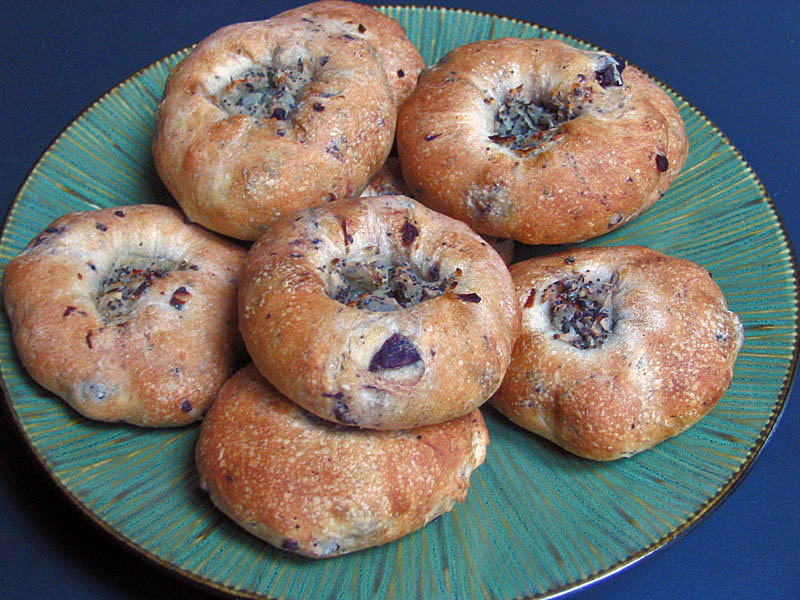
I’ve never had a bialy until today. But, ever since I first saw a picture of a bialy in cookbooks and all over the net I wanted to try one, or even better, to make one!
Many weekends I was ready to give it a go, but things came up and… bialy was postponed until next week. And the next… and the next…and the next. Then I saw Dan Lepard’s recipe for black olive bialy and I couldn’t wait any more. Black – olive – bialy. Three simple words that made my heart jump with joy. I’m a Kalamata-cheerleader…
BLACK OLIVE BIALY (from Dan Lepard)
1/2 tsp instant dry yeast
150 g pitted Kalamata olives, diced
25 mL olive oil
1 tsp salt
550 g bread flour
1 medium onion, finely chopped
1 Tbs poppy seeds
Pour 250 mL warm water and yeast in a bowl then add the minced olives, olive oil and salt. Add the flour, mix forming a firm dough, and refrigerate for 24 hours or more (up to three days).
Dry fry the onion a few minutes on a non-stick skillet until soft but still pale, scrape into a bowl with the poppy seeds, and leave in the fridge.
Heat the oven to 450F.
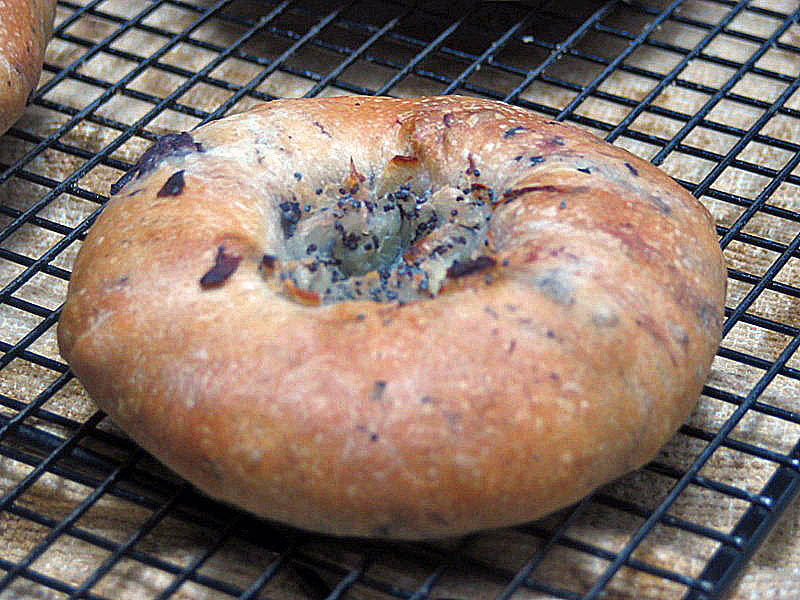
Divide the dough into ten pieces (use a scale to get equal pieces) and shape into balls. Leave covered for an hour to rise at room temperature. Pat the balls out to about 4 inches diameter, and firmly indent the middle area, leaving a very thin and wide skin of dough in the center. Cover a tray with parchment paper, and lay five bialys on it, well spaced. Press 1 tsp of onion/poppy seed mixture in the center, with wet fingers.
Bake for 12 – 15 minutes until puffed and just beginning to get dark, then repeat with the remaining five pieces.
ENJOY!
Comments: If this recipe didn’t have Dan Lepard behind it, I probably wouldn’t have tried it, because it’s essentially a no-knead bread. Quoting Seinfeld, “not that there’s anything wrong with that,” but I prefer recipes that involve kneading and/or folding the dough. This was one of the easiest breads I’ve ever made, that’s perfect for a dinner party or brunch: once the dough is in the fridge it takes just a little over 1 hour to enjoy the fruits of your labor (i.e., the bread!).
Two important remarks:
1. Use Kalamata olives or another good quality black olive that’s high in moisture. Avoid the black olives sold in tins, that are brine-free and have almost no olive flavor.
2. Don’t be shy when pressing your fingers into the dough to make the depressions. Try to leave a very thin skin in the center. My second batch was better than the first, because I was too delicate in shaping the first five.
The flavor of the olives as you bite into the soft bread, mixed with the onion filling, is just dreamy! I’ll revisit this bread again and again.
I am submitting this post to this week’s Yeastspotting….
I’m always searching for interesting ways to bring pork tenderloin to our table. This preparation, with a dry rub of powdered trumpet mushrooms, coffee, and curry, turns humble pork into a feisty little beast. The meat gets tightly wrapped, then rests in the fridge for a couple of hours (or more). The flavors of this threesome synergize to more than the simple sum of their parts. Funky, deep, mysterious… you’ll hear your diners asking… “what is this spice?”
I found the recipe five years ago in a blog called Foodie NYC. To my disappointment, the proprietor seems to have vanished from the blogosphere – no activity since 2008. Still, I highly recommend that you browse his blog, because all the recipes are original, not from cookbooks or magazines. It’s impressive!
BLACK TRUMPET COFFEE CRUSTED PORK TENDERLOIN (from Foodie NYC blog)
1 package of dried black trumpet mushrooms (or dried shiitake)
handful of coffee beans
1 tsp hot curry powder
2 pinches of freshly ground nutmeg
kosher salt and pepper to taste
1 pork tenderloin
1-2 Tbs olive oil
Using a spice grinder, grind enough black trumpet mushroom to obtain 1/4 cup of powder. Reserve. Grind the coffee beans and add 3 Tbs to the powdered mushroom. Add the curry and nutmeg; mix well.
Dry the pork tenderloin (previously brined it if you prefer, but it’s not necessary), place it on a piece of plastic wrap and add the mushroom /spice powder to its surface, completely covering it. Wrap it tightly and refrigerate for at least one hour.
Heat the oven to 300 F.
Add the oil to an oven-proof skillet and heat on top of the stove over high heat. Sear the meat briefly on all sides – the idea is to seal the crust, not to make it golden brown. Since the meat will cook in the oven, over-browning the crust now could make it burn later.
Transfer the pan to the oven and roast for about 30-35 minutes (see comments). Remove the meat from the oven and let it rest for 10 minutes.
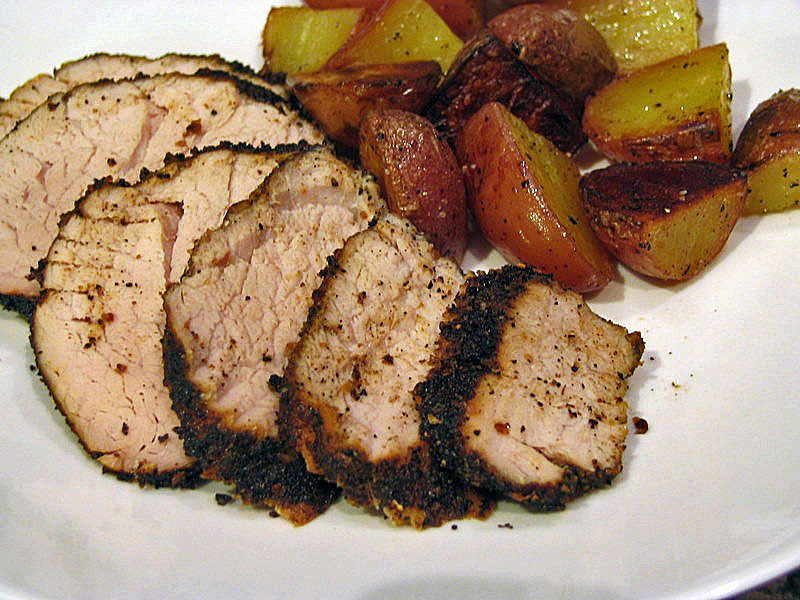
Comments: I’ve made the full menu as described in Foodie NYC, serving the pork with eggplant puree and pistachios, and it was excellent. But I also made only the pork and then picked different side dishes to accompany it. For our dinner this week I served it with new potatoes, that were roasted in a light coating of olive oil, salt and pepper.
Cooking conditions: Some people like their pork medium-rare, however my old-fashioned (in a good way…) beloved prefers it traditionally well-done, so I increase the time and sometimes also the temperature (350F). Use a meat thermometer and adapt the cooking to your taste.
Note to self: play with other flavors… cocoa powder? a little smoked paprika? ground ginger? Just don’t skip the mushrooms… 😉
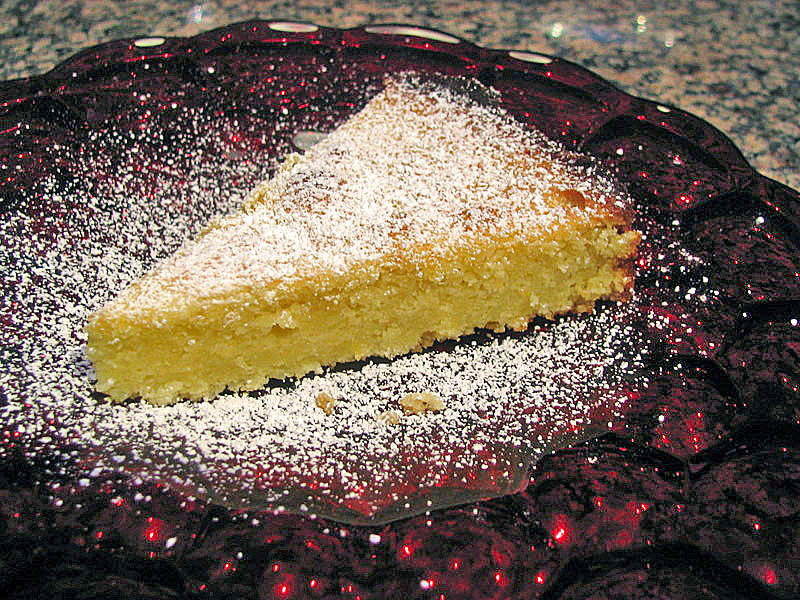
Italian is such a beautiful language! Most Italian phrases sound poetic, warm, and enticing… For example, this title translates as “lemon and almond cake,” but by sticking with the original Italian, I can pretend that it’s not really a cake, and therefore, it is doable. 😉 This recipe came from Fer’s blog (Chucrute com Salsicha), where I find a lot of inspiration, and she convinced me to ignore my cake-phobia and give it a try.
Done! I can’t say it was painless, but it wasn’t as horrible as some of my past cake experiences.
125 g softened butter
125 g granulated sugar
3 eggs, separated
125 g almond flour
60 g all purpose flour, sifted
1 tsp baking powder
juice and zest of 2 lemons
powdered sugar (optional)
Heat the oven to 355F / 180 C.
Prepare a springform pan (8 inches diameter) by coating it with butter and dusting with flour. Take a deep breath and beat the butter with the sugar until it forms a cream. Hope that the stars are correctly aligned so that the elusive cream stage appears in recognizable form.Take another deep breath andadd the egg yolks, one by one, beating after each addition. Calm yourself, collect yourself, and move away from the Kitchen Aid mixer. In a large bowl, combine the flours with the baking powder, mix them well together, and add the dry ingredients to the egg mixture. Add the lemon juice and zest and mix to incorporate. Stop hyperventilating. Beat the egg whites until soft peaks form, and fold them into the cake batter, trying to avoid deflating the egg whites too much. Cross your fingers for sustained alignment of the stars.
Spoon the batter into the prepared pan, and hope it will be enough to cover its whole surface, as cake batters tend to dissipate into thin air and never ever fill the pan called for in the recipe (which is very annoying!). Bake for 30 to 40 minutes (mine baked for 43 minutes and 19 seconds), until the cake is lightly golden. Allow it to cool before opening the springform pan. If desired, dust with powdered sugar.
Comments: This was a lovely cake, I’m so glad that I made it! If you have Meyer lemons, use them, as Fer recommended. The almond flour brings an interesting texture: a little more dense, but it quickly melts in your mouth, with a bright lemony finish. It sure brightened up our lab meeting last Friday… 😉
Not sure what Mellow Bakers is all about? Click here to read about it.
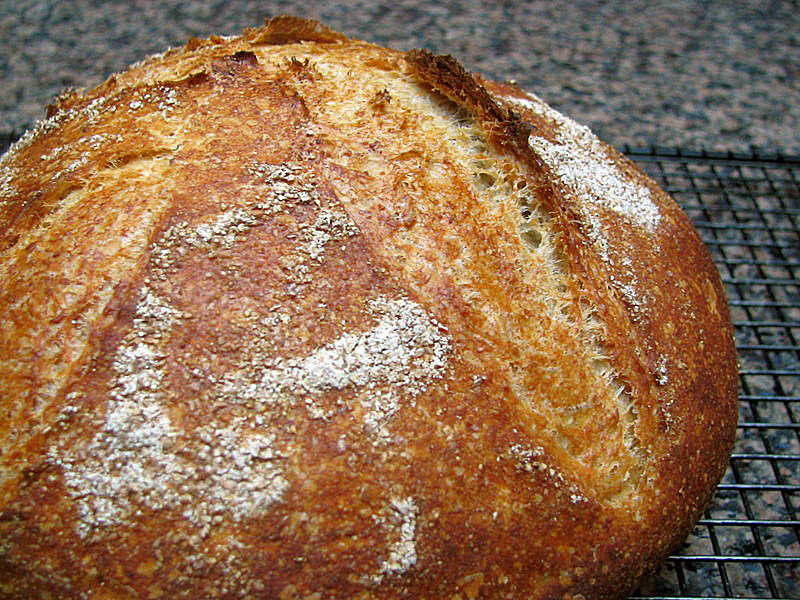
I haven’t decided yet if I”ll make the bagels, which are part of the three breads listed for this month. While debating this extremely important issue, I baked Rustic Bread today (page 115 of Hamelman’s BREAD).
and the crumb was just the way we like it….
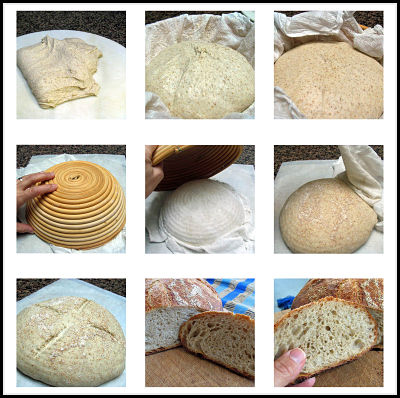
The bread takes a pre-ferment made the day before and allowed to rise for 12 to 16 hours at room temperature (around 70F). Next day, the final dough is mixed using a combination of regular, whole-wheat, and rye flour. The basic mixing and the folding method for kneading are very similar to that for Hamelman’s Vermont sourdough series, which happens to be my favorite way to handle bread dough. I did not need to adjust anything in the recipe, the dough came together beautifully.
Check the work of my mellow baker buddies by clicking here….
…. to bagel or not to bagel: that is the question! 😉
When traveling to a country for the first time, it’s a good idea to pay special attention to their “street food.” In Paris, for example, the tiny shops selling crepes (sometimes slathered with Nutella!) are a delight as one strolls along the avenues. Many big cities are filled with such delicacies, and in fact, one of my favorite cookbooks revolves around this topic.
On the streets of Brazil, you might stop to buy a “pastel,” and after sampling it, immediately return to the vendor for a couple more (plural = pasteis). These fried savory pastries are sold at the entrance of street markets: every week on the same day a few blocks of a neighborhood street close to traffic, while farmers sell their produce from early morning until slightly past noon, with prices dropping as the hours pass. You’ll smell the pasteis from a distance, and it’s impossible to resist eating more than just one… The vendors are usually hard working Chinese-Brazilians, with red faces from the intense heat in their huge woks.
Growing up in our house, my memories of pasteis go well beyond the street markets. Luisa, a cook who worked for my Mom every Saturday, often made them, and always from scratch. She used no machines or special gadgets, but only her strong arms, a rolling pin, and a fantastic disposition.
Luisa routinely prepared two batches, one for the whole family, and another for my Dad, which no one else would touch. What was so special about his pasteis? They were filled with minced peppers, and I am not talking jalapenos, poblanos, or serranos. Those were incendiary Brazilian peppers that can make a grown man cry. Dad was absolutely addicted to them.
Besides his love for hot peppers, he loved a good laugh. You might see where this is headed: he’d sneak into the kitchen to steal a couple of pasteis as Luisa was busy frying them, and then hide one of his “special ones” in the middle of the normal batch. He later patiently waited for a very unlucky camper to bite into it. Although everyone was on high alert at the beginning of the meal, we always seemed to forget until someone started howling in pain! Dad, laughing to the point of tears, insisted that he didn’t do it, that Luisa had certainly made a mistake. 😉 The best times were when Mom got the fiery one… Normally soft-spoken and even-tempered, a mouthful of hot pepper really made her fume, literally. It’s been almost six years since my Dad left us, but the memories will never fade.
PASTEIS (recipe adapted from my friend and fantastic cook, Anita)
for the dough
250g all purpose flour
1/2 cup warm water
1 egg
2 Tbs vegetable oil
1 tsp salt
1/2 Tbs pinga (or vodka)
1 tsp baking powder
vegetable oil, for frying (around 2 cups, depending on pan size)
Mix all ingredients together until very smooth. Allow the dough to rest for 30 minutes to 12 hours in the fridge, covered by plastic film.
Using a pasta machine, open small portions of the dough – on a Kitchen Aid, I roll up to number 5, not thinner. Place the dough on a floured surface and cut into squares. Add the filling of your choice to the center of the square and close the dough around it, pressing the edges with the tines of a fork to prevent it from opening as you fry it. Make absolutely sure there are no holes for the oil to sip in, or they will be soggy.
Fry in extremely hot oil until golden, turning them only once. Remove to a tray with paper towels to absorb excess oil. Pasteis can be kept in a 200F oven while you fry the full batch.
Ground beef filling
1 pound ground beef
1 Tbs olive oil
1/4 diced onion
1 Tbs tomato paste
1 Tbs pitted, diced green olives
1 Tbs minced parsley
salt and pepper to taste
1/4 cup cold water
1/2 Tbs cornstarch
1 boiled egg, finely diced
Saute the onions in the oil until translucent. Add the ground beef, and saute until cooked through. Add the tomato paste, green olives, salt and pepper and cook in slow-heat for 10 minutes. Add the boiled egg, mix well. Make a slurry with water and cornstarch, add to the ground beef mixture, cooking for a few minutes, until it thickens slightly. Let it cool completely before using. Leftover filling can be frozen.
(makes about 20 pasteis)
ENJOY!
PDF file under preparation…… (it had a mistake when originally published)
Comments:If you don’t want the trouble of making the dough, won ton skins will work reasonably well, and they are quite easy to find in grocery stores. But, this recipe will produce an authentic version, with a crust full of blisters and slightly more “substance” than you’ll get from won ton skins.
Pasteis can be filled with many different things. Pastel de queijo (cheese pastel) is very popular in Brazil: just enclose a piece of mozzarella with a sprinkle of oregano, and remember that it will be very hot once it’s done frying. Hearts of palm is another popular filling (pastel de palmito) that I’ll definitely post about in the future, because I’m very fond of it. Your own imagination is the limit: roasted chicken with a little cream cheese, cooked shrimp with tomatoes and herbs, all veggie….. Have fun with it!
Pasteis can be made in a small size that’s perfect as an appetizer with a cold caipirinha on the side. But my favorite pasteis are as part of a full meal, with rice and a fresh salad. Tropical paradise on a plate!
For more photos, follow the slide show…. And for a quick lesson on Brazilian Portuguese, click on the sound files down below.
This slideshow requires JavaScript.
If you want to pronounce it like a native, listen carefully:
pastel
pasteis








 Bewitching Kitchen
