YES, WE CAN (on the GRIDDLE)

I wish I could say that I made this dish, but the credit goes to my dear husband, who prepared petrale sole filets on our griddle, something we’ve never attempted before.   Our default method for this fish is the classic “sole meuniere“, which is ready in minutes in a luscious butter sauce, with lemon, parsley and capers.   Healthwise, it’s a bit of a wash: the fish is so light and healthy, but it’s swimming in butter…   Nevertheless, the taste is awesome (worth every molecule of saturated fat it contains).

Seriously. this griddled alternative was absolutely delicious, undoubtedly also from  the high quality of the fish.  It’s so nice to have a fish monger nearby!

GRIDDLE-FRIED FILET OF PETRALE SOLE
(from the Bewitching Kitchen)

filets of sole
lemon juice
all purpose flour
salt and pepper
vegetable oil to coat the griddle
(small pad of butter, optiional)

Rinse the fish briefly, dry with paper towels.   Sprinkle a little lemon juice all over the filets and season with salt and pepper.    Dredge each filet in salted/peppered flour or very carefully shake the filets in a paper bag with seasoned flour.

Coat the surface of the griddle with a tablespoon of oil, set it at maximum temperature (ours goes to 400F), and cook each filet about 5 min per side, until  both sides are golden brown and the fish is cooked through.  In the last couple of minutes squeeze some lemon and drop a small pad of butter among the filets, if you like.  Serve with lemon wedges.

ENJOY!

to print the recipe, click here

Comments: When your are fortunate enough to find fresh petrale sole, the less you mess with it, the better it will be.  It’s such a terrific, delicate fish, don’t suffocate it with powerful flavors.  We were amazed by how well the griddle fried it.  In a sautee pan, even with high heat, the coating may become soggy.  This doesn’t pose a problem in a classic sole meuniere, because the pan sauce coats the fish and distracts from the texture.   Griddle-frying, on the other hand, resulted in crisp, dry filets that weren’t greasy, and the lemon juice sealed the meal.  Amazing that we had to travel a thousand miles to a downsized kitchen to discover this way to cook a fish filet!

ONE YEAR AGO: Barm Bread

Add to FacebookAdd to DiggAdd to Del.icio.usAdd to StumbleuponAdd to RedditAdd to BlinklistAdd to TwitterAdd to TechnoratiAdd to Yahoo BuzzAdd to Newsvine

HIDDEN TREASURE

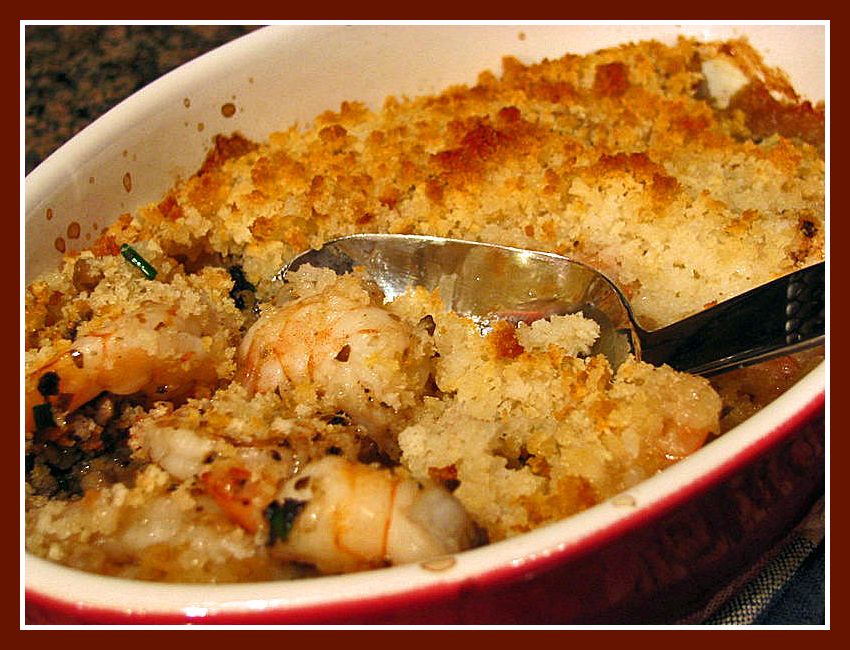
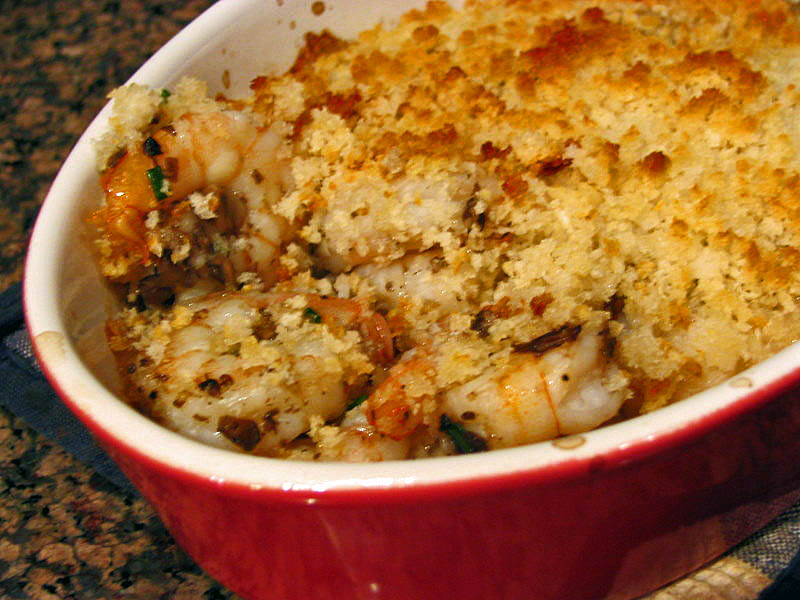
When Jacques Pepin speaks, I listen.  His book “Fast Food My Way” is a permanent fixture in my kitchen, just because I often cook from it on weeknights.  His simple dish, “Little Shrimp Casserole” only takes 30 minutes to prepare, and you’ll will be delighted by the moist tenderness of the shrimp,  which are baked hidden beneath a layer of bread crumbs.

LITTLE SHRIMP CASSEROLE
(adapted from Pepin’s Fast Food My Way)

4 Tbs unsalted butter, melted
2 tsp chopped garlic
1/4 cup minced chives
1/2 cup coarsely chopped mushrooms
salt and black pepper
2 Tbs canola oil, divided
1 pound large shrimp (about 24), shelled and deveined (brined if previously frozen)
1 cup panko bread crumbs
1/4 cup vermouth

Mix the melted butter with the garlic, chives, mushrooms, salt and pepper in a large bowl.  Add the shrimp and one tablespoon of canola oil;  mix well.   Transfer the mixture to a shallow baking dish (or make 4 individual servings).

In another bowl, toss the panko crumbs with the remaining tablespoon of oil, but make sure that they remain fluffy and don’t stick together. Sprinkle the crumbs all over the casserole, pour the vermouth on top and bake in a 425F oven for 10-15 minutes, or until the top is well browned and the shrimp are fully cooked.

ENJOY!

to print the recipe, click here

Comments: When using frozen shrimp, I like to quickly brine them to plump them up. You can see my method in this previous post. If you have access to fresh shrimp, then skip it. Whatever you do, make sure to thoroughly dry the shrimp on paper or a kitchen towel before assembling the dish.  Jacques uses white wine in his recipe, but I substituted vermouth because I like the way it complements seafood.

You can assemble the casserole a few hours beforehand, keeping it refrigerated until baking time.

ONE YEAR AGO:  Avocado Three Ways

Add to FacebookAdd to DiggAdd to Del.icio.usAdd to StumbleuponAdd to RedditAdd to BlinklistAdd to TwitterAdd to TechnoratiAdd to Yahoo BuzzAdd to Newsvine

A TWIST ON PESTO

Even though I know that the word “pesto” refers to pounding ingredients into a paste (preferably using a mortar and pestle), I tend to associate it with basil – the classic pesto Genovese. So, this recipe using cilantro as the main herb perked my interest. I found it in the latest issue of Bon Appetit, and it seemed perfect for this time of the year, in which the temperature approaches 100 F every day, with no rain in the horizon.   Not that there’s anything wrong with it… 😉

LINGUINE WITH CILANTRO-LIME PESTO & SHRIMP
(adapted from Bon Appetit)

1 pound large shrimp, peeled and deveined
1 pound linguine
1 + 1/2 bunches fresh cilantro leaves
1/4 cup green onion, cut in large pieces
1/2 serrano pepper, seeded, quartered
1 garlic clove, minced
3 Tbs lime juice
salt and pepper
1/2 cup olive oil
3 Tbs tequila
cotija cheese to taste, grated (or crumbled feta)

To make the cilantro pesto:
Place the cilantro leaves in the bowl of a food processor and process it for a few seconds. Add the green onion, jalapeno pepper, lemon juice, garlic, salt and pepper, and process for 30 seconds. With the machine on, pour the olive oil until a thick paste forms – you may need a little more or a little less olive oil. (I usually opt for a lot less than recipes call for).

Cook the pasta until al dente. While the pasta cooks, heat 1 Tbs olive oil in a large skillet, add the shrimp and cook until it just starts to get opaque. Remove from heat, add the tequila, bring back to the stove and cook for about 30 seconds, until the tequila achieves a syrupy consistency. Add the pesto to it, cook a few seconds to warm it up. Add the cooked pasta and mix everything together until shrimp, sauce and pasta are well blended. Grate some cotija cheese on top and serve.

ENJOY!

to print the recipe, click here

Comments: Cilantro haters will have to forgive me, but this pesto rocks! At first I thought this recipe could end as a major gastronomic disaster, due to cilantro overload, but its taste mellowed down in the final sauce. I had never tried cotija cheese, and did not particularly cared for its texture, but grated over the pasta it worked very well. Many people dislike adding cheese to seafood dishes, but I don’t have a problem with it: it definitely embellished this pasta.

One year ago: WHEN LIFE GIVES YOU CHARD…

Add to FacebookAdd to DiggAdd to Del.icio.usAdd to StumbleuponAdd to RedditAdd to BlinklistAdd to TwitterAdd to TechnoratiAdd to Yahoo BuzzAdd to Newsvine

SPRING ROLLS on a SPRING DAY

March is a wild month. It’s the beginning of Spring in the Southwest, but Winter still occasionally shows its teeth, bringing low temperatures, freezing rain, snow and nasty winds.   It’s enough to make a tropical creature sob.    This past Saturday I fought back,  ignoring the cloudy skies, the intermittent rain and the 25mph winds…  I went ahead and brought a burst of Spring air into the house.

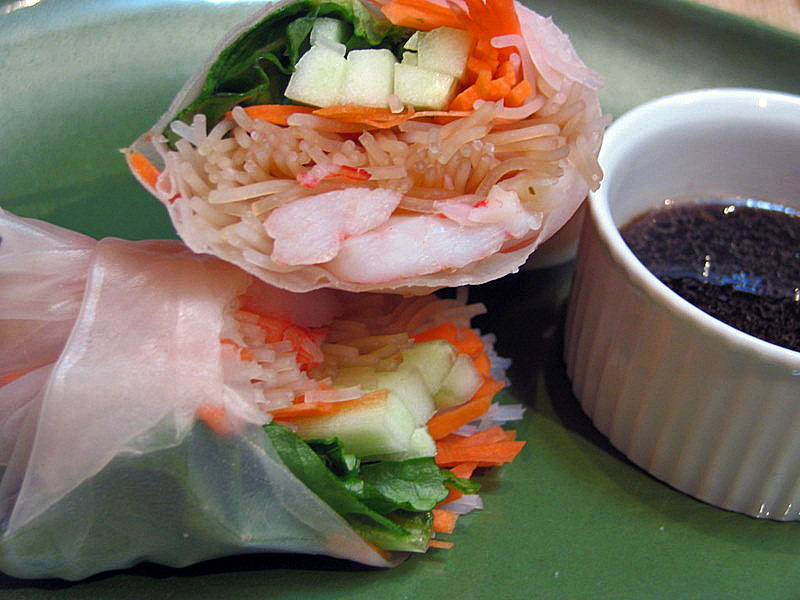
VIETNAMESE-STYLE SPRING ROLLS
(from the Bewitching Kitchen)

4 rice paper rounds
1 oz dry bean threads or rice vermicelli
cooked shrimp, cut in half lengthwise
carrots, cut in long julienne strips
cucumbers, cut in long matchstick pieces
lettuce, cut in strips
cilantro leaves

for dipping sauce
6 Tbs soy sauce
2 Tbs water
2 Tbs rice wine vinegar
2 Tbs brown sugar
1 tsp sesame oil
1 tsp grated fresh ginger

Cut the vegetables, cook the shrimp,  and have everything ready to use on your kitchen counter. Prepare the dipping sauce by mixing well all its ingredients.

Cook the noodles according to the directions on the package (they vary according to type). Rinse them in cold water and set aside (you can add a tiny bit of sesame oil or olive oil to prevent them from sticking, but it’s not absolutely necessary if you rinse them well).

Fill a bowl large enough to hold the rice paper with very warm water. Open a damp cloth over your work surface. Soak the rice paper in the warm water until it is soft and pliable. Carefully lift it and place it over the damp cloth. Line your ingredients, starting with the cut shrimp, then the noodles, veggies, herbs. Add 1/2 tsp of dipping sauce (or just a few sprinkles of soy sauce) to the filling, and roll the paper around them. Repeat with the remaining rice papers. To serve, cut each roll at an angle and serve with a small bowl of dipping sauce.

Think about birds chirping, flowers blooming, and ENJOY!


to print the recipe, click here


Comments: What I love about these rolls is that you can improvise and use lots of different things in the filling.  Granted, this practice might compromise their authenticity, but unless you’re having a Vietnamese guest for lunch, no harm done.   Keep in mind that you can have too much of a good thing: avoid using 6 different veggies, two types of meat, 5 herbs, and a smear of peanut butter inside.  😉 These rolls are supposed to be delicate, fresh, and light.   Perfect for the warm weather that is certainly peeking at us  (fingers crossed).

Click here for a quick tutorial on how to prepare them (plus a cool song in the background!)…

Add to FacebookAdd to DiggAdd to Del.icio.usAdd to StumbleuponAdd to RedditAdd to BlinklistAdd to TwitterAdd to TechnoratiAdd to Yahoo BuzzAdd to Newsvine

SEARED TUNA is MY OWN PRIVATE IDAHO

…. Get out of the steak you’re in! 😉

We don’t often dine out, simply because we prefer to cook at home:  it’s less expensive, less caloric and more satisfying.  The only real exception is sushi, which I don’t attempt to make.   But,  if a restaurant menu offers “seared tuna,”  then that’s usually my selection!   I like  it served cold (our local sushi restaurant makes a killer seared tuna salad with creme fraiche and wasabi dressing), I like it served warm (over pasta, rice, or soba noodles), and I feel great after eating it.  Seared tuna is a fantastic, weeknight-friendly dish:   ten minutes tops from the refrigerator to plating.

I slightly adapted this recipe from “The Improvisational Cook“, by Sally Schneider, and served it with a crispy potato / spinach / escarole salad based on this recipe.   It’s a healthy, tasty dinner, that reinforced my infatuation with seared tuna.

TUNA WITH SESAME SEEDS, CRACKED CORIANDER and CRISPY GINGER
(adapted from Sally Schneider)

2 ahi-tuna steaks (sushi-quality)
3-inch piece of ginger, sliced very thin
3 Tbs peanut oil
1/4 cup sesame seeds
1/4 cup cracked coriander seeds
1/16 cup nigella seeds
salt and pepper to taste

Heat the oil over medium heat in a small saucepan. Add the ginger slices and cook over low heat for 7-8 minutes until the ginger is crisp. Transfer to paper towels with a slotted spoon, season lightly with salt, and reserve the ginger slices and the oil.

Place the sesame seeds, cracked coriander, and nigella seeds in a plate. Season the tuna steaks with salt and pepper, then press both sides of the steaks on the seeds mixture.

Heat the ginger oil in a non-stick skillet until hot, but not smoking. Place the steaks in the oil, and cook for 90 seconds on each side for medium-rare. Transfer to a cutting board, slice with a sharp knife, scatter the crispy ginger, and serve.

ENJOY!

to print the recipe, click here

Comments: If you can’t find top-quality tuna steaks, then don’t attempt this recipe.  The fish will be nearly raw in the middle, so only the best quality tuna will rise to the challenge. If you prefer it a little more cooked, then give it an additional 30 seconds on each side, but avoid over-cooking.

To crack the coriander seeds I placed them in a small ziplock bag and used a meat mallet. Be gentle because they crack easily; you don’t want to turn them into powder.   Other mixtures also work well, like cracked black pepper or mustard seeds.  Nuts easily burn, but the searing takes less than 2 minutes,  so it’s not a problem as long as the oil isn’t smoking hot.

I’d never tried crispy ginger, and my husband thought it was a bit strong, but I liked it a lot.  Cut the slices as thin as possible.  The mandoline didn’t work as well as I’d hoped, so I ultimately used my chef’s knife.  Amazingly enough, I still have all ten fingers. 😉     Even if you don’t like the fried ginger, it is worth making it for the infused oil.

And now for something completely different…. savor this!