BBA#16: KAISER ROLLS

A Kaiser roll….
KR1

is the beginning of a great sandwich!
sandwich

But let’s not get ahead of ourselves… Back to this tasty bread…

Once more I switched from kneading the dough to folding it, and the results couldn’t have been better. For those following along the “challenge”, here’s a heads up: the recipe uses only half the amount of the pate fermentee shown on page 105. If you make the full amount, remember to only use half of it. 😉

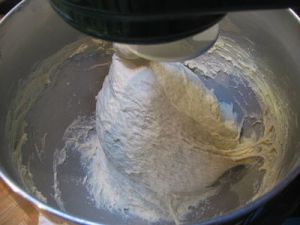
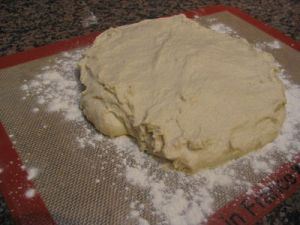
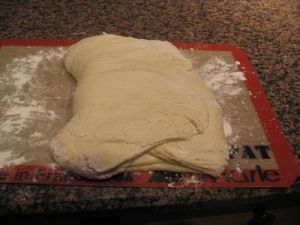
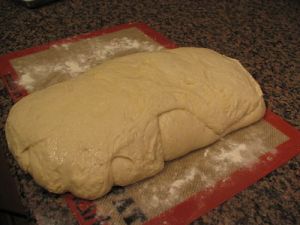
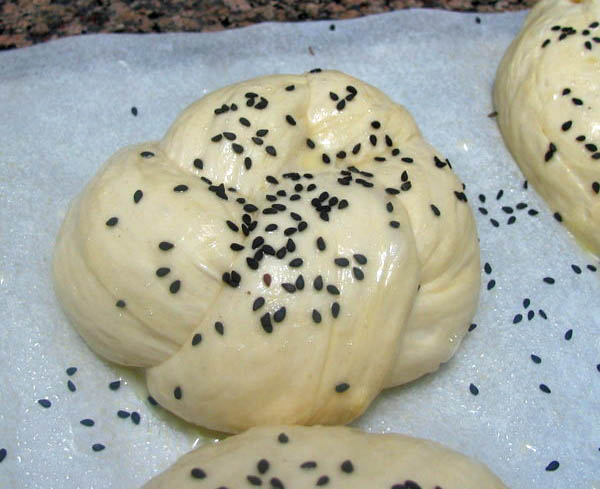
After incorporating the pate fermentee into the flour, egg, oil, malt, and yeast, I folded the dough at 30, 60, and 90 minutes. At the 2 hour mark the dough was bubbly and airy as expected, so I cut it into 6 pieces and formed the rolls using the knot method. They rose for almost 1.5 hours (see the before and after pictures, the two photos at the bottom of this gallery).

composite2

A little egg wash helped to glue the black sesame seeds on top…
seeds

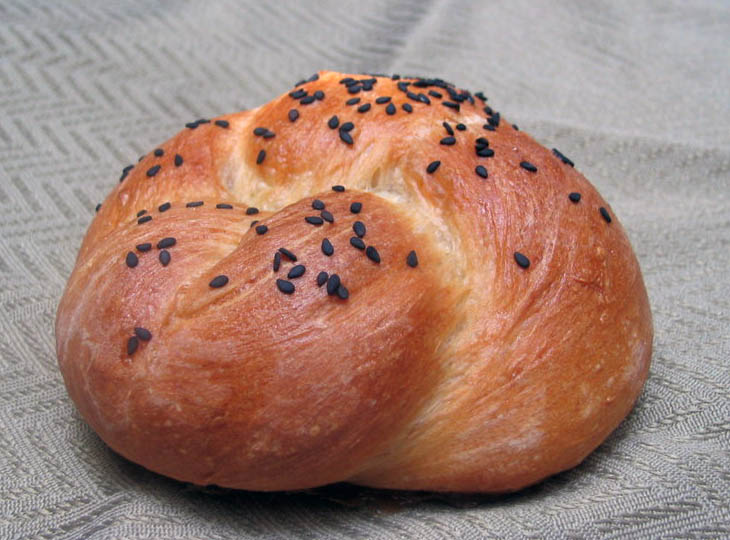
Right out of the oven, a light roll, with a nice crumb structure…
IMG_2206

hand

And, before I forget… that sandwich was made with ham, cheese, yellow tomatoes, and a fried egg. Absolutely delicious!

For more Kaiser Roll adventures, here are links to blogs by fellow bakers who made the rolls ahead of me, check them out!

Carolyn, from Two Skinny Jenkins
Deborah, from Italian Food Forever
Maggie, from The Other Side of Fifty
Devany, from My Hawaiian Home
Oggi, from I can do That
Joelen, from What’s Cooking, Chicago?

BBA#15: ITALIAN BREAD

IMG_2097

Fifteen breads down, twenty-eight to go…

Once more I should say that all recipes from the challenge can be found here, a must-have book for any serious (or beginner) bread baker.

Reinhart’s Italian Bread is quite similar to the previous one (French Bread), except that it takes a “biga” instead of a “poolish”. No need to run away all scared, those are terms to describe the pre-mixture of flour, water, and yeast, that generally ferments for 24 hours before being used in the final dough. Usually a “biga” is firmer (contains less water).

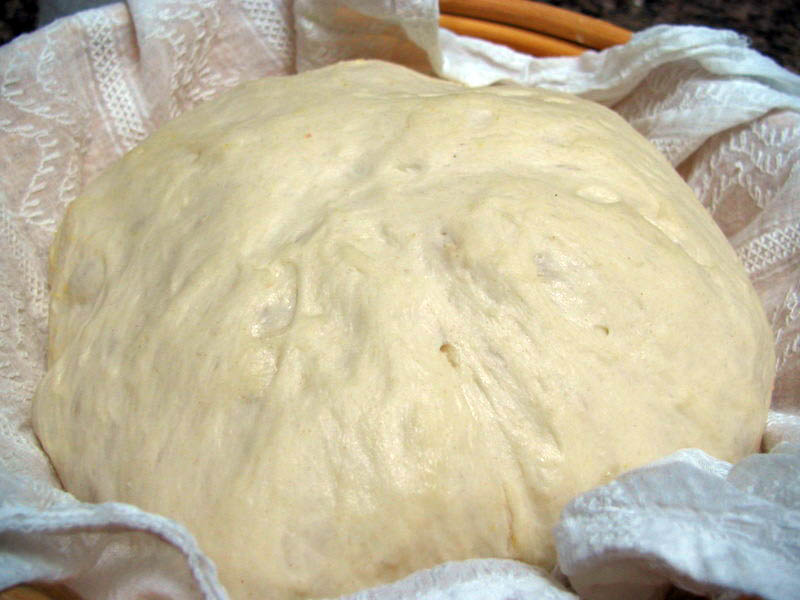
For this bread, I changed the method of kneading. Instead of adding the dough to the Kitchen Aid and watching the machine do its job, I kneaded it myself, but used my favorite method: folding. I put the advice from bakers over at “The Fresh Loaf” to work, folding the dough twice, at 40 and 80 minutes, then forming a “boule” at 120 minutes. One more hour rising, and into the oven it went. These pictures show the second folding (made in two directions), and the “boule” right after shaping. Notice how bubbly it was, even before the final rise.
composite1

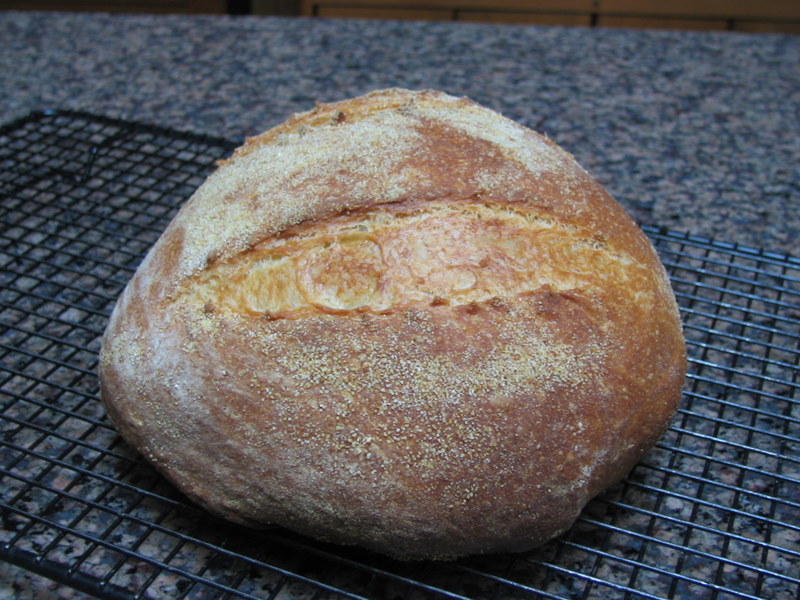
After 1 hour at room temperature, the dough rose about 1.5X of its original size, as expected. It had a spongy texture, airy and light. It lost some of it when I dumped it into my clay pot, but not much. It had good enough oven spring to recover.
finalboule

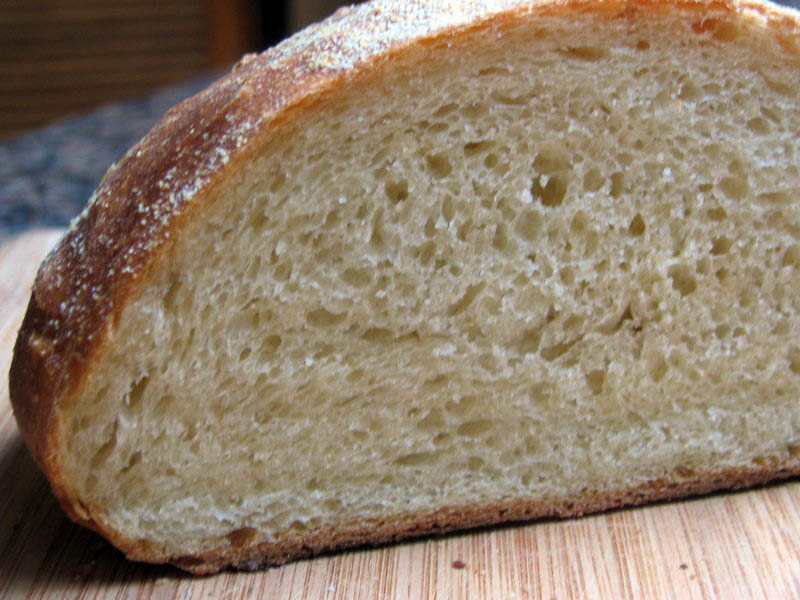
This bread is spectacular, the crumb has excellent texture, the crust is not too hard, not too soft, just right. As my husband put it, “it is not very easy to stop eating it”. Indeed. It was a wise decision to make half the recipe, because there is only so much running one can do. 😉
IMG_2095

A final shot of the crumb…

crumb

BBA#14: FRENCH BREAD

FB2

Another bread I was looking forward to! We arrived from the other side of the world a little tired, but after a nice shower I grabbed the book and prepared  “pate fermentee”. It’s a fancy name for a simple thing: flour, salt, yeast, and water, kneaded together, allowed to rise for one hour and placed in the fridge overnight.

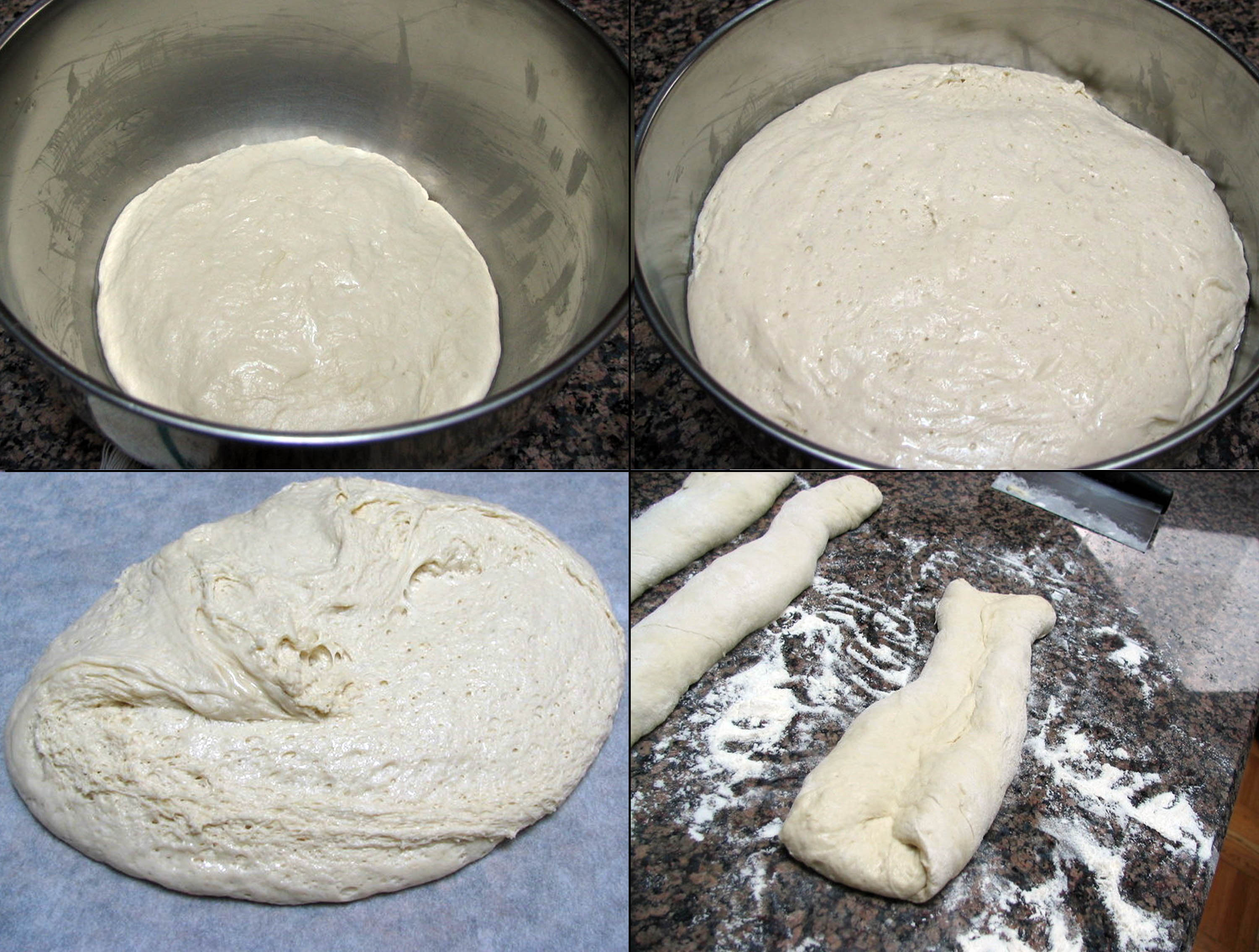
French bread is reasonably easy to make, but tricky to shape, as the dough contains a high proportion of water. Refrain from adding too much flour and you are half the way there.

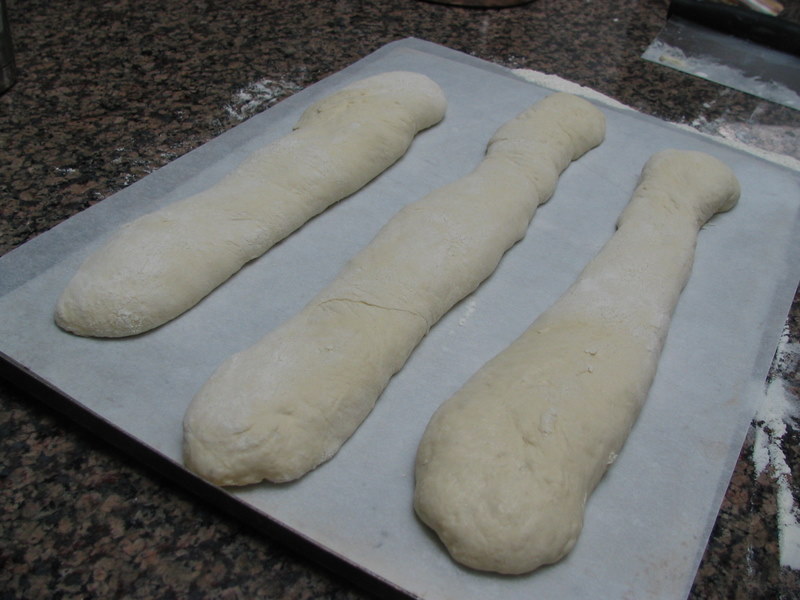
These photos show the complete dough (pate fermentee’ + more flour, salt, yeast and water) before and after rising for 2 hours at room temperature.  I cut the dough into three pieces, shaped as baguettes, taking care to deflate it as little as possible.

FB1

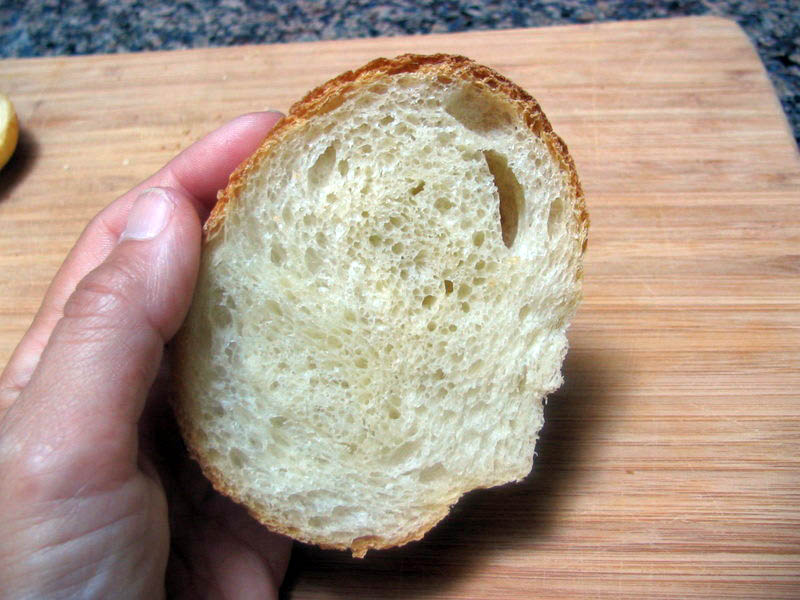
The baguettes rise one more time, at least 45 minutes, then go into a 500F oven. I need more practice shaping baguettes, but overall I think they worked quite well.

IMG_2039FBfirst

FBcrumb

The crumb is not very open, but the bread has excellent flavor and texture.  They were a nice complement to our dinner tonight!

BBA#13: Focaccia

focacciaready

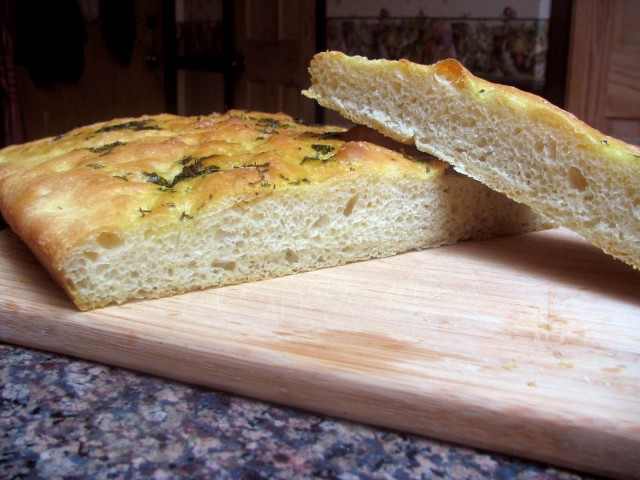
Not quite sure how else to put it: I LOVE focaccia! In fact, it was one  of my very first posts in Bewitching Kitchen, a straightforward recipe we’ve enjoyed countless times. If you haven’t seen it, click here for a flash back.

In the Bread Baker’s Challenge, it was time for Peter Reinhart’s recipe, which is a lot more involved. Whereas my usual method takes you from flour to baked focaccia in a little over an  hour, Reinhart’s calls for  almost 3 hours of preparation, followed by an overnight sleep in the refrigerator.  The next day it involves 3 more hours until baking;   I was understandably  anxious to see the results.

But first, the process…

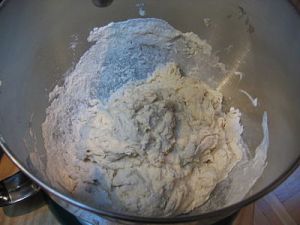
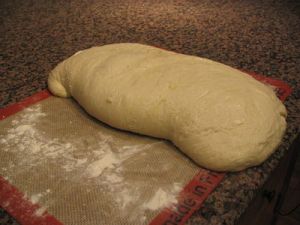
As the ingredients mix it won’t look very promising…
dough1

But don’t worry about it, just get the dough hook going…. and going… and going… it might take 10 minutes to get it smooth

dough2.

This is exactly how it’s supposed to be: almost clearing the sides of the bowl, but still sticky at the bottom

Now, be brave and with wet hands, remove the dough to a heavily floured surface…

dough3

and proceed to make three folds, 30 minutes apart.  Don’t forget to enjoy the amazing changes in texture, as the dough gains strength and shape with minimal effort…

fold1fold2finalfold

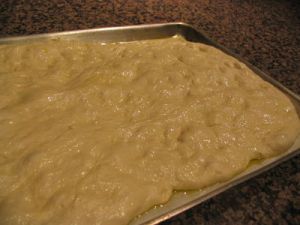
I confess to having a bit of trouble with the next step.  It was tricky to move the dough to the sheet pan. If you have helpers around, line them up, and flour their hands… heavily. In fact, it might be even better to follow Paul’s suggestion (a fellow baker who recently posted about it here ), and transfer the dough to the sheet pan right after the last fold. It will make your life easier. 😉

sheetpan1

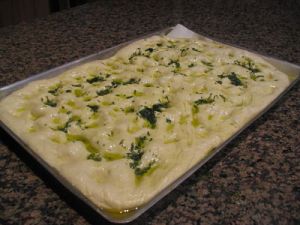
Reinhart’s herb oil is a must, I will definitely incorporate it in my focaccia from now on, no matter the recipe.

herboilsheetpan2

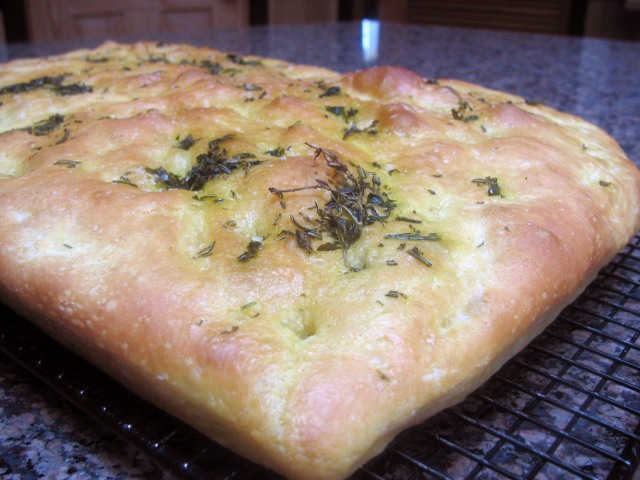
The next morning, after 3 hours of final rise at room temperature, the focaccia goes into the oven!

ready2

a few final comments after the jump….

Continue reading

BBA#12: Golly Moses, She’s a Muffin!

Unless you are a fan of “Two and a Half Men”, the title will not mean much to you. But, if you are like us, it will bring a smile to your face… 😉

I was “counting the breads” to this one, as making English muffins has been on my to-do list for years. In fact, with this bread, Reinhart starts on a very nice path down yeast lane: I look forward to many of the breads ahead.

IT’S A MUFFIN!

muffin1

This recipe (found here) was easy, absolutely no worries. Mix the flour, the yeast, the buttermilk, and wait for the dough to beautifully rise.  Form 6 balls of dough, let them rise again and plop them on the griddle.

The trickiest part is to cook undisturbed for several minutes, until the bottom is dark brown. I’m not a particularly patient person, and those minutes seemed like hours! But it was worth it, as the photos confirm.

Without further ado, muffin time!

Here they are, after the final rise, ready to cook…

muffindough

As you add them to the griddle, they spread a little. Just let them sit, don’t move them around.

ongriddle

close-up

muffingriddle

…and a “group shot”

muffingroup

General comments: it’s another great recipe to make with kids: they’ll have a lot of fun to see the changes as the muffins cook, and then to eat them with some butter and jam!  They finish in a 350F oven to make sure that the inside cooks thoroughly. The crumb turned out a little tighter than I like it, but maybe I was not gentle enough handling them. Make sure to sprinkle some cornmeal on the parchment paper or Silpat before resting the dough balls on top,  so that you retain the airy quality of the dough and the bread acquires the characteristic muffin texture inside. Eggs Benedict may well be on your menu in the near future! 😉

Note to self: explore variations using whole wheat flour and/or sourdough starter as part of the dough.