POMEGRANATE CHICKEN THIGHS & CARROT MASH

chickencarrot
I am feeling quite generous these days, so you’ll get two recipes in a single post. It turns out they went so well together, that it would be sad to separate them.  The source of inspiration for the chicken was a blog I found not too long ago, and started following right away: The View from Great Island, hosted by Sue. Her photography is beautiful, and I’d be happy sitting at her dinner table anytime! The mashed carrot was in  the latest issue of Fine Cooking magazine  as an option for Thanksgiving side dish. Roasted asparagus rounded our meal quite nicely.

Pomegranate Chicken ThighsPOMEGRANATE AND LIME CHICKEN THIGHS
(adapted from The View from the Great Island)

for the chicken
1 cup Greek yogurt
1/2 cup pomegranate juice
1 tsp salt
4 bone-in skin-on chicken thighs
for the glaze
1/4 cup pomegranate molasses
juice of 1 lime
2 Tbsp agave nectar
1 Tbsp Dijon mustard

To marinate the chicken, put the yogurt, pomegranate juice, salt, and chicken in a large zip lock bag. Massage everything until well combined. Put in the fridge to marinate for at least 2 hours or overnight.

Set the oven to 300 F.  Remove the chicken from the marinade, place the pieces skin side down on a large baking dish, and cover with aluminum foil.  Bake for 45 minutes to 1 hour at this low temperature.  Remove the foil, if there is a lot of liquid accumulated in the dish remove most of it and discard.  Turn the pieces skin side up, cover with foil again and bake for another 20 minutes.  At this point, prepare the glaze by combining all ingredients together.   If too thin, gently warm it on a small saucepan to thicken it a little.  Watch it carefully because it can burn due to all the sugar.

Remove the aluminum foil from the baking dish, increase oven temperature to 425 F.  Bake for 15 minutes, once the skin starts to get some color brush the glaze all over the chicken thighs and bake for 10 more minutes or until very dark.  You can also broil the pieces at this point, but pay attention to prevent it from burning.  Serve with lime wedges.

ENJOY!

to print the recipe, click here
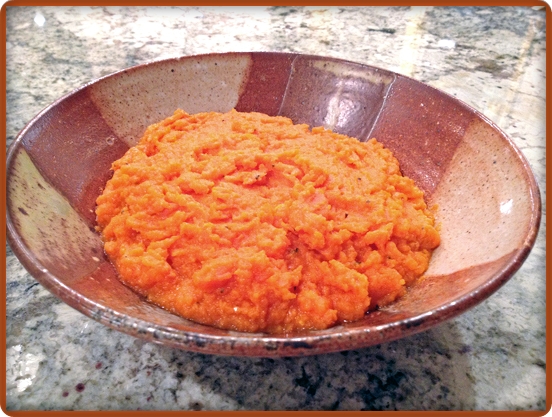
Carrot Mash1

    CARROT MASH WITH ORANGE AND MINT
    (adapted from Fine Cooking magazine)

    2 lb. carrots, peeled and cut into 1-inch pieces
    salt
    1 oz. (2 Tbs.) unsalted butter, cut into 2 pieces
    2 Tbs. almond milk, unsweetened
    2 Tbs. extra-virgin olive oil
    1 tsp dried mint
    1 tsp finely grated orange zest
    Put the carrots in a large saucepan with enough cool water to cover by at least 1 inch. Add 1 tsp. salt and bring to a boil. Turn the heat down and cook at a gentle boil until the carrots can be easily pierced with a fork, about 25 minutes.

    Drain well in a colander, letting the steam rise for a few minutes. Meanwhile, heat the butter, almond milk, oil, mint, orange zest, and  1/2 tsp salt in the saucepan over low heat until the butter melts.

    Purée the carrots in a food processor until smooth and then add them to the pan, stirring well to combine.

    Adjust seasoning and serve.

    ENJOY!

    to print the recipe, click here

    Comments: My main modification of the chicken recipe was to adapt it to my favorite method of cooking chicken thighs: low and slow followed by high and fast.  I like the way the meat gets super tender and the skin super crisp.  You should stop by Sue’s blog and check her version too.  She actually made the glaze from pomegranate juice, reducing it with sugar. Since I had a bottle of pomegranate molasses, I followed a slightly different path.  The full idea is to have a reasonably thick glaze to coat the chicken.
    orangezest

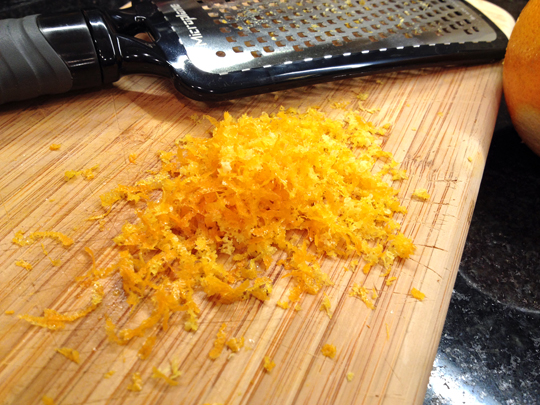
    The carrot mash: my only tweak was to use almond milk instead of heavy cream.  I love almond milk and use it every chance I get.  A lot more orange zest went into the recipe then called for, because the music playing got me carried away with the Microplane. Such a cool gadget!  Phil thought it was slightly too orange-y and not enough carrot-y, but when we had leftovers next day that flavor had mellowed down considerably.  As to a side dish for Thanksgiving, I was a bit shocked by how little puree 2 pounds of carrots produced… If you will be feeding an army of people, be ready to peel a ton of carrots and scale this recipe up by a factor of 3 or 4.  😉  Still, a delicious option, bright color, bright flavor, it will shine on your Thanksgiving table next to that big bird.

    ONE  YEAR AGO: The Many Faces of Kale

    TWO YEARS AGO:  Short and Sweet

    THREE YEARS AGO: Ciabatta, a Classic Italian Bread

    FOUR YEARS AGO: Magical Lamb Stew

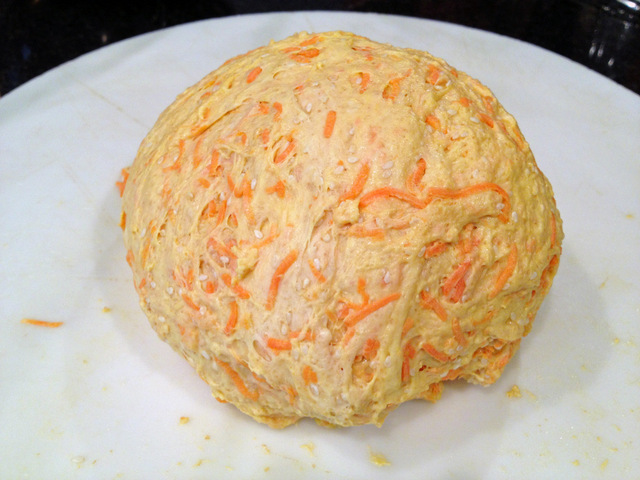
    CARROT AND SESAME SANDWICH LOAF

    From the one and only Dan Lepard, a loaf to satisfy your cravings for a hearty sandwich bread, with the slightly nutty flavor of sesame seeds and a very subtle sweetness from grated carrots in the crumb.  Very easy to make, very easy to love…    You can find the full recipe on The Guardian site, by clicking here.

    loaf
    Here’s a little virtual tour of the process, starting with a quick preparation of your loaf pan.  You might be surprised to learn that I am a complete disaster when it comes to using scissors. I cannot make a straight cut to save my life.  So I was proud of my job here, although truth be told, it took me almost 15 minutes to do this.

    prepbowl

    You weigh your ingredients, and make a nice, smooth round of dough…
    weighingdough
    Thanks to the use of Rapid Rise Yeast (which is unusual for me, I normally go for the regular kind), you will end up with a shaped loaf that will threaten to escape its container, so make sure not to leave the house to run a few errands as the dough rises…  😉
    risingslashed

    The carrots are very evident in the dough, but they get baked into the crumb in a wonderful way. They won’t disappear, but you won’t feel any harsh bits of carrots as you bite into the bread.  A very soft crumb, with a nice crunchy top given by the sesame seeds.  Make sure to follow Dan’s tip on adding them: wet the surface of the slashed dough with a little water so that the seeds can stick better.  He used black sesame seeds, for quite a dramatic look.  I could swear I had black sesame seeds somewhere, but I could not find them, so I used regular, white seeds.
    crumb

    And I share with you a favorite lunch option: an open-faced sandwich made with  this bread, slightly toasted, some smoked ham, and cottage cheese with enough salt and black pepper to make it all shine…  Perfection, if you ask me!

    sandwich

    I am submitting this post to Susan’s Yeastspotting

    ONE YEAR AGO: Border Grill Margaritas

    TWO YEARS AGO: Goodbye L.A.

    THREE YEARS AGO: Vermont Sourdough

    QUINOA WITH CIDER-GLAZED CARROTS

    A note to subscribers:  Google Reader will shutdown on July 1st, 2013. If you have a subscription to this blog through Google Reader, please sign up for email notifications, or switch to another reader. I recommend Feedly or Bloglovin.  They will automatically retrieve all your Google reader subscriptions. 

    I’ ve had plenty of versions of quinoa in the past, but this one takes the number one spot. The carrots added a sweet-sour note, the thinly sliced almonds a delicious crunch, and the quinoa married them together with its light and refreshing nature. Cannot praise this dish enough. I was inspired by this recipe from Bon Appetit, and decided to come up with a version to be served hot instead of cold, but with similar flavors. If you are searching for a recipe to please vegetarians or a perfect side dish for pork, poultry,  perhaps a thick slab of grilled salmon, look no further. This is perfect!

    served22

    QUINOA WITH CIDER-GLAZED CARROTS AND ALMONDS
    (from the Bewitching Kitchen, inspired by Bon Appetit)

    1 cup quinoa, very well rinsed and drained
    salt
    3 medium carrots, thinly sliced at an angle
    2 Tbsp apple cider
    2 Tbsp agave nectar
    1/4 cup sliced almonds
    2 Tbsp olive oil, divided
    1 Tbsp cider vinegar
    2 Tbsp lemon juice
    zest of 1 lemon

    Heat oven to 450°. Bring quinoa and 4 cups lightly salted water to a boil in a medium saucepan. Cover, reduce heat, and simmer until quinoa is tender, 10-15 minutes. Drain; return quinoa mixture to saucepan, cover, and let sit for 10 minutes. Fluff with a fork and transfer to a large bowl; let cool.

    Meanwhile, lightly coat a large rimmed baking sheet with oil (or cover it with parchment paper). Whisk cider and honey in a large bowl to blend; season with salt and pepper. Add carrots and toss to coat. Transfer to prepared baking sheet and roast until tender, 15-20 minutes. Let cool.

    Heat 1 tablespoon of olive oil in a small skillet. Add the almonds and cook over low heat until fragrant.  Set aside, keeping it warm.

    Whisk vinegar, lemon zest, lemon juice, and remaining tablespoon of olive oil in a small bowl.  Season with salt and pepper.

    Add carrots and almonds to quinoa mixture and toss to coat. Drizzle the vinegar & lemon mixture and mix well tp combine all ingredients.  Adjust seasoning if needed.

    ENJOY!

    to print the recipe, click here

    Comments: If you are new to cooking the seeds of Chenopodium quinoa, please remember to rinse them extensively.  The seeds  have a natural coating of saponins that taste very bitter.  Processing the seeds for sale includes pre-washing, but you will notice that the water still foams slightly once you soak the seeds.  A couple of years ago, I read somewhere that quinoa goes rancid very easily, so the advice given was to store it for  no more than 6 months (or freeze it).   I tried to find a source for this information,  but now I find plenty of sites stating that it lasts for several years in the pantry.  Oh, well. I guess one can always open the bag and do a sniff test.

    Cooked quinoa freezes very well, so you can prepare a full bag and portion it in the freezer for later. I actually cooked it on a Saturday and made this recipe for our dinner on Tuesday.  Pork tenderloin kebabs completed the meal, but the truth is we both raved about the quinoa a lot more.  Bonus:  we got our intake of carrots all taken care of!  😉

    ONE YEAR AGO: Celebrate Wednesday: Heirloom Tomatoes Steal the Show

    TWO YEARS AGO: Pain de Provence

    THREE YEARS AGO: Golspie Loaf, from the Scottish Highlands

    KINPIRA GOBO AND JAPANESE HOME COOKING

    burdock2_opt

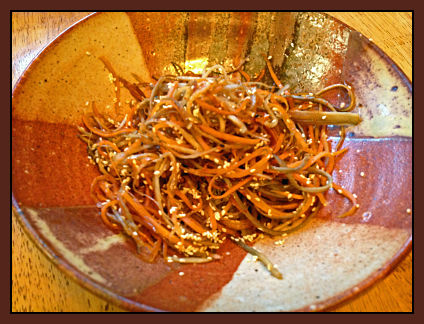
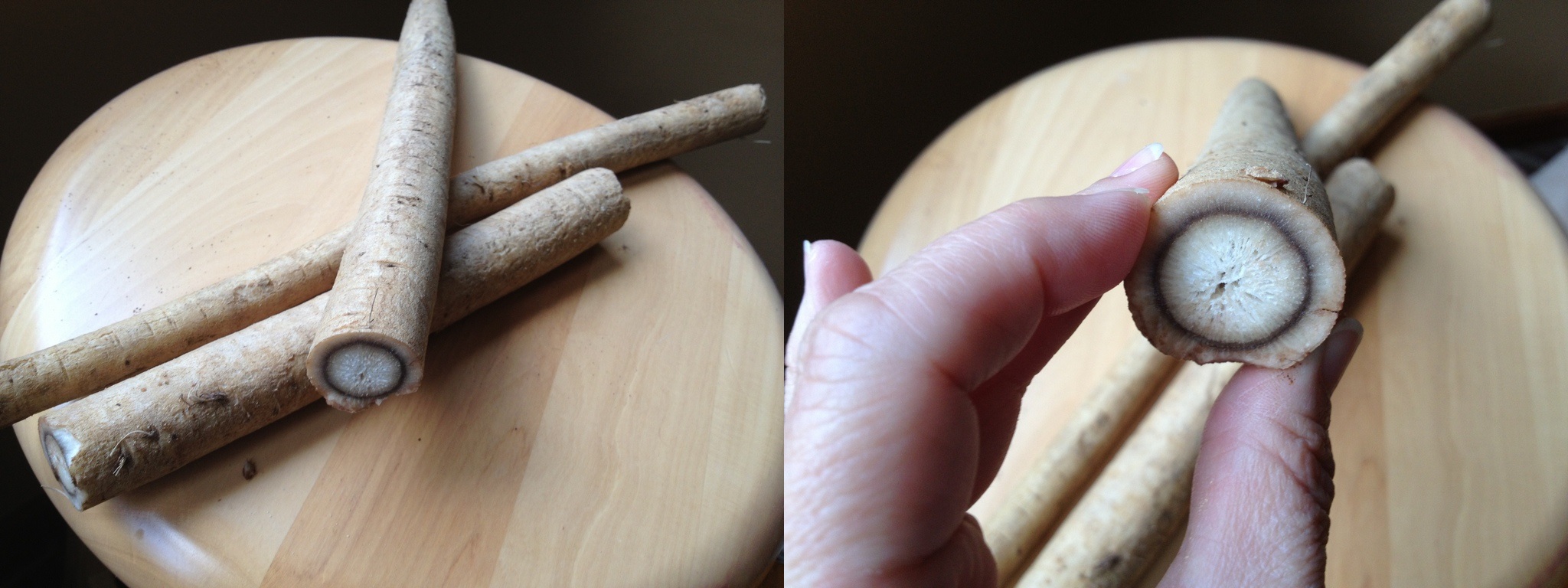
    Of all types of cuisine, Japanese is the one that intimidates me the most. Making sushi at home is out of the question for me, but even other types of Japanese cooking give me pause.  In a recent trip to California, we met a wonderful couple who takes a different approach: they are both Americans, but mostly cook Japanese food at home and are really serious about it.  Their bookshelves are loaded with cookbooks devoted to Oriental (and vegetarian) cooking, their pantry stocked with the most exotic ingredients.  They mentioned a dish they love so much that it’s not uncommon to have it twice in the same week.   It uses a strange-looking root called “gobo“, also known as “burdock“.   They gave me the perfect spice mix to season this traditional Japanese dish (see my previous post) and wished me luck finding gobo in Manhattan, KS.   I was very optimistic, though. It turns out “The Little Apple” is home to one of the most amazing food stores I’ve ever been to, called quite simply “Asian Market“.    I could not wait to get there to search for the elusive root.  Not only they had a ton of it, but the owner said it’s always in stock.   Call me a happy camper. And call this dinner one of the healthiest meals I’ve ever put together.   And very delicious too!
    served1

    KINPIRA GOBO (Sautéed Burdock)
    (adapted from Hiroko Urakami Japanese Family-Style Recipes)

    1 medium gobo root
    2 carrots
    1 Tablespoon sesame oil
    1/2 Tablespoon grape seed oil
    2 Tablespoons mirin (or sake)
    1 + 1/2 Tablespoons sugar
    2 Tablespoons soy sauce
    1 + 1/2 Tablespoons sesame seeds, toasted
    Nanami togarashi to taste

    Set up a large bowl with cold water. Peel the carrots and cut in julienne strips. Peel the outer dark skin of the gobo root, and working quickly, cut it in julienne strips.  Soak the gobo and the carrots in water for 10 to 20 minutes.  Drain well, and dry the strips using a kitchen towel.

    Heat the sesame and grape seed oil on a large skillet.  Add the carrots and gobo root, and sautée them together for about 4 minutes, until they are tender.  Add the mirin, sugar, and soy sauce, and cook over medium heat until all the liquid has been absorbed.  Transfer to a serving bowl, add the sesame seeds and the nanami togarashi right before serving.

    ENJOY!

    to print the recipe, click here

    composite

    I have a bit of  trivia about gobo for you:  in the 40’s, a Swiss inventor called George de Mestral was walking his dog through some woods and noticed that the seeds of a particular plant glued to everything, from his clothes to his dog’s fur. He collected some seeds, and inspected them under the microscope. He was amazed by its hooks and loops, and thought that it could be the basis of a new material. From that observation, Velcro was born.  The plant was burdock. Apart from its technological impact, gobo is considered by the Japanese as one of the healthiest types of food, that they claim to “purify the blood”.   It contains a lot of minerals (including iron),  it is high in fiber, low in calories, and has a very unique taste.  The soaking in water is necessary to get rid of tannins that can give it a harsh taste.
    soakingI love to find a new ingredient to play with!   Our kinpira gobo was served as a side dish for boneless chicken thighs on the grill (marinated with yogurt and a few spices), snow peas, and brown rice.  It was the type of meal that makes you feel healthier with each bite.  I hope you can find some gobo and give this recipe a try, it’s a keeper…  😉

    ONE YEAR AGO: Walnut Sourdough

    TWO YEARS AGO: Thai Chicken Curry

    THREE YEARS AGO: Zen and the art of risotto

    EVERYBODY LOVES CARROTS!

    And to prove my point, a photo straight from one of my favorite websites, Dogshaming.com (published with permission)

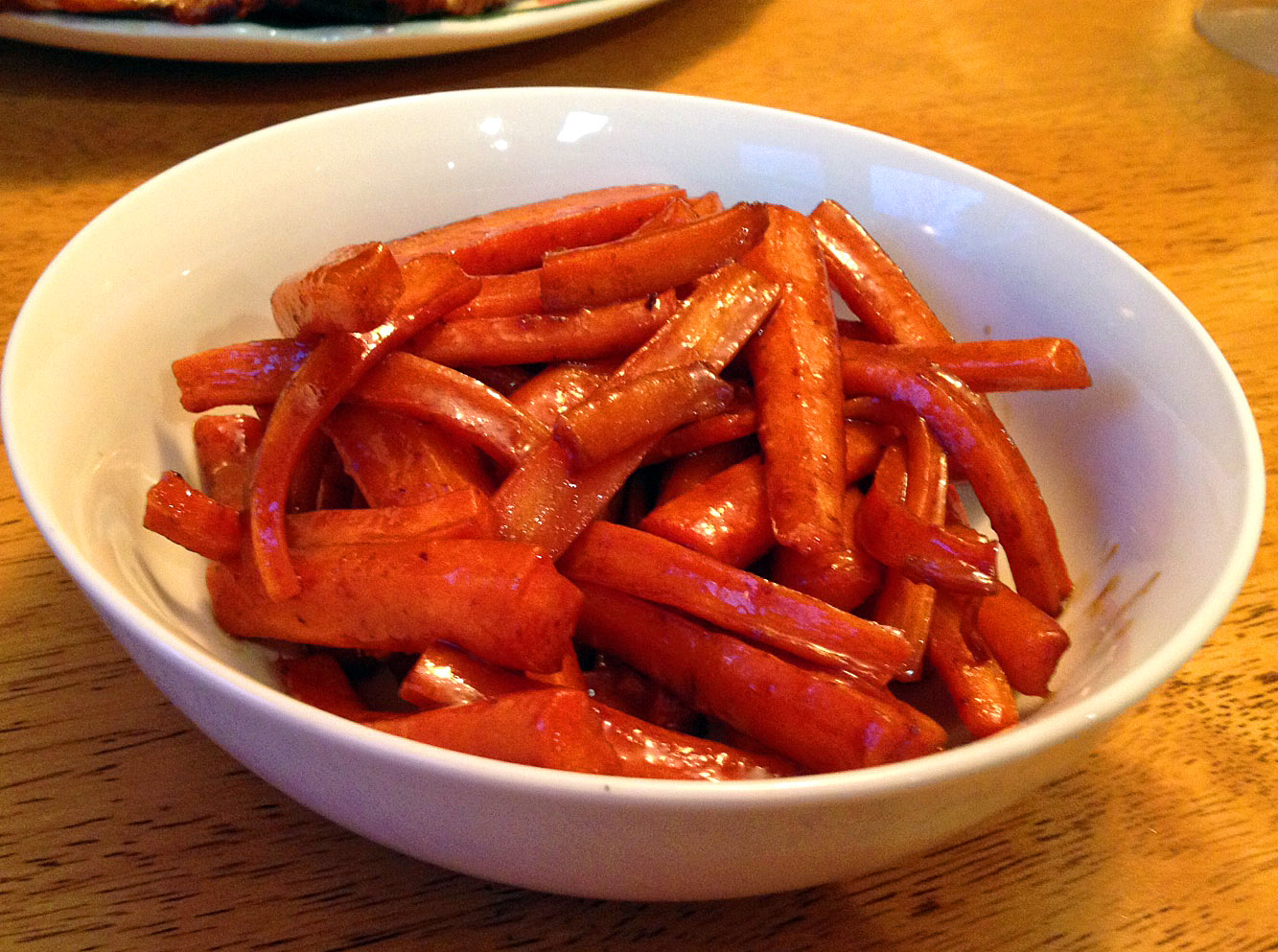
    Carrots Phil and I try to eat a varied diet.  We don’t exclude fats or  carbs, only moderate the intake of overly caloric stuff. Over the years we made some changes in our nutrition that we follow as strictly as possible.  We do the seafood at least once a week, often more.  We limit red meat to once a week. We save desserts for special occasions. Recently we decided to increase our consumption of carrots. Our goal is to have them as a side dish twice/week. Carrots are a fantastic source of beta-carotene, a compound that is metabolized into vitamin A and retinal in humans and other vertebrates. Retinal (vitamin A-aldehyde), is a key compound in the vision process.  Interestingly, carotenes are poorly absorbed from raw carrots. For optimal absorption, the carrots should be cooked, and preferably consumed with a little oil, as carotenes are oil-soluble.  I am sure the cute dog above compensates the poor absorption by maximizing uptake and grabbing each root available in the backyard…   😉  This recipe solves the problems for H.sapiens, as the carrots are roasted with a bit of olive oil. Plus, to pump the “good-for-you” index even further, they are mixed with pomegranates, themselves chock full of nutrients.  Interestingly enough, did you know that both carrots and pomegranates originated in Afghanistan?  That may be why they go so well together!

    served1

    POMEGRANATE MOLASSES GLAZED CARROTS
    (adapted from Bon Appetit)

    8 carrots (any color), halved lengthwise, cut crosswise into 2-inch pieces
    1 tablespoons olive oil
    Salt and freshly ground black pepper
    1 tablespoon honey
    1 tablespoon pomegranate molasses

    Heat oven to 425°. Combine carrots and oil in a medium bowl. Season with salt and pepper and toss to coat. Transfer to a rimmed baking sheet, spreading out in an even layer. Clean any excess oil left in the bowl and reserve it. Roast carrots, turning occasionally, until just tender, 12-15 minutes. Meanwhile, whisk honey and pomegranate molasses to blend in reserved bowl.

    Transfer carrots to bowl with honey mixture; toss to coat well and spread out on baking sheet, scraping out any remaining glaze from bowl. Roast  until glaze is reduced and sticky and beginning to brown in spots, 5-8 minutes longer.

    ENJOY!

    to print the recipe, click here

    I loved this recipe not only for its flavor, but also its simplicity.  At first, I thought that the honey would make it overly sweet, because molasses sound sweet enough to start with. Not the case. The pomegranate component of the molasses wins the battle and the honey is needed to compensate its sharpness.  Since the final roasting takes less than 10 minutes, you can pre-roast the carrots in advance, and finish the dish right before sitting down to eat. I am all for easy during weeknights.

    Note to self: make a lot more carrots than you think you’ll need. Yeah, they are that good…  😉

    Note to readers:  if you are a dog lover and have not been introduced to Dogshaming.com,  make sure to stop by.  My day is not complete without a visit!

    ONE YEAR AGO: Codruta’s Rolled Oat Sourdough Bread

    TWO YEARS AGO: Roasted Corn and Tomato Risotto

    THREE YEARS AGO: Light Rye Bread