A PIE FOR YOUR 4th OF JULY

This year is very special for me, as it will be my first 4th of July as an American Citizen! I went through the Naturalization Ceremony on May 29th, a day I will never forget. Of course, I am looking forward to this weekend…

To share with you our favorite recipe for a very American pie, I introduce a guest blogger: my beloved hubby, who is much MUCH better with sweets and desserts in general than me.

Mom’s cherry pie. I grew up watching the women of the family make all kinds of fantastic sweets in the kitchen, including apple dumplings (mom), fudge (sisters), taffy (grandma), and a whole lot of cakes and pies (mom, grandma, aunt Mildred). I wasn’t a participant or apprentice in the creation of these delicacies, except for stirring the fudge, pulling the taffy or (happily) cleaning the beaters. Nevertheless, the memories gave me the interest to make a few sweet things on my own. Here’s a 4th of July pie that you and your kids will never forget…

4thofJulyPie

The Joy of Cooking is my kitchen bible, and here’s the Rombauer-Becker recipe for a fruit pie
(p. 650 of 2nd ed):

BERRY OR CHERRY PIE WITH FRESH FRUIT

1. Line a pan with pie dough (see below), or buy a frozen crust

2. Prepare, by picking over and washing, 4 cups of berries or fresh sour cherries – let them drain thoroughly or even spread them on a towel to dry. For the 4th of July pie we made two pies, and prepared 4 cups of fresh blueberry filling and 4 cups of fresh cherry filling, then appropriately divided them between the two pies.

3. For each 4 cups of fresh berries or sour cherries, combine 1 cup of sugar, 1/4 cup of flour, 1/12 T lemon juice, ½ t cinnamon, and 2T quick cooking tapioca. Mix and then mix with the berries by gently stirring. If don’t have a source of fresh sour cherries, as we did while living in Michigan (the Traverse City Cherry Festival is Jul. 3-11 this year), then buy a couple of cans and use 3 (drained) cups instead of 4. If the canned cherries are sweetened, then reduce the sugar in the cherry filling to 2/3 cup.

4. Let the fruit mixture(s) sit for 15 min or more while you preheat the oven to 450 F.

5. Fill the pie shell(s) with the berries or cherries. For the 4th of July pie, use a couple of pieces of heavy paper or cardboard to confine the blueberries to one quarter of the pie shell, then take the paper/cardboard out. Cut 2 T butter into pieces and distribute it over the berries.

6. Roll out some dough (see below) and cut lattice strips or the stars and stripes; assemble on the pie

7. Bake at 450 F for 10 min, and then reduce the heat to 350 F for an additional 40 min, until the pie is golden brown.

In case you are tempted to buy a frozen pie crust, please read this article (you can also read it for inspiration). To make the pie dough use your favorite recipe, but if you don’t have one, Sally recommends you use this.

Add to FacebookAdd to DiggAdd to Del.icio.usAdd to StumbleuponAdd to RedditAdd to BlinklistAdd to TwitterAdd to TechnoratiAdd to Yahoo BuzzAdd to Newsvine

Chicken breasts, coffee, and serendipity…

CoffeeBrine
ANY_CHARACTER_HERE
This past week we’ve had high temps above 100F every single day. My Brazilian nature does not mind the heat, quite the contrary, but meals have to match the weather: give me something light, refreshing,  maybe with a hint of spice in the background.  Preferably something I can cook outside on the grill, so the kitchen stays nice and cool. I had some boneless chicken breasts in the fridge, but usually grilling  them would not be my first option: they are so lean, it is easy to end up with dry, chalky-tasting meat. But, where there is a will, there is a way; in this case the way is called “brining”. You can read about the  method here and  here.
ANY_CHARACTER_HERE
For our dinner, I chose a recipe I had made before from Fine Cooking. I remembered that we both liked the way the chicken turned out, but thought that the flavor was just a little bland. Then, my friends,  serendipity hit: the TV was on,  and it so happens that Bobby Flay was showing Giada de Laurentiis how he liked to grill chicken breasts… No, he did not brine it, but before grilling he covered one side only with a mixture of dry spices, or as the lingo goes, a “dry rub”.  If you want to see his recipe, click here.
ANY_CHARACTER_HERE
That pretty much sealed the deal for me. I made a “mix-and-match” version that pleased 100% of the critics (those would be me and hubby, the dogs did not have a chance to taste it, even though they did beg).
ANY_CHARACTER_HERE
Grilled Coffee-brined Chicken Breasts
(adapted from Fine Cooking #59)

1/4 cup kosher salt
1/4 cup packed dark brown sugar
3 cups water
4 slices lemon (1/4 inch thick)
1 Tbs. black peppercorns
1 Tbs. mustard seeds
3/4 cup strong brewed coffee
4 boneless skinless chicken breast halves2 T olive oil
dry rub:
1 T smoked paprika
1  t  ground fennel

To make the brine, combine the salt, sugar, water, lemon, peppercorns, and mustard seeds in a medium saucepan and heat over medium heat, whisking occasionally, until the salt and sugar dissolve, about 5 minutes. Transfer to a medium-large bowl, add the coffee, and refrigerate until cool, about 15 minutes. Put the chicken breasts in the brine and refrigerate for 2-3 hours.

Heat a gas grill to high or prepare a hot charcoal fire.

Make a dry rub mixing the spices. If you don’t have adobo seasoning, feel free to improvise mixing flavors you are fond of  😉  Drain the chicken and blot dry with paper towels. Lightly brush both sides with olive oil, and coat one side with the dry rub mix. No need to make a thick coating, just sprinkle the spices all over. Place the breasts on the grill, spice side down, grill for about 3 minutes, rotate them 45 degrees (do not flip them yet) to get a nice pattern of marks, continue grilling 4 additional minutes. Now flip the breasts and grill 4 minutes with the spice rub up.

Remove from the grill and tent with aluminum foil for a few minutes before slicing at an angle.

but, but… what about the tomatoes?

BBA#8 – CINNAMON ROLLS

cinnamon roll

Moving along in the book, time for some cinnamon rolls!

I confess to having a small mathematical problem while making these. I opted to halve the recipe, but contrary to what I keep telling our students in the lab “always write down your protocol”, I decided  to mentally make the adjustments while adding the ingredients to the bowl. Everything went quite well, until the final, most important addition: water.

I got distracted by the need to warm the filtered water in the microwave, and  completely forgot to cut the amount in half. As the dough turned into pancake batter in front of my very eyes, I felt the all too familiar shiver up my spine; familiar as in “I’ve done this before”. Unfortunately, it was not too long ago, but apparently I did not learn the lesson.

Such is life. I started all over, mumbling to myself  “these better be some outstanding rolls”

click here for more photos and comments

WHEN LIFE GIVES YOU CHARD…

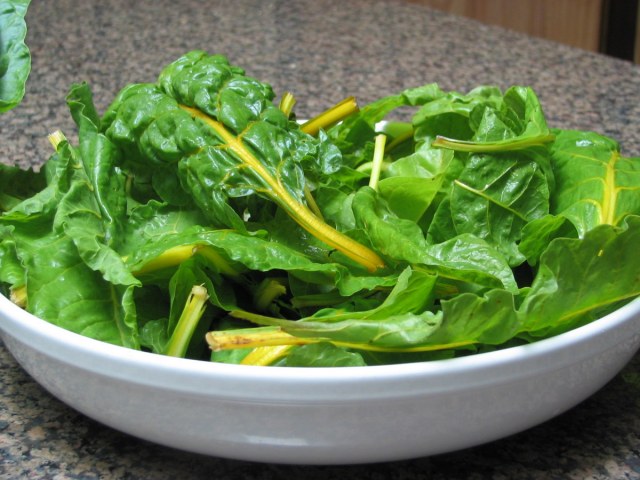
… you open a bottle of Chardonnay!  Yes, of course! But if the chard is as gorgeous as this batch I got last week:

Golden chard

you also need to find the perfect recipe to show it off.  I could have taken the simple route and made a saute to serve over pasta or as a side dish for some juicy grilled steak. But, I am aware that hubby is not as wild about chard as I am, so other possibilities came to mind: a quiche? an open tart? a gratin? I searched for a recipe in some of my cookbooks, but as it happens so often, the internet came to the rescue. I found this recipe and knew it would be a winner. I made a few changes, taking it slightly away from Greece and closer to Italy, to accommodate the ingredients I had around.

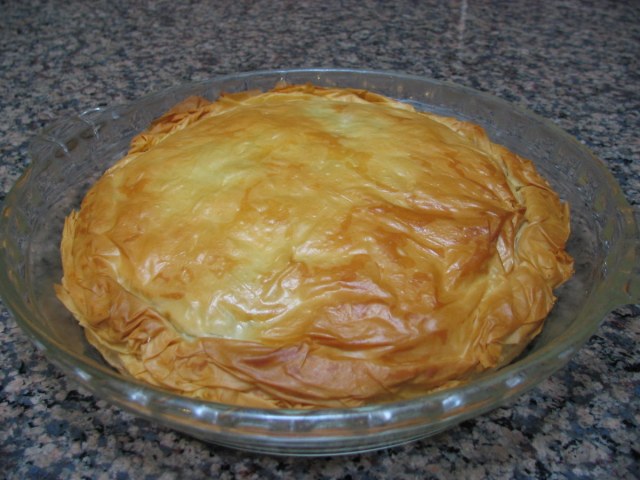
GOLDEN CHARD PIE
(adapted from Martha Rose Shulman’s recipe)

2 pounds Golden chard, stemmed
2 T olive oil
1/2 onion, diced
1/4 cup fresh herbs of your liking (I used basil and lemon thyme)
3 large eggs, beaten
4 ounces whole milk ricotta cheese
black pepper and salt to taste
dash of ground nutmeg
12 sheets of phyllo
olive oil spray

Bring a large pot of salted water to a boil, add the stemmed chard and blanch for 1 minute. Transfer the leaves quickly to a bowl with ice water. Drain and squeeze well. Chop coarsely and set aside.

Heat the olive oil in a non-stick skillet and saute the diced onion until it just starts to get some color. Add the chard, herbs, salt, pepper and nutmeg. Saute for a couple of minutes, remove from heat and allow it to cool.

Beat the eggs in a large bowl, add the ricotta cheese, mix to incorporate, add the saute chard mixture.

Spray a 10-inch baking dish with olive oil, layer 7 sheets of phyllo over the dish, allowing part of the sheets to hang outside (see photos). Spray each sheet with a little olive oil as you place it in the pan.

Add the filling, fold the hanging bits of phyllo over it, then cover the pie with 5 more sheets of phyllo, always remembering to spray some olive oil in between the layers. Tuck the edges into the sides of the pie.

Spray olive oil on the surface, cut 3 or 4 small slits to allow steam to escape.

Bake the pie at 375 F for 40 to 50 minutes, until golden.

Serve hot, warm, or at room temperature.

IMG_1264

more photos and comments, click here

BBA#7 – CIABATTA: judging a bread by its holes

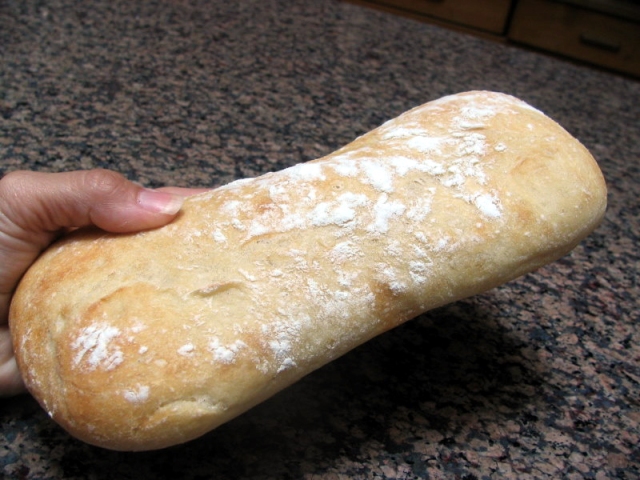
ciabatta1

With this post, I finally join as a blogger the crowd of bakers  who are taking  “The Challenge“. You can see the other breads, made before this blog was launched, by clicking here.

Ciabatta is one of my favorite kinds of bread.  A friend of mine (you know who you are…) says she does not understand this fascination with holes in the bread, as obviously where there is a hole, there is NO bread. What can I say? I love the texture, the look, the “feel” of a bread invaded by holes…

I have made ciabatta in the past, but never this particular recipe. Peter Reinhart gives us a choice, ciabatta made with “poolish” or “biga”.  No need to panic, those are simple terms used by bakers, that define a pre-mixture of yeast with water and flour.  In very general terms, a “poolish” contains more water, ends up looking like porridge. “Biga” is thicker, resembles play dough.  Either of  these are incorporated in the final dough, sometimes more yeast might be added to it. For this bread, I decided to use a “poolish”.

The “poolish” is added to flour and more yeast in the bowl of a stand mixer.

ciabatta3

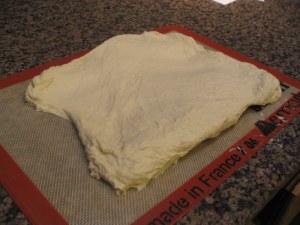
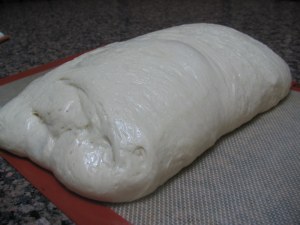
After mixing, the dough is spread in a rectangular shape and folded twice during a few hours of rising. You can see how a dough is folded by clicking here.

ciabatta4

After the first fold, things start to get really smooth, but the second fold is what really changes the look of the dough. Notice the nice “bubbly” nature…

ciabattafold

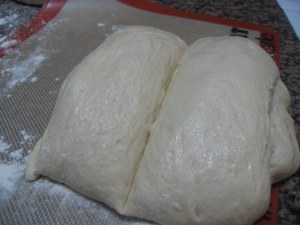
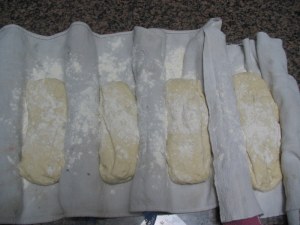
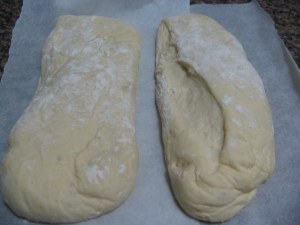
More rising, the dough is cut in pieces, and allowed to rise some more in improvised “couches”

ciabattacutciabattacouche

Ready to go into the oven!

ciabattaoven

click here to see the outcome