DINNER IN A HURRY

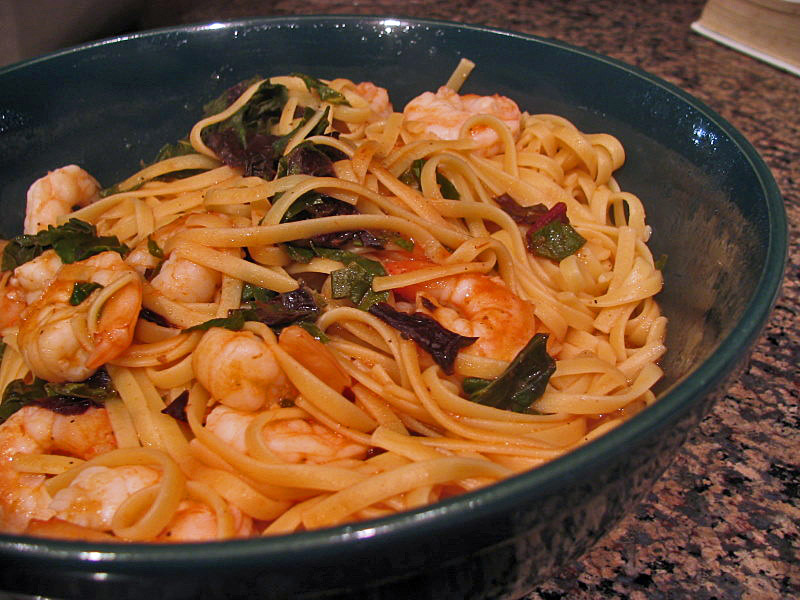
I made this in “desperation-mode”, when there was very little available in our fridge: a bunch of Swiss chard harvested from our garden, and a little over half a cup of tomato puree leftover from another recipe.   All I needed was to defrost a bag of large shrimp, and a quick, tasty dinner arrived at the table!

FETUCCINE WITH SHRIMP, SWISS CHARD AND TOMATOES

dried fetuccine (enough for two)
1 Tbs olive oil
1 shallot, finely diced
big bunch of Swiss chard
12-15 large shrimp
zest of a lemon
tomato puree
salt and pepper

Place a large pan with salted water to boil.

Shred the chard leaves after removing the central, tough stem. If you have extra time, dice the stems and start sauteing them a few minutes before adding the rest of the leaves; otherwise send them to your compost bin.

Heat the olive oil, add the diced shallots, cook for a couple of minutes, add  the chard, season lightly with salt and pepper,  and cook in medium heat until it starts to get soft, about 5 minutes.  Increase the heat to high and add the shrimp.  Cook until they turn opaque, add the tomato puree, lemon zest to taste,  simmer a couple of minutes, adjusting the seasoning with salt and pepper.

Meanwhile, cook the pasta until al dente. Reserve a little of the pasta cooking water, drain the pasta and add it to the skillet with the shrimp mixture.  Simmer everything together to perform the beautiful marriage of sauce and pasta, adding some of the pasta cooking water if necessary.

ENJOY!

to print the recipe, click here

Comments: Normally I don’t add Swiss chard to a tomato based sauce, but this worked so well, I intend to do it again.  Amounts are all very flexible, of course.  Most people will enjoy sauteing  some garlic with the shallots, so go right ahead…

para receita em portugues, siga ate’ a proxima pagina

Continue reading

DUNDEE CAKE BAKE-ALONG

or…. “THE DAY DAN LEPARD TRICKED ME

Maybe some cooks are fearless.  They open any cookbook, pick any recipe, open their cupboards, and make it:  no trauma, no drama.  But, I am not such a cook.  I notice some improvement over the years:   in the past I wouldn’t even attempt  a risotto or a souffle.   But I’m still severely “cake-challenged.”    Nothing infuses me with fear more than the phrase:  “cream the butter and sugar“.    Ever since a painful fiasco with a strawberry genoise “shoe” cake, that I regrettably served at a party back in 2003, I’ve successfully avoided recipes that instruct to beat the butter and sugar into the elusive “creamy” stage.   Why would I even bother?

Fate plays strange tricks, though.

A couple of weeks ago I learned about an internet event – a Bake Along – organized by Dan Lepard (my bread baker guru).  Folks from all over the world connected to “The Guardian” website at 3pm London time, and waited for Dan’s instructions to bake  a  traditional Dundee Cake together.   He posted the ingredients the day before, and the bakers logged in for a virtual group meeting – even a lady from Australia who awakened at 2am to join the party!

Where  I live, the baking started at 9:00 am.  Well,  to be precise it was 9:03 am…. Can you tell that I was ready for it?

I measured the ingredients, prepared the pan and waited for Dan’s first instructions, that  arrived like a  hydrogen bomb overhead:  mix the sugar with the butter and beat until creamy.    WHAAAT?   I re-read it, hoping for a misunderstanding on my part.   Nope.

I looked at my butter, it was not even “softened” (whatever that might be).    I considered quickly logging out, explaining that a tornado was headed my way, but….  in November?  Who would believe me?  Then, a fellow baker, probably hyperventilating almost as much as me, related that his butter was still cold from the fridge, what was he supposed to do?   “Don’t worry,  Dan responded,  ” heat it until about 1/3  melts, and proceed.”

Maybe that’s why his last tip before we began was…

“Stay calm and relaxed. We’re going to have the best time, ok?”

Yeah, right!  Calm and relaxed I was not.  Still, I took a deep breath, microwaved it slightly, added the whole pitiful blob to the bowl of my mixer, dumped the sugar on top, and…… beat it.  To my amazement,   IT WORKED!!!

I suddenly realized that I hadn’t  done it correctly before.  Maybe my butter was too cold or  my sugar too coarse (this time I used superfine), but  on this occasion it worked!

Thrilled, I moved on, adding the eggs, the  marmalade, the dried fruits…

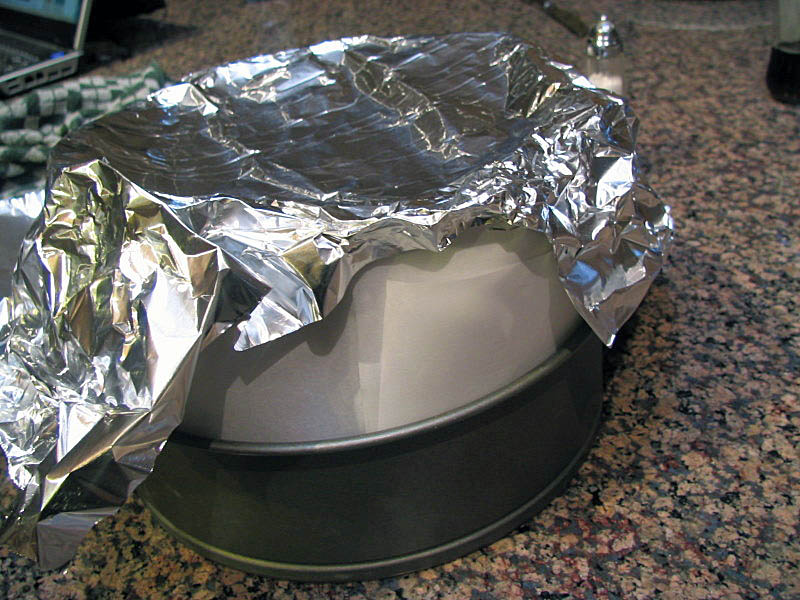
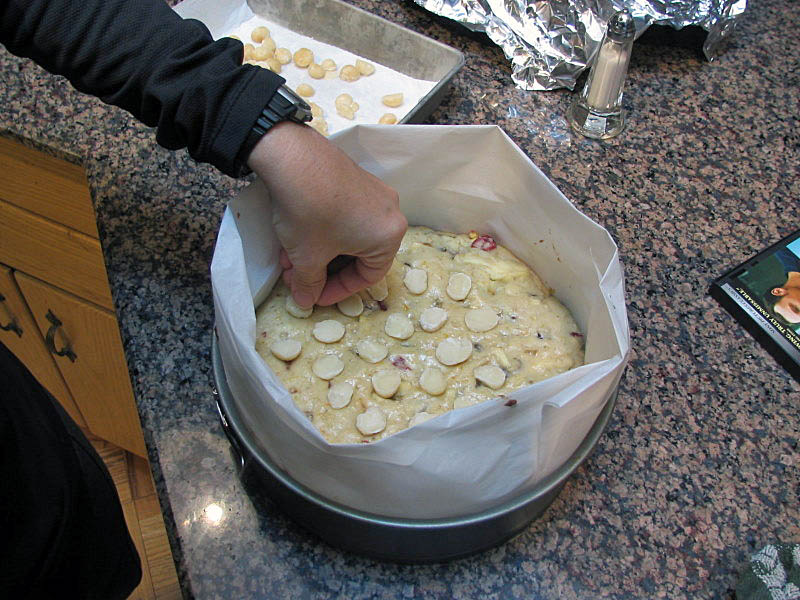
This  cake baked in two stages:  first a partial bake covered with foil to generate steam,  and then after removing the foil, nuts were added on top and the baking resumed, uncovered, for the remaining  time.   I couldn’t find whole blanched almonds to cover the fruitcake, so I used macadamia nuts instead.  My cake wasn’t as beautiful as those with the nicely distributed almonds, but it tasted great!

Beautiful cake or not, having survived the “cream the butter with sugar” battle, I was happy….

Maybe for the most part I was not calm and relaxed, but… I did have the best time that Sunday!

You can see the work of all my virtual friends by following the pictorial show organized by Dan and his crew in London, by clicking here

Verdict: A wonderful fruitcake indeed!  I was planning to eat a few slices and then add Port wine to some of it, wrap and store.  But there were only crumbs left next day…  Next time I will make it in small loaf pans, and save a couple to taste later.

get the recipe after the jump, or by visiting Dan Lepard’s blog
jump for recipe

BBA#29: PUGLIESE

Pugliese, as the name indicates, is a bread typical from Puglia, a region in the south of Italy. The bread is supposed to be quite crusty, perfect for olive oil tasting. Peter Reinhart’s recipe, like many others in the book, calls for a biga, prepared the previous day, and placed in the fridge overnight. For reasons absolutely out of my control, my biga stayed the whole night at room temperature instead of going to sleep in the fridge. I debated whether to go ahead with the recipe or start all over, but decided to go for it.

Other than forgetting to put the biga in the fridge… 😉  I had no issues with the recipe.  But, maybe my mistake contributed to a crumb texture a lot tighter than that shown on the book.  Still, it tasted very good, a little chewier than a regular Italian bread.   Once the BBA Challenge is over, I will revisit this recipe for sure!

Check out my fellow bakers’ take on Pugliese, by visiting:

Txfarmer’s blog here,

Oggi’s blog here

PUMPKIN PIE, LIGHT AS A FEATHER


My first Thanksgiving was in 1986, the date that also marks my first encounter with a pumpkin pie. Not knowing exactly what to expect, I overindulged in the turkey, the dressing, the mashed potatoes AND the gravy, so that by the time dessert arrived, I was absolutely full. Not to be rude to my hosts, I accepted a small piece, but even that was not easy to negotiate, as the pie was heavy and sweet.  For  years I avoided pumpkin pie, until my husband convinced me to give it another chance.   He makes it from the recipe in the second edition of the Joy of Cooking, but he’s adamant about the use of fresh pumpkin in the filling.

This year was the first time I made it all by myself. If you think “light-as-a-feather pumpkin pie” is an oxymoron, then think again and give this one a try.    Now I can’t conceive of a better way to finish Thanksgiving dinner.

PUMPKIN PIE
(adapted from Joy of Cooking, second edition)

2 cups cooked pumpkin (see comments)
1 + 1/2 cup evaporated milk
1/4 cup brown sugar
1/2 cup white sugar
1/2 tsp salt
1 tsp cinnamon
1/2 tsp ground ginger
1/4 tsp ground nutmeg
2 slightly beaten eggs

Heat the oven to 425F.
Mix all the ingredients very well and pour the mixture into a pie shell. Bake for 15 minutes, reduce the heat to 350F and continue baking for at least 45 minutes longer, until a toothpick or a knife blade inserted in the center comes out clean. Serve with slightly sweetened whipped cream.


to print the recipe, click here

PIE CRUST
(from Cook’s Illustrated)

2 1/2 cups all-purpose flour
1 tsp salt
2 Tbs sugar
12 tablespoons very cold unsalted butter, cut into small cubes
1/2 cup cold vegetable shortening, cut into 4 pieces
1/4 cup cold vodka
1/4 cup cold water

Mix the flour, salt, and sugar in a large bow. Place the very cold butter and shortening on top and quickly incorporate them into the flour using a pastry cutter, until they have the size of small peas. Add the vodka and water over the mixture and with a rubber spatula fold the mixture pressing it down to form a dough that sticks together. Divide the dough into two balls, flatten them into a 4-inch disk, wrap them separately in plastic and refrigerate for at least 45 minutes, or up to 2 days.

Remove one of the disks from the fridge, roll it out in between two plastic sheets, place it inside a pie dish. For the pumpkin pie, only one disk will be used, the remaining can be frozen.

jump for comments

TROUBLE-FREE PIZZA DOUGH

Believe me, I’ve tried plenty of recipes for pizza made from scratch. But I always return to this particular version from Fine Cooking magazine.   The dough comes together in minutes in a food processor, and even though I’m a huge advocate for making dough by hand, once I tried this method, I was sold.

EASY PIZZA DOUGH
(from Fine Cooking, issue 49)

1 package (2 + 1/4 tsp) active dry yeast
1 +1/2 cups very warm water (110F)
18 ounces all purpose flour (4 cups)
1 + 1/2 t salt
2 T olive oil

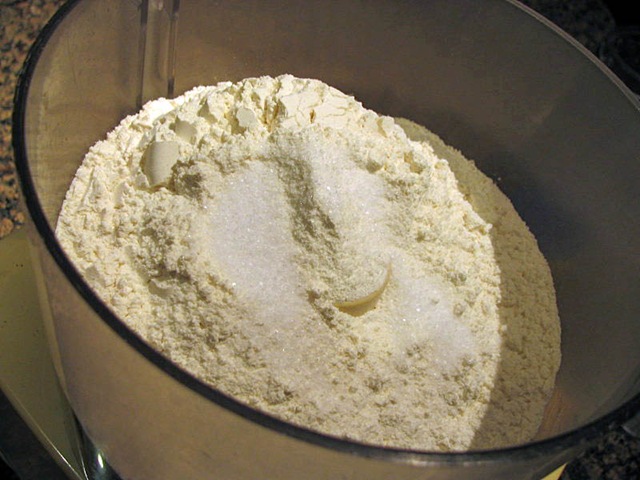
Measure the water in a pyrex bowl, sprinkle the yeast on top, and mix gently to dissolve. Add the flour and salt to the bowl of a food processor and process for a few seconds to mix well.  With the processor running, add all the water/yeast mixture. Process for about 5 seconds, open the lid and add the olive oil.  Close the processor again and mix for about 20 seconds longer.  You want the dough to form a tacky ball, but don’t over process it or it may get too hot.

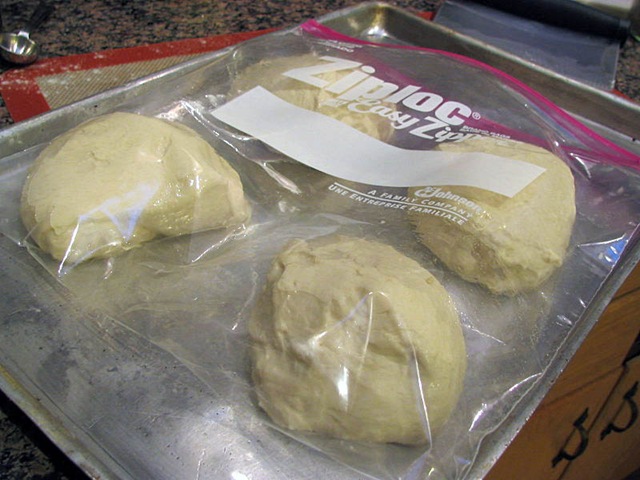
Remove the dough from the processor, knead it a few times by hand and form a ball. If you want to make a  large pizza, leave it whole. If you want to make individual pizzas, quarter it, place them in a large plastic bag and refrigerate until ready to use (from a few hours to a couple of days).

Remove the dough from the fridge 1 hour before shaping the pizzas.  Roll it out with a floured rolling pin, top with your favorite home-made tomato sauce, and the toppings of your choice.

ENJOY!

to print the recipe, click here

Comments: One of my favorite gadgets is a measuring spoon from King Arthur’s Flour, that holds the exact amount of a standard American package of yeast.  I buy my yeast in bulk, so having that spoon saves me a lot of time.

pouring

Sometimes I vary the flour composition of the dough, by including some whole wheat flour (regular or white), or some spelt flour in the mix. Usually I add only 1/8 of the total amount (1/4 cup, keeping the remainder as all purpose flour).  The overall process will be the same, add them to the bowl of the food processor with a little salt, and move on…  Once it gets into a shaggy ball, not quite cleaning the side of the bowl, it will be done…

ingredientsdough

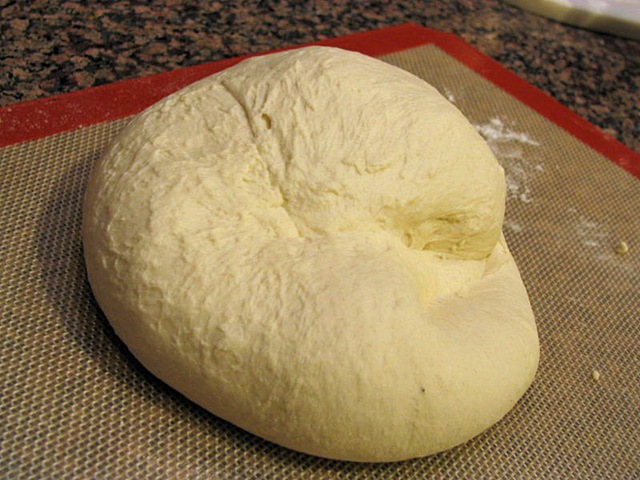
The dough is very smooth, a pleasure to work with… divide it into four balls and place it to rise in the fridge, slowly… for several hours

dough2 4balls

Some people like to get artistic with the toppings….  😉

assembled

We make our pizzas on the grill, using it as an oven – an idea from my beloved husband that works very well. We place quarry tiles (6 of them from the Home Depot) on the grill and turn the gas as high as it will go. The pizzas  sit on the tiles, still on some parchment paper.  After a few minutes remove the parchment paper, and cook the pizzas in direct contact with the tiles until ready – about 8 minutes total, depending on the heat of your grill.

ready2