EGGPLANT TOMATO STACKS

This is pretty much a non-recipe, but a few details made this preparation so delicious, I must share. First of all, you’ll need to use the best juicy large tomatoes you can find. We got heirloom tomatoes that turned out perfect. Slice them thick, no skinny slices. Same goes for the eggplant slices, and once you grill them, 2 minutes per side and you are done. This will preserve some of the eggplant texture, it won’t go all mushy on you.  I often make the mistake of over-grilling eggplant. It gets bitter and limp. No bueno city.

Eggplant Stacks

EGGPLANT TOMATO STACKS
(from the Bewitching Kitchen)

1/4 cup olive oil
juice of half a lemon
Herbes de Provence to taste
salt and pepper to taste
2 big Heirloom tomatoes
1 medium eggplant
4 slices of mozzarella cheese

Make the dressing by mixing the olive oil, lemon juice, herbs, salt and pepper. Whisk well to emulsify.

Cut the eggplant in thick slices and brush each side with some of the dressing.  Reserve.  Slice the tomatoes, place over a platter and brush each slice very slightly with the dressing.  Reserve.

Grill the eggplant two minutes per side on a very hot grill. While hot from the grill, assemble the stacks, starting with a thick tomato slice, then a slice of hot eggplant on top. Add a slice of mozzarella, continue stacking the veggies. Top with a thin mozzarella slice, and drizzle any dressing leftover on top.  Add a tad more salt and serve.

ENJOY!

to print the non-recipe, click here

Comments: Sometimes simplicity is all you need in life. I didn’t anticipate making a post about this dish, but considering how much we both loved it, I had to share.  Resist the idea of melting the mozzarella on top by running the dish under a broiler or something.  It’s all a play with contrasting temperature and texture. The tomato will be just barely warm from cozying up with the grilled eggplant, and that will intensify its taste in a delightful way. I said it once, but will say it again, do not grill the eggplant to death. Assemble the stacks, bring them to the table, and pair them with any main dish you feel like it. I suppose two of these stacks could work well as a light meal. If you have some bread with it, even better. Some leaves of fresh basil in between the layers would be a nice touch, which unfortunately I thought about only a couple of hours later.  Such is life…

I hope you’ll give this a try before summer is over…  (typing this last phrase just about sent me into a crying fit. I am such a sensitive creature…)

ONE YEAR AGO: The Couscous that Wasn’t

TWO YEARS AGO: Apple-Cinnamon Bread

THREE YEARS AGO: Blueberry Galette

FOUR YEARS AGO: In My Kitchen, August 2011

FIVE YEARS AGO: Journey to a New Home

SIX YEARS AGO: Friday Night Dinner

ROASTED RED PEPPER-WALNUT DIP WITH POMEGRANATE

Are you familiar with Muhammara, a flavorful Middle Eastern red pepper dip? This concoction is similar but not quite the same. The addition of dates gives it a sweeter note, and the use of pomegranate juice is also a departure from the classic.  I made it for a dinner party we hosted not too long ago, and served it with Ka’kat bread. Perfect partner for the dip.  The recipe comes from Martha Stewart, and contrary to my expectations, there were problems. In fact, it was almost a disaster, but my beloved husband saved the show and thanks to his advice, the dip did not metamorphose into soup. And guess what? This is Paleo-friendly, so if you are into it, feel free to dig in!

Red Pepper Walnut Dip

ROASTED RED PEPPER-WALNUT DIP WITH POMEGRANATE
(from Martha Stewart)

4 pitted dates
3 chopped roasted red peppers
1/2 cup pomegranate juice (use less: see my comments)
1/2 cup toasted walnuts
1/2 teaspoon red-pepper flakes
2 tablespoons extra-virgin olive oil
Coarse salt and freshly ground pepper
Pomegranate seeds (optional)

Soak dates in hot water until softened, about 10 minutes; drain. Pulse dates, red peppers, pomegranate juice, walnuts, and red-pepper flakes in food processor until smooth. With machine running, slowly add olive oil until thoroughly combined. Season with salt and pepper.

Dip can be stored in refrigerator in an airtight container up to 3 days.

Garnish with pomegranate seeds, if so desired.

ENJOY!

to print the recipe, click here
composite2

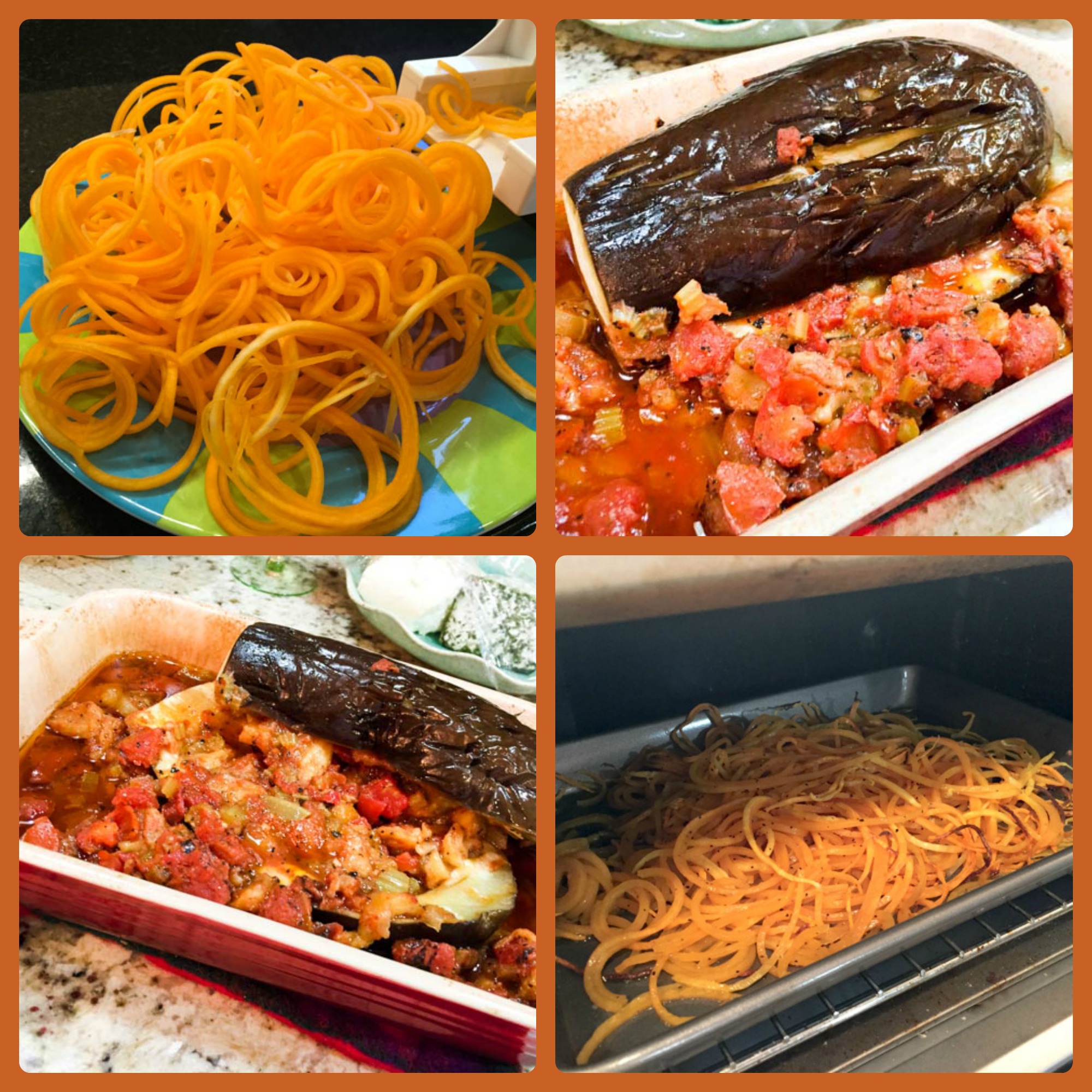
Comments: Don’t let my almost disaster stop you from making this dip, it was delicious!  However, I even left feedback on Martha Stewart’s website stating that there are problems with the recipe as published. No way 1/2 cup of pomegranate juice will work. I actually roasted more bell peppers than the recipe called for, and it was still pretty much a soup once I was done processing it.

In complete despair, I told Phil that we would have to settle for store-bought hummus for our dinner party because the dip was ruined, but he did not even blink: put it in a sieve to drain, it will be alright.  He is simply the most optimistic human being ever, nothing brings him down.  Take golf, for instance. He faces each shot, no matter how tough, with full composure. Moi? I start shaking uncontrollably when my golf ball goes into a bunker (the golf balls I play with have a mind of their own, did you know that?).  In part because I know how many strokes it will take me to get said ball out of there. But, let’s get back to cooking, a nicer subject.

Following the advice of the resident scratch golfer, I placed the dip inside a small colander lined with a coffee filter, and within 30 minutes it had reached a perfect dip consistency.  Tragedy averted! I struck gold in March 07th, 2000.

😉

ONE YEAR AGO: Lemon-Pistachio Loaf

TWO YEARS AGO: Roast Beef French Dip Sandwich with Green Pea Pesto

THREE YEARS AGO: Asparagus Pesto

FOUR YEARS AGO: Chocolate and Chestnut Terrine

FIVE YEARS AGO: Under the spell of lemongrass

SIX YEARS AGO: Greens + Grapefruit + Shrimp = Great Salad!

TOMATO TATIN

One of my favorite desserts is the classic Tarte Tatin, a delicious upside-down apple pie originated in France in the 1880’s. I made it quite a few times before my blogging days, and often tell myself that I should bake one “for the blog.” You know, I am unselfish that way. But after reading a cooking forum in which people raved about a savory version of the classic, I had to make it. Roasted tomatoes with a touch of herbs and cheese are covered with a buttery dough, baked, and inverted on a platter for a stunning presentation… If some tomatoes  stick to the pan, no need to use crass language, gently scoop them out and coach them into the original position. After all, it is supposed to be rustic, so small boo-boos are forgiven…

Tomato Tatin
TOMATO TATIN
(adapted from Whip +  Click)

for the dough:
205 grams (1+1/3 cup) flour
1/2 teaspoon sea salt
118 grams (8 tablespoons) chilled butter, cut into cubes
1 egg

for the filling:
940 grams (2 pounds) plum tomatoes
olive oil
Herbes de Provence to taste
sea salt and pepper to taste
1 large leek, washed and thinly sliced
grated Parmigiano cheese

Make the dough: Sift the flour into a bowl. Add salt and cubed butter and work into the flour with your fingers until the butter pieces are no bigger than lentil size. Add the egg and mix until just combined. If it is too dry, add cold water one teaspoon at a time. Chill for 30 minutes.

Prepare the leeks. By sautéing the slices in a little olive oil, season with salt and pepper. Cook it in a very low heat, stirring often until golden brown. Reserve.

Heat the oven at 350 F. Cut tomatoes in half, core and remove the seeds. Coat the bottom of a 10 inch round dish with olive oil and place the tomatoes skin side down all around the pan. Season with salt, pepper, herbes de Provence and drizzle with olive oil. Bake for approximately 30 minutes or until soft.

Before you take out the tomatoes, roll out your dough to a 10 inch round. Spread the leeks on top of the tomatoes, then add an even layer of grated parmesan. Add the dough on top and tuck the edges in. Bake for another 30 minutes or until the dough is golden brown. To unmold, run a knife around the edges and flip onto a serving dish.

ENJOY!

to print the recipe, click here

composite
Comments: This was my first time making this recipe, and I think there is room for improvement. I added a little bit too much olive oil to the tomatoes before placing the dough on top, and the dough itself turned out a tad too oily for my taste.  I also think that for the size of my pan, one or even two more tomatoes cut up would have been better.  They shrink a little during roasting, keep that in mind when you make it and aim for full coverage of the pan. I hope you do try this recipe, by the way. It is very elegant and quite simple to prepare. Perfect to open a dinner as a first course, or to serve for brunch. It is nice at room temperature too, making it possible to prepare it in advance. My kind of recipe, all the way.  I intend to try a lighter version using phyllo dough just for fun… What do you think?

ONE YEAR AGO: Headed to Colorado!  (and there we are again this year…  😉

TWO YEARS AGO: Farofa Brasileira

THREE  YEARS AGO: Thai-Inspired Pork Tenderloin

FOUR YEARS AGO: A yummy Brazilian cake: Bolo de Fuba’

FIVE YEARS AGO:  Summer’s Tomatoes

SIX YEARS AGO: Leaving on a jet plane… 

YELLOW SQUASH SOUP

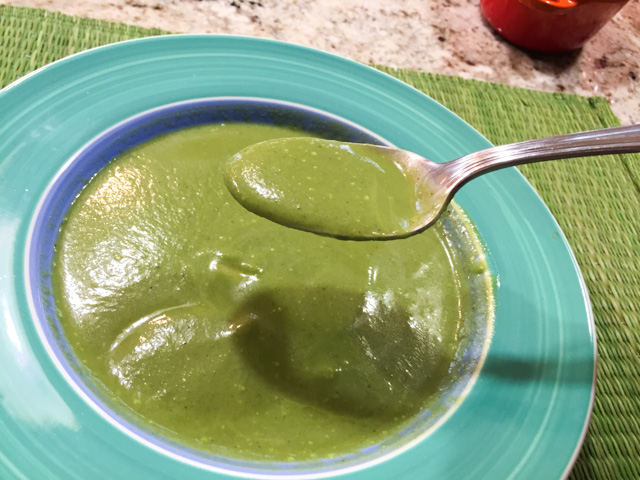
I generally dislike negativism, although admittedly I am not a very optimistic person.  I try to hide it well, though, and keep my assessment of everything that will might go wrong to myself. HOWEVER, the weather lately has pushed me to a dangerous edge, so I shall pout, whine, complain and be generally unpleasant to fellow human beings.  We have rain, then thunderstorms, then more rain. When there’s no rain, we have cloudy skies.  The temperature rarely reaches 75 F, but when that happens I am expected to be cheerful, walk around smiling. Not happening.  Given the bizarre meteorological situation I’m stuck with, I am blogging on soup. Soup. Hot and soothing. In May. I know, pitiful.

Yellow Squash Soup11
YELLOW SQUASH SOUP WITH TARRAGON AND LEMON
(slightly modified from Fer’s site Chucrute com Salsicha)

2 large yellow squash, cut in chunks
1 shallot, minced
1 tablespoon olive oil
1 tablespoon butter
1 tablespoon fresh tarragon leaves, minced
salt and pepper to taste
3 cups chicken or vegetable stock
juice of 1/2 lemon
1/4 cup heavy cream
dash of nutmeg
fresh chives for decoration

Heat the olive oil and butter in a pan, add the shallots and saute until translucent. Add the pieces of squash and cook for 7 to 10 minutes in medium heat.  Season lightly with salt and pepper.  Add the tarragon, chicken stock, and lemon juice.  Mix well, cover the pan and simmer for 10 to 15 minutes.  Off the heat, add the heavy cream and nutmeg, transfer the mixture to a blender and process until smooth.  Alternatively, you can reserve some of the pieces of squash to add later, for texture.

Serve right away with chives (or fresh tarragon) on top.

ENJOY!

to print the recipe, click here

Comments: For those who don’t know, Fer is a Brazilian food blogger who’s been living in the US probably as long or even longer than me. She was also my number one inspiration to start the Bewitching Kitchen, so it feels special to blog about a recipe from her site… Fer shared a post about this soup not too long ago, but my intention was to make it in the fall, when the weather would be more appropriate for it.  However,  the universe conspired against me.  We are at the end of the month of May.  I’ve been unable to wear shorts or flip-flops. End of May.  I had to bring a jacket from storage on more than one occasion. I wore boots three times this month. So there you have it, Yellow Squash Soup for lunch.  At least I can testify that it’s delicious!  This soup will be a regular appearance at our kitchen, and in my next time – when October comes – I intend to use coconut milk instead of heavy cream, just because I think it will be awesome that way too.  If you are faced with adverse meteorological conditions, make this soup, it is bright yellow like the sun that should be shinning outside.

cartoon-calvin-grumpy

Note added after publication…. because I have great friends, I share with you a better cartoon sent to me by the one and only Gary…  yeap, that summarizes it all much better

unnamed-23

ONE YEAR AGO: Grilled Chicken with Tamarind and Coconut Glaze

TWO YEARS AGO: Chicken-Apricot Skewers

THREE YEARS AGO:  Asparagus Quiche

FOUR YEARS AGO: Two-stage Pea and Prosciutto Risotto

FIVE YEARS AGO: Mellow Bakers: Corn Bread

POACHED WHITE ASPARAGUS WITH LEMON AND PISTACHIOS

I have a cookbook recommendation for you: Rose Water and Orange Blossoms, by Maureen Abood, who runs a gorgeous food blog I’ve been following for a while. As I browsed through my Kindle version, I was surprised by the number of recipes I bookmarked, a feature I love in the Kindle reader, actually. Makes it so easy to go back to favorites. So I did that A LOT. I also love when a cookbook mixes just the right amount of prose. Don’t make each recipe a reason to pour your soul out and tell me all about your childhood and that of your close friends, but give me enough to dream about, to make me understand why that recipe is special for you, special enough that you chose to include in your cookbook.  Maureen does just that. The first recipe I made from her cookbook is simple yet very elegant. Poached white asparagus with pistachios. She used pistachio oil to drizzle the dish, I decided to go with my recent acquisition, a blood orange-infused olive oil.  I am quite fond of its color, a soft reddish tone, and I think the taste matched the white asparagus very well.

White Asparagus with Pistachios

POACHED WHITE ASPARAGUS WITH LEMON AND PISTACHIO OIL
(from the cookbook Rose Water and Orange Blossoms)
reprinted with permission from Maureen Abood

Makes 4 servings

1 pound / 450 g white asparagus
Juice of 1 lemon
1 teaspoon kosher salt
2 tablespoons shelled roasted, salted pistachios
4 teaspoons pistachio oil (I used blood orange infused olive oil)
Fine sea salt, to finish

Trim the asparagus by snapping the ends off at their natural break. Peel them from just beneath the tip to the end with a vegetable peeler. Cover the asparagus with water in a large sauté pan. Squeeze the lemon into the pan and add the teaspoon of salt.

Cover the pan and bring the water to a boil, and then reduce the heat to medium-low and simmer for about 20 minutes, or until a spear can be easily cut with a knife and fork. Drain and set the asparagus aside to cool. Remove the thin papery skin on each pistachio to reveal the bright green nut underneath by rubbing the skin off of each nut between your fingers and thumb. Coarsely chop the pistachios.

Divide the asparagus among four individual salad plates, or pile them, all facing the same direction, on a platter. Sprinkle the pistachios across the center of the asparagus crosswise, forming a line. Drizzle everything with pistachio oil, and finish with the sea salt.

ENJOY!

to print the recipe, click here

whiteasp

Comments: White asparagus will always make me think of a trip to Germany many years ago. We were living in Paris at the time, and went for a little scientific mission to a couple of cities in Germany. We arrived at the peak of asparagus season and one restaurant in particular had pretty much all dishes centered on them. I still remember a gratin of white asparagus and ham that blew my mind, it was superb! Until I got Maureen’s book, I confess to butchering my share of white asparagus when trying to cook them at home. It never occurred to me that these pale white creatures need to be treated differently from their siblings, the ones allowed to grow under full sun. Maureen gives two simple tips for success: peel them all the way from the bottom to the region right below the tips. And cook them gently but for a longer time. I was amazed at the difference these two little modifications brought to my culinary life.

rwob_cookbook

Now, back to Maureen’s book. So many dishes I want to cook from it, it’s not even funny…  Doesn’t “Flower Water Syrup” make you go in a dreamy daze? Many of her recipes are simple but join unexpected flavors, leaving you with that feeling of “why didn’t I think of that?” For instance, Warm Dates with Almonds and Lime Zest… I just know it will be an amazing recipe. Or… Tahini Avocado?  Za’atar Roasted Tomatoes? It all sounds perfect.  And to me, nothing is better than a great kibbeh, I love it. She shares her classic version of Baked Kibbeh, and one particular recipe I had a few times in Brazil and find spectacular: Yoghurt-Poached Kibbeh.  You may think it is strange, but trust me, it is the best kind. I guess I was lucky to grow up in São Paulo where we have many great Lebanese restaurants, some pretty close to the university where I studied. Still on the kibbeh front, Maureen offers several variations that were unknown to me: Fried Kibbeh with Mint Butter, Vegan Tomato Kibbeh, and Potato & Spinach Kibbeh. But I will tell you what will be my next recipe for sure: Whipped Hummus with Minced Lamb. One little tip she gives in that recipe is worth my weight in chickpeas. But I share no more. You will have to invite her book to join your collection, and that will be a very wise move. Go for it with a simple click here.

Maureen, thank you for allowing me to publish your recipe, and best of luck with your cookbook!

ONE YEAR AGO: Dan Lepard’s Saffron Bloomer

TWO YEARS AGO: Fesenjan & The New Persian Kitchen

THREE YEARS AGO: Quinoa Salad with Roasted Beets

FOUR YEARS AGO: Pasta Puttanesca

FIVE YEARS AGO: Miche Point-a-Calliere