ISRAELI COUSCOUS SALAD

For a long time Israeli couscous was hard to find, and I only enjoyed it in restaurants, or by placing special orders online.  Now it’s available almost everywhere!   Even one store in our small town carries it in bulk, so I buy as little or as much as I want.  Heads up: when you  buy Israeli couscous in bulk, make sure to tie the plastic bag very well, and handle it with loving care.  Those cute little balls of semolina flour travel long distances when spilled on the floor. It’s amazing the lessons a cook learns! 😉

Israeli couscous has an interesting history. It indeed originated in Israel,  in the 50’s,  with the name of “ptitim.”  It was conceived in a time of austerity, as an attempt to deal with the scarcity of food, including the almost complete disappearance of rice.  Back in Israel it remains a popular food item for kids, available in all sorts of cute shapes, like stars and hearts, to please the young audience.  Abroad, Israeli couscous became a trendy gourmet ingredient, as we all know well.  It’s versatile and has less tendency to form lumps than regular couscous. It can be dressed up in countless ways and it’s equally tasty warm or cold, as in this delicious salad, adapted from a recent issue of Food and Wine.

ISRAELI COUSCOUS SALAD WITH ARUGULA PESTO
(adapted from Food and Wine magazine)

6 cups packed arugula (6 ounces)
2 cups Israeli couscous (12 ounces)
2 Tbs extra-virgin olive oil
1/3 cup full fat yoghurt  (or low fat if you prefer)
1/4 cup pine nuts
1 garlic clove, chopped
1/4 cup freshly grated Parmigiano-Reggiano cheese
Salt and freshly ground pepper
1 cup red cherry tomatoes, halved
1 English cucumber, peeled and diced

Bring a large saucepan of salted water to a boil. Add the 6 cups of arugula and blanch for 10 seconds. With a slotted spoon, transfer the arugula to a colander. Rinse under cold water to stop the cooking, drain well and reserve.

Add the couscous to the boiling water and cook over moderately high heat, stirring occasionally, until al dente, 8 to 10 minutes.  Taste to make sure you don’t overcook it.  Drain, and spread on a large baking sheet, drizzling with a very small amount of olive oil (use a spray bottle if you have it) to prevent the little balls from sticking. Let it cool to room temperature.

In a small skillet, toast the pine nuts over moderate heat, tossing, until golden brown, about 2 minutes. Let cool.

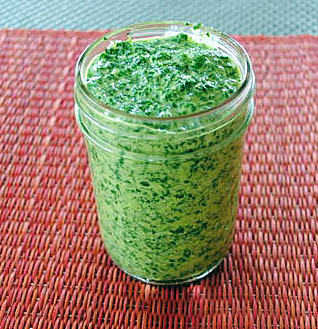
Squeeze the excess water from the arugula, coarsely chop it, and place it in the bowl of a food processor. Transfer the arugula to a food processor. Add the pine nuts, garlic, cheese and the 2 Tbs of olive oil, processing until the arugula and pine nuts are chopped. Immediately add the yogurt, process until smooth, and season with salt and pepper to taste.

Transfer the couscous to a large serving bowl and stir in some of the pesto, using as much or as little as you like.  Gently fold in the tomatoes and cucumber pieces.  Adjust seasoning, and….

ENJOY!

to print the recipe, click here

Comments:  We loved this recipe!   And I’m especially happy about my modifications of the arugula pesto.  Purists may roll their eyes, but I reduced the fat content of this baby to levels previously unknown to mankind!  Imagine my audacity, going from 1/2 cup of olive oil in the original recipe to 2 Tbs  olive oil  + 1/3 cup of yogurt!  That, my friends, is a drop from 954 calories down to 175.   I am not a fat-o-phobe, but I’ve played with yogurt and buttermilk long enough to learn that they often substitute well for oil, as illustrated in this example: the acidity in the yogurt kept the arugula bright and it added an interesting sharpness to the pesto.   Of course, you may also ignore my adaptation and use the full amount of olive oil. As Emeril Lagasse says, “…you won’t hurt  my feelings.”   😉

Olive oil is one of the healthiest options among fats, but any fat packs a huge load of calories.  If you struggle with weight issues (who doesn’t?), then be attentive to the amount of olive oil in your recipes and restaurant foods.  Salads are deceptively high in calories. Consider asking for dressing on the side, and use it sparingly.  Another dangerous option that seems healthy and light:   buffet platters of grilled veggies, such as eggplant and zucchini. They are  prepared with a substantial amount of olive oil, and eggplant in particular soaks it up like a sponge.  Be aware, make the right choices, and exercise portion control.  When you’re cooking at home try my low-cal pesto and see what you think.  It’s good to splurge with the real thing sometimes, but it’s also wonderful to find an alternative that makes you feel good when you leave the table.  😉

ONE YEAR AGO:  Heavenly Home-made Fromage Blanc

TWO YEARS AGO:  Pasta with Fresh Tomato Sauce

Add to FacebookAdd to DiggAdd to Del.icio.usAdd to StumbleuponAdd to RedditAdd to BlinklistAdd to TwitterAdd to TechnoratiAdd to Yahoo BuzzAdd to Newsvine

COUSCOUS SALAD WITH ZUCCHINI AND PINE NUTS

From one of the latest issues of Food and Wine magazine, this recipe was the only bright spot on a day in which everything that could go wrong (in the lab) went wrong.  But, as we were driving through intense Los Angeles traffic that Thursday, I knew that getting home and making dinner would improve my mood.  It always does, actually.  Especially if I already have it all planned and laid out in my mind, which was the case that day.

COUSCOUS SALAD WITH ZUCCHINI AND PINE NUTS
(adapted from Food and Wine, May 2011)

1 cup diced zucchini
2 Tbs olive oil
salt and pepper

1 cup couscous
1 cup boiling water

3/4 cup frozen peas
1/2 cup water
2 Tbs lemon juice
2 Tbs olive oil
1/2 cup pine nuts, lightly toasted
fresh mint and parsley, minced
salt and pepper to taste

Heat the olive oil in a non-stick skillet and sautee the zucchini until golden.  Season lightly with salt and pepper. You can prepare it in advance and keep it in the fridge.

Pour 1 cup of boiling water over the couscous in the bowl you intend to serve the salad. Cover with plastic wrap and let it sit at room temperature for 5-10 minutes as you prepare the rest of the recipe.

Boil the peas for 2 minutes, drain, reserving 1/4 cup of the water.  Add the lemon juice and olive oil, a little salt, to the reserved pea water, and whisk well.  Fluff the couscous with a fork, pour this dressing over it, mixing it well.  Gently mix in the cooked peas, reserved zucchini, toasted pine nuts, and fresh herbs.  Taste, adjust seasoning with salt and pepper, and serve.

ENJOY!

to print the recipe, click here

Comments:  Next time, I will dice the zucchini in slightly larger pieces, because I’d like their presence in the salad to be a little more obvious, not only visually, but also in texture.   I love the popcorn-y taste of pine nuts, but you can use almonds (as in the original Food and Wine version), or walnuts.  Make sure to toast them first.

It is crucial to let the zucchini get some color, so I like to leave it undisturbed in the sautee pan for a couple of minutes, before moving the pieces around.

This could be a nice vegetarian entree, as couscous is very filling, but we enjoyed it next to a juicy, grilled chicken breast.    And that was a perfect antidote for  the “lab-blues.”  😉

ONE YEAR AGO:  A Simple Salad a la Jacques Pepin

Add to FacebookAdd to DiggAdd to Del.icio.usAdd to StumbleuponAdd to RedditAdd to BlinklistAdd to TwitterAdd to TechnoratiAdd to Yahoo BuzzAdd to Newsvine

THE END OF GREEN BEAN CRUELTY

I’m talking about THIN green beans, of course…   😉

We learned about Michel Richard firsthand, at his wonderful, exciting restaurant Central in Washington DC.  What a delicious experience it was! The bread – that keeps coming to the table, always warm and impossible to say no to – and the gougeres alone are worth stopping by.  In his book Happy in the Kitchen, Michel Richard comments  that  most recipes for green beans cook them in boiling water, then quickly shock them in an ice-bath. However, he adamantly opposes this method when dealing with pencil-thin green beans. They are so delicate, so why would anyone furiously boil and shock the poor things, leaving them limp and lifeless?

I’ve been guilty of such green bean cruelty more than once, but I won’t ever do it again. When prepared  by Michel’s guidelines, they are simply irresistible, even served without any embellishments. However, pairing these beauties with small roasted tomatoes didn’t hurt them a bit.

GREEN BEANS WITH ROASTED TOMATOES
(from the Bewitching Kitchen)

for the green beans:
a bunch of pencil-thin green beans (amount enough for two)
1 Tbs olive oil
pinch of red pepper flakes
1/2 tsp orange zest
salt and pepper to taste

for the tomatoes
1 cup of grape tomatoes, cut in half
drizzle of olive oil
drizzle of balsamic vinegar
salt and pepper to taste

Start by roasting the tomatoes.  Spread them in a single layer on a small baking sheet lined with foil or parchment paper for easy clean up. Drizzle some olive oil and balsamic vinegar, shake them around, and season with salt and pepper.  Place in a 400 F oven until they get soft and start to brown around the edges, 20 to 25 minutes. Reserve, keeping warm.

Heat the olive oil in a non-stick skillet, add the red pepper flakes and the orange zest.  Keep in a gentle heat for a couple of minutes, until the mixture starts to get fragrant.  Increase the heat, add the green beans, and let them cook for a few minutes undisturbed, so that they get a little color where they make contact with the pan.  Stir them around to coat the beans with the flavored oil, and saute for a little while longer, until the beans are cooked through, but still al dente. Don’t overcook! Season with salt and pepper, add the roasted tomatoes on top, and mix gently.  Adjust seasoning, and serve right away.

ENJOY!

to print the recipe, click here

Comments: Michel Richard’s main message is to cook thin green beans straight by sauteing in a small amount of fat.  You can substitute butter or a mixture of butter and olive oil, or use a different type of oil, keep in mind that some – like walnut oil –  burn at a lower temperature, so it’s best to add them close to the end of cooking.

The combination of green beans and orange zest, worked quite well in this recipe,  with the touch of balsamic vinegar brought by the tomatoes.  It was a nice side dish for our grilled flank steak, but if you want a fully vegetarian meal, add some pasta or couscous, a big salad and a thick slice of grilled bread.  It’s  more than enough for a tasty dinner.  Just remember, be kind to the green beans!  😉

ONE YEAR AGO: Torta di Limone e Mandorle

Add to FacebookAdd to DiggAdd to Del.icio.usAdd to StumbleuponAdd to RedditAdd to BlinklistAdd to TwitterAdd to TechnoratiAdd to Yahoo BuzzAdd to Newsvine

DOUBLE ASPARAGUS DELIGHT

Here’s a clever approach that Michel Richard published in his cookbook “Happy in the Kitchen” :  asparagus spears paired with an asparagus “vinaigrette.”   If you love green vegetables, as I do, you will delight in this recipe.  It’s a model of simplicity because it involves so few ingredients, but you must pay attention to the details, and above all, avoid overcooking the spears.  I can’t imagine a better way to welcome Spring!

ASPARAGUS ON ASPARAGUS
(from Happy in the Kitchen)

24 large asparagus
2 Tbs extra virgin olive oil
1 tsp Dijon mustard
1 Tbs fresh lemon juice (I used Meyer lemons)
pinch of  sugar
pinch of salt

Set aside 4 whole spears for the dressing. Cut off the tough bottom ends of all asparagus spears and set those aside for the as well. With a vegetable peeler, peel the remaining asparagus starting about one inch below the tip.

Have a bowl with ice cold water ready.  Steam the asparagus spears for 5 to 6 minutes only, until they are just tender when gently pierced with the tip of a knife.  knife. When the asparagus is cooked, lift the spears with a pair of tongs and plunge them in the ice bath to cool, then remove and dry on kitchen paper or a towel.

Make the asparagus sauce: cut the 4 reserved spears into 1-inch pieces. Place them in a small saucepan with the trimmed asparagus bottoms and add ¼ cup water and the olive oil. Bring it to a simmer, cover, and gently cook for 8 to 10 minutes, or until the asparagus is completely softened. The water should have evaporated, leaving the asparagus  stewing in only the oil.

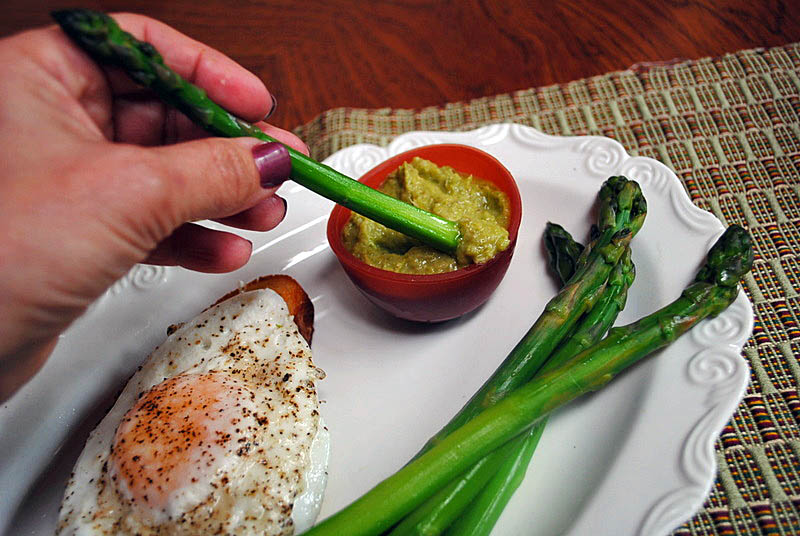
Transfer the asparagus to a blender or food processor and puree it until completely smooth. Transfer the puree to a small bowl and whisk in the mustard, lemon juice, salt, and pepper. Serve the asparagus on a platter, with the vinaigrette in a small dish or ramekin on the side for dipping or dousing the spears.

ENJOY!

to print the recipe, click here

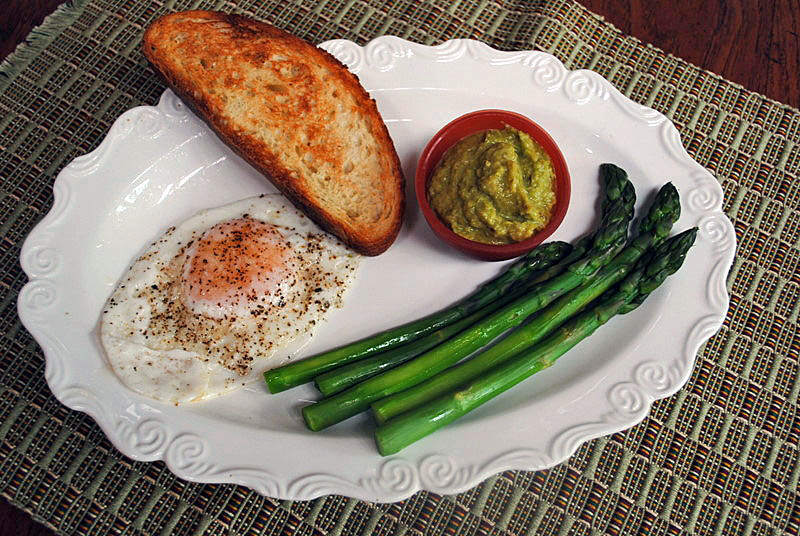
Comments:  Peeling the asparagus may seem like work, but don’t skip it.   Use large asparagus for this dish, and the peeling will ensure a wonderful texture and even cooking.  I enjoyed them as a light lunch with homemade bread and a sunny-side egg, but the dish is also a perfect option as an appetizer at a dinner party.  The asparagus lovers among your guests will never forget it!

The sauce or dressing is an excellent adaptation for the tough ends of the spears, so consider making some whenever you cook asparagus.  I imagine that it will also complement other dishes, like grilled salmon, with a sprinkle of fresh dill on top.  Must try that soon.

The beginning of asparagus season always makes us happy!

ONE YEAR AGOSundried Tomato and Feta Cheese Torte

Add to FacebookAdd to DiggAdd to Del.icio.usAdd to StumbleuponAdd to RedditAdd to BlinklistAdd to TwitterAdd to TechnoratiAdd to Yahoo BuzzAdd to Newsvine

CARROT AND SWEET POTATO PUREE

Potato puree is comfort food “par excellence”. One of my favorite menus on a chilly evening is braised short ribs served over mashed potatoes (I gained about 3 pounds just by typing that sentence! 😉 ) Sometimes I crave that type of side dish, but I’d be happier with a lighter caloric load.

Giada de Laurentiis devised a perfect alternative during her “Light and Fabulous” menu, that paired broiled tilapia filets with a creamy puree of carrots and yams. You can find the recipes for that episode here. The puree has a beautiful, bright orange color, and its taste complements many main dishes.

CARROT AND SWEET POTATO PUREE
(adapted from Giada de Laurentiis)

1/4 cup extra-virgin olive oil
1 medium shallot, diced
1 clove garlic, minced
2 pounds carrots, peeled and sliced
2 pounds sweet potatoes, peeled and cut into 3/4-inch pieces
1 teaspoon salt, plus extra for seasoning
1/2 teaspoon freshly ground black pepper, plus extra for seasoning
2 cups chicken (or vegetable) broth
2 cups water

Heat the oil over medium-high heat in a saucepan. Add the shallot and cook until tender, about 5 minutes. Add the garlic and cook for 1 minute until fragrant. Add the carrots, sweet potatoes, 1 teaspoon salt, and 1/2 teaspoon pepper. Cook for 5 minutes until slightly softened. Add the stock and water and bring to a boil. Reduce the heat and simmer until the veggies are tender, about 25 minutes. Drain the veggies, saving the cooking liquid. Transfer them to a food processor, and puree until still slightly chunky, adding some of the cooking liquid, until you reach the consistency you like. Taste and adjust seasoning with salt and pepper.

ENJOY!

to print the recipe, click here

Comments: Our grocery had sweet potatoes, but not yams, so that’s what I used. Next time I’ll add a touch of ginger to the puree, because it goes so well with sweet potatoes. Maybe a little orange zest too? But even without these additional touches, this puree was an excellent side dish for our grilled, butterflied pork tenderloin. Something about eating bright colored food instantly makes me feel healthy. This puree tastes good, it’s not too heavy, and it gives that  feeling of happy satisfaction at the end of the meal.

Want to make it even faster on a weeknight? Cut the veggies in the morning before work, and save them in the fridge. Small details make life a lot easier when you return home  feeling a little spent. 😉

ONE YEAR AGO: Impromptu Pasta Dinner


Add to FacebookAdd to DiggAdd to Del.icio.usAdd to StumbleuponAdd to RedditAdd to BlinklistAdd to TwitterAdd to TechnoratiAdd to Yahoo BuzzAdd to Newsvine