ALMONDS, A COOKBOOK REVIEW

New Year Resolutions are so much fun to break!  I was doing reasonably well on the “no more cookbooks” scenario, but then I read a post on Taste Food that changed all that.  Lynda announced that her recipes would be featured in a soon-to-be-released cookbook, a collaborative effort with Barbara Bryant & Betsy Fentress.  I did not even blink: pre-ordered it right away at amazon.com.  A full cookbook devoted to almonds, with recipes from one of my favorite food bloggers!  That should not (and will not) count as breaking a decision. I had no choice. It was meant to be.

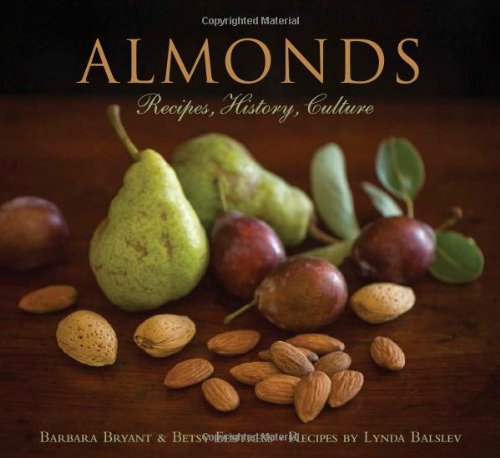
The book is called “Almonds: Recipes, History, Culture“, and you can get it with a simple click here. Disclaimer: I am not affiliated with amazon.com, will receive no compensation whatsoever if you get the book. I just happen to think it is a wonderful publication that my readers will certainly enjoy as much as I did.
513TibFiWyL

Almonds are a favorite ingredient of mine.  Interestingly enough, Lynda opened my horizons to almond butter a year or so ago, when she published a post on cookies using it. I made those cookies, and  have been a huge fond of almond butter ever since.  Clearly, you will all agree that her cookbook had to be in my kitchen. It was meant to be.  Have I said that already?  Hummmm…..   Without further delay, I share with you the first recipe I made from Lynda’s book.
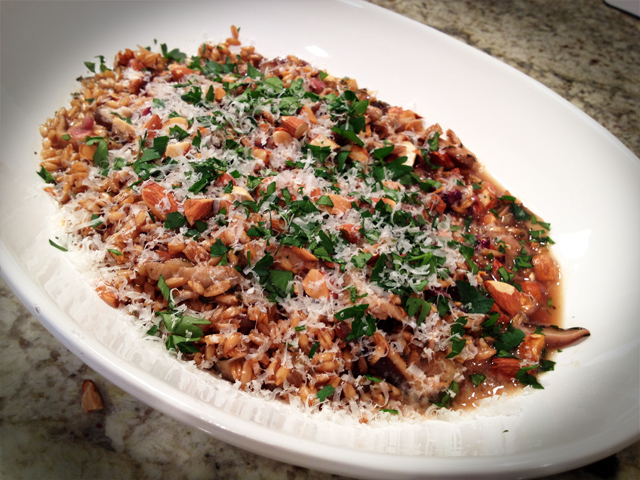
FarroRisotto1

FARRO RISOTTO WITH ALMONDS, SHIITAKE MUSHROOMS AND BALSAMIC-GLAZED RADICCHIO
(from Almonds, reprinted with permission)

2 tablespoons olive oil, divided
1/4 cups (45g) minced shallots
8 ounces (225g) shiitake mushrooms, sliced 1/4 inch thick
1 teaspoon salt, divided
1 clove garlic, minced
1 teaspoon dried thyme
1 + 1/2 cups (300g) farro
1/2 cup (125 mL) dry white wine
1 + 1/2 cups (375 mL) chicken stock
1 small radicchio, cored and sliced
1/4 cup (60 mL) balsamic vinegar
1/2 cup (60g) raw almonds, roasted, and coarsely chopped
1/2 cup (60g) grated Parmigiano-Reggiano cheese
freshly ground black pepper to taste
minced fresh parsley leaves, for garnish

Heat 1 tablespoon of the oil in a large saucepan over medium heat Add the shallot and cook until softened, about 2 minutes. Add the mushrooms and 1/2 teaspoon of the salt. Saute until the mushrooms begin to soften, about 2 minutes. Add the garlic and thyme. Continue to cook, stirring, until the mushrooms begin to release their juices, about 2 minutes more. Add the farro and stir to coat. Add the wine and cook until the liquid is nearly evaporated. Add the stock. Bring to a boil, then reduce heat to low. Cover and simmer until the farro is tender and the liquid is absorbed, about 30 minutes.

While the farro is cooking, heat the remaining 1 tablespoon of olive oil in a large skillet. Add the radicchio and saute for 1 minute. Add the balsamic vinegar and cook, stirring, until vinegar has thickened and coats the radicchio, about 1 minute. Remove from the heat and season with the remaining 1/2 teaspoon salt.

When the farro is tender, stir in the radicchio, half of the almonds, half of the cheese, and season with freshly ground pepper. Taste and adjust the seasoning. Place the farro in a serving bowl, sprinkle with the remaining almonds and the remaining cheese.  Garnish with parsley, and serve immediately.

ENJOY!

to print the recipe, click here
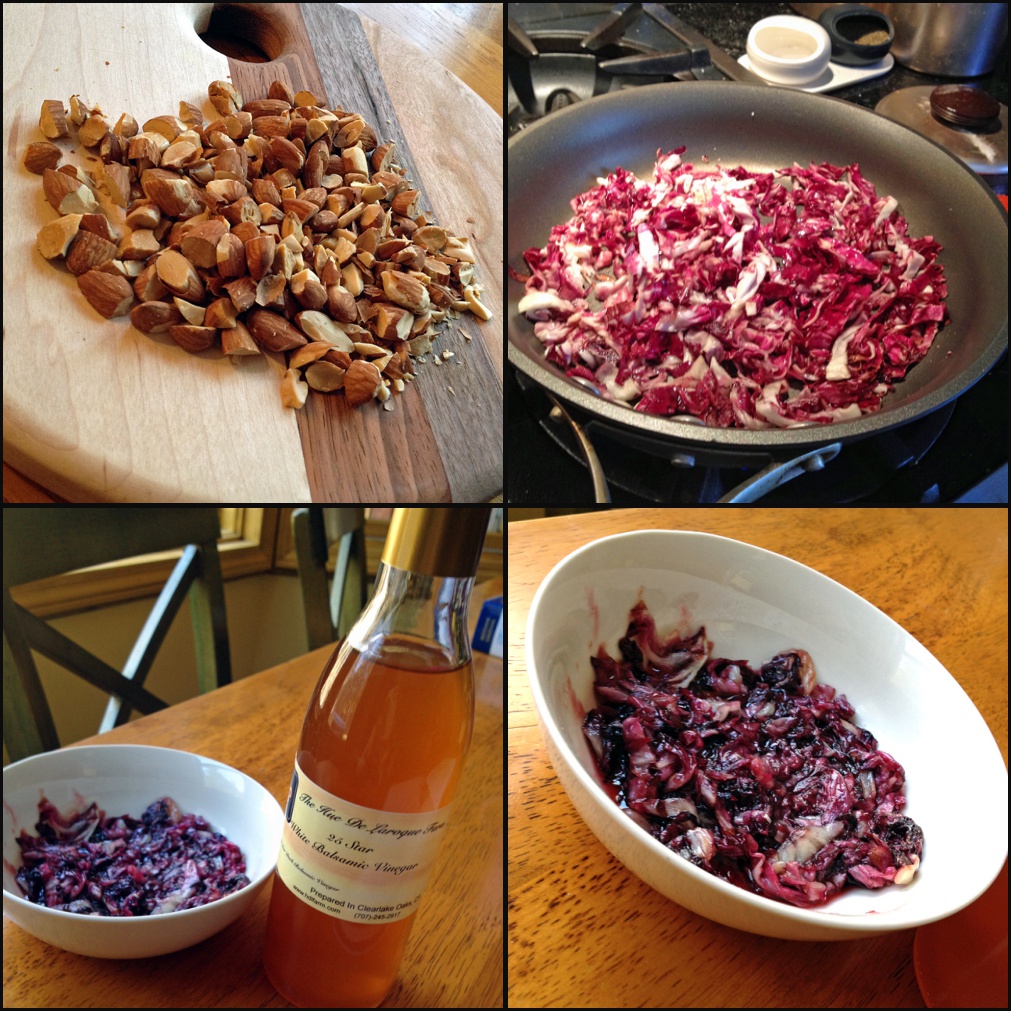
 

composite

Comments:  It took me quite some time to decide which recipe to feature, but I am glad I chose this one, even though I knew it would be tricky to get a good picture. It’s the karma of brown food, so unkind to the camera.  The flavors in this whole-grain risotto are simply spectacular, each component playing an important role, like musical instruments in an orchestra. The grains of farro will have just a little bite left, so the almonds, added in chunks, give this risotto a delightful crunch.  But, in my opinion, the addition of radicchio glazed with balsamic is the touch of genius!  I used a syrupy white balsamic, but I am sure any regular balsamic vinegar will be great too.  Radicchio can be bitter, in this preparation it mellows down and plays nicely with the almonds and the farro. Simply put: a perfect dish, hearty enough to stand by itself as a main dish, but by now you are probably not going to be surprised that we added a little bit of animal protein to our plates.   Sorry, Lynda, I hope you won’t mind…
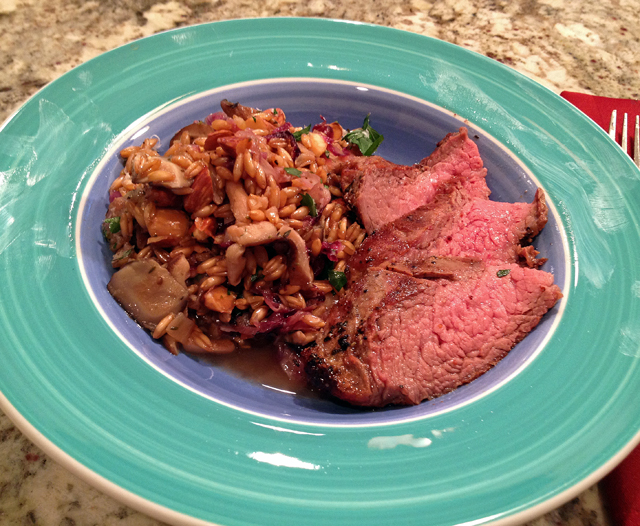
FarroRisottoServed


Let’s take a virtual tour of this beautiful cookbook, shall we? 

The book opens up with an introduction about almonds, in which you will learn a lot about this exotic, versatile fruit, which is in fact not a true fruit, but a drupe.  From its origins in the Middle East, to the way it is farmed today, and its absolute requirement of bees for pollination. Did you know that to make sure the almond trees will bear fruit, farmers in California often have to order special shipments of bees, that travel by trucks sometimes all the way from Texas?  I had no idea. I often skip introductory chapters in cookbooks because I find them for the most part quite boring. For instance, cookbooks that start with “equipment needed”, “ingredients”, or “useful gadgets” just make me roll my eyes to the ceiling and skip those pages without feeling guilty. Not the case in this book. I savored each paragraph and could not put the book down.  The photos in the introduction are spectacular, and that quality is maintained throughout the whole book, almost every single recipe has a photo that goes along with it.  Very few exceptions.

IntroPhoto

And now, onto the recipes.  The book is divided in courses, and I will list the recipes that tempted me the most in which chapter.

Starters & Snacks : Salted and Spiced Green Almonds: this one made me dream, because I probably will never be able to get green almonds. They are available only for a very short time, and I am sure Californians won’t allow them to move too far from their trees…   Burnt Sugar Almonds…  Green Olive and Almond Tapenade: quite a change from the regular black olive concoction… White Gaspacho with Green Grapes and Almonds,  described as light and refreshing, perfect for Summer days. The photo alone made me swoon…  Almond Chai with Dates and Honey... In this page, a reproduction of one of my favorite paintings of Van Gogh, Almond Brunches in Bloom.  A touch of class. In fact, the book is full of reproductions of artwork relevant to the subject.  Humans have been in love with almonds for a very long time, a love absolutely justified.  😉

Salads & Vegetables : I wanted to make every single recipe of this chapter, but just to list a few, here we go: Asian Citrus and Almond SlawProvencal Tuna Salad with Almonds, Olives and Capers in Lettuce Cups…  Winter Kale and Quinoa Salad with Carrots and Raisins (amazing colors!)…  Zucchini Carpaccio with Toasted Almonds.

Soba

Pasta & Grains :   Soba Noodles with Spicy Almond Butter Sauce, depicted in the photo above…  I have a very soft spot for soba noodles, so this was a heavy contender for featured recipe in this post.  But there is also Toasted Pearl Couscous with Almonds and Harrissa (I know this one will be a total winner!), Almond and Saffron Rice Pilaf (a classic),  Bulgur Salad with Chickpeas, Pomegranate Seeds, and AlmondsBuccatini with Pesto Trepanese...

Land & Sea : One of my favorite sections of the book. Just to list a few recipes, she starts with Almond-Crusted Pork Chops with Sweet-and Sour Apricot Glaze (need I say more?), follows with Pulled Pork with Red Mole (I almost made this one for this review)… Wine-Braised Chicken with Saffron and Almonds… Mughlai Chicken Biryani… Lamb Tagine with Apricots, Almonds and HoneyRoasted Sea Bass with Orange, Olive, and Almond Gremolata…  Almond and Lemon Crusted Salmon…

Baked Goods & Desserts : Almond Flour Bread opens this chapter. I love using almond flour, so you can bet I’ll be making this bread in the near future,  the photo shows a soft crumb, with a dark crust, perfect toasting bread.  I can imagine the taste… Almond and Cinnamon Kringle... Salted Almond Butter Cookies with Chocolate ChunksAlmond Florentines (I’ve always wanted to try to make these… Pear and Almond Frangipane Tarte (the tarte in the photo is a culinary masterpiece!)… Lemon Semolina and Almond Cake with Olive Oil and Honey...  Almond-Fig Tea CakesAlmond Granita with Raspberries…

If you are a regular visitor of Lynda’s blog, Taste Food, you’ll know what to expect from this cookbook. If you are not, I hope you add her blog to your list of tasty places to visit in the blogosphere. I’ve made several recipes (and blogged on a few) from her site, and have many on my list to prepare at some point in the future. Her site is elegant, straightforward, a real pleasure to visit.

Lynda, thank you for giving me permission to publish this delicious farro recipe, I wish you, Barbara and Betsy a ton of success with this cookbook!


ONE  YEAR AGO: Pomegranate-Molasses Glazed Carrots

TWO YEARS AGO: Codruta’s Rolled Oat Sourdough Bread

THREE YEARS AGO: Roasted Corn and Tomato Risotto

FOUR YEARS AGO: Light Rye Bread
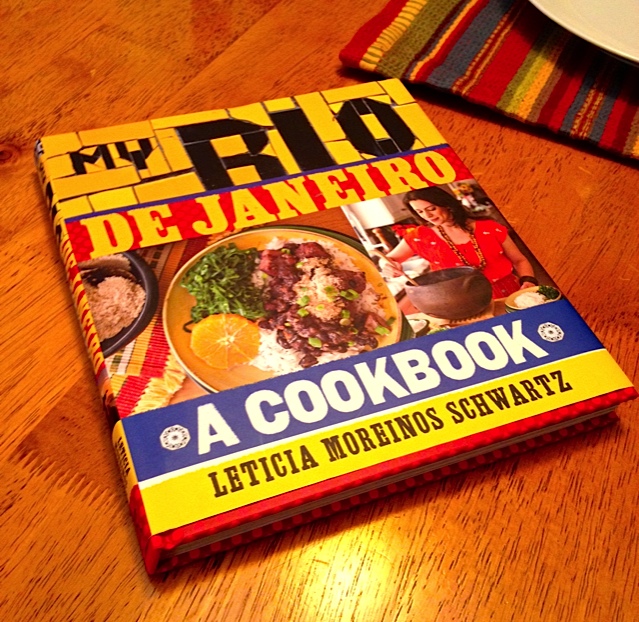


MY RIO DE JANEIRO: A COOKBOOK REVIEW

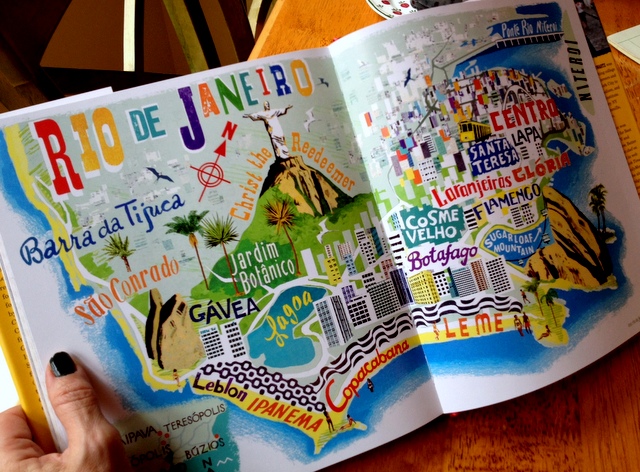
Time for a cookbook review, the second publication by Leticia Schwartz.  Those who have been around the Bewitching Kitchen long enough might remember I reviewed Leticia’s first cookbook, The Brazilian Kitchen.   With this new book, she takes her favorite city in Brazil, Rio de Janeiro, and professes her love by showcasing recipes from each different neighborhood.  I imagine that only two of them might ring a bell for those who never set foot in Rio: Ipanema and Copacabana.   Those are names made famous by Tom Jobim’s song Garota de Ipanema, and by images of beautiful women wearing bikinis that cover the bare minimum of their bodies. But Rio is a lot more than that, a collection of very diverse neighborhoods reflecting the immigrants who shaped them.

noname-7

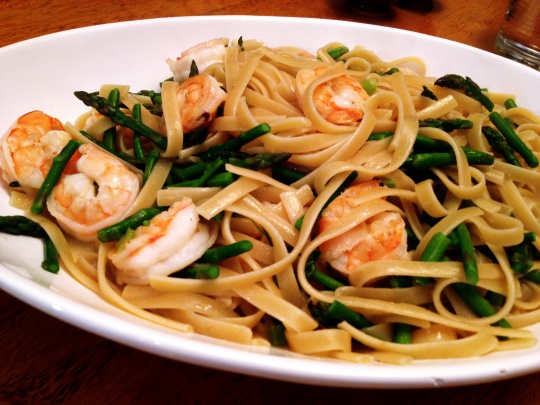
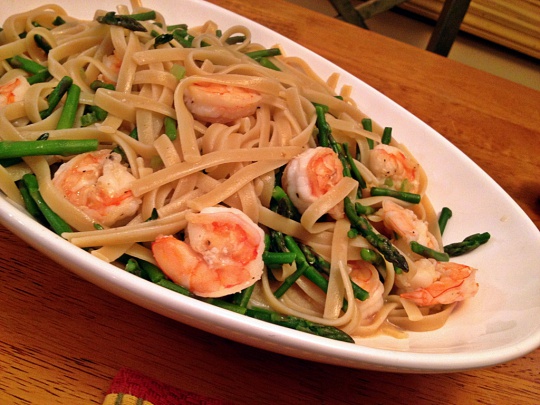
I had a pretty tough time picking a recipe to share with you, but decided to make her Pasta with Shrimp and Asparagus in Coconut Milk because it is quite unique and brings many of the flavors of Brazilian cooking in a single dish.

Pasta with Shrimp and Asparagus in Coconut SaucePASTA WITH SHRIMP AND ASPARAGUS IN COCONUT MILK
(published with permission from Leticia Schwartz)

kosher salt
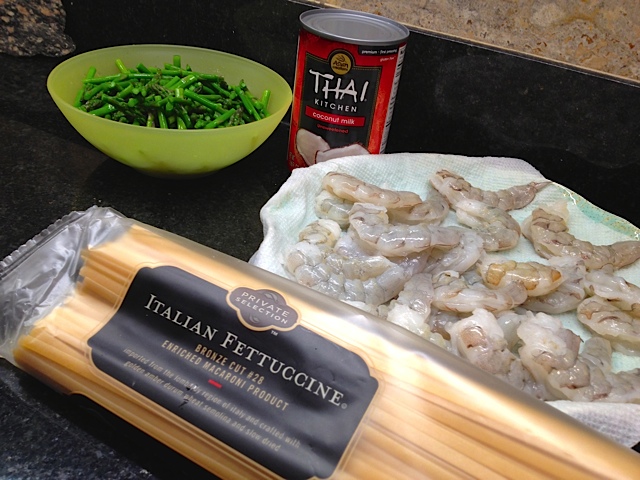
8 ounces tagliatelle, linguine or the pasta of your choice
8 ounces asparagus (about 1 bunch), tough parts trimmed
3 Tablespoons olive oil
1 pound medium shrimp, peeled (use shells for stock)
black pepper
1 shallot, minced
1 cup shrimp stock (or chicken stock)
1 cup coconut milk2 Tablespoons Cognac
2 Tablespoons chives, minced

Steam the asparagus for about 3 minutes, cool them quickly in a bowl of ice-water. Drain well and reserve. Cut in pieces before adding to the sauce.

Bring a large amount of salted water to a boil and start cooking the pasta until a little short of al dente.  As the pasta cooks, prepare the sauce. Reserve some of the pasta water when you drain it in case you need to thin the sauce at the end.

Heat the olive oil in a large, preferably non-stick skillet on medium heat.  Season the shrimp with salt and pepper, add to the skillet and saute until they start to turn orange, about 1 minute per side. Remove the shrimp to a plate, tent with foil, and reserve.  Add the shallots to the skillet, cook until they start to develop a golden brown color, about 3 minutes.  Add the stock and bring to a boil, scraping any brown bits from the bottom of the pan. Add the coconut milk, bring to a gentle boil again, cook until the sauce starts to concentrate, thicken, and reduce to about half the volume (about 3 to 4 minutes).

Reduce the heat to low, add the cooked pasta, the reserved shrimp, and asparagus pieces. Toss everything together vigorously, if needed add some of the pasta cooking water, or a little more coconut milk to keep the dish creamy.  Adjust seasoning with salt and pepper, stir the cognac, and add chives right before serving.

ENJOY!

to print the recipe, click here

IMG_3874

Comments: Making your own shrimp stock is not absolutely essential, you could use chicken stock or even vegetable stock, but it does add an extra something to the sauce. The seafood flavor is obviously intensified.  Leticia likes to roast the shrimp shells with a little tomato paste, I just sauteed the shells on olive oil, then added water and simmered them for 20 minutes with some celery, carrots, and onions.

I had never used coconut milk  in a pasta sauce before, I might try the light coconut milk next time, I don’t think it would pose a problem.  I could not find chives at the store that day, but a little cilantro or parsley sprinkled on top would also be wonderful. I only remembered that step after we were halfway through with dinner.  Such is the life of a blogger. You don’t always fulfill your own expectations.  😉

Spaghetti with Shrimp and Asparagus in Coconut Milk Sauce

Now, let me go through the book, chapter by chapter, so you can have a better idea of what it’s all about. I list just a few recipes from each chapter, as the book contains 90 recipes.  I should also mention that even though the chapters are divided according to each neighborhood of the city, in the index the recipes are listed by ingredients, making it very easy to find anything you might be interested in cooking.

LeblonEvening in Leblon

CHAPTER ONE: LEBLON. In this chapter, Leticia brings the type of food associated with “botequins“. A quote from the book: “A botequim is a simply type of restaurant that came to being in Brazil in the late 1800’s by and for Portuguese immigrants”.   The botequim actually reminds me of simple bistrots in Paris, not the fancy ones geared to tourists, but the small, usually a bit dark inside, where folks who live or work in the neighborhood meet for a simple meal, a drink, a coffee.  She opens the chapter with Sugar and Lime Cocktail, the Brazilian national drink, “capirinha“.   “Botequim” food is usually finger food, a bit like Spanish tapas.  You will find Golden Salt Cod Fritters (bolinho de bacalhau), Brazilian-Style Fried Chicken, in which the pieces are cut very small and heavily seasoned with garlic, and the wonderful Brigadeiros, like the ones I had in the blog  years ago.

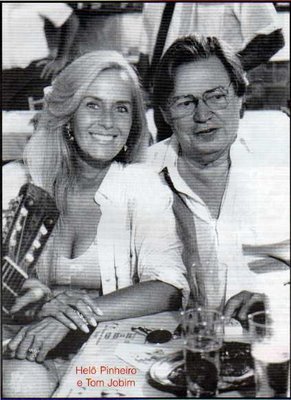
GarotaIpanemaAn old photo of Helo Pinheiro (the original Girl from Ipanema)  & Tom Jobim.

CHAPTER TWO: IPANEMA. The opening part of this chapter is a nice tribute to Farmer’s Market, which are a must-visit in Rio (as well as Sao Paulo, says the “paulista” in me). She describes the hard work associated with getting the market ready, as at 7am every stand is open for business.  Grated coconut, coconut milk, fresh coconut pieces, those are ingredients that are part of many traditional Brazilian recipes, and as Leticia points out, no one wants to do that type of job at home, so the street markets have several stands in which people grate coconut the whole day, handing you a bag with the freshest possible product. Absolutely nothing to do with the stuff we get in grocery stores, dried up, often overly sweet.  Her first recipe in the chapter is for Yucca Cracker, and that brought me so many memories!  I grew up enjoying them, and honestly I had no idea they could be made at home. They are shaped like a bagel, but their taste and texture is absolutely unique. You can see them here. Pao de queijo is in this chapter too, her recipe more traditional than the one I blogged about in the past.  Some other recipes in this chapter: Feijoada (Brazilian Black Bean Stew), Duck and Yucca Shepherd’s Pie (be still, my heart!). and the recipe I shared with you today, Tagliatelle with Shrimp, Asparagus, and Coconut Milk.

CopacabanaSunsetSunset in Copacabana

CHAPTER THREE: COPACABANA & LEME.  A quote from the book: “Rio’s magical places have the power to inspire musicians and artist from around the world. Indeed music and passion are always in fashion at the Copa! Copacabana!” The chapters opens with a classic soup of Portuguese origin, Garlic and Cilantro Soup with Poached Eggs and Croutons (Açorda Alantejana), followed by Creamy Brazil Nut Soup (a heavy contender for featured recipe, by the way), and also brings some dishes with Middle Eastern influence, like “Esfihas“.  The recipe that made my heart miss a beat, though was Moqueca Blinis with Shrimp.  A fantastic twist on Shrimp Moqueca, in a recipe by Chef Rolland Villar, joining Brazilian and French cuisines.  I must make it! Here is a photo from the book, doesn’t that seem amazing? The moqueca flavors are in the blinis, and the shrimp sits on top of each delicious bite…

photo(2)CHAPTER FOUR: JARDIM BOTANICO, GÁVEA E LAGOA. A quote: “Cariocas are obsessed with exercise and Lagoa Rodrigo de Freitas (a lagoon) is one of the most beautiful places in town to go jogging. … exercising in that setting it’s as if your endorphins double from the visual effects of Rio, and the result is a sense of pure happiness, elation and peacefulness…”  Some recipes from the chapter include Rolled Sausage Bread with Rosemary (a concoction from the very famous Pizzaria Braz), Chez Anne’s Cheese Empanadas, Brazilian-Style Veal Stroganof, and Cashew Fruit Ice Cream (trust me, this is to die for!).

SugarLoaf
CHAPTER FIVE: FLAMENGO & BOTAFOGO.
The famous Sugar Loaf is located in this part of town.  Leticia featured in this chapter some recipes from trendy restaurants like Nomangue and Irajá.  I was quite tempted to prepare the Hearts of Palm Soup, so soothing and creamy, but the Molten Brigadeiro Cake (which Leticia likes to serve with ginger ice cream) was also calling my name.  Real loud.

Cristo

CHAPTER SIX: SANTA TERESA, GLÓRIA, LARANJEIRAS & COSME VELHO: Dining with a view. Perhaps the most famous landmark of Rio, Christ the Redeemer, is located in this neighborhood. Leticia recommends two restaurant in the region, Aprazível, and a botequim-type place called Bar do Mineiro. By the way, clicking on the link to Aprazivel will bring up a beautiful Brazilian song, worth listening to. She features not only recipes from these places, but also some from caterers that often come up with incredible twists on classics.  A few examples: Plum Tomato and Bread Soup, Rita’s Fried Zucchini, Chicken and Chorizo over Jasmine Rice (the famous Galinhada), and Passion Fruit Mousse.

Carnival_in_Rio_de_Janeiro

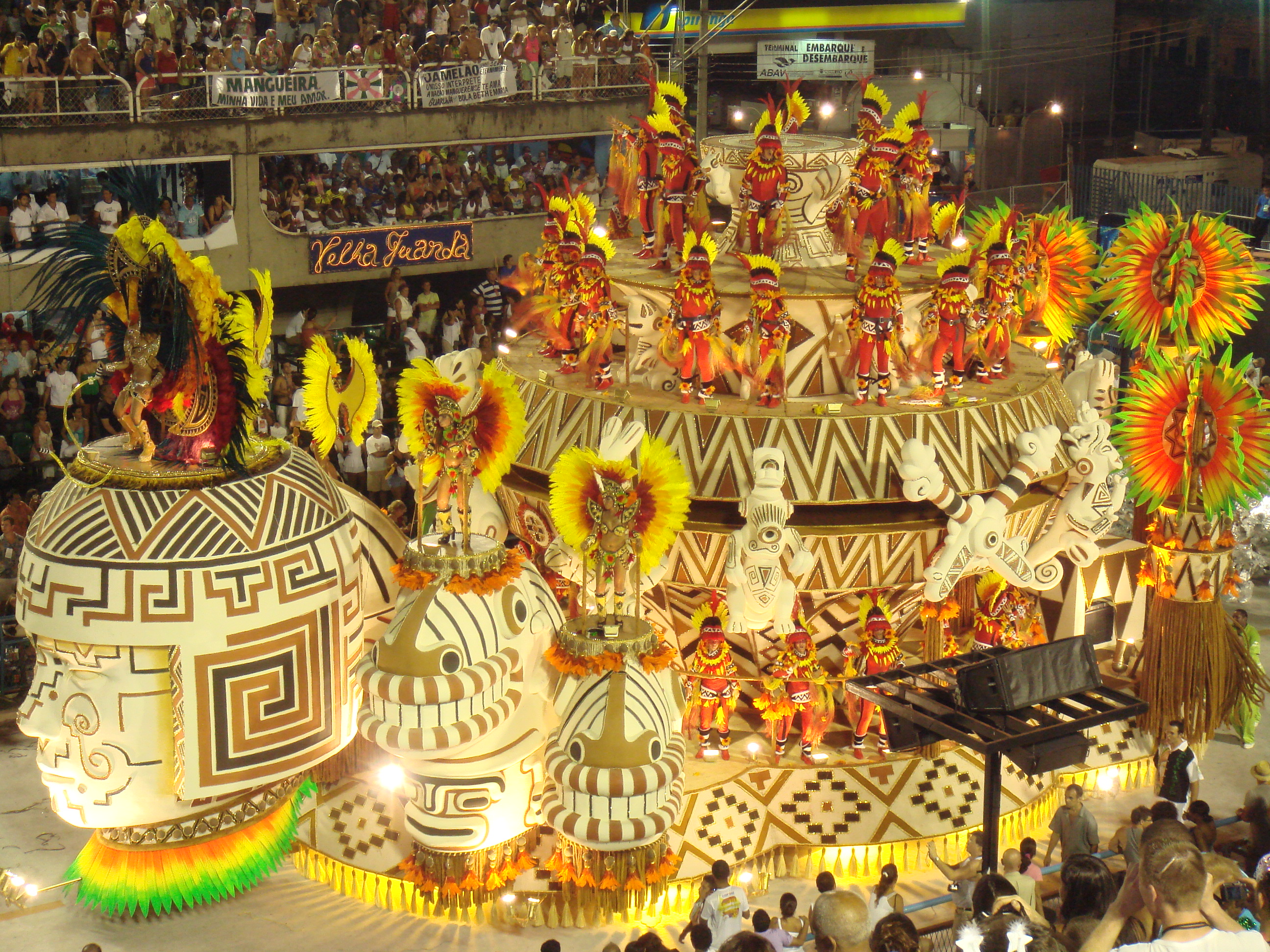
CHAPTER SEVEN: CENTRO, LAPA E ARREDORES.  This is the neighborhood associated with samba and Carnival, where the “Sambódromo” is located, and the huge avenue where the samba schools parade for days, Avenida Marques de Sapucaí”.  Lots of great recipes in this chapter, like Feijoada Fritters with Collard Greens (a take on feijoada from the restaurant Aconchego Carioca), Slow-Roasted Pork Ribs with Guava Sauce, Polenta Turnovers (what a great culinary move!), and Tapioca Pudding with Coconut Caramel Sauce.

CHAPTER EIGHT: BARRA DA TIJUCA.  Well, that is a part of Rio very dear to my heart.  My Mom and my sisters were born and raised in that neighborhood, and so was Leticia!  Quote from the book: “To enter Barra, you have to drive through Rocinha, the largest favela of Brazil. Leticia grew up just a few minutes away, but never connected with this world – so close but yet so far away”.   That is one interesting aspect of Rio, and quite disturbing for foreigners, how close the opposites of society co-exist in town.  A common denominator, though, is food.  Some examples of recipes featured in this chapter are Yucca Fries (the best food in the known universe, if you ask me), Chicken Salad with Carrots and Chives on Whole Wheat (very famous sandwich sold at every beach in Rio, by vendors who scream as they pass by “Look, it’s the Natural Sandwich!”, Fresh Cod with Onions, Potatoes, and Broccolini, and the absolutely delicious Pulled Carne Seca with Butternut Squash Puree.

Buzios
CHAPTER NINE: BÚZIOS.
  Búzios is supposed to be a paradise on Earth. I have never been there, believe it or not, but one day I dream of spending a few days with Phil. It is a beach town, three hours drive from Rio. Enjoying seafood is a must.   How about Farfalle with Salmon and Caipirinha SauceTuna Sandwich?

Paraty
CHAPTER TEN: PARATY.
Now, THAT is a paradise I visited with Phil and a couple of great friends years ago.  We had a fantastic time, and also got one of the worst sunburns in the history of our lives… 🙂 Paraty is more or less halfway through Rio and São Paulo, and it is a historic city, full of churches from the Gold Era of Brazil, and also fantastic restaurants and hotels. Leticia opens the chapter with a drink, Coconut Cocktail, which I find as delicious or better than capirinha… Also in this chapter you can drool over her Roasted Garlic-Ginger Shrimp with Coconut and Fresh Herb Crumbs (the picture is enough to make me swoon).

CHAPTER ELEVEN: REGIÃO SERRANA. In this chapter, Leticia focuses on a town called Teresópolis, located in hills not too far from Rio de Janeiro. I would love to make her Spinach Crepes with Fresh Tomato Sauce (Brazilian crepes, called “panquecas”, are not the same as the French concoction), the Brazilian Tiramisu, or the Dulce de Leche Brioche Pudding (I gained a pound typing it, though).

CHAPTER TWELVE: HOME COOKING.  In my opinion, no better way to close a cookbook. She features recipes from her family, and surprisingly starts the chapter with her Aunt Sarita’s Moroccan Meatballs. It turns out her Aunt was born in Tangier, so you won’t be able to get more Middle Eastern than that…  One of the recipes in this chapter gave me a huge smile because it was part of my childhood, teenage years, and adulthood too: Ground Beef with Hard-Boiled Eggs and Olives. That is simple,  home cooking to the fullest, and I find myself making batches and batches to enjoy for lunch.  Also in this chapter, Baked Rice with Chicken and Chorizo (Arroz de Forno, each family in Brazil seems to have a version for it),  Brazilian Style Pot Roast, White Chocolate Mousse with Passion Fruit Gelee, and Brazilian Rice Pudding.

photo-1
Leticia, thank you so much for giving me permission to publish one more of your recipes!  I am sure My Rio de Janeiro will be a huge success, for Brazilians in Brazil, for those like us, living abroad, and for people all over the world who share a passion for food and like to learn about other cultures through their cuisines.  You did a wonderful job assembling these recipes, your love for Rio comes through in every page…

ONE YEAR AGO: Hearts of Palm Salad with Cilantro Vinaigrette

TWO YEARS AGO: Watercress Salad

THREE YEARS AGO: Curried Zucchini Soup

FOUR YEARS AGO: Chocolate Bread

OWN YOUR KITCHEN with CAPPUCCINO PANNA COTTA

HAPPY THANKSGIVING TO ALL MY AMERICAN READERS! 

You will definitely find plenty of T-day recipes (plus leftover ideas) in the food blogosphere, so I will dance to a slightly different tune, and offer you a cookbook review instead…  

_________________________________________________________

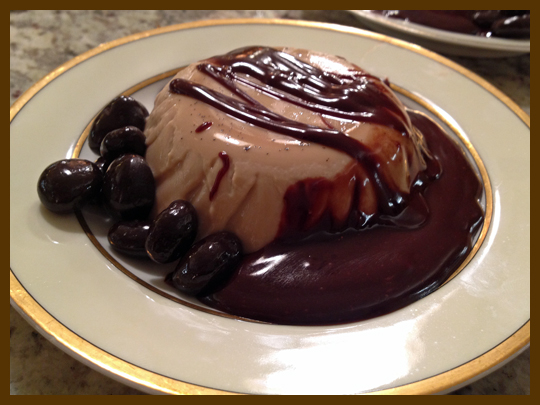
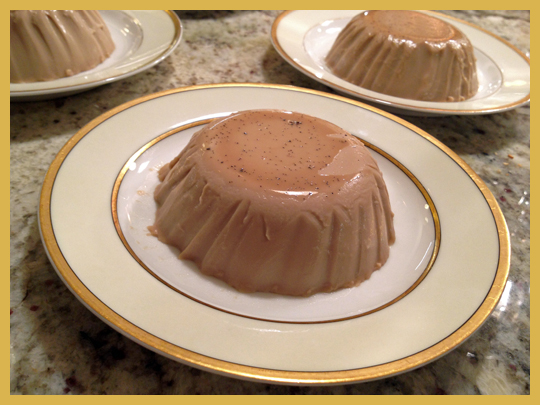
Anne Burrell strikes again with a new cookbook, “Own Your Kitchen: Recipes to Inspire and Empower.”   Knowing that on January 1st my annual New Year’s Resolution of  “No more cookbooks!”  will be in place, I ordered it on the first week of November.  I am obviously quite astute.  😉 However, after browsing “Own Your Kitchen,” I concluded that it would be worth breaking any New Year’s Resolution, no matter what the resulting karma may be.   I couldn’t wait to cook something from it, and with a dinner party approaching this dessert selection was winking at me:  a batch of  her Cappuccino Panna Cotta, that Anne describes in her delightful way:

“My version tastes like a coffee milkshake…YUM!  It’s super cinchy to make but very impressive and a perfect do-ahead… Dress it up with a little chocolate sauce and voilà, it’s fancy!”

Cappuccino Panna Cotta

CAPPUCCINO PANNA COTTA WITH CHOCOLATE SAUCE
(from Own Your Kitchen, re-printed with permission from Anne Burrell & Random House LLC)

for the panna cotta:
4 sheets of gelatin (*)
3 cups heavy cream
¾ cup sugar
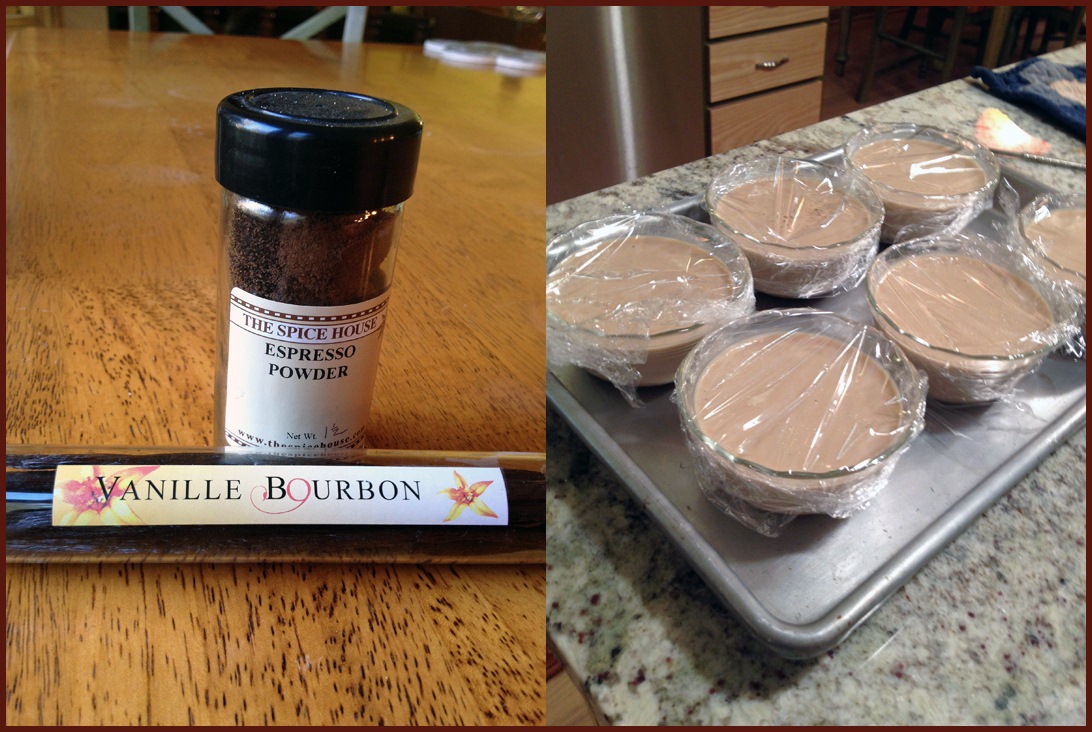
2 tablespoons instant espresso powder
½ vanilla bean
½ cup chocolate-covered coffee beans, for garnish (I opted for chocolate-covered cranberries)
.
for the chocolate sauce:
4 ounces semisweet chocolate chips
¼ cup heavy cream
2 tablespoons unsalted butter
2 tablespoons light corn syrup

.
Make the panna cotta: In a small bowl of cool water, submerge the gelatin sheets to soften. They will go from stiff to soft.
.
In a small saucepan, combine the cream, sugar, and espresso powder. Split the vanilla bean lengthwise down one side, open it up, and scrape out the seeds with a paring knife. Add the seeds and the hull to the pan. Whisk to combine everything.  Bring the cream mixture to a boil and then immediately turn off the heat.
.
Remove the softened gelatin sheets from the water and squeeze out the excess water. Add the gelatin sheets to the pan and whisk to combine. Immediately ladle the cream mixture into four 6-ounce ramekins and refrigerate for 2 to 3 hours or overnight.
.
Make the chocolate sauce: Fill a small saucepan with 1 inch of water and bring it to a boil.  In a medium heatproof bowl, combine the chocolate chips, heavy cream, butter and corn syrup. place the bowl on top of the pan of water. Reduce the heat to a simmer. Stir until the chocolate has melted and all the ingredients are combined. Remove and use immediately or store in a warm place until ready to use.
.
Unmold the panna cotta:  Fill a small saucepan with 1 inch of water and bring to a boil, then turn off the heat. Run a paring knife around the outside edge of the panna cotta to loosen it. Set each ramekin in the saucepan for 10 seconds. Place a small serving plate on top of each ramekin and flip it over to unmold the panna cotta. If it doesn’t release, put the ramekin in the water for a few seconds more and try again.
.
To serve, ladle a couple of tablespoons of the chocolate sauce around the panna cotta and sprinkle with a few chocolate-covered espresso beans.
.
(*) If you can’t find gelatin sheets, you can substitute powdered gelatin. To use powdered gelatin in this recipe, first bloom one ¼ ounce envelope in 2 tablespoons water, then add it to the mix. ENJOY!

to print the recipe, click here

composite1

My comments on the panna cotta…   Our desserts tend toward simple rather than extravagant, and  Panna Cotta is the essence of simplicity.  It’s a recipe that you can take in countless directions by changing the flavors in the steeping cream.   The espresso powder in this version performs pure magic with the vanilla, and when the chocolate sauce joins it, the party reaches perfection.   And, because chocolate-covered cranberries never hurt anyone, I invited them too.  😉   The fact that you can prepare the panna cotta the day beforehand makes it great for entertaining.  I measured and placed all the chocolate sauce ingredients in a double-boiler, except the butter and cream that I kept in a small bowl in the fridge.  When the dinner wound down I cooked up the chocolate sauce, unmolded the cold panna cotta, and assembled each individual serving.  The softness of the cool panna cotta against the warm sauce, and the little crunch of the cranberries was out of this world!  A perfect end for any special meal, and as Anne pointed out, simple to prepare.

panacotta1

OWN YOUR KITCHEN, my review…

ABCover

If you were hooked on Anne’s FoodTV show  (and can’t quite understand why they don’t bring her back for new episodes….) you’ll love her new book.    If you’ve never watched her show, the outcome will be exactly the same!. 😉 “Own Your Kitchen” is an extension of her personality,  highlighting the fun aspects of cooking, but also loaded with culinary knowledge from her many years as a successful chef.   My favorite cookbooks not only feature nice recipes, but also share a little background about each one.   Is it a family recipe?  Is it something that the author recreated from a vacation, or maybe from a restaurant meal?  What makes it so special that I’d want to hurry to the kitchen and prepare it?   On the other hand, I don’t  need a philosophical treatise tagged to a Bolognese sauce.  Anne Burrell achieves just the right the balance between food and entertainment.

Like many cookbooks, the overall organization of  “Own Your Kitchen”  is divided into courses, but in a flexible, amusing way:  Firsts, Seconds, Brunch, Sandwiches, Sides, and Desserts.  She precedes each recipe with what I’d call a  “teaser paragraph,” that reveals interesting info about it.  In the recipe itself she highlights (with a “HINT!”) steps to prepare ahead of time, or even the day before, that will help those who are not seasoned cooks.   Lastly, after the recipe you’ll often find remarks called Anne-notations, in which she suggests possible changes, how to make that recipe your own. It’s the “inspire and empower” aspect of the book.

Now, for a brief virtual tour of “Own Your Kitchen,”  I’ll describe my two favorite recipes from each chapter.

FIRSTS
Tomato Salad with Shrimp and Black Volcanic Salt.  
Simple has never looked so decadent and luscious.  With just a few ingredients,  she re-created a recipe  enjoyed on a trip to Hawaii, a place so dear to my heart!  Of course, I had to place an order for Black salt, and this salad will be on our table whenever great tomatoes are back in season…

Ricotta Flan with Bacon, Corn, Cherry Tomatoes and Arugula Pesto.    In Anne’s words:  “…this lovely little flan says, “Hi, ricotta, you shy girl, come out and be the superstar!”  😉  You can make your own ricotta (she shows you how), or use store-bought, but this recipe would be amazing to start a dinner party, or to enjoy as a light meal.

SECONDS
Cornish Game Hens with Pancetta-Rosemary Crust. 
She developed this recipe years ago, while working in a restaurant in New York where “her paycheck kept bouncing and she was frustrated and broke.”   She left that place, but took this gem of a recipe with her.  Wise girl! I wonder if the place still exists (I bet it doesn’t) and how they feel about losing Anne as a chef.  Ha! Their loss! Come to think of it, that’s the type of recipe that has her trademark all over, using an ingredient (pancetta) in a completely unexpected way. I love it!

Balsamic-braised Brisket with Bacon and Mushrooms.   I almost picked this recipe as my first to cook from the book, because I remember it from her show on TV.   She actually wrote that the filming crew attacked the meat once the show was over.   I can imagine the scene…  Her personal endorsement:  “one of my favorites of all the recipes I’ve ever written.”  You can bet I’ll be making it during the cold months ahead of us.

BRUNCH
Farro Granola.  
To deal with the harsh texture so common in granola,  Anne uses a clever twist on the grains of farro before adding them to the other ingredients.  Fascinating, Mr. Spock, fascinating…

Homemade Ricotta.   Making ricotta from scratch has been on my list of things to do for years!  Shame on me!  Maybe this cookbook will finally push me in the right direction.

SANDWICHES
Killer Turkey Burger.  
I remember this burger from her TV show too.   She was so tired of bad turkey burgers that she took matters into her own hands, and made a great version.  In typical Anne Burrell fashion, you will find an ingredient you would not expect in the mix.  😉

Tallegio Grilled Cheese with Bacon and Honey Crisp Apples.   Her upscale version of a classic, adding crisp apples to a strong cheese and smoky bacon.  Comfort food, in sandwich form…

SIDES
Shaved Raw Cauliflower with Caper-Raisin Vinaigrette.  
  I just know this will be a winner!   She shaves the cauliflower, then takes it in the direction of ceviche.  Yeah, baby… Much to my beloved husband’s consternation, I can’t have enough recipes for cauliflower…

Yukon Gold Potato Pancakes.    These are NOT your regular potato pancakes.  Trust me, Anne adds her usual twist to the recipe, and these pancakes will top any other version.

DESSERTS
Cappuccino Panna Cotta.  
Today’s post, a winner all the way…

Sticky Toffee Pudding.     I’ve been meaning to make this dessert forever,  as I’ve never had it but it sounds incredibly tasty.   Anne’s description of her own experience in a London restaurant will convince you  to bake a batch right on the spot.

_______________________________________________________________________________________________________________________

My job is to empower you to become the best cook you can be and learn to own your kitchen. Why? Because cooking is fun and delicious.
(Anne Burrell, Own Your Kitchen)

_______________________________________________________________________________________________________________________

She definitely succeeds in doing that. First, there is no doubt she brings the fun aspect of cooking to the forefront. Diluting a sheet of gelatin in water and feeling its textural change? Fun! Making and cooking dough? Fun (and satisfying)…  Cracking the salt crust on a whole fish at the table?  Fun! Mixing bread and sausage with your hands to make a stuffing?  Fun, of course!  But, she is also a natural teacher who is able to stress what really matters in a technique. With her trademark phrase “Brown food tastes good!“, she makes sure that cooks take their time to do that first step so common in stews, braises and even roasts: BROWN your food, do it nicely, do it well. That step alone will make a huge difference in the quality of your dishes. But that’s just one example, there’s a lot more to learn from her.

The holidays are coming up, so if you want to give someone a great cookbook, order a copy of “Own Your Kitchen“. Now, if you are like me and insist on making New Year Resolutions that involve a self-inflicted moratorium on cookbooks, hurry up and get a copy for yourself: 2014 is just about to say hello…

Disclaimer: I do not accept requests or any type of compensation to review cookbooks or products. I am not affiliated with amazon.com or any other company. Not that there’s anything wrong with it, but I like to make this point clear.

ONE YEAR AGO: Chicken Parmigiana, the Thriller

TWO YEARS AGO: Wild Mushroom Risotto

THREE YEARS AGO: Tartine Bread:  Basic Country Loaf

FOUR YEARS AGO:  Pugliese Bread

FESENJAN & THE NEW PERSIAN KITCHEN

newpekMany, many years ago, when I lived in California with my first husband, we would often go to a Persian restaurant located in Palo Alto. The food was simply outstanding, and the atmosphere perfect.  A quiet place, beautifully decorated, and with a menu full of dishes that sounded magical to us, two Brazilians with no experience in that type of food.   We would usually ask the waiter to pick something for us. One day he served us a braised lamb over rice with fava beans that completely awed our taste buds.  I remember the fresh dill sprinkled all over it. And I also remember that I hated fava beans, but would gladly spend each day of my life enjoying that rice.  Persian cooking can perform miracles.  In those days, I had no way of knowing that the man I would marry many years later was also under the spell of Persian food.  Phil had a friend from Iran who often invited him for dinner and prepared tahdig, best described as “rice with a crust”.  Like my lamb dish with fava beans, that rice stayed forever in Phil’s memory as one of the best things he’s ever had!  With all that in mind, when I read this review on Louisa Shafia’s book it took me 95 seconds to order it.

plated

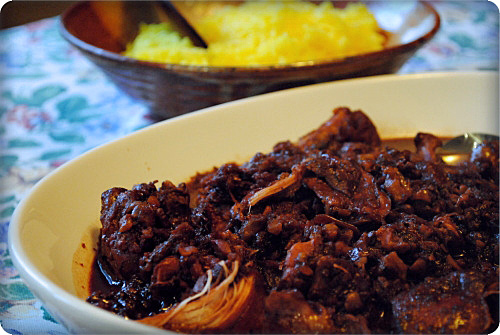
FESENJAN (WALNUT POMEGRANATE STEW)
(reprinted with permission from Louisa Shafia – The New Persian Kitchen)

1 tablespoon grapeseed oil
2 pounds skinless chicken legs or breasts
2 teaspoons salt, plus more, to taste
2 yellow onions, finely diced
1 cup walnuts, coarsely ground
½ cup pomegranate molasses
2 cups chicken stock, vegetable stock, or water
1 cup peeled and grated red beets
Pomegranate seeds and fresh mint leaves for garnish

.
Heat a large, deep skillet over medium-high heat and add oil. Lightly season chicken with salt and sear until well browned, 6-7 minutes per side, then transfer to a plate.

In the same skillet, sauté onions over medium heat for about 15 minutes, until lightly browned. Add walnuts, pomegranate molasses and 2 teaspoons salt. Stir to coat the onions. Add stock and bring to a boil. Reduce heat to a simmer and return chicken to stew. Cover and cook 25 minutes.

Stir in beets and cook, uncovered, until stew is thick and beets are tender, 15-20 minutes. Adjust salt to taste.  Pull out chicken pieces with tongs and cut into halves or thirds, if you like. Put a few pieces of chicken on each plate, along with plenty of sauce. Garnish with pomegranate seeds and mint.

ENJOY!

to print the recipe, click here

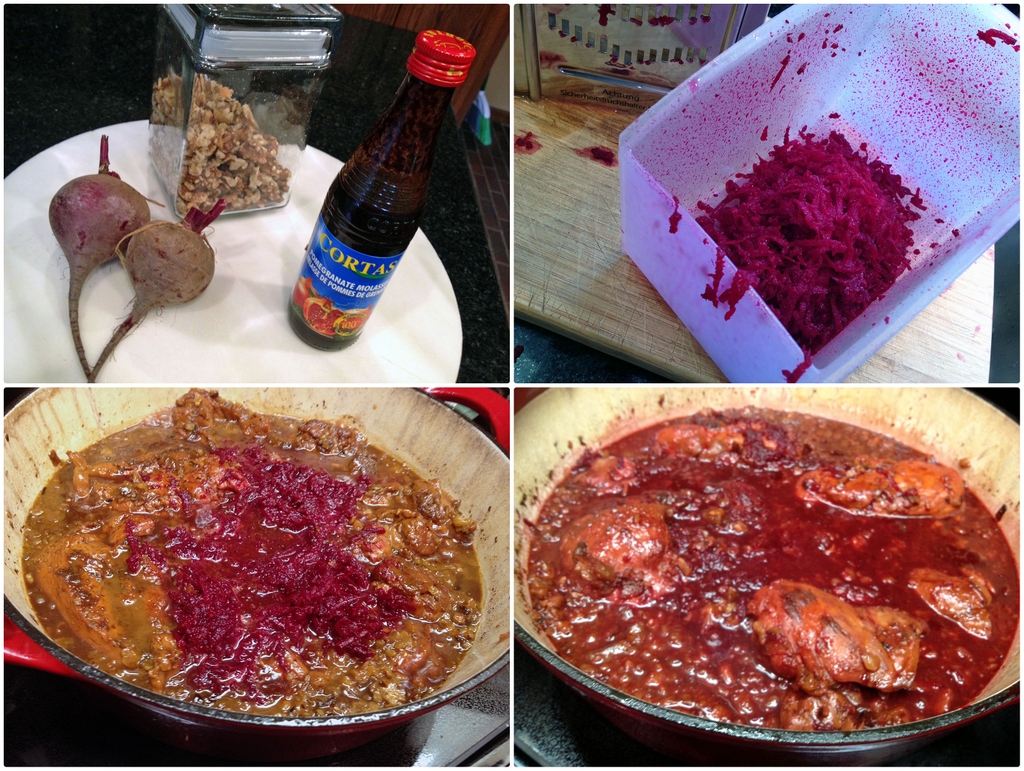
composite-001It was not easy to choose a recipe to highlight this great cookbook. You’d think I would pick either that magical lamb or a tahdig from our past, but I could not find fava beans, and tahdig is a bit intimidating for a first timer.  Indeed, according to Louisa herself, tahdig is the type of dish that requires practice. Your first won’t be your best. So, I opted for this amazing chicken concoction. Once you make it, you’ll realize why it is usually reserved for special occasions.  The intensity of flavors is hard to describe – it is sweet, sour, the walnuts give it body and texture, and the beets offer the most gorgeous color ever!   Don’t even think about omitting the beets, by the way. First, you won’t detect their taste. Second, remember that Persian cooking perform miracles…  😉  I could not find fresh pomegranate seeds to sprinkle on top, but the dish was festive enough without it.

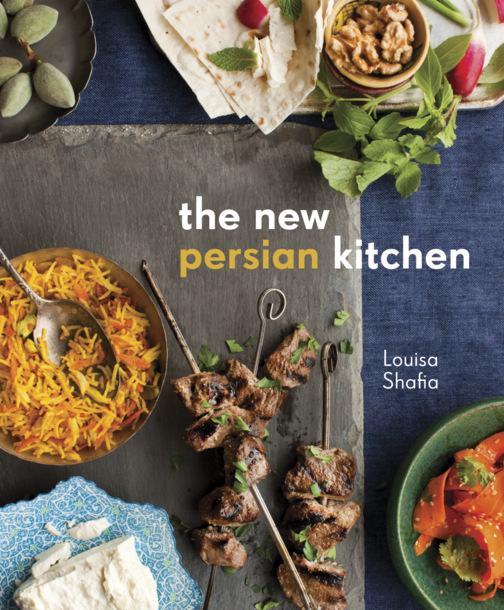
bookcoverTo order, click here

A little review of Louisa Shafia’s book.  Some cookbooks capture you from the moment you open the first page.  I started reading it late at night, and could not put it down for a couple of hours.  Louisa starts the book answering the simple question “What exactly is Persian food?” – and from there she takes the readers through a beautiful journey that covers not only its exotic flavors (sour cherries, rose petals, pomegranate molasses, dried limes, sumac, tamarind) but also the history of a fascinating region of the world and how it influenced the gastronomy of other places.  You will learn a lot more than cooking through Louisa’s words. Even Persian poetry will be there for you…

Reading her book, I learned the correct way to deal with saffron (so now I am on a quest to find a small mortar made of brass ;-)), and also opened my horizons to using dried mint. Louisa states that dried mint in many instances is better than the fresh herb, and recommends searching for Egyptian mint. I followed her advice, and she is right, it delivers great flavor.

The book has 80 recipes, divided in courses.  I will list a couple of recipes I found particularly tempting from each course just to give you an idea of what to expect.

Starters and Snacks:  Winter Squash Fritters with Rose Petals & Turkish Roasted Tomato and Red Pepper Dip

Soups: Saffron Corn Soup & Oat and Mushroom Soup (her description of this soup made me dream…)

Salads: Shaved Celery Root and Pomegranate Salad & Vinegar Carrots with Toasted Sesame Seeds

Vegetable and Egg Entrees:  Herb Frittata with Walnuts and Rose Petals  & Sweet and Smoky Beet Burgers (click here for Louisa’s own blog post about it)

Meat and Fish Entrees: Grilled Shrimp with Lime Powder and Parsley-Olive Oil Sauce & Turmeric Chicken with Sumac and Lime (both of these dishes plus Fesenjan were my final contenders to cook for this post)

Main Dish Stews and Casseroles:  Fesenjan (the featured recipe) & Persian Gulf-Style Spicy Tamarind Fish Stew

Rice and Grains:  Jeweled Brown Basmati Rice and Quinoa (hard to resist this one…) & Rice with Favas and Dill (the rice of my past…)  Several of her rice recipes can be turned into tahdig, and she does a great job advertising this spectacular take on rice.

Sweets: Rhubarb and Rose Water Sorbet with Rice Noodles (I simply HAVE to try this at some point) & Nutty Chocolate Bark with Cardamon and Coffee.

Beverages: Salty Mint Yogurt Soda & Watermelon, Mint, and Cider Vinegar Tonic

Pickles and Preserves: Fig Mustard (wow!) & Sour Cherry and Rose Preserves

You probably noticed that Louisa is one of those chefs who is in top shape, and that definitely influences her cooking style.  She always offers variations that make a classic dish lighter and better for you. If you are particularly interested in cooking with whole grains and healthy oils and sweeteners, this book covers it all. Her chapter on ingredients closes with a wonderful list of grains and gluten-free flours and tips on how to cook with them.  Can you tell I love her book?

Louisa, thank you for allowing me to publish a recipe from “The New Persian Kitchen”. I intend to cook a lot from it, and that includes tahdig…  😉

ONE YEAR AGO: Quinoa Salad with Roasted Beets

TWO YEARS AGO: Pasta Puttanesca

THREE YEARS AGO: Miche Point-a-Calliere

POTATO GALETTES A L’ALSACIENNE & BOOK REVIEW

served2222Right around the time I started this blog, I stumbled upon Pham Fatale’s site, and fell in love with it.  The site’s name is a perfect choice for someone called Pham and who looks as gorgeous as she does… 😉   But what captured me for good was her multi-cultural style of cooking.  Keep in mind that she was born in Paris, with parents who emigrated from Vietnam in the mid-70s. To make things even more interesting, she married a man who is also the son of immigrants,  his parents came from India.  If that does not make for an amazing array of recipes, I don’t know what would.  Check her site and you will also be smitten by it, she is an amazing photographer and her recipes quite creative and unique.  Jackie is a busy bee – she has a young baby, and cooks for a large family that includes teenagers with dietary restrictions – but even with such intense life she managed to publish her first cookbook. I asked her permission to publish a recipe from it, as well as write a little review.  The book is called Haute Potato, and it includes 75 gourmet recipes using this “humble” vegetable.  In Jackie’s hands, the potato is anything but humble!

POTATO GALLETES A L’ALSACIENNE
(reprinted with permission from Jacqueline Pham)

2 pounds Russet potatoes
1 lemon, freshly squeezed
2 Tablespoons parsley, chopped
4 shallots, chopped
1 piece of leek (3 inches), white part only, chopped
2 eggs
1/8 teaspoon cayenne pepper
3 Tablespoons all-purpose flour
1/4 teaspoon nutmeg, freshly grated
1/4 teaspoon baking powder
1 + 1/2 teaspoons salt
1/2 teaspoon black pepper
1 cup canola oil, as needed

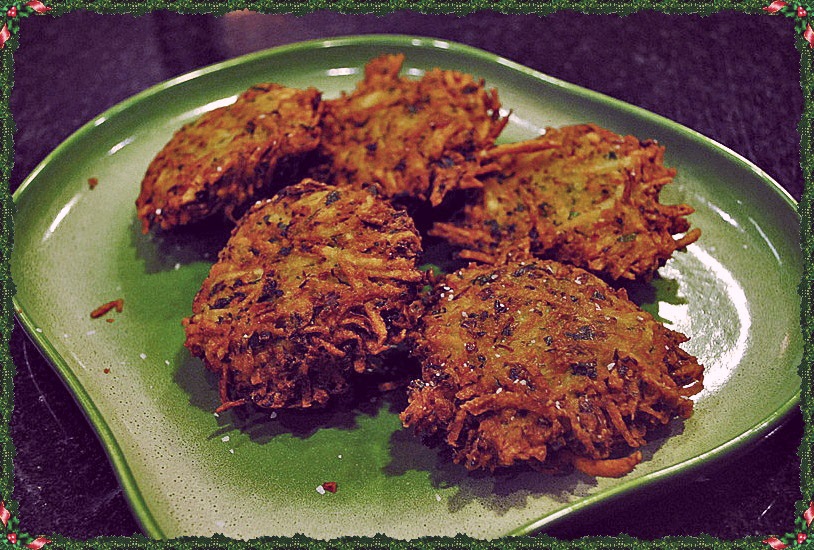
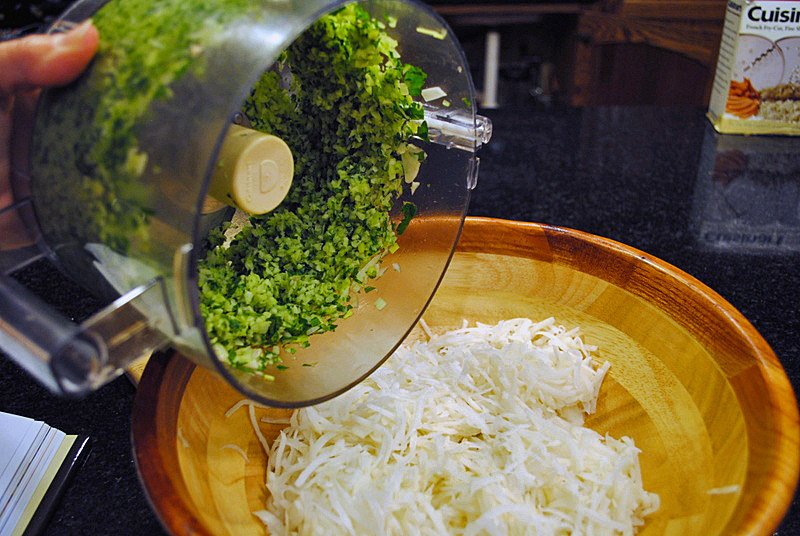
Prepare the potatoes: wash and peel the potatoes.  Shred 2/3 of them and place in a large mixing bow. Add the lemon juice and cover with cold water. Let sit for 5 to 10 minutes. Drain the potatoes and discard the liquid. Place all the shredded potatoes in a cheesecloth and remove as much excess wter as possible, than pat dry with paper towels.  Pace inside a large bowl. Coarsely chop the remaining 1/3 of the potatoes and place them into the bowl of a food processor. Add the parsley, shallots, and leek. Pulse into a smooth raw puree. Add the mixture to the shredded potatoes.

Make the batter: in a mixing bowl, beat the eggs with the cayenne pepper and the flour for 2 to 3 minutes, until slightly thickened. Add the nutmeg and baking powder. Add this egg mixture to the potatoes.   Season with 1 teaspoon of salt and 1/2 teaspoon of pepper.  Stir well to combine.

Fry the galettes: heat the oil over high heat in a large Dutch oven or heavy-bottomed pan.  You should have 1 inch of oil in the pan, so use as much oil as needed for that. Form small flattened patties with the potatoes (if you have disposable gloves, they work well if you grease them lightly with oil). When the oil is very hot, drop the patties into it, making sure they don’t touch each other.  Lower the heat if they seem to brown too fast, and cook them for 5 to 8 minutes, until browned on the first side, then flip them and cook for about 3 more minutes on the second side.  Season them with a little extra salt as you remove them from the pan and place on paper towels to absorb excess oil. You can fry them and keep them warm in a low oven until serving time.

(makes 6 servings, about 12 galettes).

ENJOY!

to print the recipe, click here

prep1

Comments:  I made one small modification to th recipe, and that was to add about 4 times as much parsley as it called for, which explains that my galettes had a bit more of a green aura than Jackie intended to. Let’s not delve too deeply into the issue. Suffice to say that I prepared the parsley to use in two different venues, and some unexpected firing of neuronal cells made me dump the full amount into the food processor.  No harm was done to the galettes as far as taste is concerned.   The key to the great texture of these fritters is the use of potato in two forms: grated and processed into a paste.  It gives the galettes a very creamy and pleasant texture.

photo(71)

ABOUT HAUTE POTATO, THE COOKBOOK…   I love the way the chapters are divided in an unorthodox way.  Each chapter gives one type of “outcome” for the potato. Here is a list of them with one example of a tempting recipe found in it.

Chapter 1: Refreshing…  Vietnamese-Style Shrimp and Potato Salad

Chapter 2: Decadent… Prosciutto-Wrapped Fig and Gnocchi Bites

Chapter 3: Cheesy…. Pine Nut, Chevre, and Potato Cigars with Lemon-Caper Sauce (this one a favorite of Jackie’s family)

Chapter 4: Crispy & Crunchy… Oven Sweet Potato Fries with Pineapple-Mango Aioli

Chapter 5: Creamy…  Brie Cheese and Roasted Garlic Mashed Potatoes (and Sally feels a little faint….)

Chapter 6: Spicy…   Traditional Samosa

Chapter 7:  Sweet…  Sweet Potato and Matcha Green Tea Creme Brulee

I had a hard time deciding on a recipe to blog about, and almost went with her carrot and potato souffle, but since we very rarely make fried foods, I took the opportunity to try her galettes.  I am definitely making the souffle next, and the potato cigars will be on our menu next time we entertain.  Jackie said they disappear quickly whenever she makes them, and are the number 1 request of friends who were lucky enough to try them… 😉

This is a cookbook that will please anyone who likes to make their meals a little more special. However, even a cook without too much experience will be able to make most recipes, as they are very well explained. Some recipes are published in her blog, but most are exclusive to the book.  You can find it at amazon.com, and in bookstores everywhere!  I wish Jackie great success in her first adventure as a cookbook author, and look forward to her next cookbook!  😉

ONE YEAR AGO: Caramelized Carrot Soup

TWO YEARS AGO: Miso-Grilled Shrimp

THREE YEARS AGO: Pain Poilane