THE US LISTERIA OUTBREAK, 2011

As some of the regular readers of this blog may know, our lab has been working on Listeria monocytogenes since 2003, studying how it transports iron from the environment (or from the human body) into the cell. After the recent outbreak involving cantaloupes from Colorado, I thought it would be worth writing about it.

First, how do bacteria contaminate a cantaloupe? Listeria normally exists  in the environment living on dead organic material in the soil (fallen leaves, rotting wood, dead plants … it’s called a saprophyte), and also in many different species of animals from birds to fish.  Indeed, some proportion (around 10%) of healthy humans have listeria in the intestinal tract, without causing any problems. Contamination of foodstuff happens in many ways. For instance, a worker involved in packaging fruits or handling equipment that harvests and packages fruits (or other foodstuff) may contaminate the produce if he or she has poor basic hygiene procedures.  But this source is quite limited in scope, and more likely, contamination results from fields that are treated with infected manure.

Where are the bacteria in the contaminated food? In the case of cantaloupes, bacteria can only infect the outside of the fruit.  Unless the husk or skin of the product is broken, the inside will remain sterile.   However, keep in mind that when  you cut the fruit open with a knife, you may transfer bacteria from the outside to the interior, edible part of the fruit.  One of the interesting characteristics of listeria, which is crucial to its contamination of food, is that unlike most bacteria it grows very well at low temperatures, like in the refrigerator (4 C). Therefore, if food is contaminated by this organism and refrigerated for later consumption, listeria will simply go on happily multiplying.  Another unfortunate characteristic of this nasty pathogen is that it has no odor, and so it doesn’t seem to affect the taste of the food. Some outbreaks in France were linked to chocolate milk, and people were drinking milk heavily contaminated by listeria without any noticeably bad flavor.

Can you get rid of Listeria by washing the fruit?
  Yes.  You can use dish-washing detergent and a soft brush, followed by a good rinse and blotting with a paper towel.  However, if  the fruit was bruised during transport, breaking the natural barrier provided by its skin, then the bacteria gain access to the fruit’s flesh.  Since refrigeration doesn’t slow its multiplication, in this case you are better off discarding any fruit that originated in the region suspected of contamination.

Why is it so hard to pinpoint the source of contamination? Most enteric bacterial pathogens, E.coli O157, Shigella dysenteria , and Salmonella typhimurium for examples, rapidly induce symptoms (within 12 to 24 hours) after ingestion of the contaminated food.   Listeria begs to differ.  It may take a couple of weeks, sometimes more, for symptoms to appear. You can imagine how tricky it becomes for epidemiologists to trace the origin of the outbreak.  Do you remember exactly what you ate 2 weeks ago, and where it was?  If you’re a food blogger  you might have a higher chance of answering yes to this question, but even then, it’s not easy.  😉  Also, the listerial incubation time differs from person to person, complicating the issue even further.

How dangerous is listeria anyway? It depends on who you are. Most healthy individuals will not even develop symptoms or become infected.  It takes a huge dose (about a billion) of bacteria to infect a healthy person.  However, the very young, the very old, pregnant women, and immunocompromised individuals (undergoing steroid treatments, HIV-infected) are at much higher high risk, because their immune systems are not up to the challenge. In France, where unpasteurized cheese is considered (as it should be) a delicacy, pregnant women are advised to avoid them because they are a source of listerial contamination.

What makes Listeria so deadly?  Once you eat contaminated food, the bacteria passes to the intestine, where it invades the epithelial cells,  white blood cells, and then reaches the bloodstream. It releases toxins, which make you sick with similar symptoms to those of other enteric pathogens like E.coli and Salmonella: fever, intestinal cramps, diarrhea, general discomfort. But that’s just the beginning. If your immune system can’t contain the bacterial growth, the strain has one more deadly trick up its sleeve: it can cross the delicate (and normally powerful) barrier between the blood and the brain. Once that happens, meningitis occurs, as well as other serious neurological problems like brain abscesses and paralysis.  Again, for the most part these problems don’t happen with healthy individuals, only those at high risk – young kids, aging people, pregnant women, and immunocompromised patients.

Can listerial infections be treated by antibiotics?  That’s the good side of this pathogen.  Most strains are sensitive to antibiotic treatment, so many  weapons are available to deal with it.  However, once the strain crosses the blood-brain barrier, antibiotics have difficulty clearing the infection, resulting in a high mortality & morbidity rate.

Some cool facts about listeria  Like many other species of bacteria, listeria can swim because they have little organelles called “flagella”  that propel them in the direction of food and other attractants.   However, it is not able to make flagella at the body temperature of mammals and humans – 37 C – so in our bodies, they cannot swim.   How do they move from cell to cell?  In a fantastic mechanism, that almost seems like the product of a science fiction movie director:  once inside our cells, the bacteria induces some of our own proteins to gather together  (in biochemical terms they  induce these proteins to “polymerize”) forming structures that act like jet propellers, and literally push each bacterium across the cell, making it go through the membrane and reach the neighbor cell.    In a classic cartoon depiction, here is what it looks like:

In this figure from Wikipedia (which originated from the laboratory of Dan Portnoy at UC Berkeley), we see in the outer edge images from electron microscope of the “real thing.”  In the center,  a cartoon depiction of what is taking place.  The bacterium is represented as a black, rod-shaped structure. InlA and InlB are two genes necessary for the initial invasion of epithelial cells.   Once inside the cell, the bacterium is briefly contained inside a little vesicle.  But listeria escapes this small “prison cell” by digesting the vesicle’s membrane with an enzyme called  listeriolysin (LLO).   It is then free inside the cell, and immediately starts the process of polymerizing actin (through the action of proteins like ActA), that act to propel the bacterium across the cell, allowing it to reach the cell adjacent to it.  And the process goes on, and on, and on…

What are we specifically working on?   For listeria to go on multiplying in our body, it needs iron.  It steals iron from us by several different mechanisms.  We are trying to understand what are the most important sources of iron, and how could we prevent listeria from using it.  By interfering with its iron uptake mechanism, we hope to prevent it from multiplying to a level that will cause disease.  Some of our published work can be found jumping here and here.

I hope you found this small overview helpful…

Add to FacebookAdd to DiggAdd to Del.icio.usAdd to StumbleuponAdd to RedditAdd to BlinklistAdd to TwitterAdd to TechnoratiAdd to Yahoo BuzzAdd to Newsvine

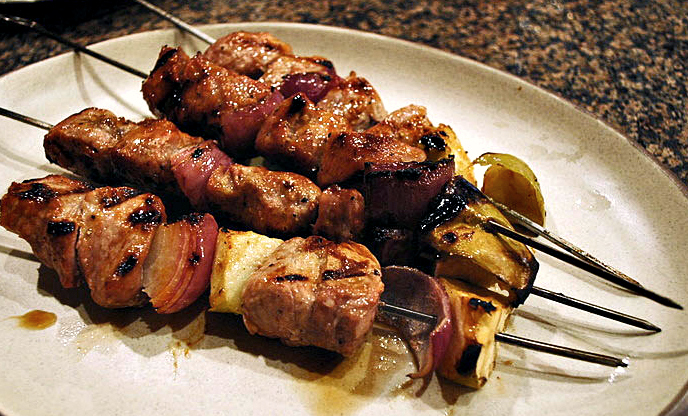
PORK KEBABS / KABABS / KABOBS / KEBAPS

Your choice. As long as the meat stays juicy, moist and delicious, you can call it whatever you want. I like kebabs myself, and these were a big hit last week, probably our favorite dinner. Lightning-fast to prepare, especially if you do what I did, and assemble the skewers early in the day, saving them in the fridge until dinnertime. Just sprinkle a little lemon juice over the cut apples to prevent them from darkening too much, and cover with plastic wrap.


BARBECUED PORK AND APPLE KEBABS
(from Martha Stewart website)

1/2 cup apricot jam
2 tablespoons cider vinegar
1 tablespoon tomato paste
2 tablespoons olive oil, plus more for grill
salt and pepper
2 small pork tenderloins –  halved lengthwise and cut into 16 cubes
1 medium red onion, cut into 8 wedges
1 Granny Smith apple, peeled and cut into 8 wedges

If using wooden skewers, soak them in water for several hours.  Assemble long skewers alternating pieces of pork, onion, and apple wedges.  Start with t a piece of meat, and end with a piece of apple.  Reserve.  (This step can be made several hours ahead of grilling).

In a small bowl, combine the apricot jam, vinegar, tomato paste,  and 1 Tsp olive oil. Season with salt and pepper.

Heat grill to medium-high, and oil the grates. Sprinkle the kebabs lightly with salt and black pepper.   Place skewers on grill; cover grill, and cook, turning occasionally, until grill marks are visible, about  8 minutes.  Brush the kebabs with some sauce, and cook, turning skewers and basting occasionally with more sauce, until pork is no longer pink in the center and is nicely glazed, 6  to 8 minutes more.

Serve over steamed rice, couscous, or just with a salad.

ENJOY!

to print the recipe, click here

My only modification of the recipe was to skip the step of peeling the apples.  I hate peeling apples because I lose about 63% of the fruit in the process.  Anyway, not a good move.  I thought that the peel would help the apple keep its shape and would not interfere with the taste, but it just doesn’t work this way.  Do as Martha does, peel your apples!

These kebabs are absolutely great, we gave them two thumbs way up…   Since grilling takes less than 15 minutes, pick side dishes that cook quickly too.  I went with couscous – cannot beat that – and simply sauteed green beans.

Leftovers were still moist and tender next day, I warmed them briefly in the microwave and squeezed a little lemon juice when they were ready to be enjoyed.  The apricot glaze is a keeper, for pork, chicken, shrimp… endless possibilities.

ONE YEAR AGO:  Saying Goodbye (1 year without our sweet Pits)

TWO YEARS AGO: Got Spinach? Have a salad!

Add to FacebookAdd to DiggAdd to Del.icio.usAdd to StumbleuponAdd to RedditAdd to BlinklistAdd to TwitterAdd to TechnoratiAdd to Yahoo BuzzAdd to Newsvine

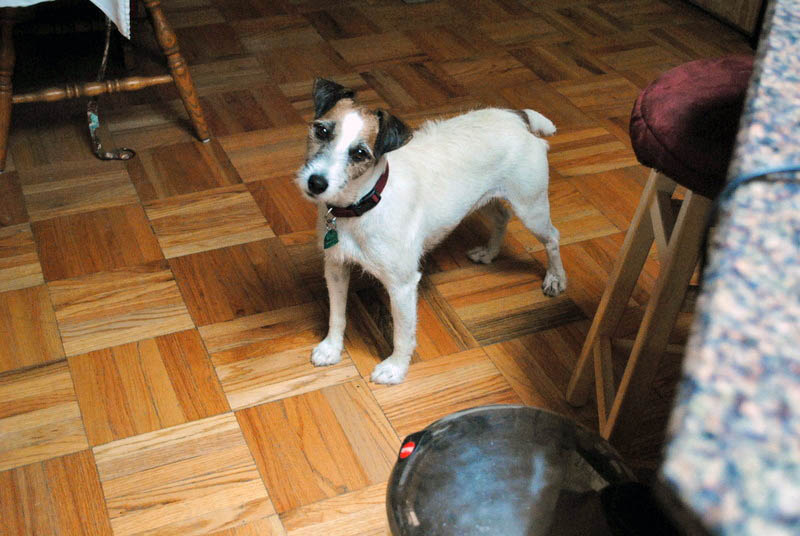
WHAT’S COOKING, MOM?

It smells sooo good!
Would you mind sharing it with the distinguished Lord Buck?

Add to FacebookAdd to DiggAdd to Del.icio.usAdd to StumbleuponAdd to RedditAdd to BlinklistAdd to TwitterAdd to TechnoratiAdd to Yahoo BuzzAdd to Newsvine

LOVE AT 30,000 FEET

It was many years ago that the airlines began to cut expenses by  throwing their bored passengers only a small bag of peanuts or pretzels to tame their hunger.  But, once on a Delta flight I got a different type of snack. Ripping open the package I found two small cookies inside, and told Phil:  “We don’t even deserve pretzels anymore, look at these tiny cookies”!   But, with the first bite I fell madly in love!  Delta, whenever possible, became my airline of choice, and I stepped inside the plane  with one goal in mind: charm the stewardess into giving me two packages. Maybe three…  😉

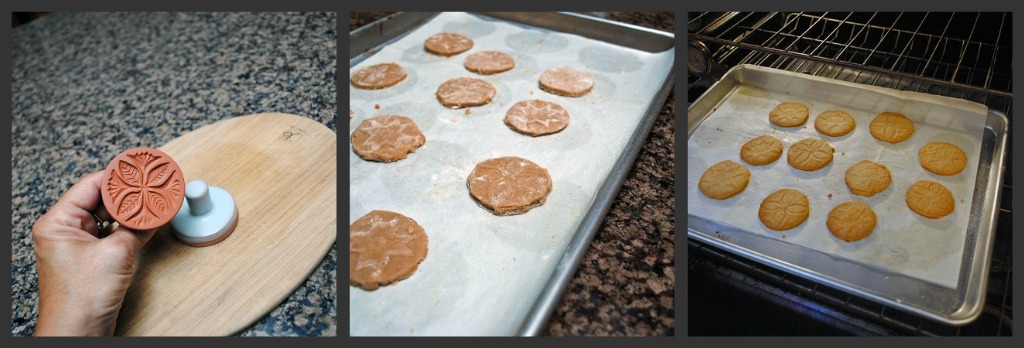
I kept my passion for these cookies a secret, thinking that professing love for airline cookies would be similar to admitting a weakness for Velveeta (don’t ask, I won’t tell).  But one day, I posed a discreet question in a cooking forum trying to find out more about them.  All clouds dissipated in the horizon: those are speculaas, very special cookies that originated in Europe centuries ago.  Many versions exist, sharing in common a mixture of spices, brown sugar, and butter.  Traditionally, they have beautiful, complex designs on the surface, requiring special molds to shape them.  I used ceramic molds (highlighted here)that were a bit more affordable than the real McCoy.  As to the recipe,  my friend Gary shared the method he learned in culinary school.   The teacher, chef  Gabriel, gave me permission to publish his very own recipe, so you can fall in love with these cookies right in your own kitchen, in the safety of firm ground!   Isn’t that awesome?

SPECULAAS
(Recipe courtesy of  Chef Jeffrey Gabriel
CMC
Schoolcraft College)

8 oz butter at room temperature
11 oz brown sugar
1 + 1/2 tsp ground cinnamon
1 + 1/2 tsp baking powder
1/2 tsp ground nutmeg
1/2 tsp ground cloves
2 egg yolks
2 Tbs milk
13 oz flour
2 oz almonds, finely chopped in a food processor.

Place the butter and the brown sugar in the bowl of an electric mixer, and beat on medium speed until creamy and smooth (about 3 minutes).  Add the spices, egg yolks, and milk.  Continue beating until it is all well blended.

In a separate bowl, mix the flour with the ground almonds, add them to the butter mixture and mix on low speed until a dough forms.  Chill the dough for at least one hour, preferably overnight (easier to work with next day).

If rolling the dough,  remove from the fridge and work on a floured, cool surface.  Roll the dough to 1/8 inch thick, cut in the shape you want, and bake.  If using a mold, pull small amounts of dough, press into the slightly floured mold, and delicately remove it, placing the cookie with the design up on a baking sheet lined with parchment paper.

Bake the cookies in a 350F oven until golden brown.

ENJOY!

to print the recipe, click here

Comments:  I will not lie to you.  Working with these molds requires patience. I can see that with a lot of practice, it could be a soothing, relaxing activity. Not much Zen was happening in our kitchen, though.  Gary recommended  this book  to speed the learning process, and I have it on my wish list at amazon.com.   All reviews are stellar.   But, if you don’t have a mold, don’t let it prevent you from making speculaas.  They may become your favorite type of cookie, perfect for this time of the year, when we all need the warmth of cinnamon, the nice heat of cloves and nutmeg, the sweetness of sugar and molasses.

Note added after publishing:  for a great take on speculas, jump here to see Celia’s version, that includes thinly sliced almonds. From what I’ve been reading, that type of recipe is common in Belgium.  Check it out!

ONE YEAR AGO: The Unbearable Lightness of Baking

TWO YEARS AGO: Pain a l’Ancienne

Add to FacebookAdd to DiggAdd to Del.icio.usAdd to StumbleuponAdd to RedditAdd to BlinklistAdd to TwitterAdd to TechnoratiAdd to Yahoo BuzzAdd to Newsvine

CRIMSON AND CREAM CHILI

The weather is cooling off and football season is warming up!  Because our university team is ranked near the top this year  every game matters, and they’re all nail-biters.  This weekend brings the season’s most anticipated and exciting game, OU vs Texas.   It’s a great rivalry, a grudge match for the schools, and every year both cancel classes the day beforehand  so that students can drive to Dallas and watch the pageantry and festivities in the Cotton Bowl, surrounded by the Texas State Fair.   I have mixed feelings about it.  It’s a wild, wild adrenaline ride.   But, sports attract too much attention and praise, relative to the pitiful amount given to academia and research.  The coaches make so much money, making me painfully aware of how broke our academic departments are.  It makes me wonder if the priorities aren’t a bit twisted.   On the other hand, we all know what may happen if the University withdraws financial support  from its  sports programs. The TV revenues will drop, and the schools will have lower profits, resulting in even greater struggles for scientific research.  Having failed to solve this pressing problem of the universe,  I go back to food.  😉 … Ohhh, and I almost forgot: GO SOONERS!

Football food. Several classic options come to mind: hamburgers, grilled sausages, hot-dogs, one-pot type meals like… chili!  Once chili was mentioned, we reached a delightful agreement.  I modified a turkey version from  The Gourmet Cookbook, to showcase the colors of our team, crimson and cream.   It was like throwing a 98-yard touch down pass!

CRIMSON AND CREAM TURKEY CHILI
(adapted from Gourmet)

2 chipotle chilis in Adobe sauce (canned)
1/2 cup water
2 cans ( 15 oz each) diced fire roasted tomatoes
2 Tbs olive oil
1 shallot, minced
1 Tbs ground cumin
2 pounds ground turkey (dark meat or a 50/50 mix of dark & white)
1 cup chicken stock
1 bay leaf
1 tsp dried oregano
1 tsp salt
1 red bell pepper, roasted, chopped
1 – 2 minced serrano peppers
1 Tbs cornmeal
1/2 can of white beans, rinsed (about 8 ounces)
fresh cilantro leaves, minced

Puree the canned chipotle beans with the water in a blender or small food processor, Reserve.

Heat the olive oil in a heavy pan, ad the shallot, saute for a couple of minutes, add the cumin, mix well and cook for another minute.  Add the ground turkey, increase the heat, and cook stirring often, until browned, about 8 minutes.

Add the chipotle puree, the canned tomatoes, chicken stock, bay leaf, oregano, and salt, and simmer without a lid for 1 hour.  If the level of liquid drops below the surface of the meat, add more water.   Add the red bell pepper, serrano chiles, and cornmeal, and continue simmering gently for another 30 minutes.

Stir the white beans into the mixture, discard the bay leaf, taste, adjust seasoning, and right before serving add as much cilantro as you like.  Serve with sour cream, sliced green onions, and shredded cheese on the side.

ENJOY!

to print the recipe, click here

Compared to our default recipe for chili, this one is much easier to prepare, and – I cannot believe I’ll be saying this –  I like it even better!   It has beans in it, which would normally turn me off, I rather have my chili with meat and peppers only, in a tomato-base stew.  But, in this case, the beans added creaminess and flavor, perfect alongside the delicate turkey meat.  Chipotle peppers in adobo sauce are simply too tasty.  If you haven’t cooked with them yet, grab some on your next stop at the grocery store and you will be going back for more…

Hope you are all having a great weekend, football or not on your menu…  😉

ONE YEAR AGO: Taking a break from the nano-kitchen

TWO YEARS AGO: Chocolate Chip Cookies

Add to FacebookAdd to DiggAdd to Del.icio.usAdd to StumbleuponAdd to RedditAdd to BlinklistAdd to TwitterAdd to TechnoratiAdd to Yahoo BuzzAdd to Newsvine