
From fruits to flowers… a little bit of everything!
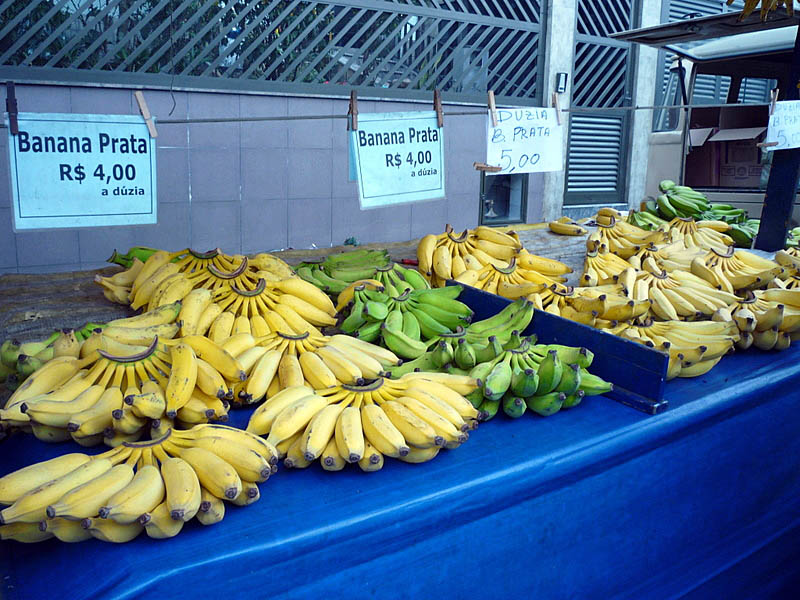
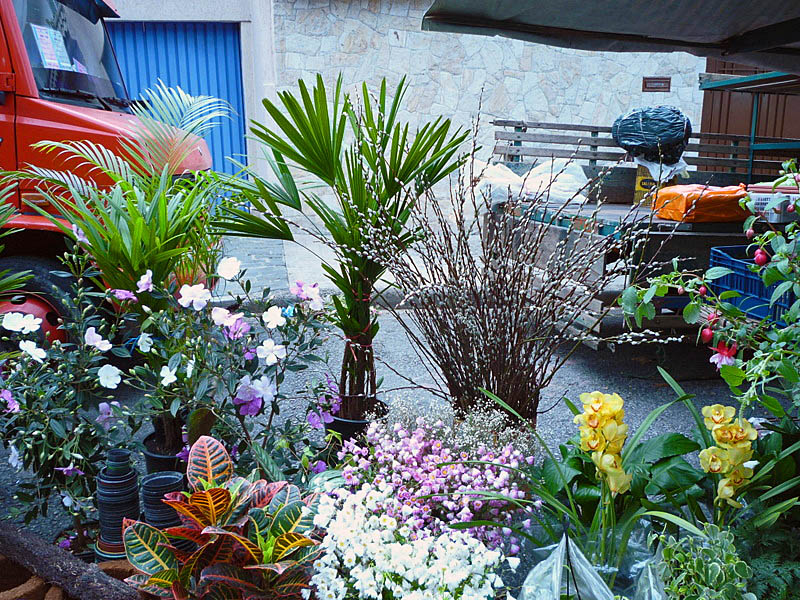 Street markets – or “feiras” in Portuguese – are a big tradition in Sao Paulo. Each neighborhood has its own weekly market, with the same vendors arriving early in the morning to set up their shops, with their voices getting louder and prices getting smaller as the hours pass. Usually it’s over by 1 or 2 pm. Near my Mom’s house the street market happens on Wednesdays, and she recalls that when she moved from Rio to Sao Paulo back in 1953, the feira was only a few years old, and only had a handful of stands. Last Wednesday our stroll through the market left us both amazed by the variety of vendors and the quality of their produce. Keep in mind that this trip took place during the dead of the Brazilian winter, which means the thermometers might drop to about 60F. These temps drive paulistas to heavy scarves and jackets, and then they still walk around shivering and chattering their teeth… We couldn’t believe our eyes when we were jogging in the park early that morning, and saw a few dogs wearing jackets to protect them from the cold (a bone-chilling 61F. ;-))
But, back to the important stuff. Each market, no matter the location, has two mandatory stands by the main entrance: one selling freshly made pasteis (for a flashback click here) and right next to it, one selling “garapa,” a refreshing, sweet drink made from pressed sugar cane. The vendor has a machine that literally presses the sweet juice from the sugar cane. It’s incredibly delicious! When I was a child, garapa was just that, pure cane juice, served over ice. Nowadays, one finds many variations, with fresh pineapple juice, lime or lemon juice, sometimes mint leaves. Each glass is made to order, and in the Summer the trucks selling garapa are surrounded by bees, going crazy by the scent of sugar, often trying to land on your glass to steal a taste. Here you see a garapa truck waiting for customers…

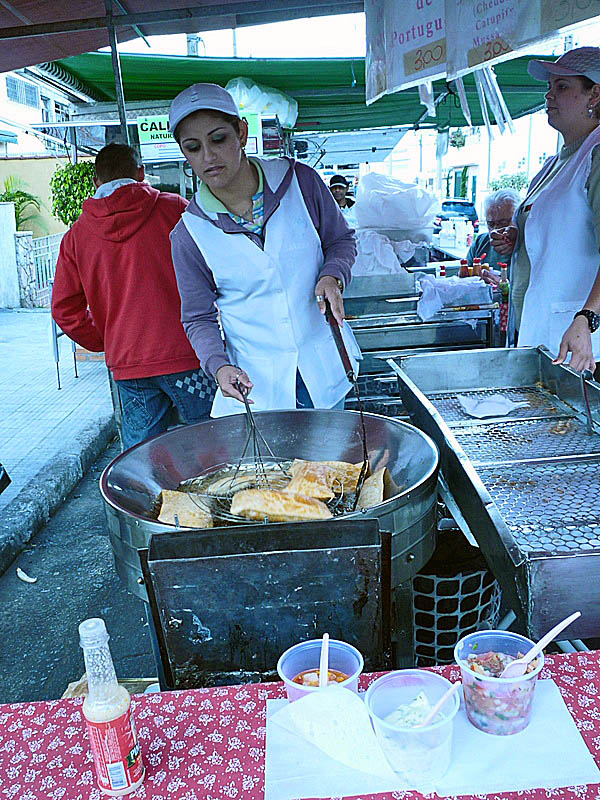
Pasteis also changed substantially from my youth, from two kinds (meat or cheese), to the many variations found today: three cheeses, hearts of palm, chicken, spicy sausage, shrimp, pizza, portuguesa (spicy sausage, hard-boiled egg and cheese) … the imagination is the limit. They even sell tiny pasteis with nothing inside, called quite appropriately “pasteis de vento”, or “wind-filled pasteis.” They are often served as appetizers at cocktail parties, and each is gone in one or two small bites, leaving crumbs all over your lips. They are messy to eat, but oohh so very tasty! You can see pasteis de vento in the photo below, they are inside big plastic bags, each holding a few dozen of these delicacies.

and here you see the real pasteis, fried as the customer waits, with the filling of his/her choice…
Then, the fun begins! Take a look at the fruits and veggies, all available at this time of the year in my hometown (each photo can be enlarged by clicking on it).


Butchers are ready to prepare special cuts for you, or do jobs like cleaning livers – slivered liver sauteed with onions is a popular dish in Brazil, by the way. My Mom used to make it every Wednesday for my Dad to profit from the extra fresh liver always available at the street market.

If you want to see more, please take a look at the slideshow I set up at Picasa by clicking here. And if the photos got you wondering about cara’-moela, thanks to the help of my dear sister Norma you can learn about it here.
All I can say is that it was hard to be just an observer at the street market, as I had no opportunity to cook during our stay in Brazil. We were very spoiled guests for the whole 10 days: many wonderful home cooked meals with family and friends, home-made pizzas cooked in a wood-oven, desserts galore!
But the best of course, was spending time with my Mom, who even made pot roast for us, something she had not cooked in more than 5 years. Didn’t I say we were spoiled guests? 😉

ONE YEAR AGO: Groceries
TWO YEARS AGO: A Souffle to Remember…. Julia Child






 Bewitching Kitchen