ASPARAGUS PESTO

My dear friend and great cook Cindy raved about this recipe during the peak of asparagus season.  Full disclosure: the year was 2010.  Yes, it takes me a while to get to important stuff, but I finally made it. Better late than never!  I am fond of the traditional Genovese pesto, but often find it a bit overwhelming.  This version takes just a bit of basil in a sea of asparagus, and I guarantee if you make it even the die-hard asparagus haters (like two of my stepsons ;-)) will fall for it.
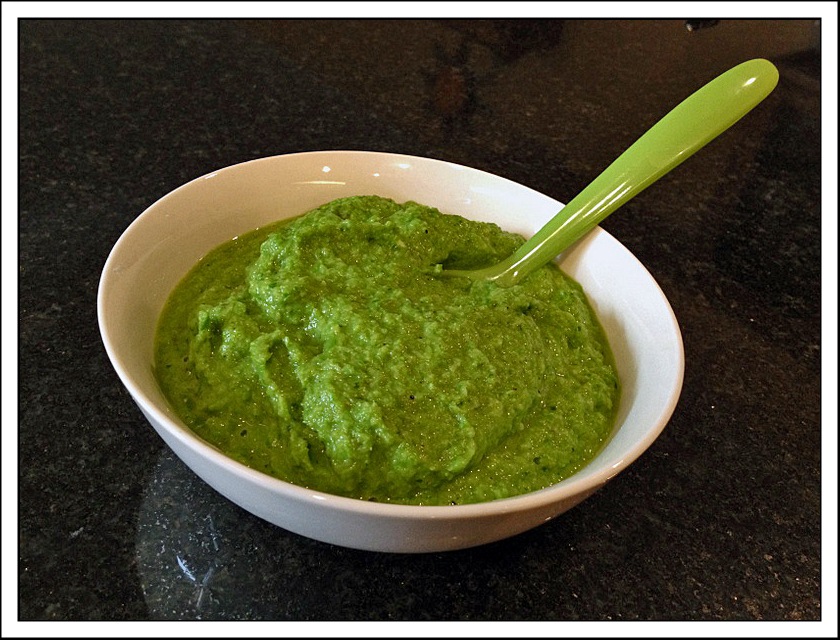
ASPARAGUS PESTO WITH WHOLE WHEAT PASTA
(adapted from Cindy, who adapted it from Michael Chiarello)

1 lb asparagus|
1 cup (lightly packed) basil leaves
2 tablespoons slivered almonds, toasted
1 clove garlic, sliced
Salt and freshly ground pepper to taste
1/4 cup low fat yogurt
about 1/4 cup extra virgin olive oil
1/2 cup grated Pecorino cheese
zest of 1 lemon
1 tablespoon lemon juice

Boil the asparagus in salted water until very tender. Drain, reserving the water, and cool slightly. Put in a food processor with the all of the other ingredients except the oil, and puree well. With the machine running, slowly add the olive oil. Taste and adjust for seasonings and consistency. It should be about the thickness of mayonnaise.

Return the water used for cooking the asparagus to a boil and cook pasta. Drain, reserving about 1/2 cup of the pasta cooking water. Mix the pasta and pesto, thinning with the pasta cooking water as necessary. Taste and adjust seasoning.

ENJOY!

to print the recipe, click here

We had this pasta with a juicy, thick salmon steak, cooked to perfection by the master grilling-guru whom I married 12 and a half happy years ago.  The pesto was excellent with the whole wheat pasta, but a small amount topping the hot salmon just as it left the grill was mind-blowing delicious!    I actually think grilled salmon and asparagus pesto might be the gastronomic discovery of 2012 for me, and I have to thank Cindy for it.

And now, for something completely different, once again.  While reading Sawsan’s blog, Chef in Disguise, I learned that she’s got two awards:  The Versatile Blogger, and Very Inspiring Blogger.  I smiled and told myself  “she definitely deserves them both!”.    Much to my surprise and delight, she passed them to a few bloggers and there was the Bewitching Kitchen! Now I am the proud receiver of those awards too!   Versatile, maybe. Inspiring?  Wow, that would be awesome…

Thanks so much, Sawsan!

ONE YEAR AGO: Chocolate and Chestnut Terrine

TWO YEARS AGO: Under the spell of lemongrass

THREE YEARS AGO: Greens + Grapefruit + Shrimp = Great Salad!

ORZO WITH HEIRLOOM TOMATO RELISH

I fell in love with heirloom tomatoes this year, and my passion only intensifies the more I use them.  Get a bunch of tomatoes, of all colors and shapes you can find.  Dice them, keep the skin and the seeds.  This is a simple dish.  Refreshing, absolutely perfect for a 110 F day (that is 43 C, folks!).   Actually, I am not complaining: my Brazilian nature takes the heat with poise, dignity,  and uncooked pasta sauces.  😉

ORZO WITH HEIRLOOM TOMATO RELISH
(from the Bewitching Kitchen)

1 cup uncooked orzo
3-4 heirloom tomatoes, diced
kalamata olives, pitted, coarsely diced
fresh parsley, minced
1 Tablespoon olive oil
1 Tablespoon lemon juice
splash of white balsamic vinegar
salt and black pepper to taste
crumbled feta cheese
lemon zest to taste (optional)

Start by making the relish:  mix in a bowl the diced tomatoes, olives, season with salt and pepper, add the olive oil, lemon juice, and balsamic vinegar.  Stir occasionally as you boil the water to cook the orzo.

Cook the orzo according to the package instructions.  Drain, add it to the fresh tomato mixture, mix the parsley, add the crumble feta on top, and mix gently, no need to try to fully incorporate it.  Serve with a nice sprinkle of fresh lemon zest on top, if desired.

ENJOY!

to print the recipe, click here

This dish is all about the contrast between hot orzo and cold relish.  I would have added capers if our bottle was not 312 miles away in another kitchen.  Sometimes it’s hard to keep track of what is where. Often while at a grocery store  in Manhattan we are sure to have something already in the fridge, and we sure do, but the fridge in question is in Norman… and vice-versa.  The bottom line: if you have capers, add them.  Leftovers are great cold too.

And now, for something completely different (great show, BTW)…  We are often concerned with the quality of the ingredients we use in our cooking, right? Let me now share with you something  equally important: the kind of labor involved in bringing an ingredient to your table.  Please jump here for a very informative article published in “Not Without Salt” and learn what may be hiding behind the gorgeous tomatoes you bring home.

ONE YEAR AGO:  Headed to Brazil!

TWO YEARS AGO: The Rhubarb Brouhaha: Revelation Compote

THREE YEARS AGO: Love me tender…

GRILLED CHICKEN PAILLARDS

Even during my pre-blogging days, repeating a recipe more than twice a month was quite unusual.  I’ve always enjoyed trying new recipes, and reserved the “oldies but goodies” for those extra-busy days in which I need something I can almost make in my sleep (chicken parmigiana is a good example).  Having said all that, here comes the shocker:  in the past month, I’ve made this chicken six times.  Six. Obviously, this new found friend is on the fast track to become an “oldie but goodie”.    😉

GRILLED CHICKEN PAILLARDS
(from the Bewitching Kitchen)

3 chicken breasts, boneless, sliced in half lengthwise
1/4 cup lemon juice + zest
1/8 cup lime  juice
1/4 cup olive oil
3 tsp grated ginger
1 tsp red pepper flakes (or less)
1 Tbsp honey
salt and coarsely ground black pepper

After slicing  each chicken breast in half, pound them carefully with a meat mallet (protecting the meat with some plastic wrap), until you have a thin filet, preferably less than  1/2 inch thick. You can see photos of the process here.

Mix all the ingredients for the marinade (lemon juice + zest, lime juice, olive oil, honey, ginger, and red pepper flakes), whisk well.  No need to try and form a stable emulsion,  just mix well and add the marinade to the chicken, coating the meat well.  Place in the fridge for a few hours or overnight.

When you are ready to cook it, remove it from the fridge  and leave the filets in a single layer on a baking dish for 30 minutes to bring to room temperature.  Right before grilling,  season with salt and pepper on both sides.

Cook on a hot grill for 6-8 minutes total time, flipping the filets halfway through cooking time, and serve it with lime or lemon slices.

ENJOY!

to print the recipe, click here

Comments: I love many things about this recipe: the citric flavor, boosted by the ginger, the way the small amount of honey ensures gorgeous grill marks with a deep brown tone, how quickly it comes to the table, and how it shines next to many side dishes, from salads to pasta, from rice to couscous.

Since I use a high proportion of citric juice to olive oil, at first I was worried that a long marinating time could hurt the meat.  This recipe was put to test when I had to change plans for our dinner, and my marinating chicken breasts stayed in the fridge for 2 days!   No problem whatsoever, the meat turned out great, with a slightly more intense citric flavor, but no unpleasant “mushiness” from excessive interaction with acidity.

Leftovers are perfect as part of a high protein lunch, if you are into that sort of meal.  I make my little yogurt-oatmeal pancake, a hard-boiled egg to go with it, and call it a day…

You can vary this recipe in countless ways.  Use white wine as part of your marinade, use orange juice instead of lemon juice, or orange marmalade in place of honey.  The idea is to have acidity plus sweetness (from honey or agave nectar, or even brown sugar), and a little oil to make sure the thin cutlets won’t end up all dry and tasteless. Of course, do not over-cook the meat, keep an eye on it, the temperature of grills may vary a lot, ours tries to mimic the surface of the sun.  😉

Note added after publication:  I just saw a blog by Greg for Asian Fusion chicken, and he adds Sriracha to his marinade.  Genius!  Check it out here.  I’ll be trying it next time.

ONE YEAR AGO: Slow-baked Salmon

TWO YEARS  AGO: Hoisin Explosion

Add to FacebookAdd to DiggAdd to Del.icio.usAdd to StumbleuponAdd to RedditAdd to BlinklistAdd to TwitterAdd to TechnoratiAdd to Yahoo BuzzAdd to Newsvine

FARFALLE WITH ZUCCHINI AND RICOTTA

Last week, after one particularly hectic day in the lab,  I had no desire to stop at the grocery store on my way home.  Instead, I improvised, using a few things in the fridge leftover from past culinary adventures:  one reasonably large zucchini,  half a container of ricotta cheese, and a Meyer lemon abandoned inside the fruit drawer.

FARFALLE WITH ZUCCHINI AND RICOTTA
(from the Bewitching Kitchen)

farfalle pasta (or other favorite shape, enough for two)
1 Tbs olive oil
1 shallot, finely diced
1 large zuchinni, ends removed, shredded
zest of half a Meyer lemon
juice of Meyer lemon
3/4 cup ricotta cheese
salt
coarsely ground black pepper to taste (don’t be shy!)

Cook the pasta according to the package instructions.

Heat the olive oil in a large saute pan, add the shallot, season with salt, and cook until translucent.  Increase the heat to high, and add the zucchini in a single layer. Do not touch it, allow it to cook undisturbed for a couple of minutes.  Add the lemon zest, and stir the zucchini around.  Add the black pepper,  the ricotta cheese, stirring gently to form a sauce. Add the lemon juice, keep warm until the pasta is cooked al dente.

Add the cooked pasta to the skillet, reserving some of the cooking water. If necessary, add some of it to the farfalle/zucchini mixture.   Heat everything together in low heat for a minute.  Serve, with the optional grating of good parmigiano-reggiano on top.

ENJOY!

to print the recipe, click here

Comments:  I love zucchini and ricotta cheese together (and a Meyer lemon will always be welcome), but I must say what really made this dish was…. the cracked black pepper!   Italians know a thing or two about cooking, and their “cacio e pepe” pasta is a classic for excellent reasons. This dish reminded me of it, even with the other components fighting for attention with the “Piper nigrum“.  😉

Use as much pepper as you’ll be able to enjoy, and keep it on the coarse side. The little bits of peppery heat will make this simple meal quite special.

ONE YEAR AGO:  Anchovies, the final frontier!

TWO YEARS AGO:  Miche Point-a-Calliere

Add to FacebookAdd to DiggAdd to Del.icio.usAdd to StumbleuponAdd to RedditAdd to BlinklistAdd to TwitterAdd to TechnoratiAdd to Yahoo BuzzAdd to Newsvine

CELEBRATE WEDNESDAY: HEIRLOOM TOMATOES STEAL THE SHOW

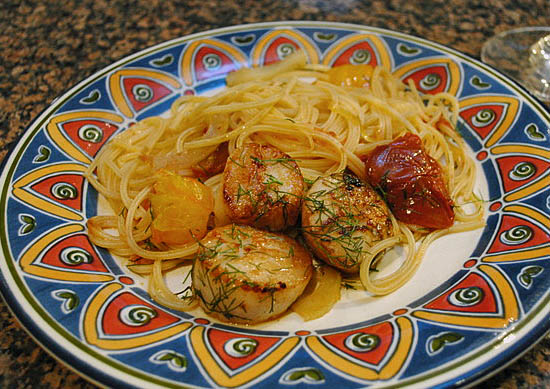
Ideally, my Wednesday special meal will catch Phil by complete surprise, but this time he had been snooping around the depths of our fridge. Just as I was getting ready to cook dinner, he asked me with a big smile “we’re having scallops tonight for dinner, aren’t we?”.  Bummer. Just could not get him this time.

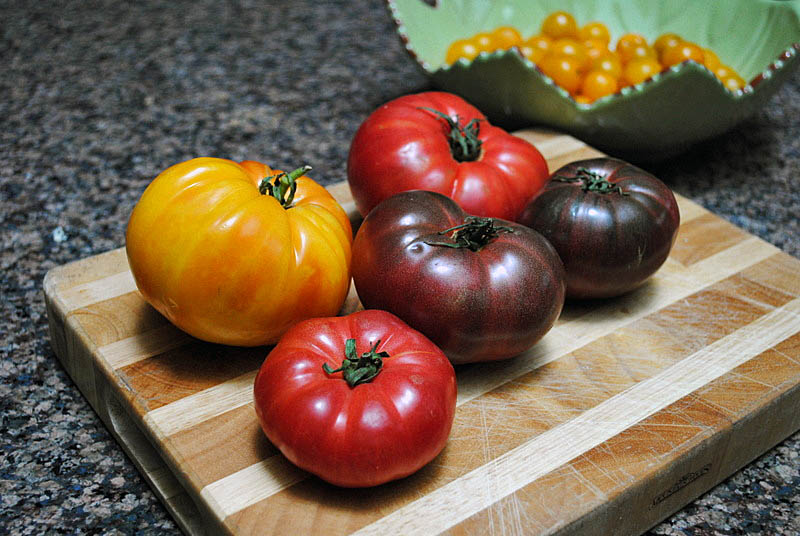
I had the inspiration for this meal when I brought home a couple of heirloom tomatoes, and was blown away by how juicy and delicious they were.  I went right back to the store and bought some more.    They turned into a fantastic sauce, paired with leeks and a thinly sliced fennel bulb.  Scallops crowned the meal with their touch of class, always welcome. Another Wednesday evening made ultra-special!

PASTA WITH SCALLOPS IN HEIRLOOM TOMATOES AND FENNEL SAUCE
(from the Bewitching Kitchen)

1 Tbsp olive oil (+ a little more for searing scallops)
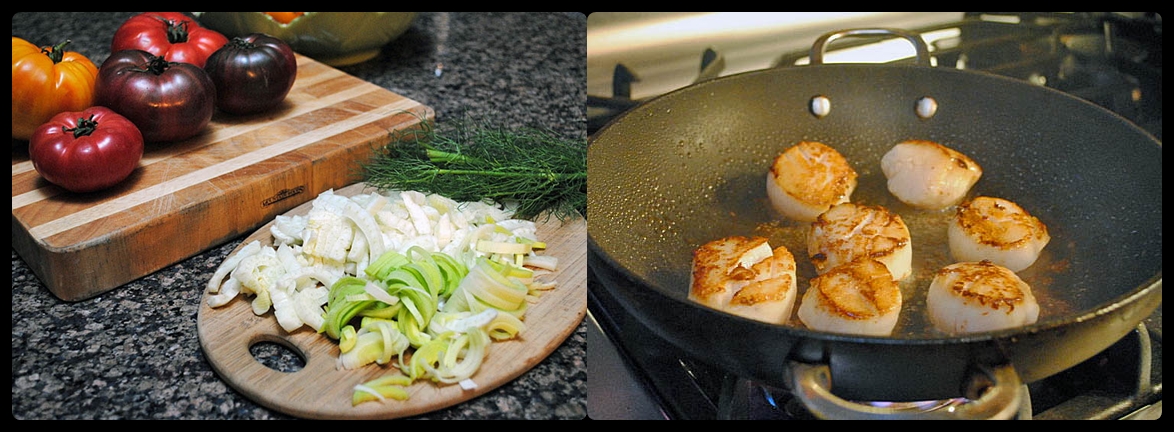
1 leek, white part only, thinly sliced
1 fennel bulb, thinly sliced, frowns reserved
3 to 4 heirloom tomatoes, depending on their size
salt and pepper
1 Tbsp orange zest, divided
8 sea scallops
¼ tsp ground fennel
spaghetti, or pasta of your choice

Boil the water to cook the pasta.

Core the tomatoes and cut them in large chunks, but don’t seed them.  Reserve.

In a large skillet, heat the olive oil, then saute the leeks and the sliced fennel for about 5 minutes, seasoning with salt and pepper.  When they are soft and starting to get some golden color, add the tomatoes and half the orange zest. Cook, stirring, until the tomatoes start to melt and release a lot of juice.  Cover the pan, and keep at a simmer.

Cook the pasta, and when it’s 5 minutes from being ready, heat a non-stick skillet on high heat, add olive oil just to coat the surface lightly.  Pat the scallops dry, season lightly with salt, pepper and ground fennel, and sear them, 1 to 2 minutes per side.

Reserve some of the pasta water, drain the pasta and add to the tomato/fennel pan, increase the heat slightly, and let the pasta and the sauce cook for a minute or so together. If needed, add some of the pasta water to the sauce.  Add the remaining orange zest, the scallops on top, and sprinkle with minced fennel fronds right before serving.

ENJOY!

to print the recipe, click here

If you make this dish with “regular” tomatoes, it simply won’t be the same, so try to find these funky looking babies, they are superb, particularly the brown ones.  We could not get over the flavor of this dish, so few ingredients, but they work together beautifully, and the scallops (make sure you get a nice sear on the outside) are not overpowered by the sauce.

Normally I reserve the pasta water to adjust the consistency of a pan sauce, but in this case it was not necessary to add any.   The tomatoes did their job providing all the moisture to coat the pasta strands.

If you don’t like scallops,  shrimp could be a good option, or chicken breast filets.  If you want to keep it vegan,  maybe grilled tofu could work too.  But don’t mess with the heirloom tomatoes!

ONE YEAR AGO: Pain de Provence

TWO YEARS AGO: Golspie Loaf

Add to FacebookAdd to DiggAdd to Del.icio.usAdd to StumbleuponAdd to RedditAdd to BlinklistAdd to TwitterAdd to TechnoratiAdd to Yahoo BuzzAdd to Newsvine