FOR THE LOVE OF BREAD

A few years ago, a small revolution  took place among American bakers  after the publication of the ‘no-knead bread recipe“.  It was hard to surf the internet food world without daily encounters of posts about it.  Like many other people, I boarded that train, which I do not regret.  As a result of the “no-knead” recipe, I baked good bread at home, which was something I’d struggled with for years.  Also thanks to the “no-knead” recipe, I gained the self-confidence to attempt more elaborate breads, until my travels took me to an unforgettable turning point:  the “Handmade Loaf“, by Dan Lepard.

I now have too many bread-baking books,  but  The Handmade Loaf is the one that I cherish, in part because his respect and love for everything about bread shines through in every sentence.  Technically, his instructions are flawless and his photography is superb.  Sure, I can make and enjoy a loaf of bread that was mixed in five minutes, but that’s not the bread that I fell  in love with.  Rather, this is it….
WHITE THYME BREAD
(Dan Lepard’s  Handmade Loaf)

350 g bread flour
1 tsp sea salt
150 g water
150 g sourdough starter
1/2 tsp fresh yeast (I used instant)
25 g olive oil
100 g pitted green olives
1 tsp fresh thyme leaves, chopped
cornmeal

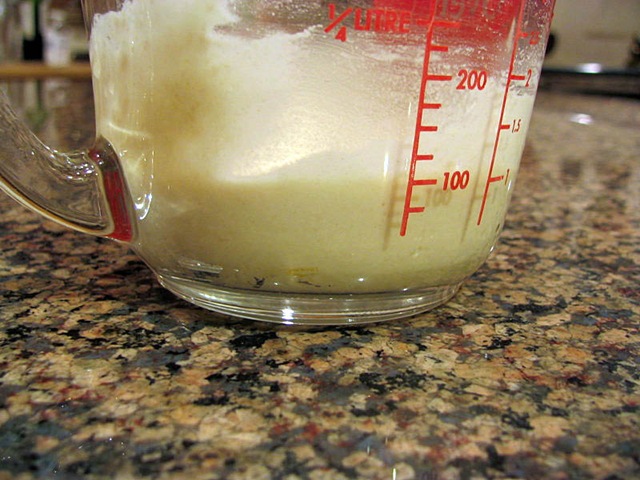
Combine the flours with the salt in a large bowl. In another bowl, whisk the water, starter, yeast, olive oil, olives, and thyme.  Add the liquid to the flour, then stir with your hands. Form a loose ball with the ingredients and allow it to rest for 10 minutes.

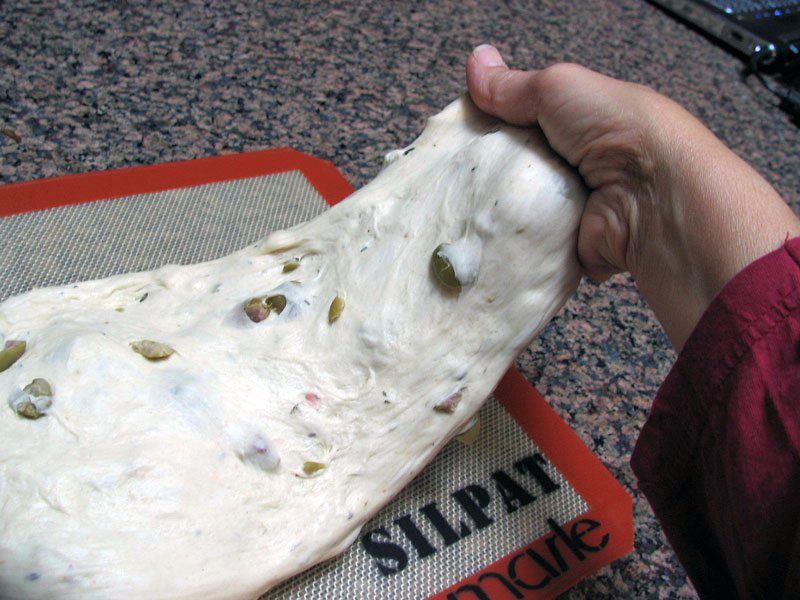
Proceed to kneading the dough three times at 1o minute intervals. Each kneading cycle will last only 10-15 seconds.  After the last kneading cycle,  let it rest for 10 minutes and form it into a rectangle.  Fold it by thirds like a letter, let it rest for 1 hour.  Stretch the dough again, fold it by thirds, allow it to rest for another hour.  Shape the dough very gently into a rectangle and pat the surface with your fingers  to flatten it slightly.   Sprinkle cornmeal on the surface, cover with a cloth and allow it to rise for 45 minutes.

Bake in a 425F oven for about 40 minutes.

ENJOY!

I am submitting this post to Susan’s Yeastspotting….

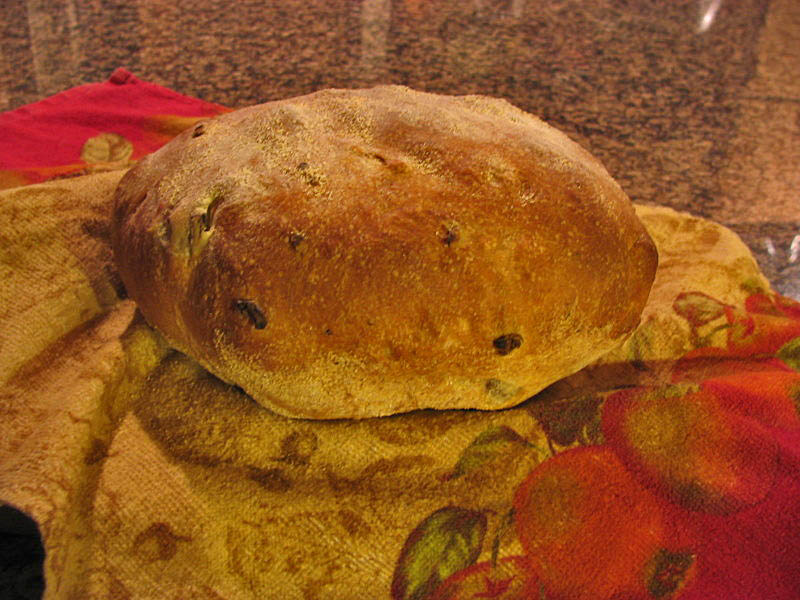
Comments: I’m not sure why this bread wasn’t called “White Thyme Bread with Green Olives,” as they are so obvious in the loaf.  Make sure to use best quality green olives;  Dan suggests piccolini olives from France, even if you have to pit them yourself.

The bread is supposed to be quite flat, but I decided to form a more rounded shape.   I could have slashed the surface,  but I didn’t expect as much oven bounce as it achieved during baking.

This bread is a departure from his white levain, because it calls for a small amount of commercial yeast in the dough.  That adjustment reduces the fermentation time, and creates a slightly less “creamy” crumb.  The addition of olive oil allows the flavor of thyme to permeate  the crumb, imparting an assertive, but not overpowering taste.

It’s bread as bread should be.  Thank you, Dan!

Here are some photos of the process…  Keep in mind that I gave only a short, summarized version of the recipe.  In the book, Lepard goes through all the steps in detail.  So, if you want to make  a loaf of bread in your own home that you can write a poem about later, then consider buying The Handmade Loaf.   It’s worth every penny.

Easy to fall in love…

KOREAN-STYLE PORK WITH ASIAN SLAW

Korean food is wonderful, and in my opinion, under-appreciated. When I lived in Sao Paulo, I loved a restaurant that specialized in Korean barbecue, a gastronomic experience not to be missed.   Unfortunately, our current location is less blessed with good restaurants, and Korean food is nowhere to be found.  The only way to satisfy my cravings is to cook it at home! I’ve made this dish many times since it was first published in Fine Cooking, and it’s become one of our favorites.

(receita em portugues na pagina seguinte)

KOREAN-STYLE PORK WITH ASIAN SLAW
(adapted from Fine Cooking #78, April 2006)

2 small pork tenderloins (about 1-1/4 lb.)
1/3 cup soy sauce
2 Tbs rice vinegar
2 Tbs. brown sugar
1 cloves garlic, minced
1-1/2 Tbs. minced fresh ginger
1/2 Tbs. Asian sesame oil
1/2 Tbs.  Asian chile sauce (like Sriracha)
2 to 4 Tbs canola oil

for salad
1 lb. napa cabbage, thinly sliced (about 6 cups)
1 cup grated carrot
4 scallions (both white and green parts), trimmed and thinly sliced
1 Tbs. canola or peanut oil
1/2 tsp sesame oil
2 Tbs. rice vinegar
1 Tbs brown sugar
Kosher salt

Trim the pork of any silverskin and excess fat, and cut on the diagonal into 1/2-inch-thick medallions. Pound each slice gently with a meat mallet, protecting it with plastic wrap as you pound it.

In a small measuring cup, whisk together the soy sauce, 2 Tbs. of the rice vinegar, 2 Tbs. of the brown sugar, the garlic, ginger, 1/2 Tbs. of the sesame oil, and 2 tsp. of the chile sauce. Toss 1/2 cup of this mixture with the pork medallions in a large bowl; reserve the remaining mixture to use as a sauce, if you want.  Let the pork sit at room temperature for 25 minutes or refrigerate for up to 12 hours.

Meanwhile, in another large bowl, toss the cabbage and the carrot with half of the scallions, 1 Tbs. of the canola oil, 1 tsp. salt, and the remaining 2 Tbs. rice vinegar, 1 Tbs. brown sugar, 1/2 Tbs. sesame oil, and 1 tsp. chile sauce. Let sit for 15 minutes, toss again, and transfer to a large serving platter.

Heat 2 Tbs. of the canola oil in a 12-inch, heavy-based skillet over medium high heat until very hot. Remove the pork from the marinade, shaking off the excess, and transfer the pork to a clean plate. Discard the marinade. Add half of the pork medallions to the skillet, spacing them evenly. Cook them without touching until well browned, about 2 minutes. Flip and cook until the pork is just cooked through about 2 more minutes. Set the pork on top of the slaw. Pour out the oil and wipe the pan with paper towels (if the drippings on the bottom of the pan look like they may burn, wash the pan). Return the pan to medium-high heat. Add the remaining 2 Tbs. canola oil, and cook the remaining medallions in the same manner. Top the slaw with the remaining pork, and pour the reserved soy-ginger sauce over the medallions. Serve immediately, sprinkled with the remaining scallions.

to print the recipe, click here

Comments – Napa cabbage is best in this recipe, but I’ve made it with regular green cabbage too.  In that case,  it’s important to slice it thin, otherwise it can be a little too crunchy.   This dish surprised us because it’s tastier than  expected from the ingredients and preparation.  I usually marinate the meat in the morning, and leave it in the fridge the whole day, for a super-easy dinner after work.  Don’t be alarmed by the state of the frying pan when you finish cooking the meat: the high sugar content in the marinade tends to cause it to stick  to the pan, but it rinses off quite easily… no elbow grease needed.  😉

Instead of adding the reserved marinade on top of the meat, I advise you to try a little on your plate – some people might find it too strong.  I often skip the additional sauce, particularly when the meat was marinated for several hours.

para receita em portugues…

MAGICAL LAMB STEW with PARSNIPS, PRUNES, and CHICKPEAS

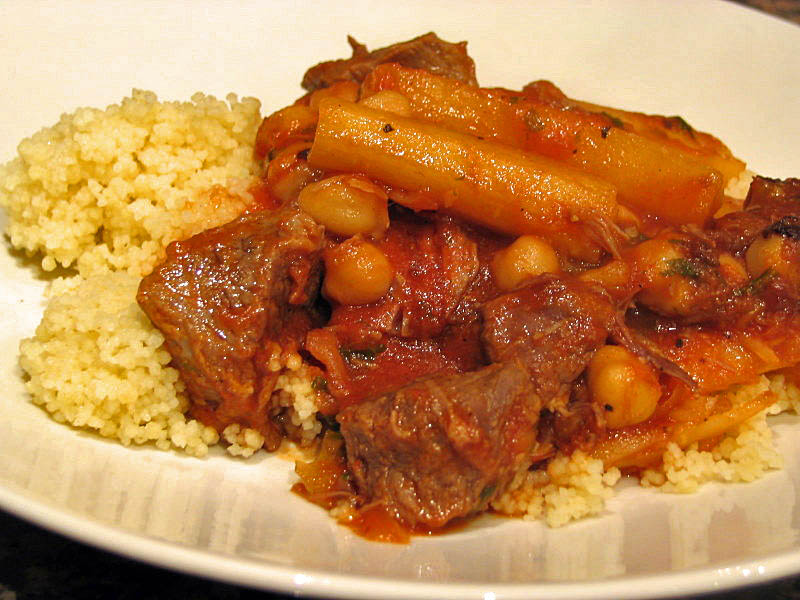
This recipe goes into the category of  “Perfect Saturday Night Dinner.”  From the recent issue of Fine Cooking magazine (number 102), contributed by David Tanis,  it has a  sexy flavor with a North African flair. The many tastes in this meal reminded me of the exotic couscous we used to savor on cold Parisian evenings by the Seine.
plate2

LAMB STEW WITH PARSNIPS, PRUNES, AND CHICKPEAS
(adapted from Fine Cooking magazine # 102)

For the Lamb
3 lb. boneless leg of lamb, cut into 1-inch cubes
Kosher salt and freshly ground black pepper
2 medium carrots, cut into 3-inch pieces
1 medium yellow onion, peeled and stuck with 1 whole clove
1 three-inch cinnamon stick
1 bay leaf

For the stew
2 Tbs. olive oil
1 large yellow onion, cut into small dice
Kosher salt and freshly ground black pepper
1 medium clove garlic, roughly chopped
1 Tbs. paprika
2 tsp. cumin seed, toasted and ground
2 tsp. coriander seed, toasted and ground
1/2 tsp. cayenne pepper
2 cups canned chickpeas, rinsed
12 pitted prunes, halved
1/2 cup tomato purée
1 lb. medium parsnips, peeled, cut into 2-inch pieces
1 Tbs. chopped fresh cilantro

Heat the oven to 350°F.

Season the lamb with 2 tsp. salt and 1/2 tsp. pepper. In a large Dutch oven combine the lamb, carrots, onion, cinnamon, bay leaf, and add water to cover. Bring to a gentle boil, cover and cook in the oven until the meat is very tender, about 2-1/2 hours. Strain the mixture through a fine sieve over a large bowl. Discard the vegetables and spices. Cool the lamb and broth, and refrigerate separately. Skim the fat from the broth before continuing.

Heat the olive oil over medium-high heat in a large pan. Add the diced onion, a pinch of salt, and a few grinds of black pepper and cook, stirring occasionally, until softened and lightly browned. Add the garlic, paprika, cumin, coriander, and cayenne and cook, stirring for a couple of minutes.

Stir in the chickpeas, prunes, tomato purée, and a pinch of salt. Add the reserved lamb and 4 cups of the broth and bring to a boil. Boil for 5 minutes and then turn the heat to low. Cover and simmer for 10 minutes. Add the parsnips and cook until tender, about 10 minutes. Season to taste with salt and pepper, and serve sprinkled with cilantro.

to print the recipe, click here

Comments – this is an unusual stew in the sense that the meat wasn’t browned before braising.    If David Tanis wasn’t the man responsible for the recipe, I’d have had second thoughts about trying it, but he is one of the chefs devising the dishes at Chez Panisse,  the famous Berkeley restaurant.   If he skips the browning, I’ll skip it too. 😉   But, after the 2.5 hours of  braising in the oven, I wasn’t too optimistic.  The meat looked pale and bland, like hospital food.  Without much choice (apart from dialing for pizza),  I finished the stew, and it was like a Phoenix born from the ashes…. the dish beautifully came together!   The lamb was super tender, and the spices permeated the meat, perhaps better than when it’s browned in advance.

We enjoyed it with couscous and a little naan bread.

I had visions of a magic carpet ride!  Maybe it will happen to you too…  😉

para receita em portugues, siga ate’ a proxima pagina

BBA#27: PORTUGUESE SWEET BREAD

This type of bread was a favorite of mine as I grew up,  but  back in Brazil it goes only by “sweet bread”  (pao doce) and is sold as a very small roll.  When I came to the US for the first time, I saw bags of “Hawaiian bread” that looked similar to the “pao doce” from my childhood.   Only a few years later I learned that indeed those are all the same, brought both to Hawaii and New England by Portuguese immigrants.  So, here we have  a bread that ties Portugal (the birth country of my grandparents), Brazil, and the United States (and for sure other countries influenced by the Portuguese culture).  Of course, I was more than excited to make this bread!
sliced

I remind my  readers that all recipes for the breads from “The Challenge”, cannot be published, so if you want to make any of these breads, buy Peter’s book.

His version of Portuguese sweet bread calls for a sponge made with a large amount of yeast, that ferments for two hours and is then incorporated in the dough.

Even though I work with microorganisms on a daily basis, it never ceases to amaze me how quickly they go to work once food is around…  Water, flour, sugar, and yeast, 90 minutes together…

sponge1sponge2

sponge3

The dough does not rise that much, after 3 hours it had barely doubled in size, but it seemed light and almost airy.  Into the oven it went…

beforerise

afterrise

The bread did not have much oven spring, but tasted very good, had a moist, soft crumb, a gentle hint of citrus, not too sweet, just right.

IMG_2795

Verdict: a nice, simple bread, not exactly like that of my childhood, but it’s ok, some memories are impossible to match… 😉

Check the Portuguese breads from my fellow bakers:

Txfarmer made a very cute version, shaping them as doves…. click here

Emily from Ready to Wait…. click here

Next on the list: Potato Rosemary Bread……   Stay tuned….

POTATO ROQUEFORT CAKES WITH RIPE PEARS

I don’t know Michael Bauer, so I have absolutely no ulterior motives for returning to the recipes of his book ‘Secrets of Success,” except for the fact that many of them result in absolutely delicious dishes 😉

This recipe comes from Fabrice Marcon, who was a sous chef for Paul Bocuse, and then opened his own restaurant in San Francisco, Hyde Street Bistro. His cuisine falls into the category of “French-Californian,” simple words that attract me the way that flowers attract bees. France and California: two places I called home in the past, that always bring a nostalgic smile to my face.

Try this dish, it’s very good.
potatocakes1

(receita em portugues na pagina seguinte)


POTATO ROQUEFORT CAKES WITH RIPE PEARS

(from Michael Bauer, Secrets of Success, original from Fabrice Marcon)

4 russet potatoes, scrubbed
8 ounces firm Roquefort cheese, crumbled
2 T olive oil
salt and pepper
2 Anjou pears, diced
1/2 pounds salad greens of your choice
1 tsp fresh tarragon, chopped
hazelnut oil

for vinaigrette

1 T red wine vinegar
1 t Dijon mustard
1 shallot, minced
1 T olive oil
salt and pepper

Heat the oven to 375F, and bake the potatoes until tender (about 1 hour). Let them cool until you can handle them, peel them, and transfer the flesh to a bowl. Mash slightly, add the roquefort and 1 T olive oil. Stir until smooth. Season to taste with salt and pepper, going light on the salt as roquefort is salty. Form the mixture into 4 equal patties, 1/2 inch thick. Refrigerate for 2 hours.

Make the vinaigrette by whisking the vinegar, mustard, and shallots in a small bowl to blend well. Slowly whisk in the olive oil to form an emulsion. Season with salt and pepper. Refrigerate until ready to use.

Heat the oven to 350F. Heat the remaining tablespoon of olive oil in a skillet over medium heat. Add the potato patties and brown on both sides until golden brown, 7 minutes total. Transfer them to the oven and bake for 5 minutes.

Meanwhile, make the salad. Toss the pears with the salad greens and tarragon. Add the vinaigrette and place in a serving bowl, or divide into individual plates. Top the salad with the potato cakes, and drizzle with a little hazelnut oil.

(serves 4 regular guests, or 2 very hungry people… )

ENJOY!

to print the recipe, click here

Comments – Great food is all about contrast. A little spice, a little sweetness, something smooth, something crunchy, teasing your palate at every bite. This dish is it. The roquefort cheese (which must not be too soft or the cakes will not stand up to the frying), counteract the sweetness of the pears extremely well, and the hazelnut oil ties it all. Who doesn’t like cheese, fruit and nuts? 😉 The cakes are wonderful by themselves, but please follow Marcon’s take on it, you won’t regret it.

Continue reading →