
Short Portuguese lesson for you. Queijo de Minas (listen to the pronunciation below), is a farmer’s type cheese traditional from the state of Minas Gerais, in Brazil. Every Brazilian grows up enjoying it. Soft, mild, slightly acidic, perfect on a piece of toast. It is also part of the dessert called Romeo and Juliet (a slice of cheese with a piece of goiabada on top. Next, we move on to “saudade”, a beautiful word that most linguists agree, has no good translation in other languages. AI tells me Saudade is…. “A deep, tender longing for someone or something you love but cannot have near you.” Basically Brazilians living abroad feel a permanent sense of “saudade de queijo de Minas”. But I am here to help. This is a recipe that is as close to the traditional as you can get. Outside Brazil, that is…
For listening to Queijo de Minas, click below:
For listening to “Saudade”, click below:
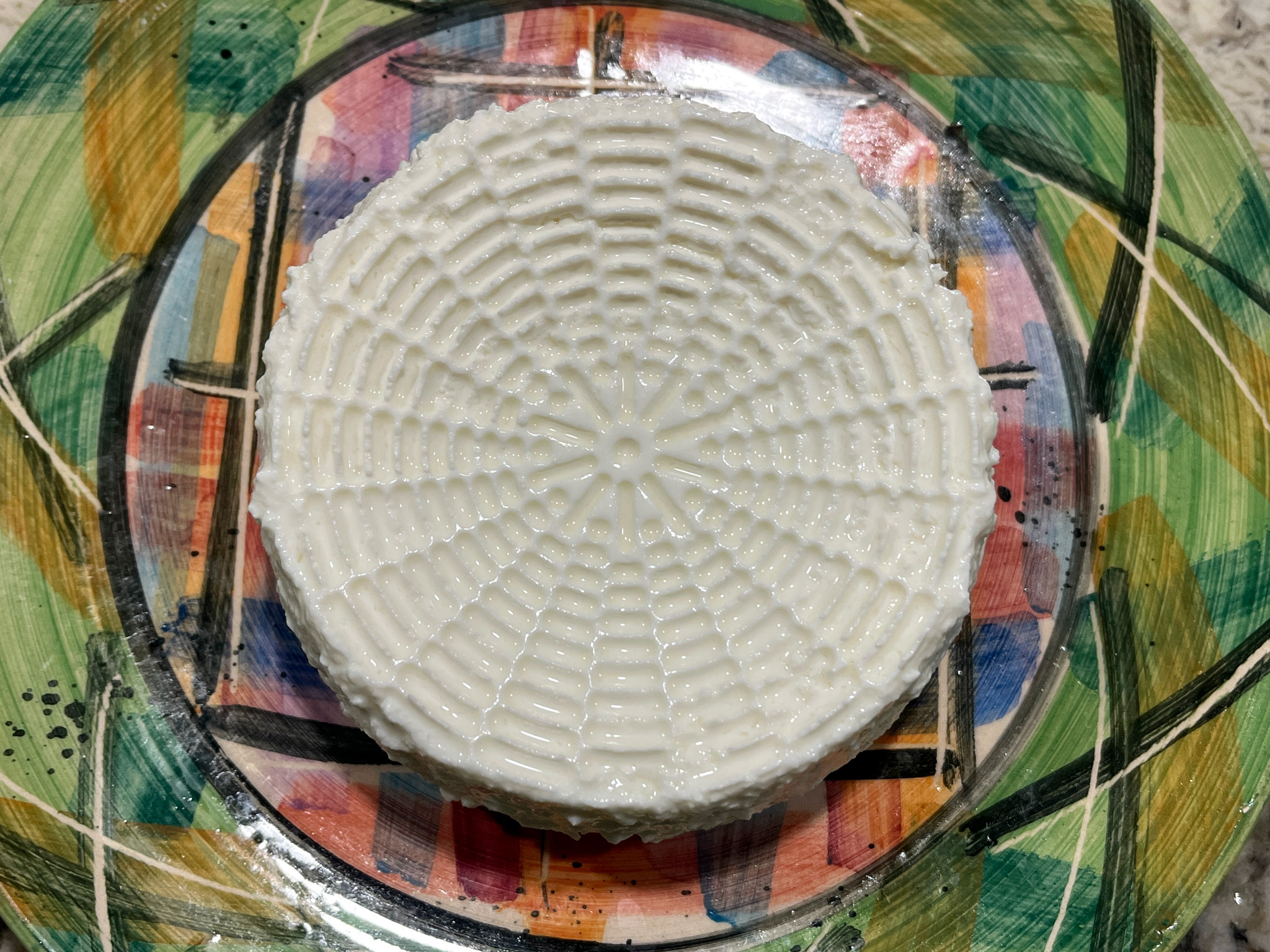
QUEIJO DE MINAS (BRAZILIAN FARMER’S CHEESE)
(from The Bewitching Kitchen)
makes 2 small cheeses
4 L full-fat milk
7g rennet
30-35g salt
Heat milk in a large pot to 85-90F. Add the rennet and salt, mix gently to fully combine.
Turn the heat off, cover the pan and let it sit for one hour at room temperature.
Break the curd with a wooden spoon, mixing gently. Drain the whey, pouring the liquid through a sieve with fine holes.
Transfer the curd to your cheese making container. If you prefer, line it with cheesecloth (probably a good idea). Place the container inside a large bowl, so that it can drain over the next 24 to 36 hours. Make sure to pay attention and discard the whey so it won’t risk to overflow.
After 24 to 36 hours, invert the cheese on platter. Read the comments for my advice about the timing.
ENJOY!
to print the recipe, click here
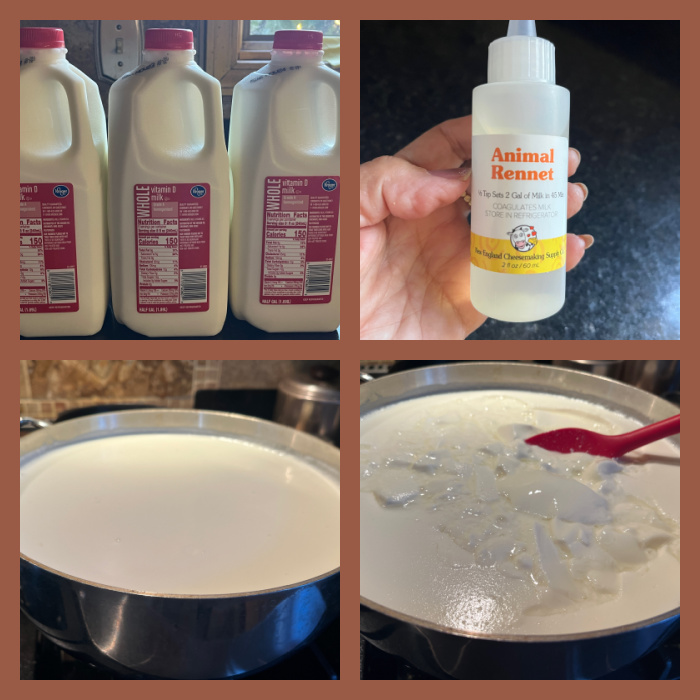
Comments: You can make ricotta by adding vinegar to milk, however, for Queijo de Minas that really mimics what you get in Brazil, you do need rennet. I used this one. For the molds, these worked perfectly. Keep in mind that to make this type of cheese, there is no need to press it down, just allow it to naturally drain. No need to buy a system that would have the additional insert to press the curd.
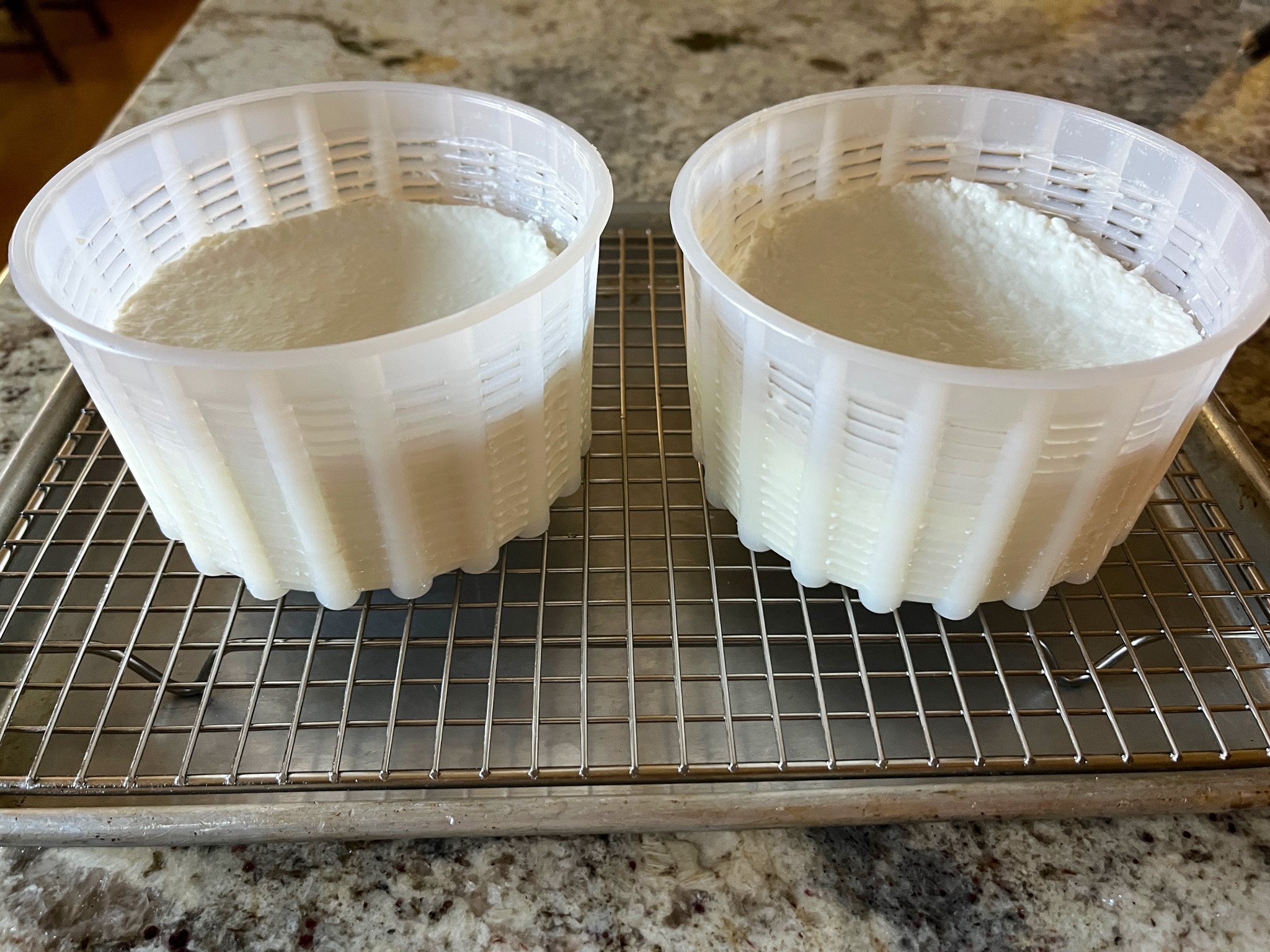
This is what it looks like in the beginning:
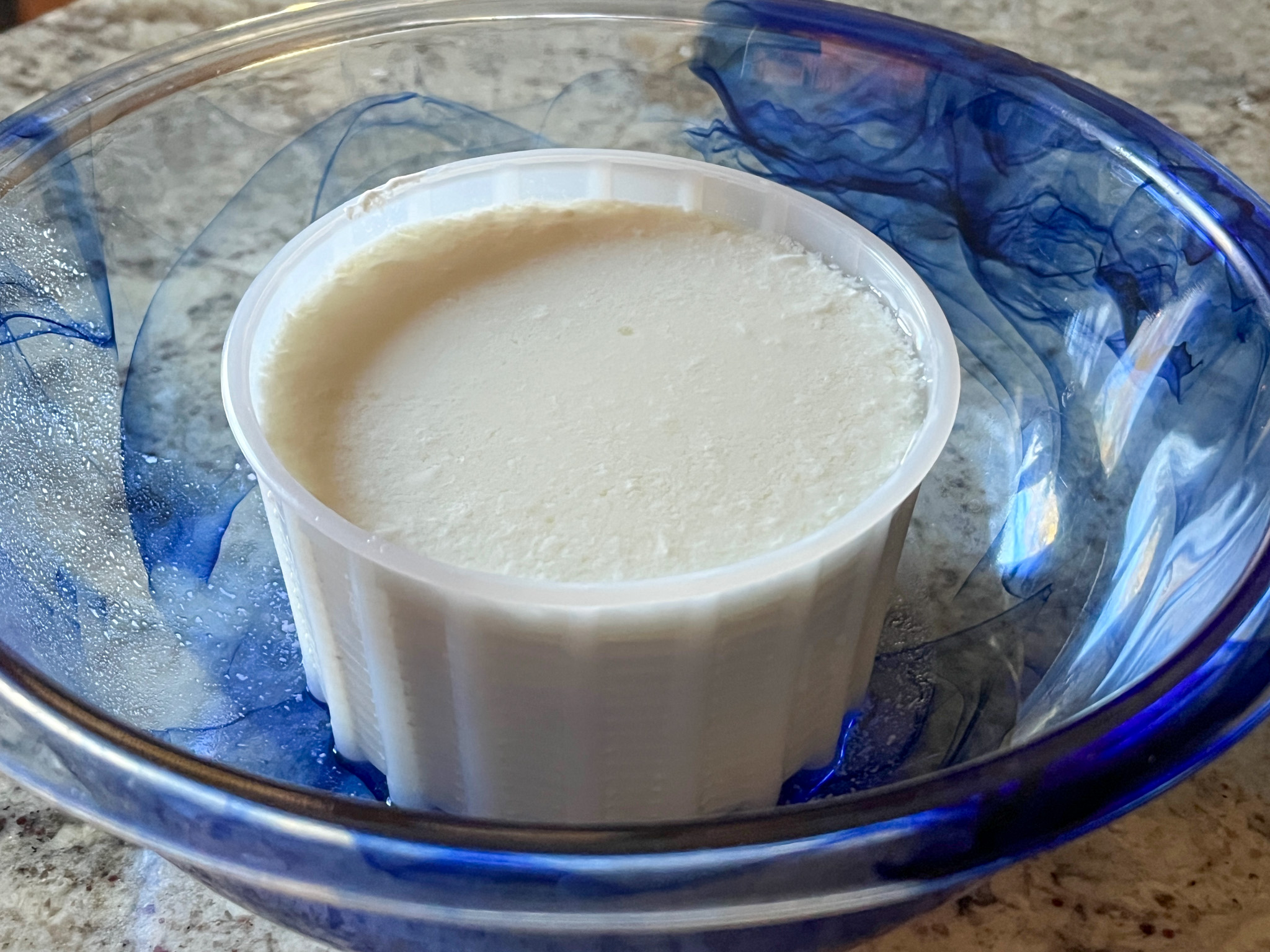
Two hours later…
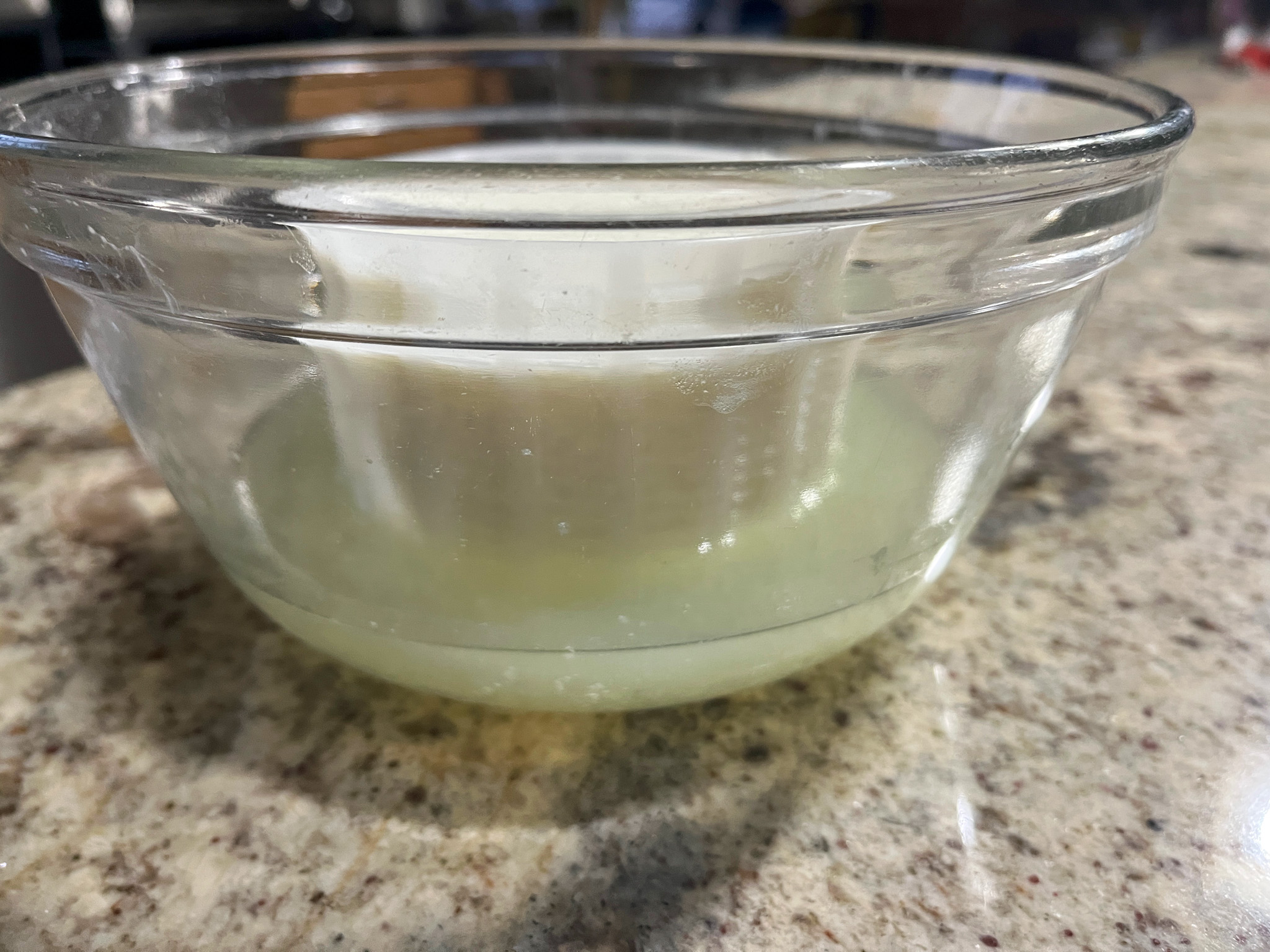
Twenty four hours later, after discarding the whey…
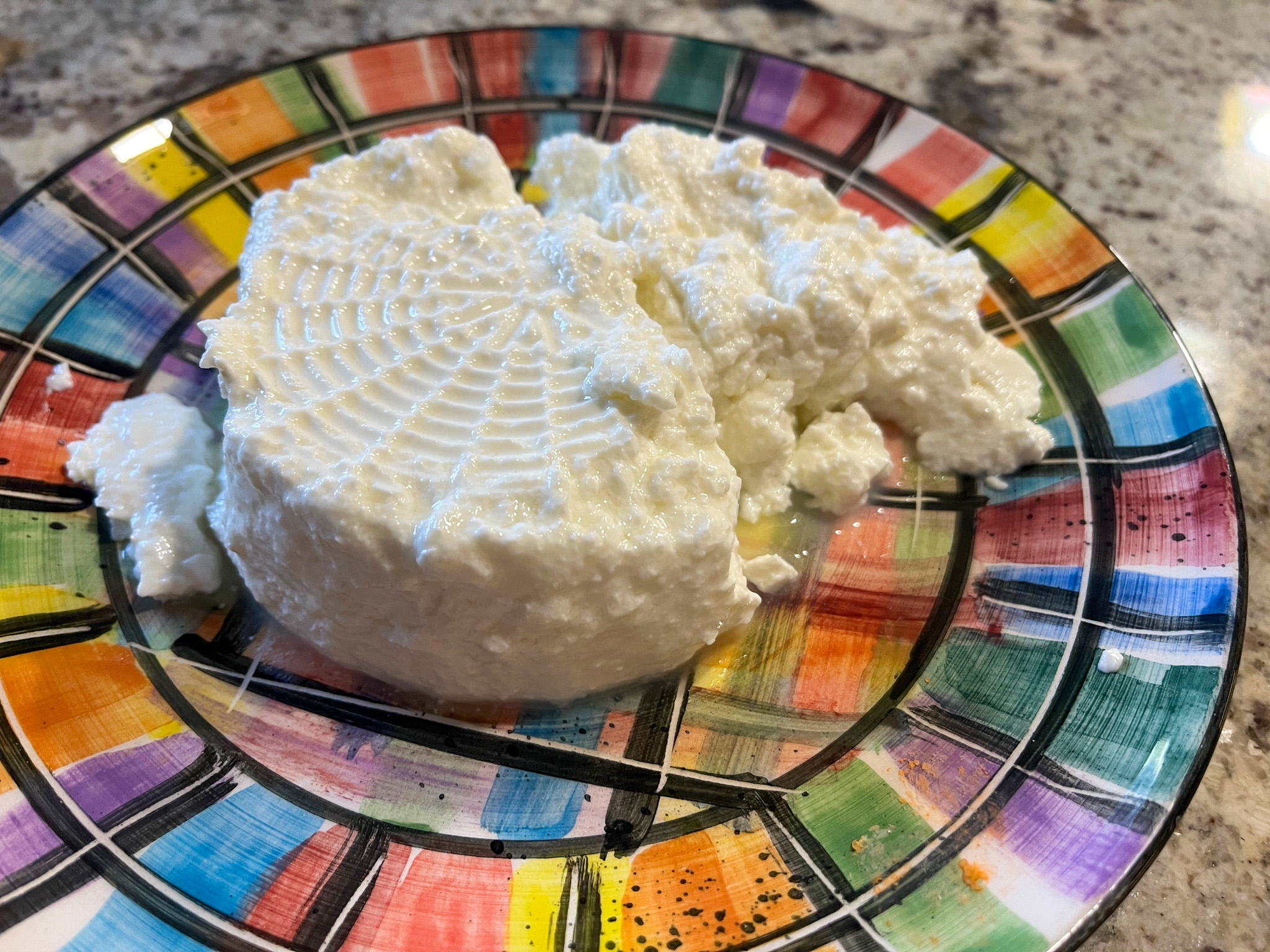
Then came the fun part. When I inverted it at 24 hours, it did not work well, the cheese was still too moist and kind of collapsed. I used it to make a “whipped cheese” and enjoyed it as a dip. Just placed it in the food processor, added a little extra-virgin olive oil, pepper, and processed until smooth.
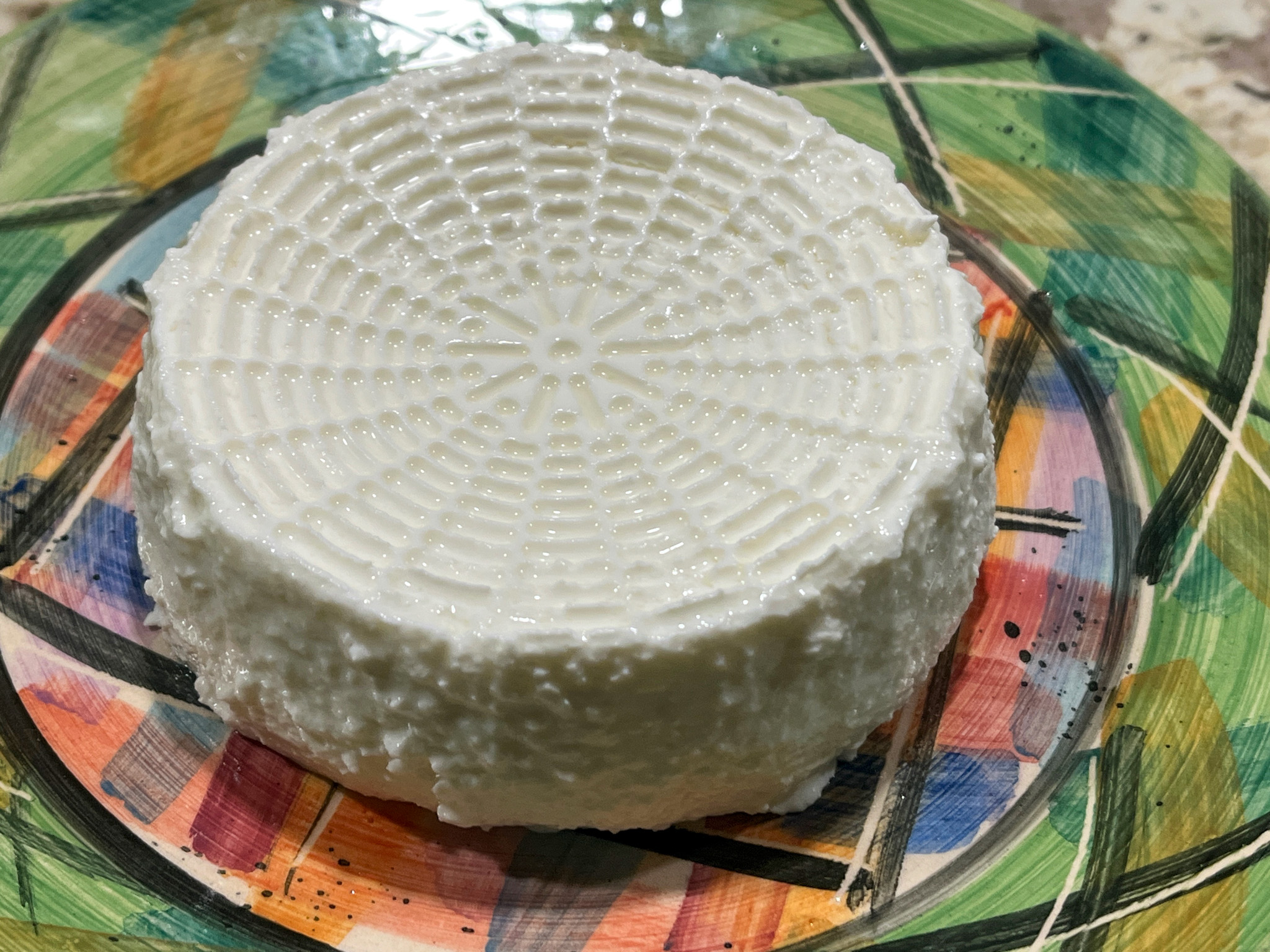
The second cheese I allowed to sit in the fridge for another 12 hours, for a total of 36 hours. Worked like a charm. You can use that as a guideline and starting point. It won’t hurt if you wait longer. I am a newbie at this, cannot say if there are signs to indicate the cheese is dry enough. At any rate, layering cheesecloth in the mold before pouring the curds in might be a good move to facilitate this step.
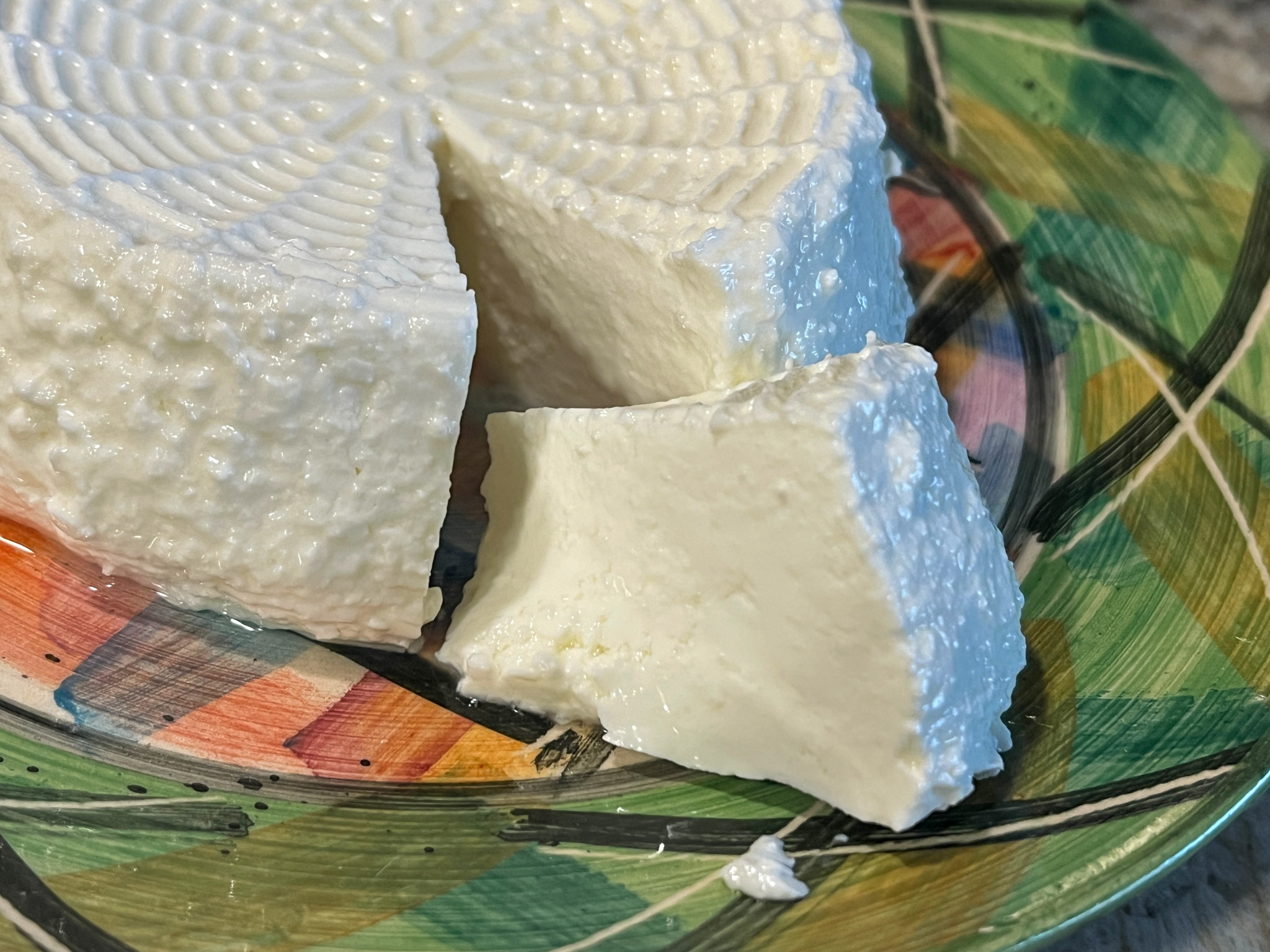
The cheese tasted just like I hoped it would… In Brazil we say “matar a saudade”, which means “kill the saudade”. It is a wonderful feeling, and yes, it happened!
1 YEAR AGO: Cheesy Chicken and Broccoli Bake
2 YEARS AGO: Barbari Bread and Hummus
3 YEARS AGO: Baking Through the Blogosphere
4 YEARS AGO: Crispy Air-Fried Zucchini
5 YEARS AGO: Pasta with Cremini Mushroom Ragu
6 YEARS AGO: A Magical Marinade
7 YEARS AGO: Roast Veggies with Black Barley
8 YEARS AGO: Pumpkin Sourdough
9 YEARS AGO: First Monday Favorite
10 YEARS AGO: Secret Recipe Club: Paalak Paneer, a Farewell Post
11 YEARS AGO: In My Kitchen, November 2015
12 YEARS AGO: Helen Fletcher’s Oatmeal Cookies
13 YEARS AGO: Thai-Style Pesto with Brown Rice Pasta
14 YEARS AGO: Shrimp with Spicy Orange Sauce
15 YEARS AGO: A Simple Appetizer (Baked Ricotta)
16 YEARS AGO: Sour Cream Sandwich Bread
17 YEARS AGO: Pasta with Zucchini Strands and Shrimp

