BBA#26: POOLISH BAGUETTES

These days the the wonderful aroma of bread is wafting through the Bewitching Kitchen  …   For those who don’t know about “The BBA Challenge“, a few months ago Nicole, of  “Pinch My Salt“, decided to bake every  bread from Peter Reinhart’s   book  “The Bread Baker’s Apprentice“, and sent out a virtual invitation to anyone interested in joining her.    It involves forty-three breads in all,  made in the order that they appear in the book.  Over two hundred people accepted the challenge, including me.  It’s been a ton of fun so far, with ups and downs, successes and failures.

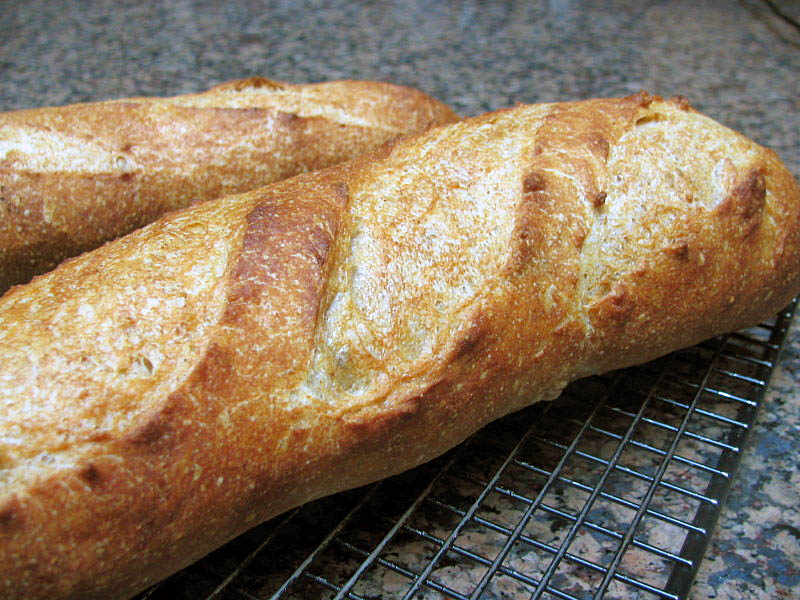
Here we are, at recipe number 26: Poolish Baguettes
twobaguettes1cut

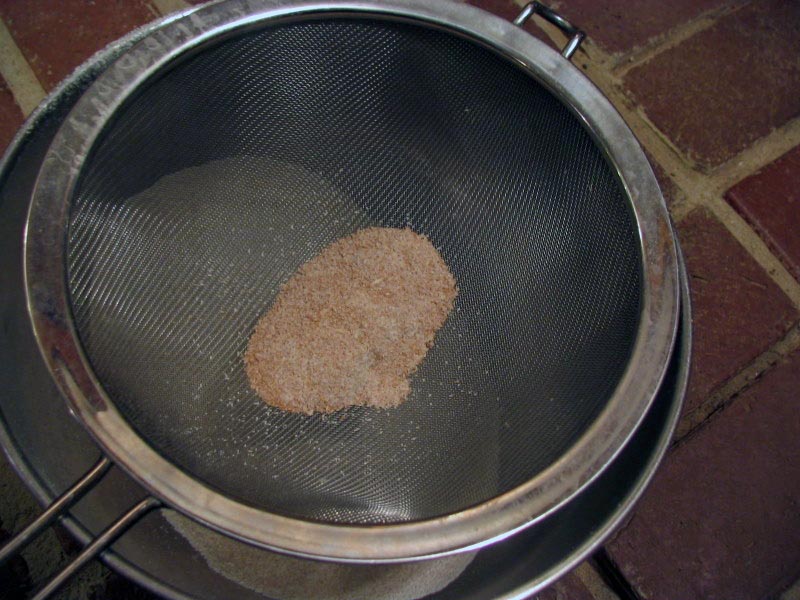
Poolish is a soft mixture of flour, water and yeast that ferments overnight (or longer) and then gets incorporated into a bread dough.  In this recipe, the dough contains both white and whole wheat flour, but the whole wheat is first sifted to remove some of the bran.  It’s an interesting method, and here’s all the bran left behind after sifting a few ounces of flour:
sifted

Reinhart’s recipe calls for kneading the dough.  I prefer folding instead of kneading, so that’s what I did: 3 folding cycles during the initial 2 hours of fermentation.  After cutting the dough into three pieces, I shaped each one as a baguette.  After two more hours rising, the baguettes were slashed with sharp razor blade, and placed in the oven.

Notice how bubbly the dough was…
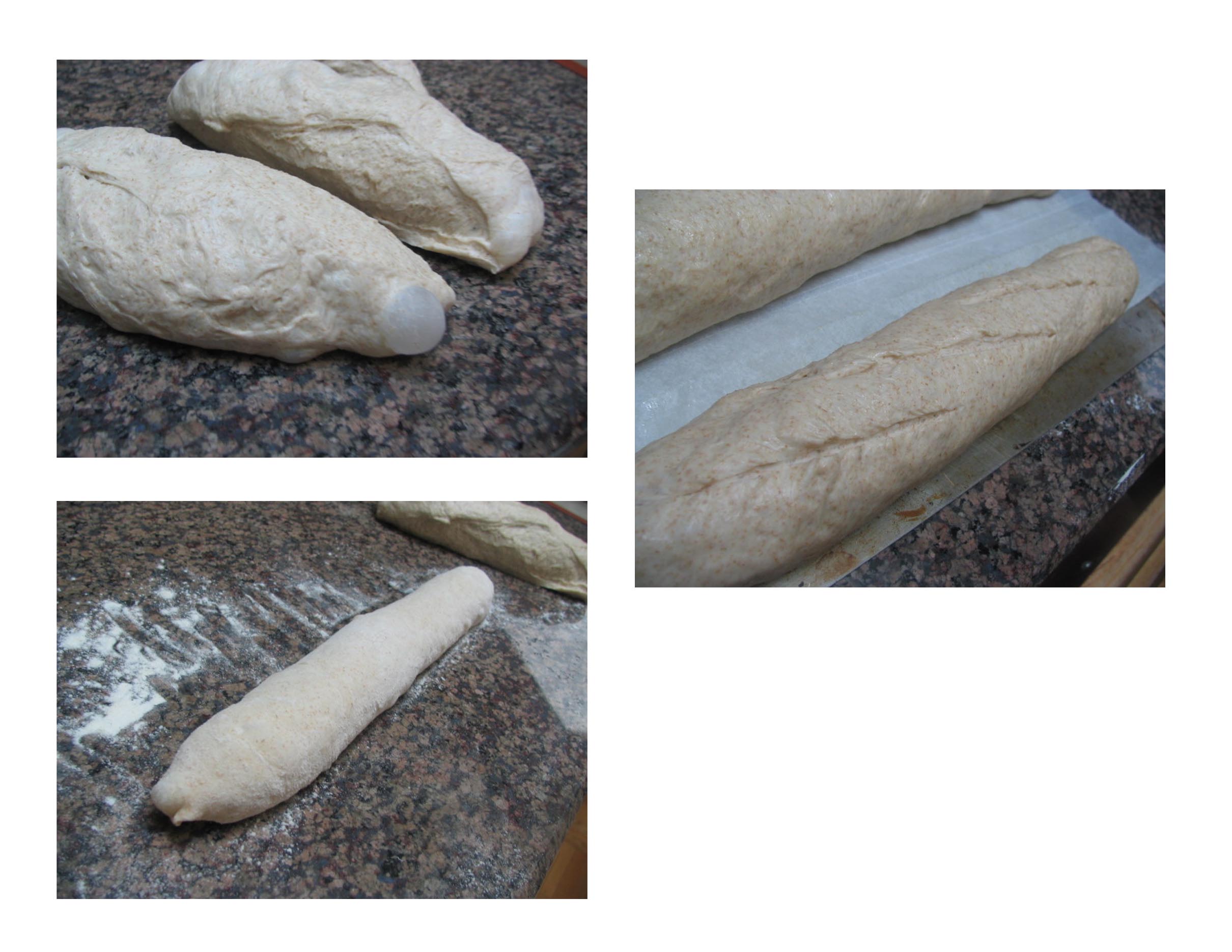
compositeEven though  my slashing skills still need improvement, this time my shaping wasn’t too bad.   There are many online videos showing how to shape a baguette;  maybe one day if I get really good at it… I’ll post my own  😉

In the meantime, you can watch a particularly instructive video here….

These baguettes were delicious!   I’d probably reduce the proportion of whole wheat in the dough, but this recipe is already a winner for me and my husband.

twobaguettes

BBA#25: PIZZA NAPOLETANA

pizza2

I was looking forward to this recipe, because for years I’ve been making pizza dough from a recipe published in Fine Cooking;  the BBA Challenge gave me the impetus to try something different.   Interestingly enough, my usual method is similar to Peter Reinhart’s, but it takes a little less olive oil, and is made in seconds (literally) in the food processor.

Reinhart’s recipe uses a regular mixer (or hand kneading) to make the dough, that then goes into the refrigerator for 1 day.  Two hours before making the pizza, he brings the balls of dough to room temperature.  In the book you’ll see a photo of Peter himself throwing the dough up in the air like a pro. I was looking forward to giving it a try, but my dough was just too uncooperative.   As I prefer to avoid  wearing the food that I’m cooking, I stretched it with my hands instead. 😉

Without further ado, some pictures of my pizza adventure!

The dough is supposed to stick to the bottom of the mixer, never clearing it completely…

dough1

I made four balls of dough with the full recipe….

dough2

And after spending the night in the fridge, they came back for a final rise at room temperature…  very soft and bubbly-looking…

ballsdough

Some of the ingredients we chose: mushrooms, tomatoes, black olives, sliced ham, fresh basil…  plus the usual suspects (homemade tomato sauce & mozzarella cheese)

ingredients

Ready for the oven, a mushroom and black olive concoction….

readyoven

The pizza was good, but both me and my resident food critic prefer the Fine Cooking recipe, which I’ll describe on my blog in the near future.

IMG_2664

I should point out that most of the bakers loved this recipe, and you can check two of them at these links:

for “The Other Side of Fifty”, click here….

For TxFarmer and her take on a pine nuts pizza, click here….

Twenty-five recipes down, only eighteen to go!

A CLASSIC ROAST CHICKEN

From Thomas Keller’s Ad Hoc at Home

roastchx

I confess to a love-hate relationship with roasted chicken: Love to eat it, hate to make it, because some recipes that promised “the best roast chicken you’ll ever eat” gave me only grievance instead.   Here are two examples.  One famous recipe calls for blasting the bird in a 500F  oven, which made an unbelievable mess, set off every smoke alarm in the house, and left a lingering smell of roast chicken for days.   I also fell for a recipe that insisted the best way to roast a chicken is to first sear it in a frying pan, and then move  it into a hot oven.  That method resulted in both the stove AND the oven covered in oily splatter.  I dealt with it in the hope of  “… the best ever“, but… it wasn’t.

Every recipe in Keller’s book makes me want to jump to the kitchen to start working on it, so I couldn’t resist his take on roast chicken.   I’m glad that I didn’t, it was simple to prepare and finished with a happy ending.  This recipe is a full  meal in itself:  you’ll have a nice roast chicken, crispy and moist, with a bonus side dish accompanying it.  It was satisfying home-cooking at its best.

(para receita em portugues, clique aqui)

ROAST CHICKEN WITH ROOT VEGETABLES
(adapted from Thomas Keller’s Ad Hoc)

1 whole chicken, preferably organic (4 – 4.5 pounds)
2 cloves garlic, mashed
fresh thyme sprigs
salt and pepper
3 rutabagas
2 turnips
6 carrots
12 small yellow or red new potatoes
1/3  cup canola oil
4 T butter at room temperature or 2 T duck fat
1/2 lemon

If you are particularly fond of crispy skin, leave the bird uncovered  in the fridge for a couple of days.  Remove the chicken from the refrigerator 1.5 hours before roasting (important step, don’t skip it).

Heat the oven to 475F.

Season the chicken inside and out with salt and pepper, add the garlic, 4 thyme sprigs, and the lemon half in the cavity.  For a nicer presentation, truss the chicken (see how to do it here, but you may omit this step if you prefer – read my comments).

Cut the rutabagas and turnips in similar sized pieces, about 3/4 inch wedges. Cut the carrots in half crosswise and again lengthwise. Keep the young potatoes whole, or, if they are a bit too big cut them in half.  Place all veggies in a large bowl, add  1/4 cup of canola oil,  2-3 thyme sprigs, salt, pepper, and toss well.  Transfer them to a roasting pan, make a small space in the center to place the chicken.  Rub the remaining canola oil all over the skin of the chicken, seasoning it again with salt and pepper.

Just before roasting, add pats of butter over the breast, or brush with some duck fat (it gives a deeper flavor to the chicken,).

Roast at 475F for 25 minutes, lower the temperature to 400F and roast for 1 hour, but check the internal temperature after 45 minutes, if it reaches 160F remove the chicken from the oven.  Allow the chicken to rest under an aluminum foil tent for 20 minutes before carving.

A few minutes before serving, place the roasting dish on the stove and heat the vegetables, moving them around to coat with the juices accumulated during roasting.

Enjoy!

to print the recipe, click here


Jump for final comments and additional photos

Continue reading

YES, WE BAKED!

Remember World Bread Day? You can see the breads baked all over the world by going to Zorra’s website. They are all organized by countries, in four different groups. Lots of wonderful loaves of bread!

Check it out here….

BBA#24: PANETTONE

Here we are, at bread number 24 of the Bread Baker’s Apprentice Challenge, started by Nicole from “Pinch My Salt“. Read all about it here.

Panettone, the traditional Italian fruit bread, is very popular in two of my former homes, Sao Paulo and Paris, during Christmas.  I wish I could say it brings back fond memories of childhood, but the truth is that I never cared for it. In my memory, panettone was a dry, chalky bread with hardened pieces of fruit in the crumb.  What can I say?  I was a difficult child. 😉

Nevertheless, Peter Reinhart says that this recipe, which is more involved than most, produces the best panettone in the world.  I was a bit skeptical, but gathered up all the ingredients and hoped for the best.

Was it good?  Oh, YESSS!  The best in the world?  Well, I haven’t sampled that many, but my husband considers himself a panettone connoisseur, and he and I agreed that this was the best we’ve ever had, by far. The crumb was moist and velvety, with the right amount of fruit and sweetness, plus that unmistakable hint of “fiori di Sicilia“, the extract that gives panettone its characteristic holiday flavor. It was impossible to eat just a single slice of this bread…and we shouldn’t have brought out the butter…in a few minutes nearly half the loaf was gone!  The other half will make some graduate students very happy tomorrow!

This is it!  The panettone for this year’s holidays!

crumb

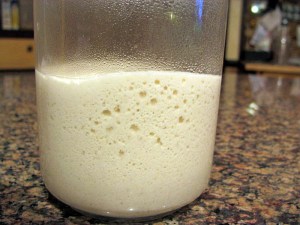
The recipe needs advance planning, as it uses a wild yeast sponge (mixture of water, flour, and a sourdough starter) as part of the final dough.  The fruits soak in rum, orange and fiore di sicilia extracts overnight.  The process went smoothly, my loaf is a little shallow because since I didnn’t have a 6-inch pan, mine was 7.5 inches in diameter.

This is the wild yeast sponge ready to go into the dough…. sponge2

Dried fruits soaking in rum, orange and fiore de sicilia extracts

IMG_2623

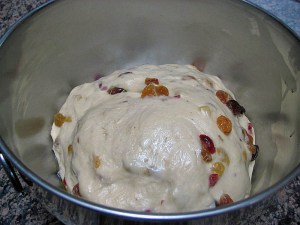
The dough smells wonderful from the very beginning….

dough1

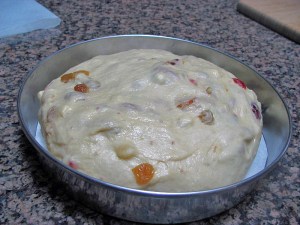
dough2

dough3

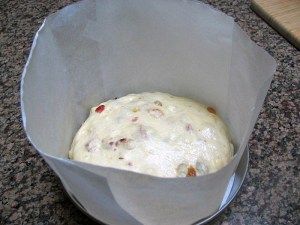
Ready to go into the oven…

dough4

Just out of the oven…

baked1

Check out the panettone posts by other bakers following along the Bread Baker’s Apprentice Challenge:

Oggi, from I Can Do That

Mags, from “The Other Side of Fifty”

TxFarmer, from Sina.blog