TURKISH CHICKEN KEBABS

It’s hard to find a simpler recipe that ranks as high in the taste department as this one.   Either place the meat in the yogurt mixture  an hour before cooking, or do as I did, and prepare it in the morning for a stress-free dinner later.   A yogurt-based marinade with the right spices  does wonders for chicken and pork, as this dish deliciously confirms.

A friend pointed me to this recipe, one of her favorites of 2009.  It’s  from Steven Raichlen,  in Bon Appetit. You can read about it here.

YOGURT-MARINATED CHICKEN KEBABS WITH ALEPPO PEPPER

(adapted from Bon Appetit, July 2009)

1 1/2 Tbs Aleppo pepper
1 cup yogurt
3 Tbs olive oil
2 Tbs red wine vinegar
2 Tbs tomato paste
2 tsp salt
1 tsp black pepper
2 garlic cloves, smashed
1 lemon, unpeeled, thinly sliced
2.5  pounds skinless, boneless chicken breasts, cut in large cubes
Bamboo skewers, soaked in water for at least 30 minutes before using

Place the Aleppo pepper in a bowl an add 1 Tbs of warm water, letting it stand for a few minutes to form a paste.  Add the yogurt, olive oil, vinegar, tomato paste, salt and pepper, whisking to blend.  Stir in the garlic and lemon slices, add the chicken and mix enough to coat all the pieces.  Leave the chicken in the fridge at least an hour, up to overnight.

Thread the chicken pieces onto pre-soaked bamboo skewers, sprinkle with salt, and grill until golden brown, turning once.  For chicken breasts, about 8 to 10 minutes total.

Serve with lemon wedges.

ENJOY!

to print the recipe, click here

(receita em portugues na pagina seguinte)


Add to FacebookAdd to DiggAdd to Del.icio.usAdd to StumbleuponAdd to RedditAdd to BlinklistAdd to TwitterAdd to TechnoratiAdd to Yahoo BuzzAdd to Newsvine

jump for more

BBA#35: SUNFLOWER SEED RYE

HAPPY NEW YEAR!

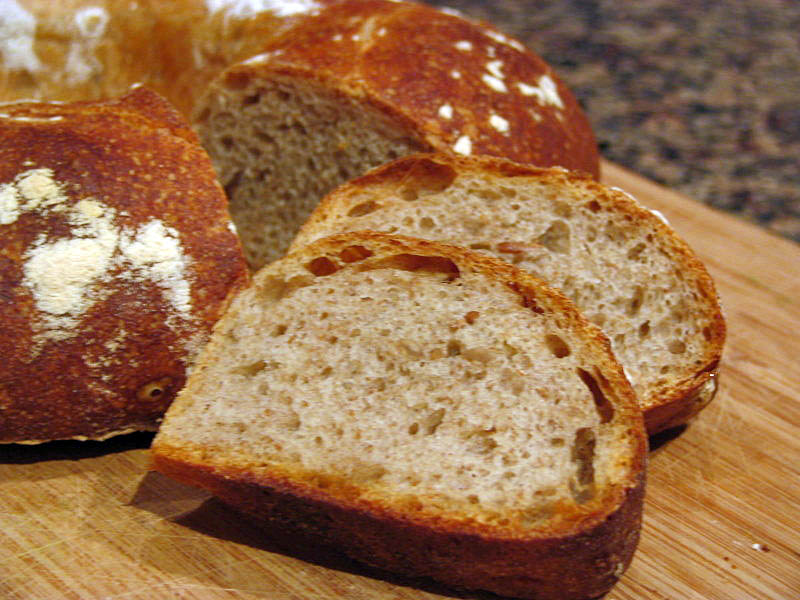
On the first day of the year… I’d like to say that bread baking is a great way to welcome 2010!   I  debated whether to make a simple sourdough, or to mark another notch in my BBA Challenge-belt.   Once I realized that the BBA bread was a sunflower seed rye, I immediately went to work on it.   From its whole flours and sunflower seeds, the bread casts a healthy aura that’s perfect for this time of the year,  in which we all feel the impact of holiday excesses.

Welcome 2010 with Peter Reinhart’s couronne of
sunflower seed rye…

The recipe calls for a soaker and a firm sourdough starter.  Once again, I couldn’t find pumpernickel flour, and settled for a regular dark rye instead.  I still prepared the soaker exactly as described – mixing rye flour with water and allowing it to sit overnight.

The dough rose slowly and less than I expected, but it was fun to shape the ring.   First, form a ball, then poke a hole in the center, stretch it out, and finally make a deep indentation to define quadrants.  I added some flour to try to prevent the square from closing during the rising, but it didn’t end with dramatic look of the picture in the book.

The bread didn’t have the oven-bounce of a typical, white flour sourdough,  but it felt light as I grabbed it from the oven.  The taste was wonderful, hearty, and the toasted sunflower seeds made it just like Reinhart described:  a “loyal” bread, that stays with you long after you enjoy it.

Another winning recipe, and with it completed, only EIGHT breads remain to finish the Bread Baker’s Apprentice Challenge!

I am submitting this post to Susan’s Yeastspotting, my favorite weekly net-event…

Enjoy rye breads? Go to Foodista for more…
Rye Bread on Foodista

On a side note,  my New Year’s Resolution in 2008 was to regularly bake bread.   It’s been two years of ups and downs, many failures but so much fun!  If you’re a believer in New Year’s resolutions, have you considered baking bread?    😉

GOOD ARTICLE ALERT

From today’s food section of the Los Angeles Times, a very interesting article on the best recipes of the past 25 years.

To read the article, click here

I wonder how many of those will be on my endless list “to try soon”  😉

HAVE A WONDERFUL NEW YEAR’s EVE!

BEEF WELLINGTON ON A SPECIAL NIGHT

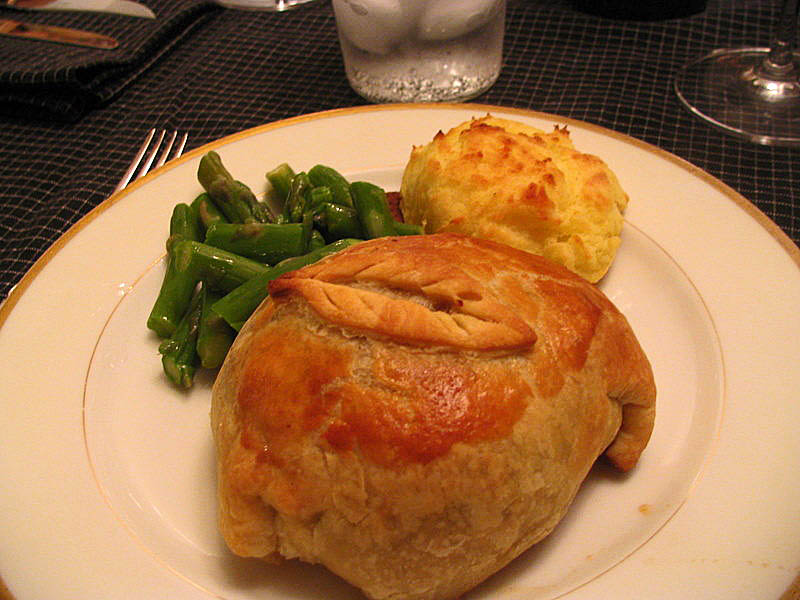
Most couples have a song, we have a dish, … Beef Wellington.    It was the first special meal that we cooked together, and it’s the recipe that we remember when a festive mood strikes.   For something that’s surprisingly simple to put together (if you use commercial puff pastry), Beef Wellington is an elegant gastronomic statement.   The  rich combination of  mushroom duxelles and foie gras raises the most delicate cut of beef to culinary heaven.  Here’s a crucial piece of advice: use a meat thermometer to determine the cooking time, because overcooking will ruin this dish.

This year we  chose Beef Wellington for our family’s Christmas Eve dinner, served as Evelyn George used to do it in my husband’s favorite restaurant,  “The Carriage House” of South Bend, Indiana: with duchess potatoes and a wine reduction sauce.  Fresh asparagus completed the meal.

BEEF WELLINGTON
(adapted from many different sources)

4 beef tenderloin filets,  1.5 inch-thick
1 T olive oil
salt and pepper

for the mushroom duxelles
4 ounces mushrooms
1 shallot, finely diced
1/2 T olive oil
1 T butter
salt and pepper
dash of nutmeg
1 T Madeira wine (or Sherry)

puff pastry (home-made or good quality store-bought)
slices of foie gras
egg wash (1 egg beaten slightly with 1 tsp water)

Heat oil on a large skillet until it starts to smoke, season the meat with salt and pepper, and sear the filets on both sides over high heat; 2 minutes per side. Reserve.

Prepare the duxelles: finely dice the mushrooms (preferably by hand)  and squeeze 1/4 cup portions at a time in a fine cloth (twist the cloth to tighten the squeeze) to release their bitter juices. Heat the olive oil and butter in a large skillet, add the shallots and cook for a couple of minutes. Add the squeezed mushrooms, saute until fully cooked and most of the liquid has evaporated, about 8 minutes.  Season lightly with salt and pepper, add the nutmeg,  Madeira wine,  and cook for a couple of minutes. Reserve.

Assemble the Wellingtons: roll out the puff pastry to enclose each individual piece of meat.  On the center of the pastry, add a slice of foie gras,  2 tablespoons of duxelles, and set the seared filet mignon on top. Enclose it in the pastry, with the seam facing up, then invert the whole package, so that the duxelle layer is on top.  Brush the surface of the wellingtons with egg wash, placing small cutouts of pastry as a decoration, if you wish. (Wellingtons can be assembled 6 hours in advance, keep refrigerated).

Cut some slits through the pastry, and place the packages in a 400F oven until the internal temperature of the meat reaches 125-130F for medium-rare – about twenty minutes (it will continue cooking a little more while it rests).  Remove from the oven and allow it to sit for 10 minutes before serving.

(to print the recipe, click here)

receita em portugues na pagina seguinte

RED WINE REDUCTION SAUCE

1/2 shallot, finely diced
1/2 cup red wine
1/2 cup veal stock
salt and pepper to taste
2 T butter, cold, in small pieces

Remove most of the fat in the pan that you used to sear the filets, leaving about 1/2 tablespoon.  Sautee the shallots for a couple of minutes, then add the red wine and deglaze the pan well.   Add the veal stock and boil gently until the sauce is reduced by half and slightly thickens.  Season with salt and pepper. Add the butter in pieces, a few at a time, swirling the pan over low heat.   The sauce will get a smooth shine from the emulsion with butter.  Remove from heat and serve alongside the Beef Wellingtons.   If necessary to re-heat, do it over very low flame.

(to print the recipe, click here)

ENJOY!
for comments and more photos, jump to next page
BBA#34: PUMPERNICKEL BREAD

Post #100 at Bewitching Kitchen!   Pop the Champagne and toast to food!

It’s hard to believe that only NINE breads remain in the BBA Challenge…   If you haven’t been following it, Nicole launched the event months ago with the idea of baking her way through the Bread Baker’s Apprentice, by Peter Reinhart, and invited other crazy bakers to join in.  We bake’em and blog’em, but if you want the recipes, then you’ll have to get the book.

I wasn’t too wild about making a pumpernickel bread, but I prepared my rye starter and mixed the dough. I couldn’t find pumpernickel flour, which is a particularly coarse grind of rye, so I had to use regular rye flour in its place. Sorry, Mr. Reinhart! 😉

I am glad to report that this bread was a winner, even without the correct flour!

I halved the recipe, mainly because I didn’t expect us to love it, but, in retrospect, that was a mistake: two of these loaves would be more than welcome in our home!

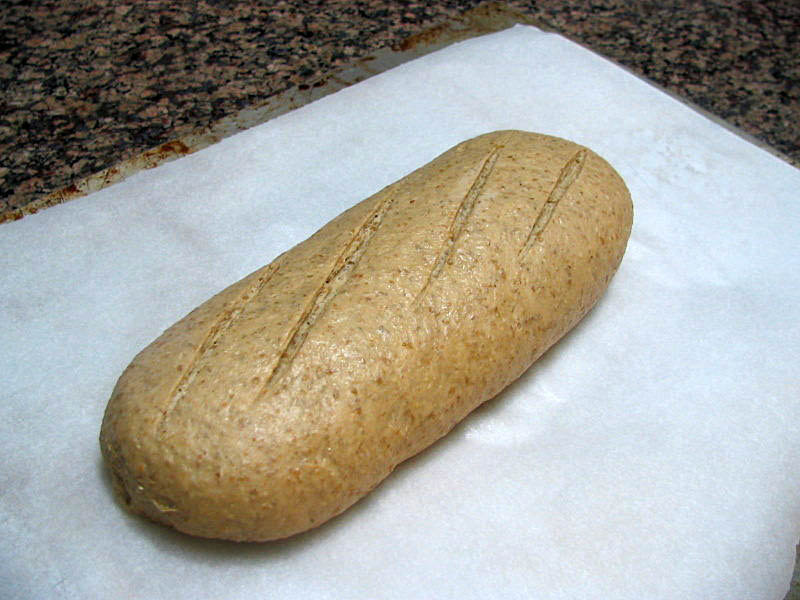
I had no problems whatsoever with this recipe.   I skipped pictures of the dough rising, because it didn’t seem to rise much, but this photo shows the slashed loaf, just before the oven.


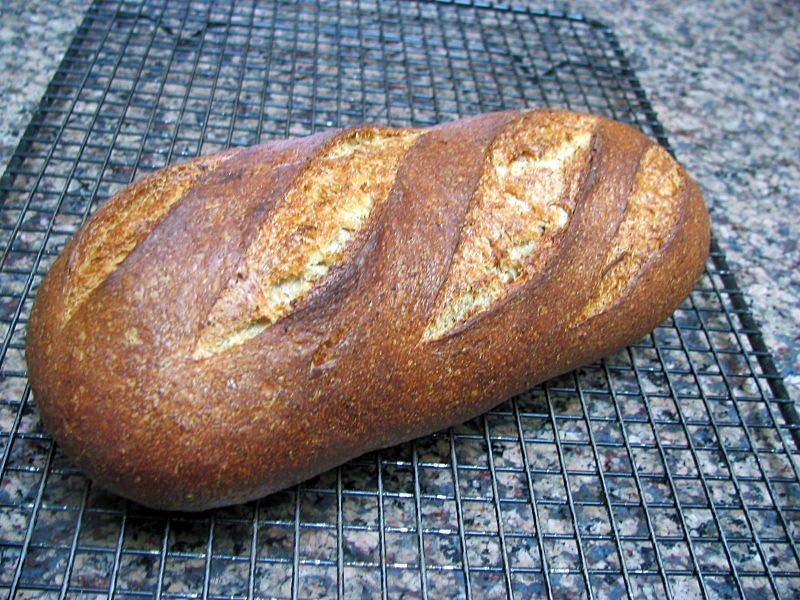
The bread did have some oven bounce, which always makes the baker happy!   The crumb was tight and  lighter than that of the bread in the book .  I used instant coffee in the dough, maybe cocoa powder would make it darker.  It was tender, moist,  and had perfect balance of sweetness and sourness.  A piece of sharp, aged Cheddar cheese was declared the winning match for this bread …

Note to self:  next time, make the full recipe!  😉