POACHED WHITE ASPARAGUS WITH LEMON AND PISTACHIOS

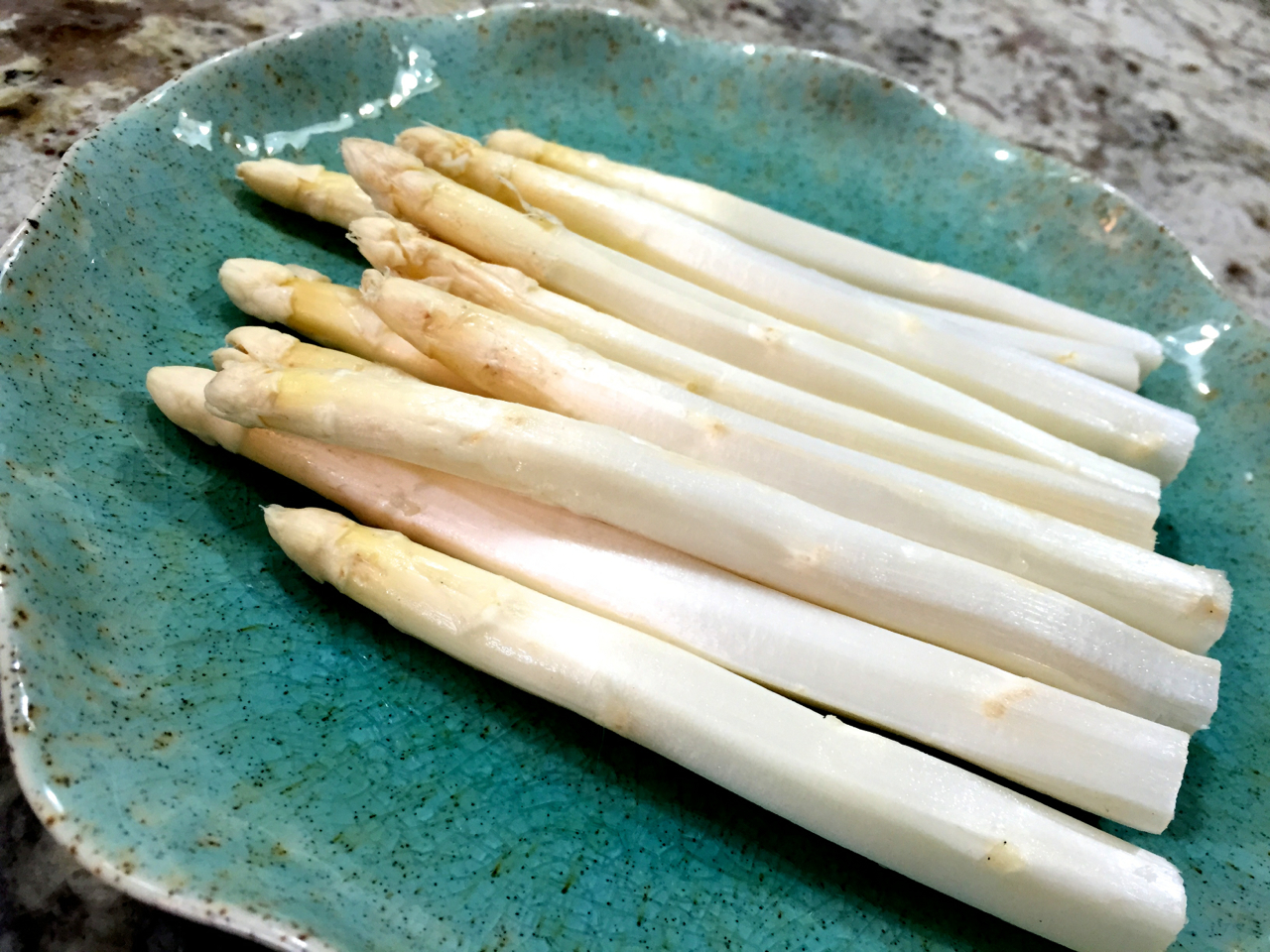
I have a cookbook recommendation for you: Rose Water and Orange Blossoms, by Maureen Abood, who runs a gorgeous food blog I’ve been following for a while. As I browsed through my Kindle version, I was surprised by the number of recipes I bookmarked, a feature I love in the Kindle reader, actually. Makes it so easy to go back to favorites. So I did that A LOT. I also love when a cookbook mixes just the right amount of prose. Don’t make each recipe a reason to pour your soul out and tell me all about your childhood and that of your close friends, but give me enough to dream about, to make me understand why that recipe is special for you, special enough that you chose to include in your cookbook.  Maureen does just that. The first recipe I made from her cookbook is simple yet very elegant. Poached white asparagus with pistachios. She used pistachio oil to drizzle the dish, I decided to go with my recent acquisition, a blood orange-infused olive oil.  I am quite fond of its color, a soft reddish tone, and I think the taste matched the white asparagus very well.

White Asparagus with Pistachios

POACHED WHITE ASPARAGUS WITH LEMON AND PISTACHIO OIL
(from the cookbook Rose Water and Orange Blossoms)
reprinted with permission from Maureen Abood

Makes 4 servings

1 pound / 450 g white asparagus
Juice of 1 lemon
1 teaspoon kosher salt
2 tablespoons shelled roasted, salted pistachios
4 teaspoons pistachio oil (I used blood orange infused olive oil)
Fine sea salt, to finish

Trim the asparagus by snapping the ends off at their natural break. Peel them from just beneath the tip to the end with a vegetable peeler. Cover the asparagus with water in a large sauté pan. Squeeze the lemon into the pan and add the teaspoon of salt.

Cover the pan and bring the water to a boil, and then reduce the heat to medium-low and simmer for about 20 minutes, or until a spear can be easily cut with a knife and fork. Drain and set the asparagus aside to cool. Remove the thin papery skin on each pistachio to reveal the bright green nut underneath by rubbing the skin off of each nut between your fingers and thumb. Coarsely chop the pistachios.

Divide the asparagus among four individual salad plates, or pile them, all facing the same direction, on a platter. Sprinkle the pistachios across the center of the asparagus crosswise, forming a line. Drizzle everything with pistachio oil, and finish with the sea salt.

ENJOY!

to print the recipe, click here
whiteasp

Comments: White asparagus will always make me think of a trip to Germany many years ago. We were living in Paris at the time, and went for a little scientific mission to a couple of cities in Germany. We arrived at the peak of asparagus season and one restaurant in particular had pretty much all dishes centered on them. I still remember a gratin of white asparagus and ham that blew my mind, it was superb! Until I got Maureen’s book, I confess to butchering my share of white asparagus when trying to cook them at home. It never occurred to me that these pale white creatures need to be treated differently from their siblings, the ones allowed to grow under full sun. Maureen gives two simple tips for success: peel them all the way from the bottom to the region right below the tips. And cook them gently but for a longer time. I was amazed at the difference these two little modifications brought to my culinary life.

rwob_cookbook

Now, back to Maureen’s book. So many dishes I want to cook from it, it’s not even funny…  Doesn’t “Flower Water Syrup” make you go in a dreamy daze? Many of her recipes are simple but join unexpected flavors, leaving you with that feeling of “why didn’t I think of that?” For instance, Warm Dates with Almonds and Lime Zest… I just know it will be an amazing recipe. Or… Tahini Avocado?  Za’atar Roasted Tomatoes? It all sounds perfect.  And to me, nothing is better than a great kibbeh, I love it. She shares her classic version of Baked Kibbeh, and one particular recipe I had a few times in Brazil and find spectacular: Yoghurt-Poached Kibbeh.  You may think it is strange, but trust me, it is the best kind. I guess I was lucky to grow up in São Paulo where we have many great Lebanese restaurants, some pretty close to the university where I studied. Still on the kibbeh front, Maureen offers several variations that were unknown to me: Fried Kibbeh with Mint Butter, Vegan Tomato Kibbeh, and Potato & Spinach Kibbeh. But I will tell you what will be my next recipe for sure: Whipped Hummus with Minced Lamb. One little tip she gives in that recipe is worth my weight in chickpeas. But I share no more. You will have to invite her book to join your collection, and that will be a very wise move. Go for it with a simple click here.

Maureen, thank you for allowing me to publish your recipe, and best of luck with your cookbook!

ONE YEAR AGO: Dan Lepard’s Saffron Bloomer

TWO YEARS AGO: Fesenjan & The New Persian Kitchen

THREE YEARS AGO: Quinoa Salad with Roasted Beets

FOUR YEARS AGO: Pasta Puttanesca

FIVE YEARS AGO: Miche Point-a-Calliere

LAMB SHANKS EN PAPILLOTE WITH CAULIFLOWER-CELERIAC PUREE

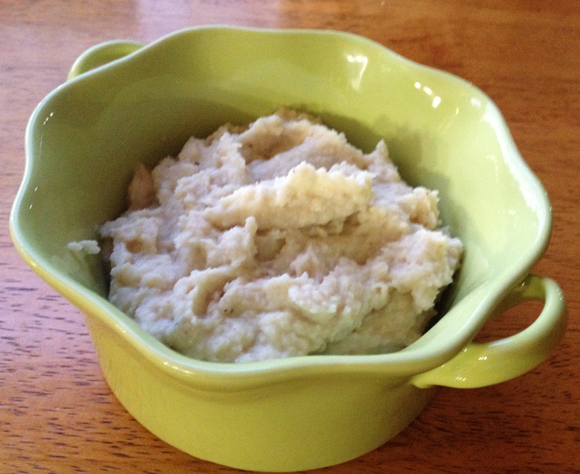
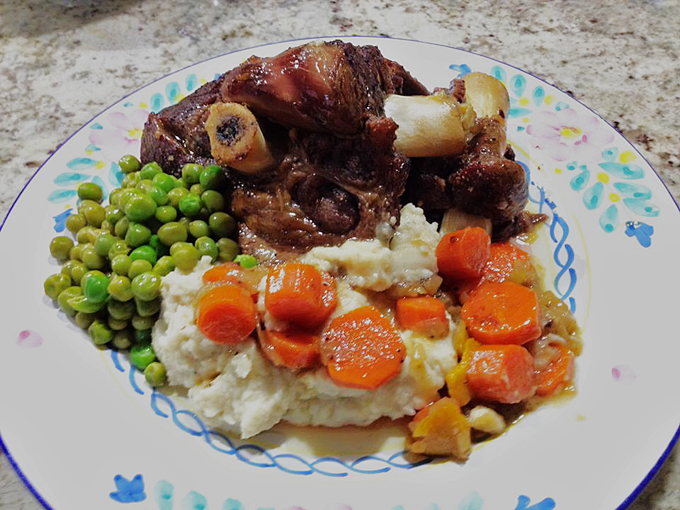
One of Phil’s favorite dishes is a nice, melt-in-your-mouth lamb shank. When we go out for dinner, if the restaurant offers lamb shanks, chances are he will order it. Lamb can be a bit tricky to cook at home. It’s usually not very cheap, so the pressure not to ruin it goes up a couple of notches. Our grocery store sometimes has lamb shanks on sale, but I usually stay away from them. Not this time. The price was too good to resist, and I decided to face the challenge. Brought them home without any specific recipe in mind, which proves I was in full daring mood. A quick search on the net pointed me to this simple and straightforward method from Fine Cooking, that gave me the opportunity to practice the “papillote” thing. It also gave me the opportunity to drive all the way back to the grocery store to get leeks (sigh). To offset the richness of the meat, I served it with a super light side dish, mashed cauliflower and celery root. Honestly, I think the puree might have stolen the show, it was superb!

LambPapillote
LAMB SHANK EN PAPILLOTE
(slightly modified from Fine Cooking magazine)
.
4 medium leeks (white and light-green parts only), cut into 1-1/2-inch lengths
4 medium carrots, halved lengthwise and cut into 1-1/2-inch lengths
4 sprigs fresh rosemary
4 strips orange zest, each about 3 inches long
Crushed red pepper flakes
Kosher salt and freshly ground black pepper
4 lamb shanks (about 1 lb. each)
1 Tbs. extra-virgin olive oil
1/2 cup dry vermouth or dry white wine
1-1/2 Tbs. unsalted butter, cut into 4 slices
.
Position an oven rack in the lower third of the oven and heat the oven to 300°F.
.
Arrange four 16×16-inch squares of heavy-duty aluminum foil on a work surface. Put one-quarter of the leeks, one-quarter of the carrots, 1 rosemary sprig, and 1 strip of orange zest on each square. Season each with a pinch of crushed red pepper flakes, salt, and pepper. Set aside.
.
Pat the lamb shanks dry and season generously with salt and pepper. Heat the oil in a large skillet over medium heat until shimmering hot. Working in batches if necessary to avoid crowding, brown the shanks on all sides, about 10 minutes total per batch. Transfer 1 shank to each foil square, arranging it on top of the vegetables. Draw up the edges of the foil to capture any juice, but don’t seal the packets yet.
.
Return the skillet to medium heat, add the vermouth, and bring to a simmer, scraping the skillet with a wooden spoon. Remove from the heat. Portion the vermouth evenly among the 4 packets, pouring it over the lamb. Dot each shank with a slice of the butter. Fold the foil to form rectangular packets, sealing the seams tightly. Arrange the packets on a baking sheet; it’s fine if they touch but they shouldn’t overlap.
.
Bake for 3 hours; then check for doneness by carefully opening one of the packets (watch out for the steam) and testing the meat with a fork—it should be tender and pulling away from the bone. If necessary, continue to bake for another 10 minutes and check again.
.
Transfer the contents of the packets to large plates or pasta bowls, surrounding the shanks with the vegetables and juice. Remove the rosemary and orange zest before serving.
.
                                                    to print the Lamb Shank recipe, click here
.
mash
CAULIFLOWER-CELERIAC PUREE

(from the Bewitching Kitchen, inspired by many sources)

.
1 head cauliflower, cut in individual florets
1 head celeriac, peeled and cut in 1 inch chunks
1 tablespoon olive oil
2 medium shallots, thickly sliced
salt and pepper to taste
coconut milk (about 1/4 cup)

dash of ground nutmeg

Heat oven to 375°F.
.
Steam cauliflower florets until very tender.  Coat the celeriac chunks and shallot slices with olive oil in a large bowl, season with salt and pepper. Roast until tender and with a light browning around the edges, 25 to 30 minutes, moving pieces around.
.
When the celeriac is easily pierced with a fork, transfer the pieces to a pan, add the steamed cauliflower florets, and start mashing it all with a potato masher, or use an immersion blender, depending on the texture you like.Turn the burner to low heat, add a dash of nutmeg, and add enough coconut milk to give it a nice creamy feel. Mix well and cook on low heat for a couple of minutes. Taste and adjust seasoning.
.
You can also use the food processor to make the puree, if you like a much smoother texture.
 .
ENJOY!
to print the Cauliflower-Celeriac puree recipe, click here

served2

Comments: The most important step in this recipe is taking the time to brown the lamb shanks. I halved the recipe, since it was just for the two of us, but decided to post the recipe as published in the magazine which feeds four.  I confess that I forgot to add the butter on top of the shanks when closing the packages, but that did not seem to hurt anything.

Make sure you have a very big aluminum foil because it is important that the package closes well around the meat.  Also, the recipe called for a cooking time of 2 to 2.5 hours, but I really like the lamb falling off the bone so I did not even bother checking it before 3 hours. Do what suits your taste best.

The mashed cauliflower & celeriac was simply amazing!  If you’ve been following the Bewitching Kitchen for a while, you know I love to play with cauliflower in all sorts of recipes, and you’ll find many versions of mashed cauliflower in the blog.  This is a new favorite.  If you serve it for guests, it will be pretty hard for them to figure out the components, but even if a little puzzled, they’ll be in love with it. Some recipe sources advise to pass celeriac puree through a fine sieve to improve texture, but I didn’t, and it was still very smooth and pleasant. Of all jobs in the kitchen, passing things through a sieve is the one I despise the most, and always find excuses to skip it. My number one excuse is “I do not want to do it“.

This meal would be great for company, since you can assemble the packages and start roasting the meat 3 hours before you plan to serve dinner.  The mashed cauliflower can also be reheated without compromising flavor or texture. One of the wonderful things about papillote cooking is the aroma that is released once you open the package, it will certainly awe any guests!

ONE YEAR AGO: Chestnut Brownies and a Blog Award!

TWO YEARS AGO: Quinoa with Cider-Glazed Carrots

THREE YEARS AGO: Celebrate Wednesday: Heirloom Tomatoes Steal the Show

FOUR YEARS AGO: Pain de Provence

FIVE YEARS AGO: Golspie Loaf, from the Scottish Highlands

SILKY RUTABAGA PUREE

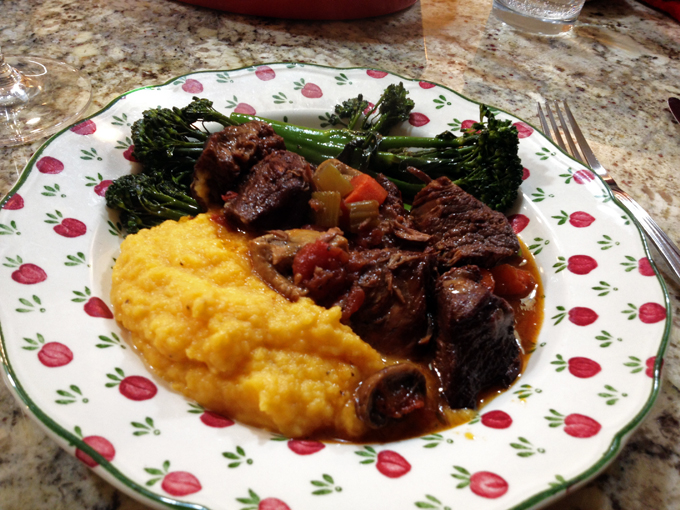
Many years ago (pre-blogging life) I had an encounter with jicama that left me traumatized.  I sliced it very thin and ate it the way Marcela often recommends it, as a refreshing, light alternative to corn tortillas.  I intensely disliked it, but through a convoluted set of events, a few days later realized that jicama that was not.  I had bought, sliced, and endured a rutabaga. Big oops moment!  I stayed away from both veggies for quite a long time, but finally made peace with them. Jicama does a reasonable job as tortilla-wannabe, and as far as rutabaga goes, it kills me that I took so long to finally cook it. I fell in love with this mashed version at the first spoonful. Creamy, smooth, with a unique flavor, perfect to showcase some Boeuf Bourguignon… or any other type of beef stew that might be calling your name.  Truth is, if you cannot make winter disappear by snapping your fingers, the alternative is to fight it with comfort food. Like this root veggie puree with a touch of coconut milk.  You will love it, I promise!

RutabagaPuree
SILKY RUTABAGA PUREE
(slightly modified from A Calculated Whisk)

3 medium rutabagas, peeled and cut into 1-inch chunks
1 large yam, peeled and cut into 1-inch chunks
1 teaspoon kosher salt
2 tablespoons extra virgin olive oil
1/4 cup coconut milk
salt and freshly ground black pepper, to taste
dash of nutmeg

Place the rutabaga and yam chunks in a saucepan with the salt and water to cover. Bring to a boil, reduce the heat, and simmer, covered, until the veggies are very tender when pierced with a fork, about 20 minutes. Drain, reserving some of the cooking liquid. Place the rutabaga, yam, olive oil, coconut milk. salt, and pepper in a food processor and process until smooth, add the nutmeg and process briefly. Taste and adjust seasonings as desired. If needed, adjust consistency with some of the reserved cooking liquid.

ENJOY!

to print the recipe, click here

served

Comments: This meal was perfect for a snowy Saturday evening.  I cooked the beef stew low and slow for over 4 hours, it was luscious, the red wine mellowed down by the long gentle simmer in the oven.  The rutabaga puree, perhaps an unusual side dish for Bourguignon,  was quite a nice match not only in taste and texture, but also in its color, bright golden.  When we sat down to enjoy our dinner, Phil took a first bite and immediately decided it was worthy of a special bottle of wine, one we bought in France many years ago. That was a great move…  Almost made me forget the snow outside. Almost.

composite

Life is good!

ONE YEAR AGO: Bon Bon Chicken: Light and Spectacular!

TWO YEARS AGO: Seafood Extravaganza Pasta

THREE YEARS AGO: A Pearfect Drink

FOUR YEARS AGO: Ming Tsai Under Pressure

FIVE YEARS AGO: Paris, Je t’aime

ZUCCHISAGNA: A TWIST ON A CLASSIC

I don’t think there is such a thing as a person who doesn’t like lasagna. I may have already mentioned that the technician of the lab where I did my PhD in Brazil did not like chocolate nor french fries. Outrageous! She still loved lasagna, proving the point I just made. I hope you’ll let this stretch in Logic 101 slide… 😉 Anyway, I am a lover of this Italian classic, but it’s one of those dishes that can make you feel super full at the end of the meal, even if you exercise severe portion control. Layers of pasta with bechamel, meat sauce, usually a pound of cheese per square inch…. I never order it in restaurants, and confess to making it at home only once in a blue moon. Using thin slices of veggies to play the role of the pasta lightens things up quite a bit. You can use eggplant, butternut squash (Anne Burrell has a great take on this version, BTW), and of course, zucchini as I did here.  A couple of details are important to keep in mind, though. You must pre-cook the zucchini slices or you’ll run the risk of having a watery, unappetizing concoction in your hands. And use a light hand on the cheese.  The delicious meat sauce should be the center of  your attention. Vegetarians? This dish is not for you, sorry. Primal-afficionados? Grab your forks, and dig in!

Zucchisagna1ZUCCHINI RIBBON LASAGNA
(adapted from Martha Stewart)

1 can (28 ounces) whole peeled plum tomatoes, with juice
2 tablespoons extra-virgin olive oil
1 shallot, finely chopped
1/4 teaspoon red-pepper flakes
12 ounces ground turkey, preferably dark meat
2 teaspoons dried oregano
2 teaspoons salt
5 medium zucchini, trimmed
olive oil and lemon juice for brushing zucchini
1 + 1/2  cups full-fat ricotta cheese
1 egg
1/4 teaspoon extra-virgin olive oil
Freshly ground pepper
1/4 cup grated Parmigiano-Reggiano cheese

Make the sauce: Pulse tomatoes with juice in a food processor until finely chopped. Heat oil in a large skillet over medium heat. Cook shallot and red-pepper flakes, seasoned lightly with salt, stirring occasionally, until shallot is tender. Add turkey; cook, breaking up any large pieces, until browned. Add tomatoes, bring to a boil. Reduce heat; simmer until thick, about 20 minutes. Stir in oregano and 1 teaspoon of salt. Let cool.

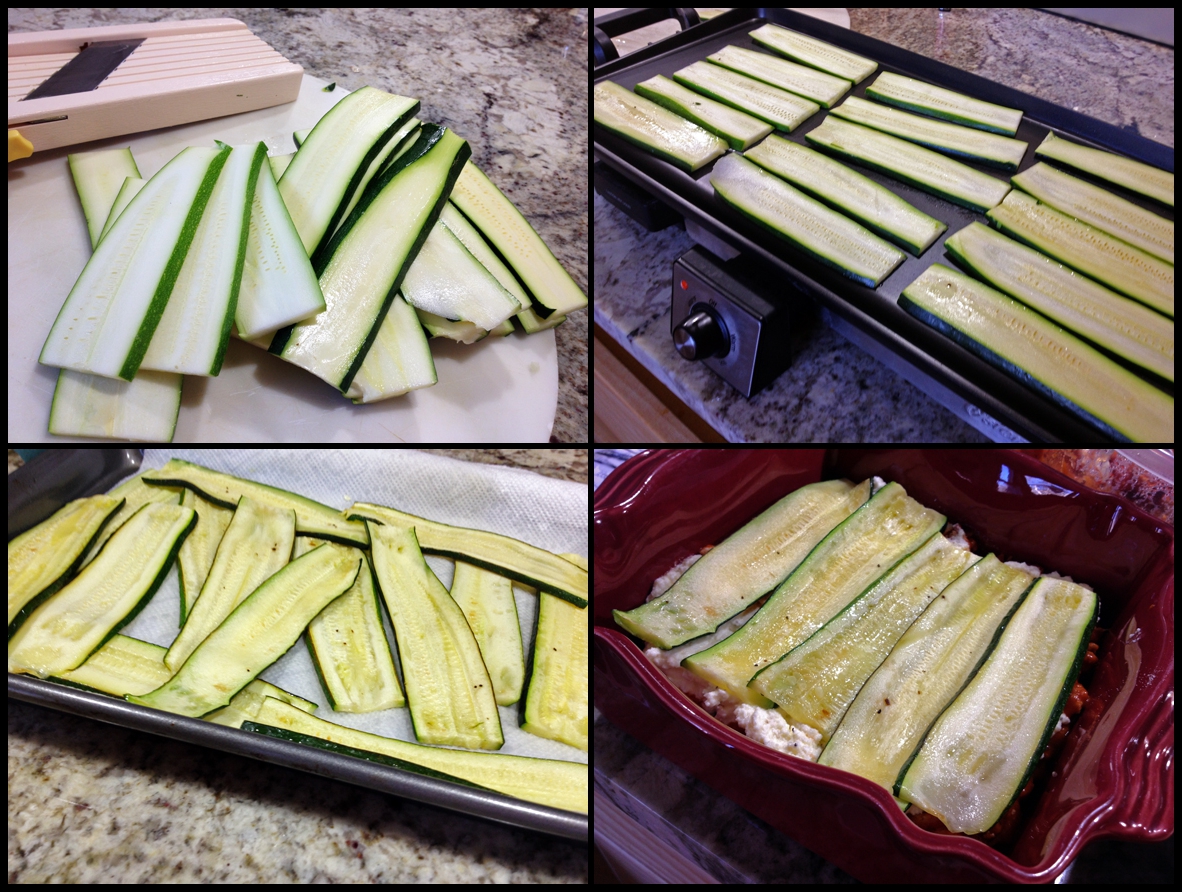
Make the lasagna: heat oven to 375 degrees. In a small bowl, mix the ricotta with the egg, season with salt and pepper. Reserve. Slice zucchini lengthwise into thin strips (about 1/8 inch thick) using a mandoline or a sharp knife. Brush each slice with a 1:1 mixture of olive oil and lemon juice, and cook on a griddle or grill pan for a few minutes on each side until the slices get some color. Blot on kitchen paper and let them cool to room temperature. Place 5 or 6 zucchini slices, overlapping slightly, in the bottom of an 8-inch square baking dish. Top with 1 cup sauce. Dot with ricotta. Repeat twice with zucchini, remaining sauce, and ricotta, alternating direction of zucchini at each layer. Finish with a final layer of zucchini, cover the dish with ricotta, sprinkle the Parmigiano on top.

Bake uncovered until lasagna bubbles and top is nicely brown, about 50 minutes. Let stand for at least 10 minutes before slicing.

ENJOY!

to print the recipe, click here

composite1

Comments: As I read the recipe from Martha Stewart’s site, a few things bothered me. First, the use of raw zucchini to assemble the lasagna.  In my opinion, that is asking for trouble. Second, the ingredient lists TWO medium zucchini for the full recipe. Unless their zucchini was treated with massive doses of auxins, two won’t be enough.  I used 4 medium zucchini, 50% more ricotta than called for, and my ingredients were enough to assemble a 7-inch square dish instead of an 8-inch.  Of course, some variation is expected, but overall I think the recipe as published in her site had some issues. My version worked great, this was a delicious meal, satisfying without that feeling of “I am going to explode if I don’t go for a walk” often associated with the real lasagna.  Not that there’s anything wrong with it, but… when you want something lighter, try this version. It won’t disappoint you at all…

served1

Dinner is served: Zucchisagna with Baby Greens in Lemony Dressing

ONE YEAR AGO: Ricotta Meatballs

TWO YEARS AGO: Farro Salad with Roasted Leeks

THREE YEARS AGO: It all started with a roof

FOUR YEARS AGO: Carrot and Sweet Potato Puree

FIVE YEARS AGO: Impromptu Pasta Dinner

BLOG-WORTHY ROASTED BUTTERNUT SQUASH

Normally I would refrain from blogging about such a simple recipe. Hard to even call it a recipe, actually. Most people know too well how to roast ANY veggie. Cut it, coat pieces with olive oil, season lightly and into the oven it goes. But, I feel that this version is worth talking about as it exceeded my expectations.  All you have to do is use coconut oil as the fat, and add some Southwest spice mix from Penzey’s or make your own version mixing the usual suspects listed in the ingredients. For my taste, this was 2 logs above the level of deliciousness of your regular roasted squash, demanding the exact same amount of work and time. That’s blog-worthy in my book!

RoastedButternutSquash


OVERVIEW OF THE  RECIPE:  cut a butternut squash in 1/2 inch to 1 inch chunks. Add to a large bowl.  Melt 1 to 2 Tablespoons of coconut oil and drizzle all over. Sprinkle a nice amount of Southwest spice, a little extra salt, some freshly ground black pepper.  Quickly toss it all together, the coconut oil will solidify and turn white again, do not worry about it.  Place it as a single layer on a baking dish, and roast at 400 to 425 F until nicely brown, it should take a maximum of 30 minutes, depending on the size of the pieces of squash, and your chosen temperature. Adjusting seasoning with salt right after roasting. If you had issues to distribute the coconut oil evenly, move the pieces around a few minutes into the roasting.

ENJOY!

composite

Since this was actually a non-recipe, I will include a bonus goodie by sharing the recipe for the pork tenderloin I served with it. Same approach as the basic 7-6-5 method  blogged about years ago, but with a new type of marinade.

PORK TENDERLOIN WITH MAPLE-BALSAMIC MARINADE
(from the Bewitching Kitchen)

1 pound pork tenderloin
2 tablespoons maple syrup (or honey)
2 tablespoons olive oil
1 teaspoon Herbes de Provence
1/2 teaspoon roasted garlic powder (or fresh garlic, minced)
1/2 teaspoon paprika
1/2 teaspoon freshly ground black pepper
3/4 teaspoon salt
zest of 1 lemon

Prepare the marinade by combining all the ingredients, whisking well. Place the tenderloin in a bag or shallow dish, pour the marinade all over, and place in the fridge for 2 to 12 hours. Overnight should be ok too.

Remove the meat from the marinade, place the meat on the grill, close the lid and grill for 7 minutes. Turn the pork tenderloin over, close the lid again, and grill for 6 minutes.  Don’t open the lid, just turn off the heat and keep the meat inside for 5 minutes. The internal temperature should be 145 F to 150 F. If not, close the lid and leave the meat for a few more minutes.  Remove the meat to a serving platter and let it rest for 5 minutes before slicing.

ENJOY!

to print the recipe, click here

servedDinner is served!
Pork tenderloin, roasted butternut squash & coleslaw.

Come to think of it, this is a meal that could be on the cover of The Modern Cavemen Magazine. 🙂  Paleo or not, I could enjoy it anytime without complaining. Flavorful, light and filling at the same time.  The coconut oil is really spectacular on the butternut squash, but of course, if you prefer a more classic take, stick with olive oil. Coleslaw is a concoction that doesn’t get enough attention. When prepared from fresh ingredients with a home-made dressing it’s a fantastic side dish.  Goes well with all types of main dishes, beef, poultry, seafood.  Refreshing, crunchy, it’s got it all…

ONE YEAR AGO: Chocolate Currant Sourdough Loaf & Roasted Beet Hummus

TWO YEARS AGO: Sesame and Flax Seed Sourdough

THREE YEARS AGO: Spanakopita Meatballs

FOUR YEARS AGO: Saturday Morning Scones

FIVE YEARS AGO: Pain de Mie au Levain