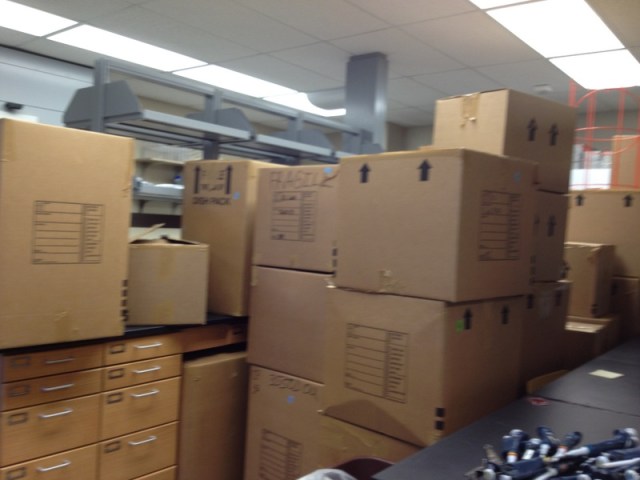
 Almost three months have gone by since we moved our lab from OU to KSU. I wish I had been able to compose a post about it sooner, but let’s just say that life has been tremendously busy ever since. Those who follow my blog might remember that our home move was a saga of epic proportions. As a consequence, I lost many nights of sleep worrying about the lab move because it’s a lot more complex, and too many things can go wrong. One of the major differences between a home move and a lab move, is a higher sense of urgency in the latter. When you move your home, you can always leave boxes hanging around, and set up just the basics: a place to sleep, a place to cook, a place to sit down and collapse at the end of the day. But, a lab is a full entity of sorts. The whole thing needs to be put in place as quickly as possible because: no lab, no work. No work, no progress. We anticipated a lag of a couple of weeks, and that’s more or less what happened. A big thanks goes to a company called TLM (Transportation Logistic Management), that moved all our stuff without breaking or losing anything! Plus, their whole crew was a pleasure to interact with, very nice group of men and women working hard and in great spirits. If you can believe it, they went through the trouble of wrapping up our large test tubes individually. And we have more than 500 of these!
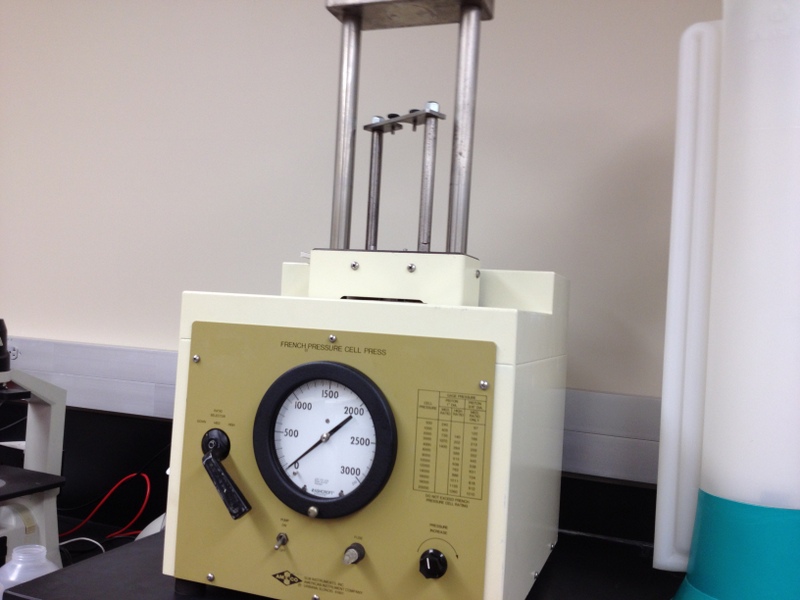
 One of the most stressful things about a lab move is that quick decisions need to be made on the spot. For instance, this “little” piece of equipment, called a French press, weighs a ton (well, almost a ton) and obviously once it sits on a spot, it better be its permanent home! 😉

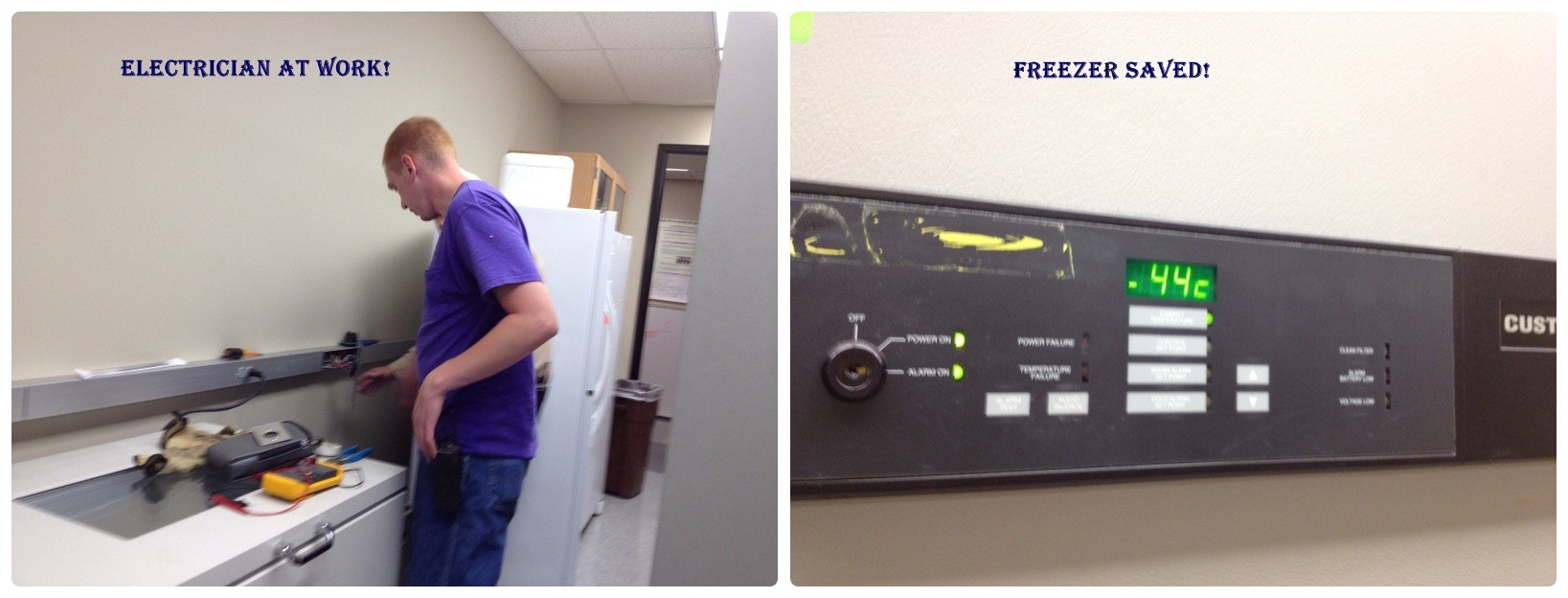
Of all things that were moved, perhaps the most important was our – 70 C freezer. It holds all our bacterial strains, as well as very sensitive reagents. TLM had a nice strategy to deal with it: they packed the whole lab over a couple of days, and closed the truck. Next morning, at 5am they came to get the freezer, loading it just before starting the 312-mile drive. Six hours later, the freezer would be unloaded first and quickly plugged. If you don’t open the door, the temperature will stay cold enough to preserve its precious contents. Well, to add a little excitement to the adventure, once the freezer was unloaded, we realized that the plug and the outlet did not match! Frantic calls were made to electricians on campus, and they came to the rescue. Thanks to their efficiency, our freezer was plugged back when the temperature had risen only to – 44 C. Big sigh of relief!
 Another very tricky piece of equipment to move was our double water-distiller. All parts are made of glass, connections are delicate and convoluted. I bet our grad student was wondering if it would ever be back in working condition…;-)

But it had a happy ending!

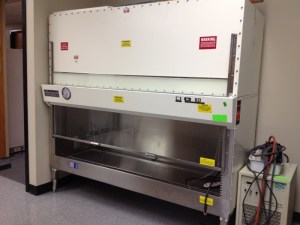
The huge baby shown below is a cell culture hood. We use it to work with mammalian cells, much more fragile and prone to contamination than bacteria. This machine has a special laminar flow of air that isolates the environment inside the hood. Plus, it also holds a germicidal UV lamp to sterilize that environment. It weighs a lot more than a ton, and it required a special lift to have its legs installed in place.
But once it is all said and done, setting up a new lab is a great experience!
Drawers are labeled… and stuff is stored inside….

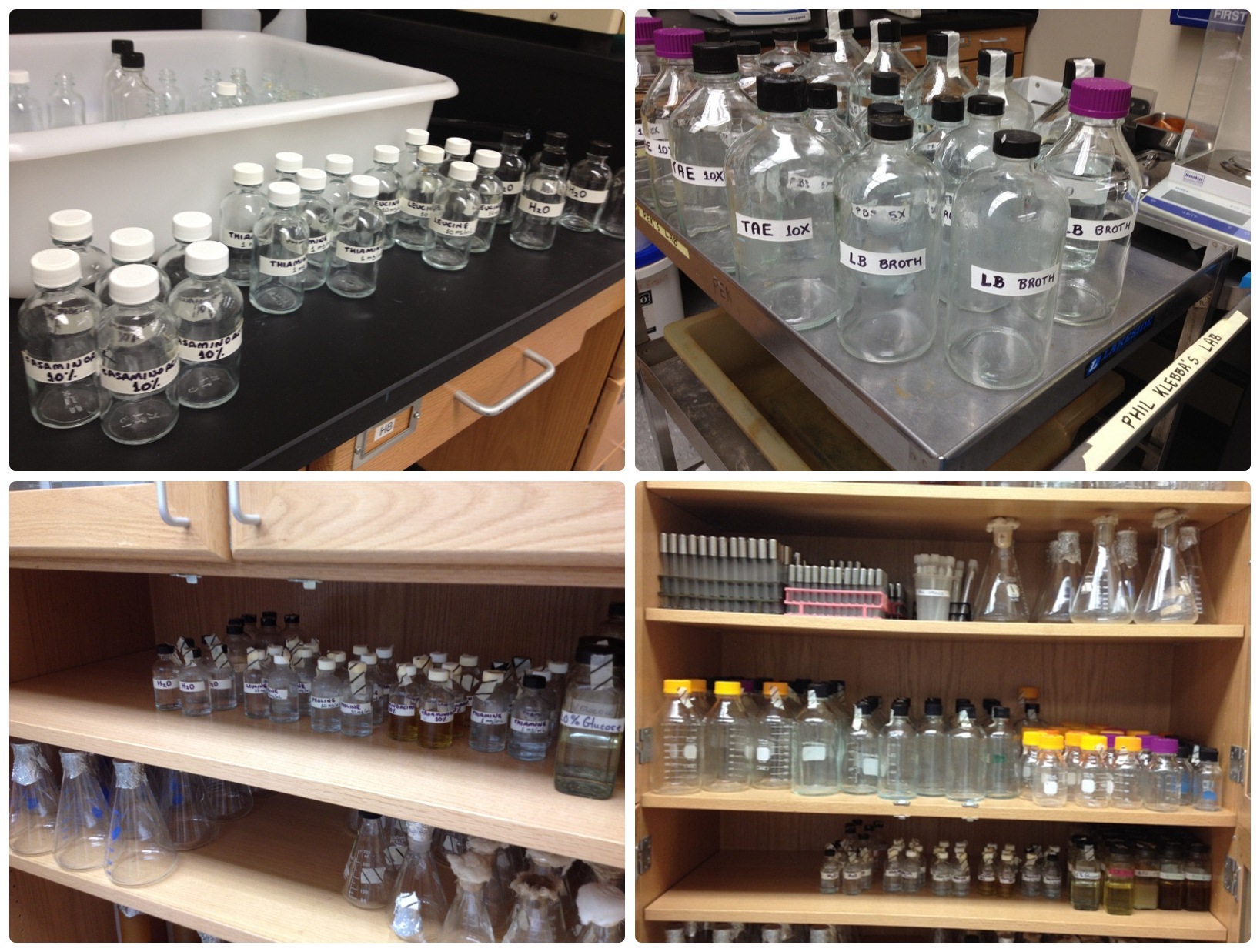
New, clean bottles are labeled, solutions prepared, sterilized and stored, ready for use…

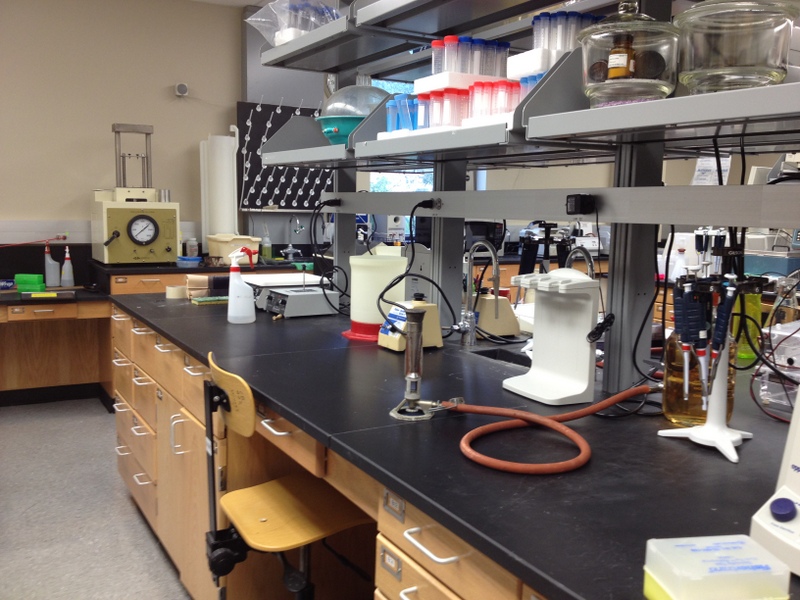
Chemicals are organized, benches get ready for experiments….

And we are finally back, cranking up some data! Here is a shot of our SLM Fluorometer 8100, a Rolls Royce of a machine, that needs to be operated in a dark room. It got a nice upgrade before our move, and it will be a major player in our projects in the near and not so near future.

I hope you enjoyed the glimpse on what a lab move involves. I can tell that we intend to retire here (not anytime soon, mind you!), because another move would just about kill us! 😉 Seriously, though, we are thrilled to join KSU and feeling energized and ready for this next phase in our professional life.
If you want to know a little more about our research, visit our webpage at KSU by clicking here….
ONE YEAR AGO: Honey-Oat Pain de Mie
TWO YEARS AGO: Carrot and Leek Soup
THREE YEARS AGO: Chicken Parmiggiana 101

 “Anyway, I told you that dropping the dead possum next to the grill when she was cooking the steak was not a good move. You should have listened to me, but now it’s too late. OK, she could have cooked it, but apparently she doesn’t like possum. “Now, we’ll be here for a while, I’m afraid.”






 Bewitching Kitchen