CHICKEN THIGHS WITH APPLES AND SAGE

A real nice recipe that has Fall written all over it. I was inspired by a blogger I follow but was a bit disappointed when I made it exactly as published. So I tweaked things around and also incorporated a step in which the chicken is cooked under pressure, giving the wonderful melt-in-your-mouth texture I love. I will give you an alternative to skip the pressure cooking.


CHICKEN THIGHS WITH APPLES AND SAGE
(from The Bewitching Kitchen)

for the chicken:
1 Tbsp olive oil
6 boneless skinless chicken thighs
3/4 tsp each salt and black pepper, or to taste
3/4 tsp paprika

for the apples:
2 Tbsp olive oil
2 medium gala apples, cored and sliced thin
2 large stalks celery, sliced 1/4 inch thin
1 shallot, minced
1/2 tsp ground cinnamon
1/4 tsp ground nutmeg
1 tsp each minced fresh thyme, rosemary and sage (or 1/2 tsp each dried)

for the sauce:
1 cup apple juice
1 Tbsp honey
1 Tbsp apple cider vinegar
1 tsp Dijon mustard
1 1/2 tsp cornstarch dissolved in 1 tablespoon cold water, reserved

In liquid measuring cup whisk together the apple juice, honey, apple cider vinegar, and dijon mustard. If cooking chicken in a pressure cooker, separate that amount in two parts (no need to be exact, eye balling is fine).

Heat a skillet over medium high heat, or if using a pressure cooker, do this step right in the pan. Sprinkle chicken on both sides evenly with paprika, salt and pepper. Drizzle olive oil into skillet or pressure cooker, when very hot add the chicken and brown on both sides. If using a pressure cooker, add half of the cooking liquid, bring to a gentle boil, close the pan and cook under pressure for 12 minutes. Release pressure under running water, reserve the meat. If the liquid does not reach halfway up the pieces of chicken, complete that volume with water.

If cooking the chicken on a skillet, remove the pieces to a platter, add more oil to the pan, and sautee the celery, shallots and pieces of apple, seasoning with cinnamon and nutmeg. If cooking the chicken under pressure, sauté the apples and veggies using a clean skillet the same way described above. When the apples are soft, add the apple juice mixture, season with a little more salt and pepper, if so desired. Return the chicken to the pan. If the chicken was cooked in the pressure cooker, simply warm everything together for a couple of minutes, then add the cornstarch slurry and the fresh sage. Serve immediately. If the chicken was not prepared under pressure, simmer with the pan covered until fully tender, probably 15 minutes. Add the sage and the cornstarch slurry right before serving.

ENJOY!

to print the recipe, click here
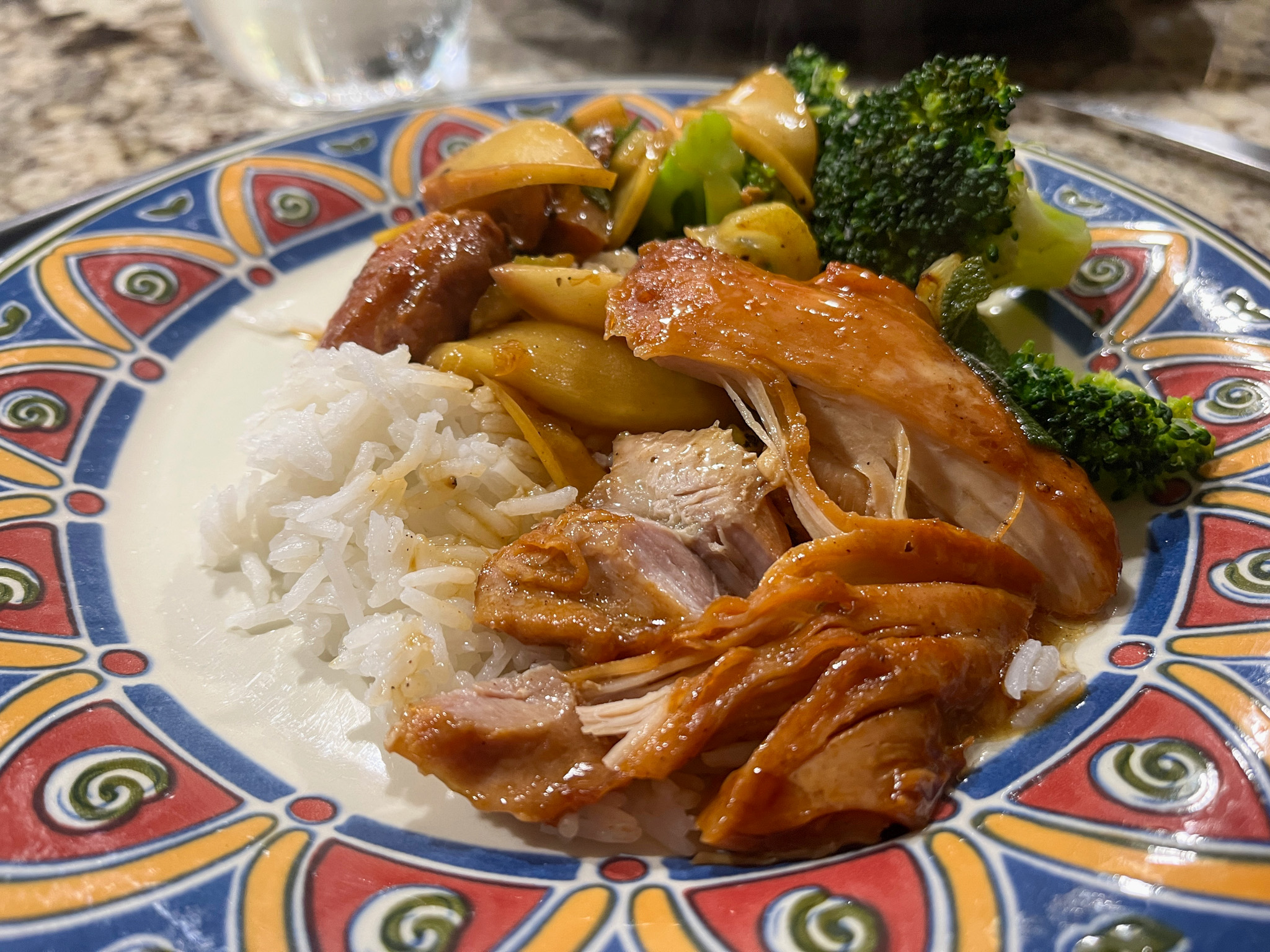
Comments: We really loved this preparation for chicken, in fact I made it twice in the same week per husband’s request! I am totally comfortable with the pressure cooker, so for me it’s really not a big deal to use it, but I realize it can be intimidating. For this reason I included the instructions to cook without it. But there is something about the texture that I absolutely love. It gets tender and never rubbery. I like to start the pressure cooking step right away, because the veggies and apples are ready so quickly. Once the chicken has been cooking for 5 minutes I start sautéing the celery, shallots and apples, and everything comes to the finish line harmoniously. A little white rice, and steamed broccoli, nothing else needed…

ONE YEAR AGO: Gochujang Grilled Chicken Thighs

TWO YEARS AGO: Feta Eggs with Zucchini

THREE YEARS AGO: Poilane-Style Bread, a simplified version

FOUR YEAR AGO: Broccoli Salad with Pomegranate Seeds and Tahini Dressing

FIVE YEARS AGO: Turkey-Spinach Meatballs with Cardamon-Tomato Sauce

SIX YEARS AGO: British Baps, a Technical Challenge

SEVEN YEARS AGO: Japanese-Style Cupcakes with Cherry Blossom Icing

EIGHT YEARS AGO: Quick Weeknight Soups

NINE YEARS AGO: Sourdough Loaf with Cranberries and Walnuts

TEN YEARS AGO: Sichuan Pork Stir-Fry in Garlic Sauce

ELEVEN YEARS AGO: Our Green Trip to Colorado

TWELVE YEARS AGO: Ditalini Pasta Salad

THIRTEEN YEARS AGO: Celebrate Wednesday with a Thai Seafood Curry

FOURTEEN YEARS AGO:  Post-workout Breakfast

FIFTEEN YEARS AGO: Semolina Barbecue Buns

SIXTEEN YEARS AGO: Lavash Crackers
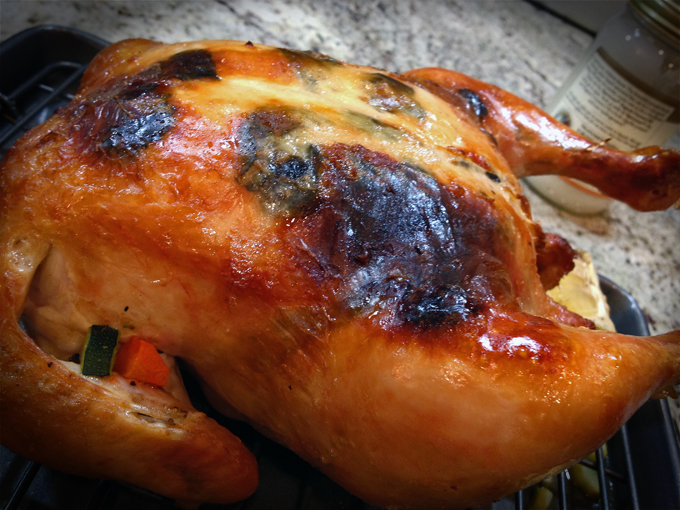
MY FIRST FRESH TRUFFLE ADVENTURE: POULET DEMI-DEUIL

Last month I showed you a gorgeous fresh black truffle received from a special reader of my blog, who prefers to stay anonymous. The package also included the right tool to shave it, and a bonus bottle of white truffle oil. I had to come up with a nice recipe to showcase this once-in-a-lifetime goodie.  After spending hours with cookbooks, magazines, and surfing the net, I finally found the recipe: a classic French dish called “Poulet Demi-Deuil“, which loosely translates as “chicken in half-mourning”. Morbid? Well, not really, the name is associated with the black truffle slices showing through the skin, like a black veil.  Let’s say it’s poetic, ok? Chicken DemiDeuil
POULET DEMI-DEUIL  (Truffle Braised Chicken)
(adapted from Fine Cooking magazine)

1 oz. fresh black truffle
2 Tbs. Madeira wine; more as needed
One 2-1/2-lb.chicken
Kosher salt
Freshly ground black pepper
2 Tbs. unsalted butter, softened at room temperature
4 cups chicken stock (homemade is best)
2 medium carrots, peeled 2 large leeks (white parts only)
2 medium zucchini
1/4 cup cold unsalted butter, cut into 1/2-inch cubes
1/2 tsp. freshly squeezed lemon juice

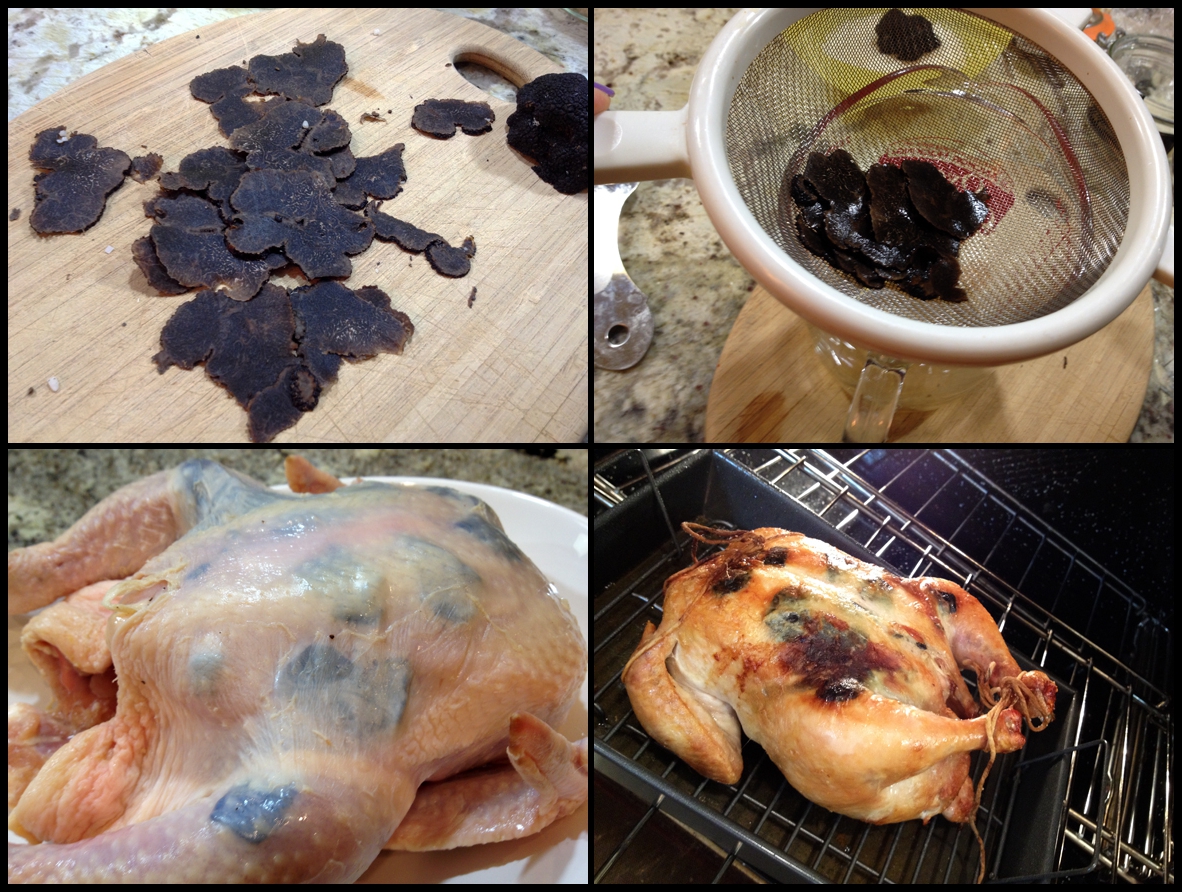
Slice the truffle very thinly using a mandoline or a very sharp, thin-bladed knife and a steady hand. Put the slices in a small bowl, add the Madeira, and let soak briefly to moisten the truffles (making it easier to slide them under the chicken skin and giving them some Madeira flavor).

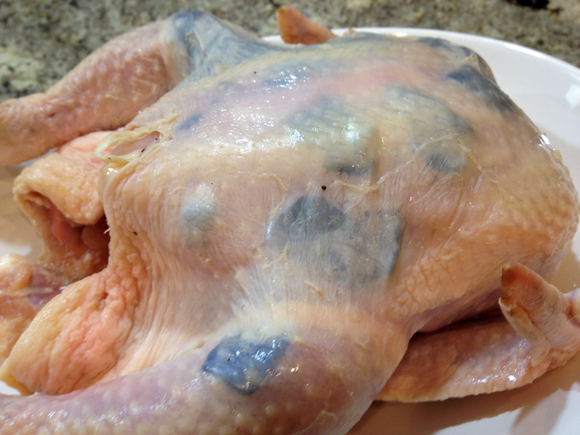
Strain the truffle in a fine-mesh strainer set over a small bowl. Reserve the liquid. Moisten your hands under cold running water and loosen the skin on the chickens’ breasts and thighs, carefully sliding your hands between the skin and meat.   Slide the truffle slices under the skin of the chicken breasts to cover them, then slide a slice or two under the skin of each thigh. Finely chop the remaining truffle slices and set aside for use in the sauce. Truss the chickens, cover with plastic wrap, and refrigerate overnight to allow the truffles to flavor and perfume the chickens.

Heat the oven to 400°F. Season the chicken generously with salt and pepper, then rub with the softened butter. Set on a rack in a roasting pan and roast for 40 minutes. (The chicken will be underdone.) Pour the stock, reserved chopped truffle, and reserved Madeira into a ovenproof, flameproof casserole large enough to hold the chicken with some room to spare. Bring to a boil, then lower the heat so the liquid is simmering and cook until reduced to about 2 cups;  about 30 minutes.

Meanwhile, cut the carrots and leeks into square segments, keeping them separate. Wash the leeks well. Cut off the ends of the zucchini and cut out the center portion by slicing down its length to remove 4 rounded sides. Discard the rectangular center portion and cut the outer portions into uniformly sized pieces. about 1/4 inch thick. Remove the strings from the chicken and set it in the casserole, breast side up. Add the vegetables, cover and braise at a simmer until fully cooked, about 20 to 30 minutes.

Transfer the chicken to a large serving platter and cover with aluminum foil to keep warm. Raise the heat in the pan with the stock and veggies to high, and cook until the broth has reduced a bit, about 5 minutes. Swirl in the cold butter, one cube at a time, to thicken and enrich it. Taste and adjust the seasoning with salt, pepper, Madeira, and/or lemon juice. Spoon some sauce and vegetables over the chicken on the serving platter and serve.

ENJOY!

to print the recipe, click here

composite1 Comments: My hands were shaking as I started slicing the truffle. In a flash-back, I had this vision of my days as a pos-doc in Stanford, around 1988. At some point I needed to use a special reagent: it was an antibody chemically coupled to a gold particle that could be later visualized under the electron microscope. In those days, such reagents were tremendously expensive, and the P.I. of my lab was definitely not swimming in grant money. So, I knew I had to be VERY careful and not make any mistakes once I opened that tiny little container. My hands were shaking, I was hyperventilating, even feeling a bit queasy.  But, back to the chicken, even though no gold-labeled antibody was involved, I went through similar hyperventilation as I worked to stuff the delicate slices under the skin. skinstuffing Phil at first was looking over my shoulder, but at some point he said “I think I should leave you alone with the truffle“. Smart man. The soaking of the slices in Madeira wine is a must, not so much for flavor, but to allow the slices to slide easily under the skin. If you don’t do that each slice will crumble in tiny pieces, and that would make a polka-dot instead of a black veil. You don’t want that. composite2
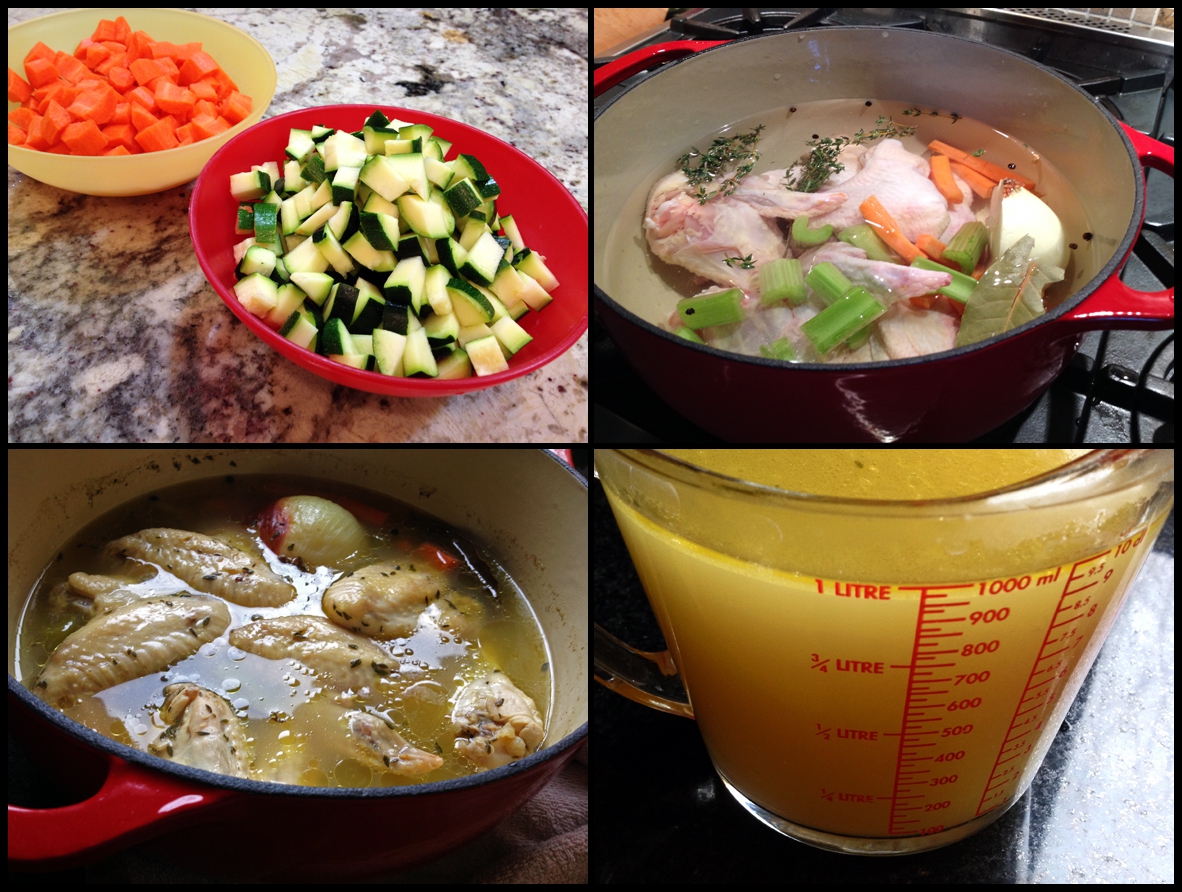
Of course, for such a special recipe, I had to make chicken stock from scratch, and used my favorite method: chicken wings, carrots, celery, onions, some herbs, a smidgen of ginger. In a little over one hour I had a luscious stock, dense with gelatin, intensely flavored.   It would be a crime to join fresh truffles with something poured out of a can, don’t you agree?

Pointers for success:  First, do the truffle stuffing under the skin 24 hours before you plan to make the dish. You get a much more intense flavor of truffle through the meat by doing that. Do not skip this advice.  Second, soak the truffles in Madeira wine for the reasons I specified.  Third, make your own chicken stock.  Those are three simple details that will make this recipe really shine.  And you don’t want to cut corners when dealing with such delicacy…

tastybite
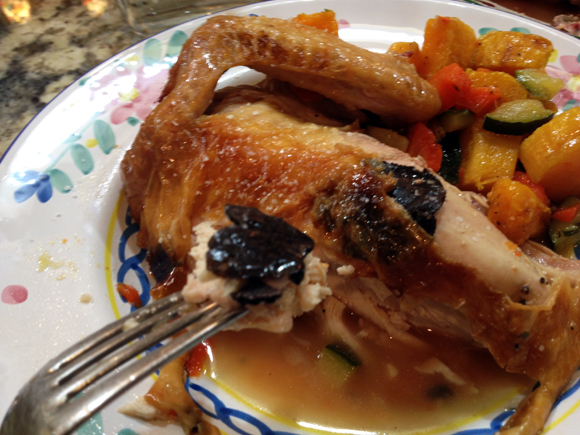
Even though the truffle flavor is present in every bite of the chicken and in the sauce that must be spooned all over your side dish of choice, when you get one of the actual slices in your mouth, it is heavenly! I found it quite interesting that the smell of the fresh truffle, especially as the days went by, was almost unpleasant. Strong, and pungent, like a Pont l’Eveque or a ripe Camembert. But the taste… sublime!

Thank you, thank you, thank you, my secret friend!  In the near future I will share two more recipes using the special gift you were so kind to send me…

ONE  YEAR AGO: My Rio de Janeiro: A cookbook review
TWO YEARS AGO: Hearts of Palm Salad with Cilantro Vinaigrette
THREE YEARS AGO: Watercress Salad
FOUR YEARS AGO: Curried Zucchini Soup
FIVE YEARS AGO: Chocolate Bread