BBA #38: TUSCAN BREAD

Before starting the BBA Challenge I browsed the book to see what  I was getting into. Two breads seemed most intimidating: Poilane, for obvious reasons, and Tuscan, for less obvious, but still relevant reasons.   Tuscan bread is a traditional Italian loaf made without salt. Yes, that’s it, no salt whatsoever.  The idea is downright scary.  If you ever baked a bread and forgot to add the salt, then you know what I’m talking about.

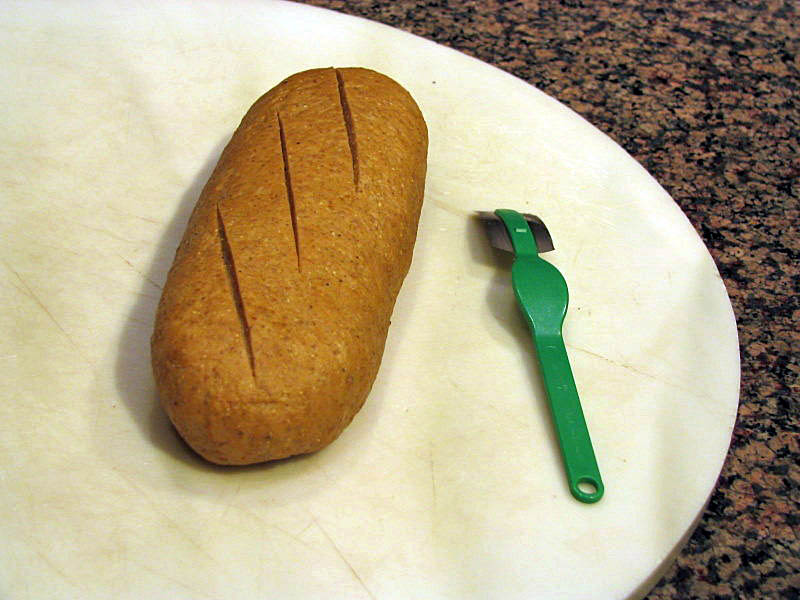
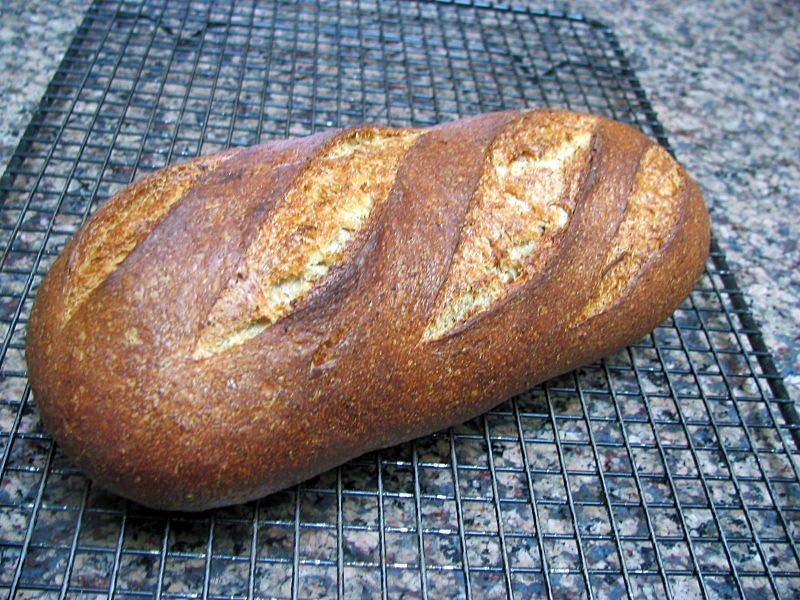
As far as its looks are concerned, the Tuscan loaf did not disappoint.

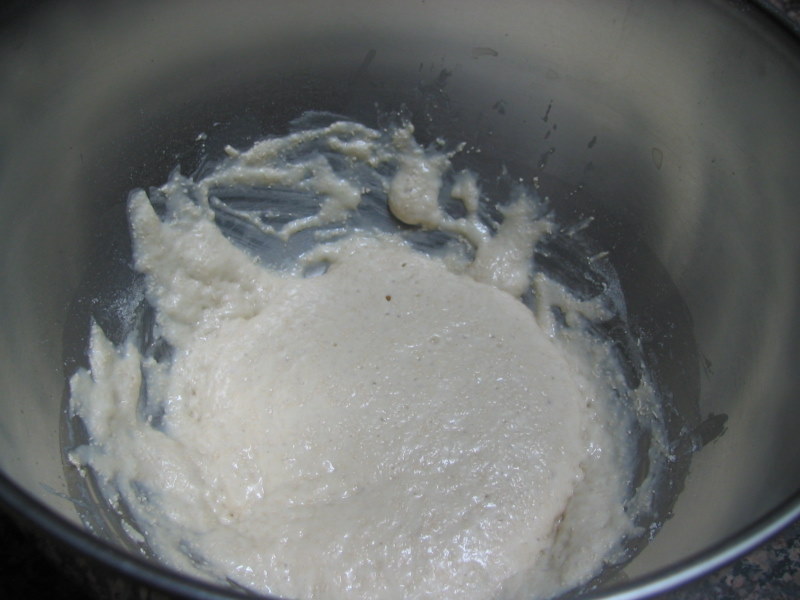
The recipe required a flour paste (flour plus boiling water) that sat overnight at room temperature, and looked like this…

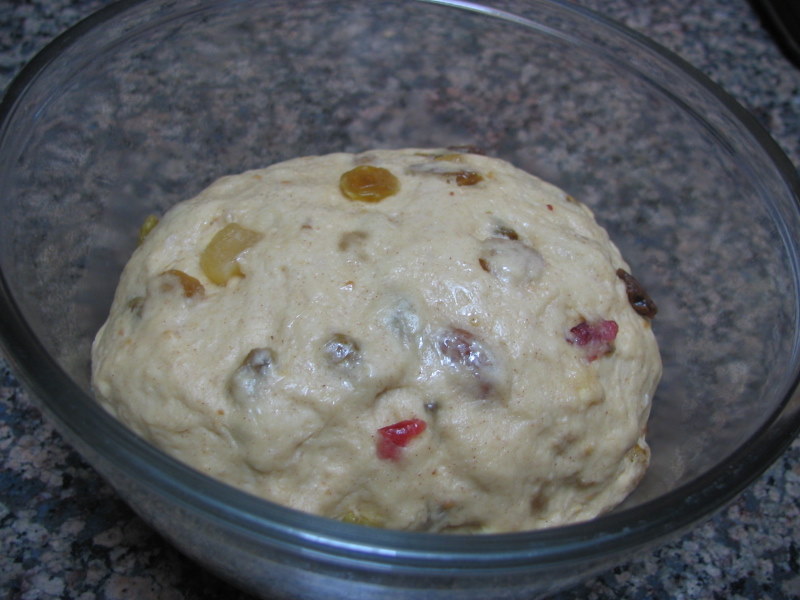
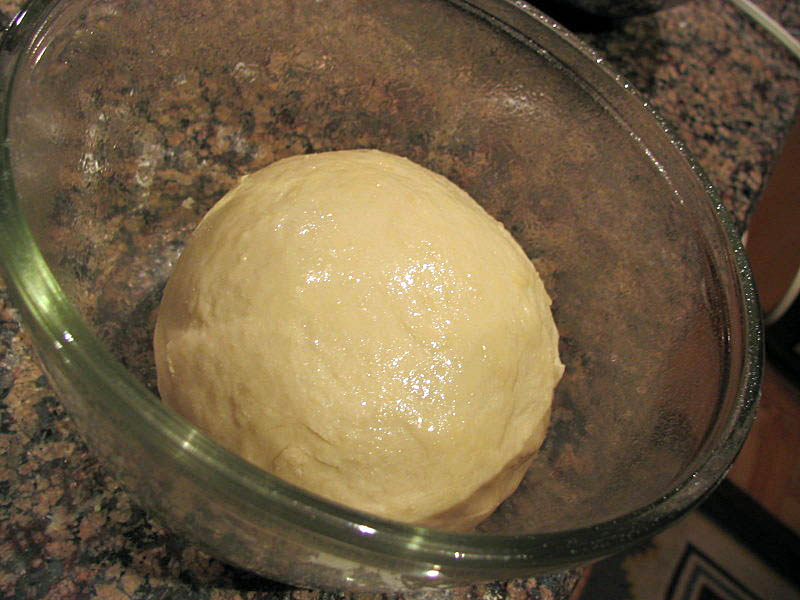
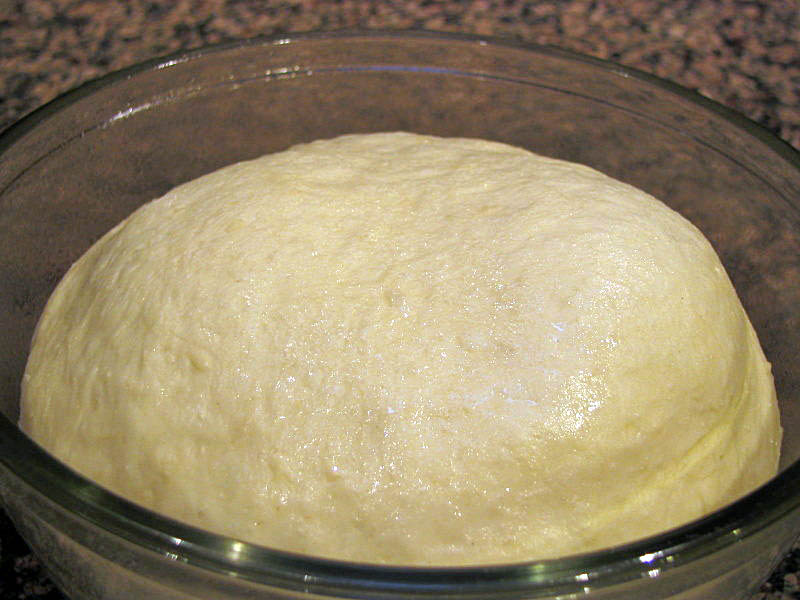
The flour paste was used as part of the dough on the next day, together with bread flour, olive oil, and instant yeast. The dough more than doubled in size after 2 hours at room temperature…
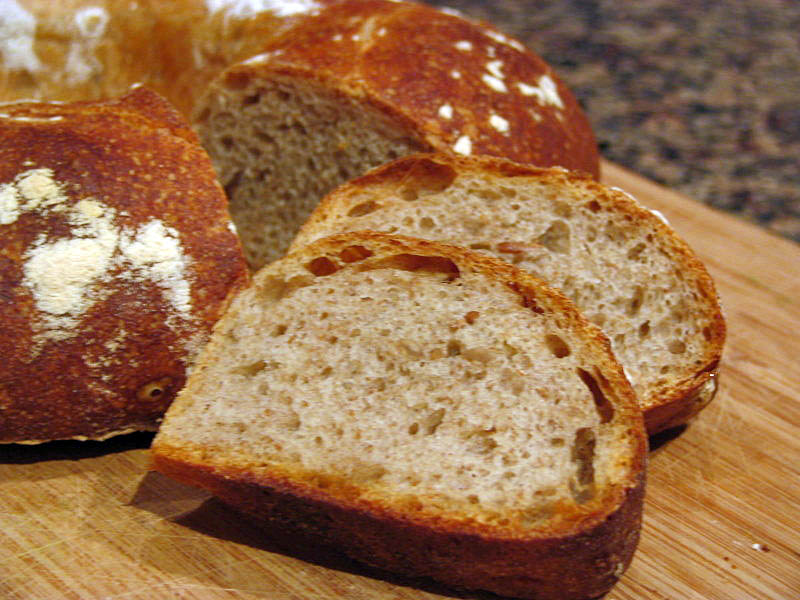
The crumb was tighter than I expected for a dough that rose  so well, and felt airy to the touch…

Now, for the taste….

I don’t know how to soften it, so here’s my verdict: this bread was tasteless.  I tried it with olive oil + salt, with butter + salt, and with jam, and I didn’t enjoy it either way.  On the other hand, my husband, who’s not a salt addict, actually liked the bread quite a bit in a peanut butter and jelly sandwich.  His comment was that the strong flavor of the peanut butter was good with the sweetness of the bread.

Maybe in Italy the flour is different, or maybe if you grow up eating this bread you learn to love it, but the lesson I took from this recipe was “the fact that you can make a bread without salt, doesn’t mean you should” 😉

You can read about Phyl’s take on Tuscan bread by clicking here

and for a very informative post on saltless bread, please visit Susan’s website by clicking here

Next…. Vienna bread….  I look forward to this one!  Stay tuned…

BBA#37: SWEDISH LIMPA

Following the Bread Baker’s Apprentice Challenge, we arrive at yet another sourdough rye, Swedish Limpa.   The recipe required a special kind of “sponge” : a sourdough starter with molasses, spices (caraway and fennel seeds) and orange peel, that smelled terrific!

Apart from the fact that I dislike the “feel” of rye dough, I had no problems with the recipe.  Here’s what the sponge looked like 60 minutes after mixing it….

The dough seemed dense and heavy; after forming the loaf it must rise for 90 minutes. Mine didn’t rise that much, but by now I’m used to the finicky personality of rye…

This bread smelled wonderful during baking, and the resulting crumb was tight and dense, but not too heavy.

Verdict: it was a delicious bread, and impossible to eat only a single slice.  Maybe it was the spices in the background, or the mix of molasses and rye that produced kind of a hippie-aura, but both me and my husband felt closer to Nirvana with each bite.

Please visit Phyl’s site to check her Swedish Limpa, and then make sure to read about her adventures with Stollen… and I thought our dogs were naughty….    😉

BBA#36: STOLLEN

The Bread Baker’s Apprentice Challenge, the adventure of baking every single recipe from Peter Reinhart’s book, brings us to Stollen, a festive European-style fruit-and-nut bread.   Once more, I cannot say I was thrilled about making it –  as far as fruit-breads go,  I like panettone, but have never tasted stollen – the sugar coating seemed excessive to me.   But, as happened in the not-too-distant past,  I was pleasantly surprised by a nice bread that, without the challenge, I would never attempt to make…

The previous three or four breads were all a bit involved, in the sense that they required a sourdough starter, sometimes a soaker in addition to it.  Stollen is much simpler – you can mix and bake the dough in the same day.   The recipe calls for a sponge made just one hour before the complete dough.

The dough doesn’t rise a lot, but it smells wonderful from the very beginning, thanks to the cinnamon, brandy, orange and lemon peel it contains.  Mr. Reinhart offers two different shaping methods, a regular loaf, and a crescent-shaped bread,  with a special fold all along it.
I chose the latter.

A few photos of the preparation…

The sponge, almost ready to be mixed with the rest of the ingredients…

The dough, after 45 minutes rising…

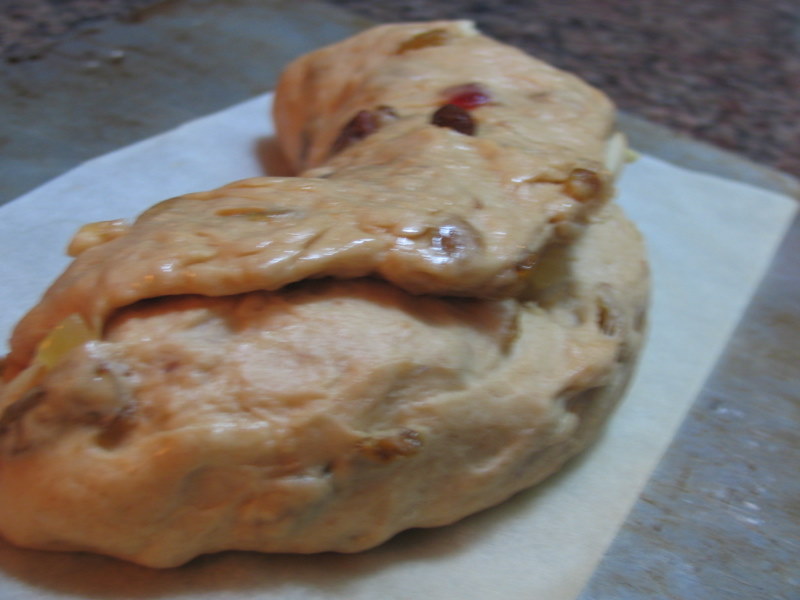
The initial shaping…

The stollen, shaped and ready to go into the oven….

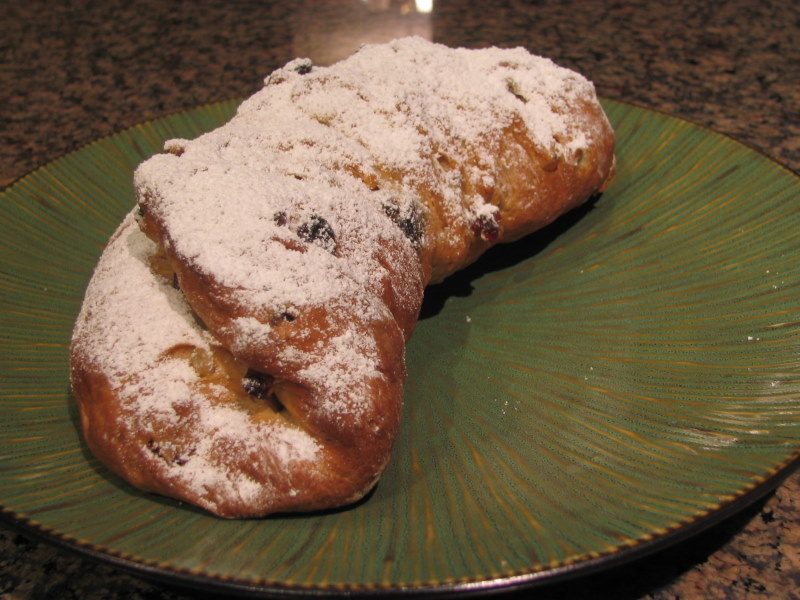
After baking, the loaf is brushed with a little vegetable oil, then dusted with a generous amount of powdered sugar.  After 1 minute, one more layer of powdered sugar is added on top….

One long hour waiting….. until we finally sliced the bread….

For those familiar with panettone, I should say that stollen is quite different.  The texture is a little softer,  the cinnamon taste very obvious and pleasant.   The powdered sugar, that at first seemed a bit too much, is a perfect match to the bread.    Do not skip it…

Thrty six breads down…. seven more to go…

Next on the BBA Challenge:  Swedish Limpa.  Stay tuned!   😉

BBA#35: SUNFLOWER SEED RYE

HAPPY NEW YEAR!

On the first day of the year… I’d like to say that bread baking is a great way to welcome 2010!   I  debated whether to make a simple sourdough, or to mark another notch in my BBA Challenge-belt.   Once I realized that the BBA bread was a sunflower seed rye, I immediately went to work on it.   From its whole flours and sunflower seeds, the bread casts a healthy aura that’s perfect for this time of the year,  in which we all feel the impact of holiday excesses.

Welcome 2010 with Peter Reinhart’s couronne of
sunflower seed rye…

The recipe calls for a soaker and a firm sourdough starter.  Once again, I couldn’t find pumpernickel flour, and settled for a regular dark rye instead.  I still prepared the soaker exactly as described – mixing rye flour with water and allowing it to sit overnight.

The dough rose slowly and less than I expected, but it was fun to shape the ring.   First, form a ball, then poke a hole in the center, stretch it out, and finally make a deep indentation to define quadrants.  I added some flour to try to prevent the square from closing during the rising, but it didn’t end with dramatic look of the picture in the book.

The bread didn’t have the oven-bounce of a typical, white flour sourdough,  but it felt light as I grabbed it from the oven.  The taste was wonderful, hearty, and the toasted sunflower seeds made it just like Reinhart described:  a “loyal” bread, that stays with you long after you enjoy it.

Another winning recipe, and with it completed, only EIGHT breads remain to finish the Bread Baker’s Apprentice Challenge!

I am submitting this post to Susan’s Yeastspotting, my favorite weekly net-event…

Enjoy rye breads? Go to Foodista for more…
Rye Bread on Foodista

On a side note,  my New Year’s Resolution in 2008 was to regularly bake bread.   It’s been two years of ups and downs, many failures but so much fun!  If you’re a believer in New Year’s resolutions, have you considered baking bread?    😉

BBA#34: PUMPERNICKEL BREAD

Post #100 at Bewitching Kitchen!   Pop the Champagne and toast to food!

It’s hard to believe that only NINE breads remain in the BBA Challenge…   If you haven’t been following it, Nicole launched the event months ago with the idea of baking her way through the Bread Baker’s Apprentice, by Peter Reinhart, and invited other crazy bakers to join in.  We bake’em and blog’em, but if you want the recipes, then you’ll have to get the book.

I wasn’t too wild about making a pumpernickel bread, but I prepared my rye starter and mixed the dough. I couldn’t find pumpernickel flour, which is a particularly coarse grind of rye, so I had to use regular rye flour in its place. Sorry, Mr. Reinhart! 😉

I am glad to report that this bread was a winner, even without the correct flour!

I halved the recipe, mainly because I didn’t expect us to love it, but, in retrospect, that was a mistake: two of these loaves would be more than welcome in our home!

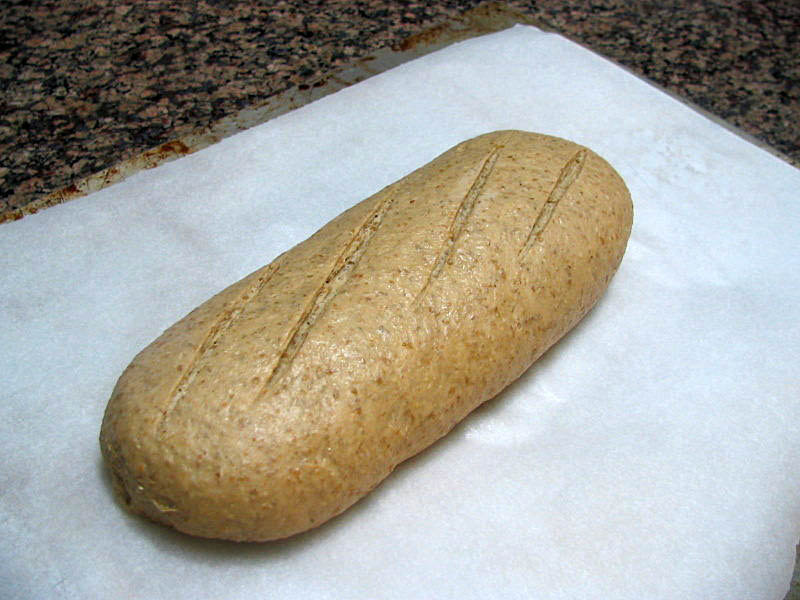
I had no problems whatsoever with this recipe.   I skipped pictures of the dough rising, because it didn’t seem to rise much, but this photo shows the slashed loaf, just before the oven.


The bread did have some oven bounce, which always makes the baker happy!   The crumb was tight and  lighter than that of the bread in the book .  I used instant coffee in the dough, maybe cocoa powder would make it darker.  It was tender, moist,  and had perfect balance of sweetness and sourness.  A piece of sharp, aged Cheddar cheese was declared the winning match for this bread …

Note to self:  next time, make the full recipe!  😉