VEGETARIAN LASAGNA

Lasagna: layers of noodles blending hearty Bolognese sauce, melted cheese or bechamel sauce with mushrooms, chicken, sausage…whatever your palate craves, then baked until bubbly and browned on top.  The creator of this dish deserves a place in the Gastronomic Hall of Fame. I like to think it was a grandma from Firenze, but some sources indicate that she was actually born in Greece! Whatever the origin, today you will find all sorts of lasagnas, some so streamlined that it’s inappropriate to even keep the name. If you google “vegetarian lasagna” you’ll find yourself sorting through many thousands of hits. I browsed through a few pages for inspiration, but then I made my own version, which even that old Italian grandma would be pleased with.
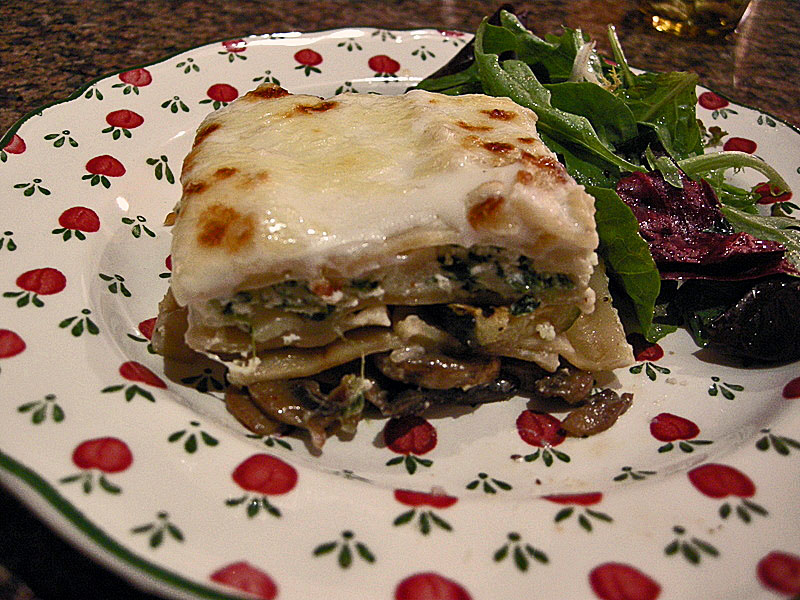
VEGETARIAN LASAGNA
(from the Bewitching Kitchen)

1 package of lasagna noodles
4 cups white mushrooms, sliced
2 T olive oil
salt and pepper
3 cups milk
3 T butter
4.5 T flour
ground nutmeg
3 medium zucchini, sliced lengthwise 1/8 inch thick
lemon juice and zest
1 pound ricotta cheese
1 egg, slightly beaten
1 small package of frozen spinach, defrosted and squeezed dry
1 ounce shredded mozzarella cheese
Grated Parmiggiano Reggiano cheese

Boil the noodles according to the instructions on the package (don’t overcook).  Plunge the noodles in ice cold water to stop them cooking, drain well and spread on a towel to remove excess moisture.  Lay them on a baking sheet brushing them ever so slightly with olive oil if you want to keep the cooked noodles in the fridge for assembling the lasagna later.  Cover well with plastic wrap.
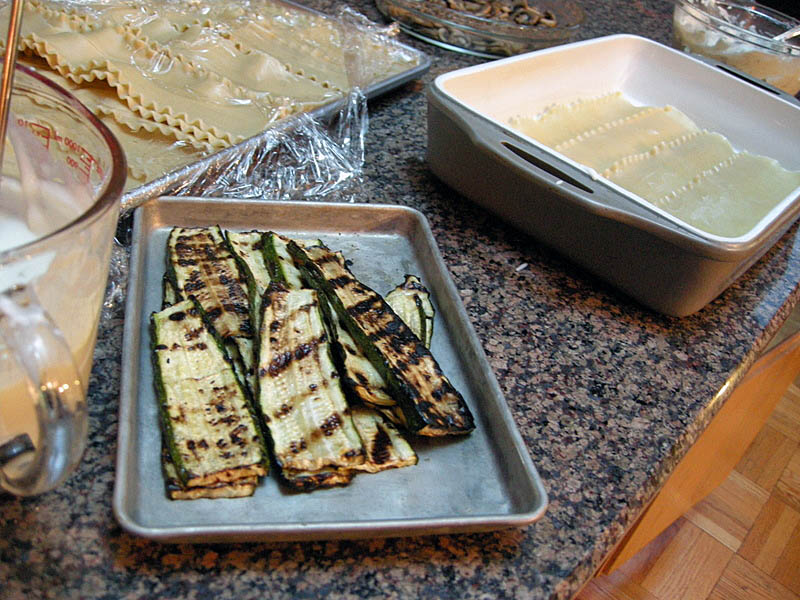
Saute the mushrooms in olive oil, seasoning with salt and pepper, until soft and all moisture has been released and evaporated.  Reserve.   Mix a couple of tablespoons of olive oil with some lemon juice,  brush the zucchini slices,  season with salt and pepper and grill until nicely marked on both sides.  Reserve.
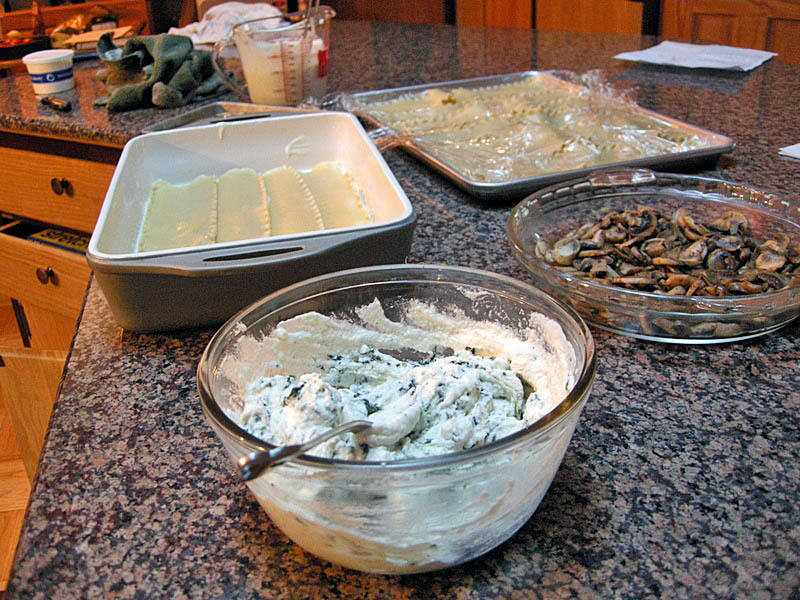
Prepare the ricotta filling by mixing the ricotta with the beaten egg and the spinach, seasoning with salt, pepper, and a little lemon zest.  Reserve.

Prepare the béchamel sauce:  warm the milk in the microwave.  Melt the butter in a heavy-bottomed saucepan, add the flour and cook for 2-3 minutes, stirring constantly.   Add the hot milk all at once, whisking to prevent lumps from forming.  Season with salt, pepper, and freshly ground nutmeg.   Cook until thickened (about 5 minutes).  Reserve (dot with butter and place a plastic wrap over it to prevent a thick film from forming).

Assemble the lasagna:  Spread some of the béchamel sauce on the bottom of a baking dish.  Layer noodles to cover the surface with a slight overlap.  Add the mushrooms, and moisten them slightly with a few tablespoons of béchamel sauce.  Add another layer of noodles.  Layer the zucchini slices over them, add another layer of noodles.   Spoon the ricotta mixture carefully on top, add noodles to cover it, and spread the béchamel sauce on top, making sure to cover the whole surface.   Add the shredded mozzarella, sprinkle some Parmiggiano, and cover with aluminum foil.

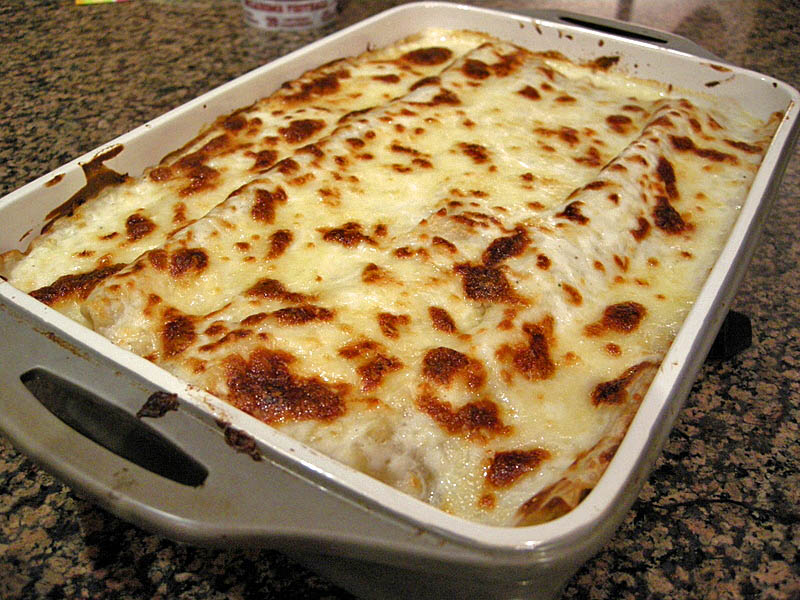
Bake at 375 F for 30 minutes, uncover, and bake for 15 minutes more to brown the surface.  If necessary, increase the oven temperature or turn the broiler in the last few minutes.   Remove from the oven, let it rest for 15 to 20 minutes before serving.

ENJOY!

to print the recipe, click here

Comments: Most current recipes call for no-boil lasagna noodles.  I’ve used them, and in a pinch I’d do it again, but not for a special dinner.  It is a little extra work to boil the pasta, but your guests (and you) deserve it. With boiled noodles the lasagna bakes more uniformly and the different layers better enrich each other, so that the final dish becomes more than the simple sum of its parts.  It’s gastronomic synergy in action  ;-).  If you don’t believe me, make two small, identical lasagnas, one by boiling the pasta and the other using the “no-boil” method. Then, let your taste buds be the judge.

Most vegetarian lasagnas use eggplant and mushrooms, a tasty combination.   I kept the mushrooms as one layer, but substituted grilled zucchini for the eggplant, because the texture of its skin is much better.  My version is lighter on cheese and the béchamel sauce filling, which I mostly reserved to the top of the dish with an appetizing gratin cover.

There’s something inexplicably nice about spending a Saturday afternoon preparing the fillings, cooking the noodles and assembling the lasagna, especially on a huge kitchen counter top with nice music in the background… 😉   I am very pleased with the way my veggie lasagna turned out, and hope that you’ll love it too.

Lasagna freezes extremely well, so we have leftovers conveniently packed in the freezer for our next trip home.  They’ll come in handy when we arrive from the airport,  a perfect antidote for the “peanut & pretzel treatment” that the airlines inflict on their passengers…  😉

ONE YEAR AGO: Brazilian Pao de Queijo (which happens to be one of my favorite posts)

Add to FacebookAdd to DiggAdd to Del.icio.usAdd to StumbleuponAdd to RedditAdd to BlinklistAdd to TwitterAdd to TechnoratiAdd to Yahoo BuzzAdd to Newsvine

receita em portugues na proxima pagina

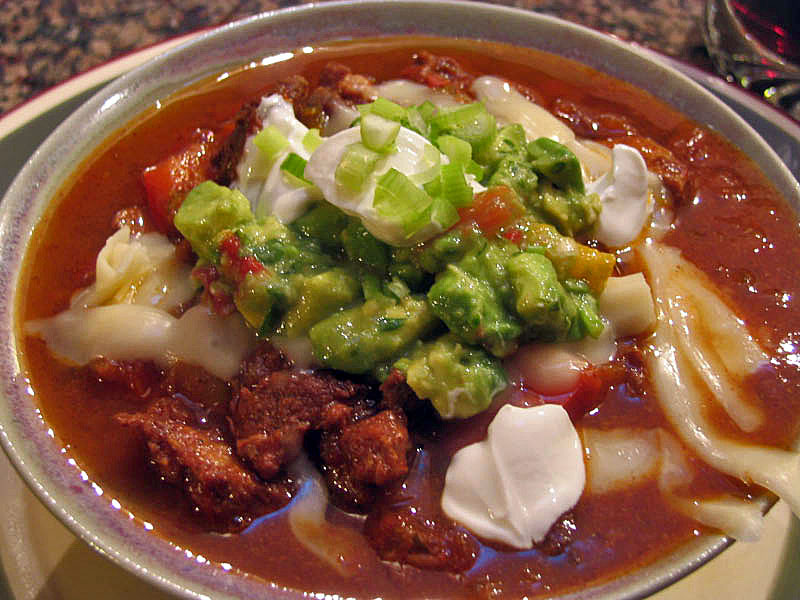
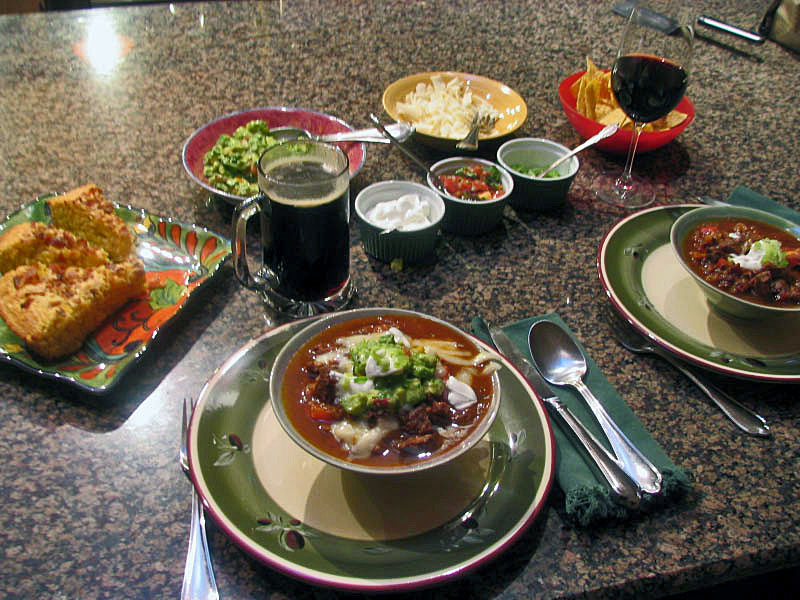
DOWN HOME DIG-IN CHILI

Get ready for a big spicy spoonful of  chili!  In the winter, give me chili with cornbread and cabernet; in the summer I’ll have chili with tortillas and tequila (or cold beer).  What a flavorful, succulent meal it is!   You’ll find chili everywhere, north, south, east and west; in cookbooks, food magazines and websites (like this one), with many of those authors claiming to divulge “the authentic” recipe.   Particularly in the Southern US, chili recipes provoke  discussions almost as heated as the peppers they contain.  But, I’m ready to jump into the fire, by sharing with you my husband’s favorite recipe.  It’s not the hottest or the spiciest chili you’ll find, but it’s meaty, delicious and the best  he’s ever encountered.  He made it for me for the first time when we started dating and we’ve cooked it together many, many times since then.


DOWN HOME DIG-IN CHILI

(from Bon Appetit, 1988)

1/4 cup vegetable oil
2 medium onions, finely chopped
2 green bell peppers, chopped
1 celery stalk, chopped
2 garlic cloves, minced
2 1/2 lbs stewing beef, chopped
2 lbs pork shoulder (Boston butt), chopped
4 cans (14 1/2 ounce) stewed tomatoes, drained, liquid reserved
salt and pepper to taste
1 bottle pale ale (12 ounce)
7 Tbs chili powder
4 jalapeno chilies, seeded
1 tsp cayenne pepper
1 tsp cumin
Hot pepper sauce (Tabasco type), to taste

Heat the oil in heavy large pot over medium heat. Add finely chopped onions, bell peppers, celery, and garlic and saute until onions are translucent, about 10 minutes. Remove vegetables using slotted spoon and set aside.

Increase heat to high. Add beef and pork; sprinkle with salt and pepper. Cook until browned, stirring frequently, about 10 minutes. Return vegetables to pot. Add tomatoes, ale, chili powder chilies, cayenne and cumin. Reduce heat, cover partially and simmer 2 hours, adding reserved tomato liquid if chili appears dry. Taste and adjust seasoning with salt and pepper. Uncover and simmer until thickened and meat is tender, 2 more hours.

Season chili with hot pepper sauce. Serve with green onions, cheddar cheese, avocado and sour cream.

Makes at least 8 servings.

ENJOY!

to print the recipe, click here

Comments: This favorite version of ours might very well be  “middle-of-the-road” in the debate about what should (or should not) be in a pot of chili. It doesn’t include beans, pleasing many, but it uses tomatoes, upsetting other purists.

We usually make it with  beef and pork, and we recently tried a mixture of lamb and pork.    We prefer this version, exactly as published 22 years ago (!!!) in Bon Appetit, by far. Some markets sell ground beef  for chili, but it’s better to buy a large cut of beef chuck,  some pork shoulder and cut them by hand into 3/4  inch cubes. The final texture is well worth the extra work.

Chili is ideal for entertaining, as it gets better when it sits in the fridge for a day.   Sometimes we make a full batch, enjoy “chili for two,” and save leftovers in the freezer for an encore another time.

This dish deserves recognition as a “Perfect Saturday Night Dinner” !


ONE YEAR AGO…    CINNAMON ROLLS

Add to FacebookAdd to DiggAdd to Del.icio.usAdd to StumbleuponAdd to RedditAdd to BlinklistAdd to TwitterAdd to TechnoratiAdd to Yahoo BuzzAdd to Newsvine

receita em portugues na pagina seguinte…..

Continue reading

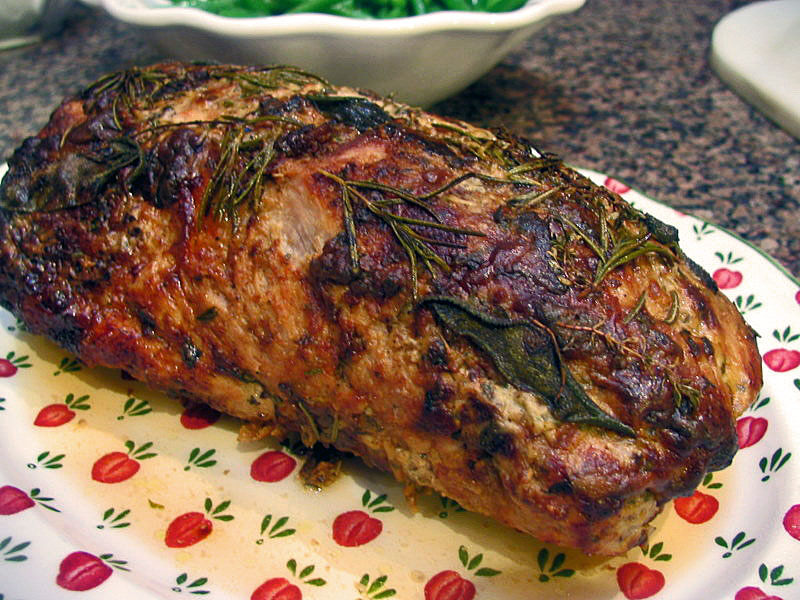
HERB AND MUSTARD PORK ROAST

Suzanne Goin’s cookbook “Sunday Suppers at Lucques”  is a collection of seasonal meals from her award-winning restaurant in Los Angeles.  It is not uncommon that cookbooks by chefs of her caliber become coffee table books, that are rarely put to use,  because either the recipes are too involved or the ingredients are too hard to find.  That’s not the case for Sunday Suppers.   Many of its recipes are uncomplicated, but their small details make them special.   In this recipe for pork roast the double application of a simple  mustard and herb marinade develops a delicious flavor.  It’s hard to improve a classic, but this method does it.

HERB-ROASTED PORK LOIN with MUSTARD BREADCRUMBS
(adapted from Suzanne Goin)

1/2 cup Dijon mustard
1 Tbs thyme leaves + 6 full sprigs
2 Tbs fresh parsley leaves, chopped
3 Tbs olive oil, divided
6 cloves garlic, smashed
pork loin (center cut, about 3 pounds)
3 sprigs rosemary
3 sprigs sage
6 Tbs butter, sliced
salt and pepper

for mustard breadcrumbs
2 Tbs butter
1 Tbs Dijon mustard
1 tsp thyme leaves
1 tsp chopped parsley

Whisk the mustard, thyme leaves, parsley, and 1 tablespoon of olive oil in a shallow baking dish. Stir the garlic, and brush the mixture all over the pork loin. Cover and refrigerate overnight (or at least 4 hours). Remove the pork from the fridge one hour before cooking, after 30 minutes season it well with salt and pepper. Reserve the marinade.

Heat the oven to 325 F. Heat 2 tablespoons of olive oil in a large skillet until it is almost smoking. Place the pork loin in the pan, sear it on all sides, until well browned (do not move the pork around too soon, you need to allow the browning to take place). The whole process should take 15 to 20 minutes. Transfer the pork to a roasting rack, and brush the reserved marinade all around it. Reserve the pan to make a sauce.

Arrange the rosemary, sage, and thyme sprigs on the roast and top with 3 tablespoons of butter. Roast the meat until a thermometer reads 120F – about 1 hour and 15 minutes. Let the pork rest at least 10 minutes before slicing.

The pan sauce….

While the pork is roasting make a sauce: heat the pan you used to sear the meat on medium,  add 1/2 cup water (or chicken stock if you prefer)and stir until it boils, also scraping the bottom of the pan. Reduce by boiling a few minutes, swirl 3 tablespoons of butter and reserve until time to serve.

The mustard breadcrumbs…
Heat the oven to 375F. Place the breadcrumbs in a bowl. Melt the butter in a small saucepan, whisk in the mustard, thyme, and parsley. Remove from the heat, let it cool slightly, and add to the breadcrumbs, tossing to coat. Transfer to a baking dish and bake for 10 to 12 minutes, until golden brown.

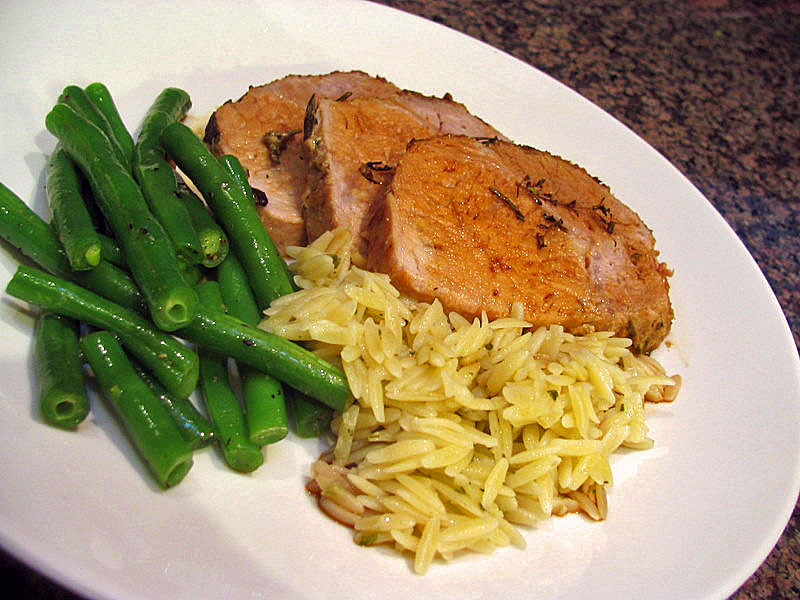
To serve, slice the meat, spoon the sauce over, and shower it with mustard breadcrumbs.

ENJOY!

to print the recipe, click here


Comments:
I’m picky about center cut pork loin, because it may become dry, even if I’m careful not to overcook it.  It is indeed difficult to overcome the lean nature of today’s pork. This recipe joins the two or three tried and true methods that I trust, and I imagine anyone who makes it will feel the same way.  With green beans, a little orzo on the side and my perfect match on the other side of the table…. life is good! 😉

Add to FacebookAdd to DiggAdd to Del.icio.usAdd to StumbleuponAdd to RedditAdd to BlinklistAdd to TwitterAdd to TechnoratiAdd to Yahoo BuzzAdd to Newsvine

INDONESIAN DELIGHT

I’ve never been to Indonesia, but like many Asian places,  it fascinates me.   Way too long ago, David Rosengarten had a show on satays, in which he highlighted the variety of cooking styles in Indonesia, a reflex of the huge number of populated islands forming the country: more than 6,000!   It is hard to imagine! I would be thrilled enough to visit just one:  Java… 😉

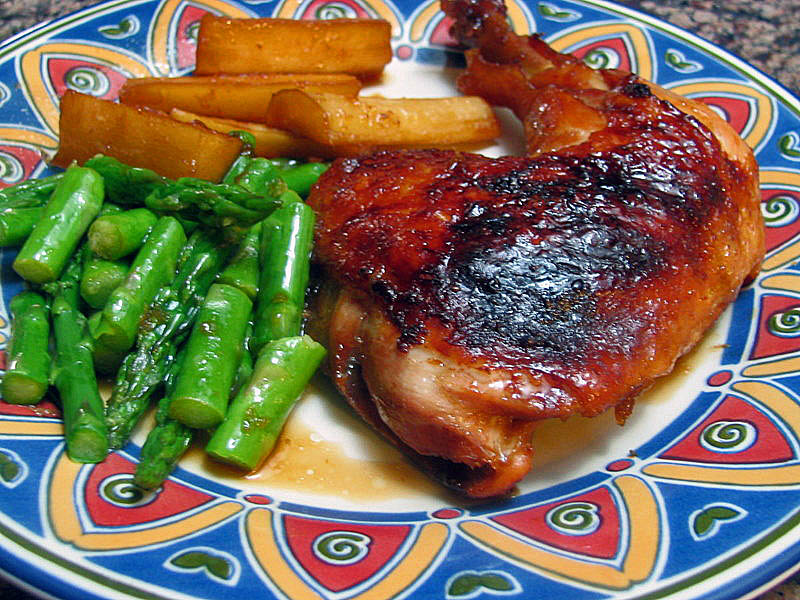
The Barefoot Contessa was the inspiration for last Sunday’s dinner: Indonesian Ginger Chicken. I’m fond of poultry marinated in soy, so her recipe  got my full attention (even if I did roll my eyes  when I read her endorsement of it: “Lauren Bacall gets cranky if we are sold out….” )

INDONESIAN GINGER CHICKEN
(adapted from Ina Garten)

1/2 cup honey
1/4 cup soy sauce
4 cloves of garlic, minced
1/4 cup freshly grated ginger
1 chicken, quartered
Parsnips, peeled and cut in large pieces

Heat the honey, soy sauce, garlic, and ginger in a small saucepan, until the honey melts and the sauce is smooth. Let it cool, and pour over the chicken arranged on a baking dish, skin side down.  Cover the dish with aluminum foil and marinate overnight in the fridge.

Heat the oven to 350F.  Place the dish in the oven, still covered, and cook for 45 minutes.  Remove the foil, turn the chicken skin side up, add the pieces of parsnips around the chicken, making sure to coat them with some of the sauce forming at the bottom of the dish. Increase the oven temperature to 375F and continue baking for at least 30 minutes, until parsnips are tender, and the chicken is fully cooked.  The sauce should be very dark brown.

ENJOY!

to print the recipe, click here

Comments: I modified the recipe  to increase the cooking time, add some parsnips and reduce the garlic.   I’m in the minority, I know,  but I dislike the over-use of  garlic.   And here’s another shocker, the parsnips were as good as the chicken itself.  We couldn’t stop eating them!  Lastly, the side portions of lemony asparagus brightened the whole meal,  to round out a delicious Sunday dinner.

Add to FacebookAdd to DiggAdd to Del.icio.usAdd to StumbleuponAdd to RedditAdd to BlinklistAdd to TwitterAdd to TechnoratiAdd to Yahoo BuzzAdd to Newsvine

CORNISH HENS FOR A SUNDAY DINNER

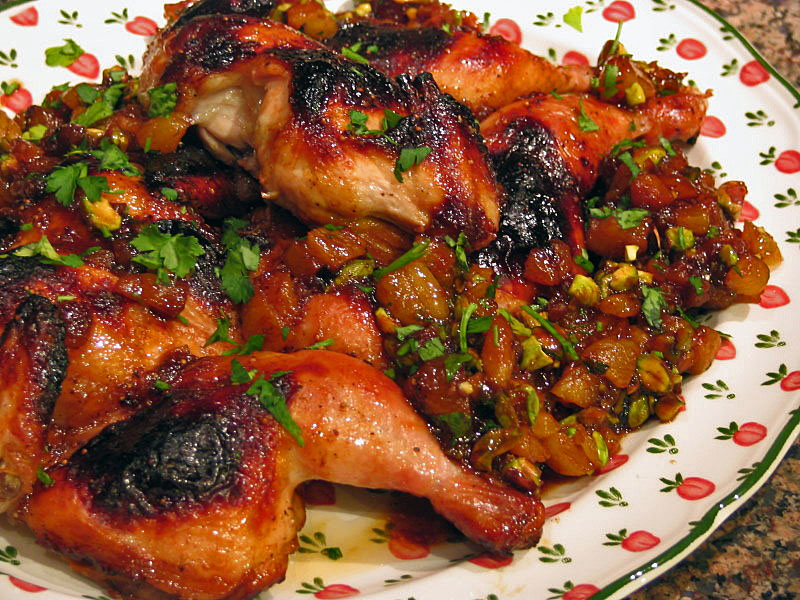
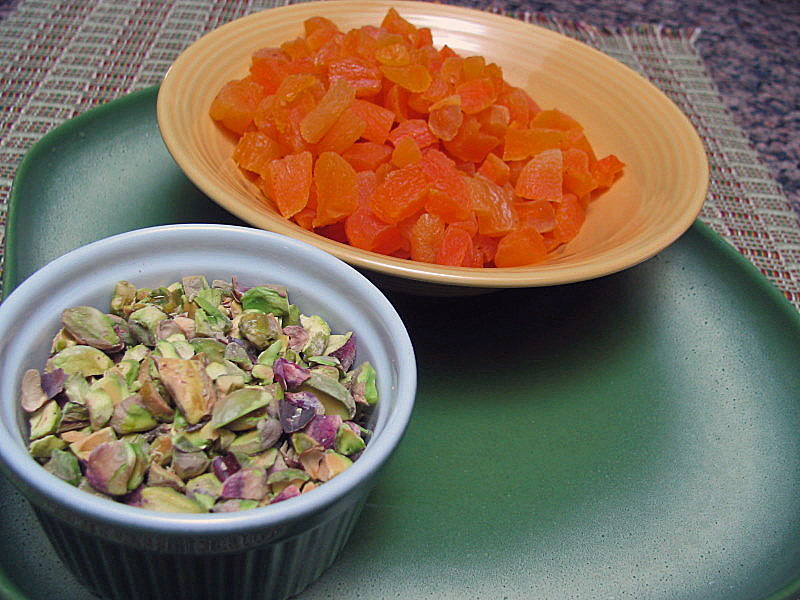
Cornish hens always create a special occasion: they are festive and elegant, but simple to prepare.  After a long session of browsing through cookbooks the pistachio dressing in a recipe from Pam Anderson grabbed my attention.  Pistachio nuts.  I adore them so much that I actually avoid buying them, because after opening the bag with the intention of having just three or four, I usually end up eating them until my fingers are bruised from opening the shells! They are the antithesis of “Everything in moderation”.   Now, imagine a recipe that pairs pistachio nuts and dried apricots… Irresistible!

BUTTERFLIED CORNISH HENS with APRICOT-PISTACHIO DRESSING
(adapted from Pam Anderson)

2 Cornish hens
1 cup kosher salt
salt and pepper for seasoning
2 T olive oil
1 large onion, diced
1 cup dried apricots, diced
1/4 cup apricot jam (I substituted fig jam)
1/8 cup balsamic vinegar
1/2 cup pistachio nuts, chopped
1/2 cup minced parsley

Heat the oven to 450F.

Butterfly the hens but cutting through the middle of the backbone and removing it.  Lay the hens on a cutting board, breast side up, and flatten them using the palm of your hand.

Dissolve the kosher salt in 2.5 quarts of cold water to make a brining solution.  Brine the birds in the fridge for 1.5 hours.   Remove them from the brine, rinse, and dry them.

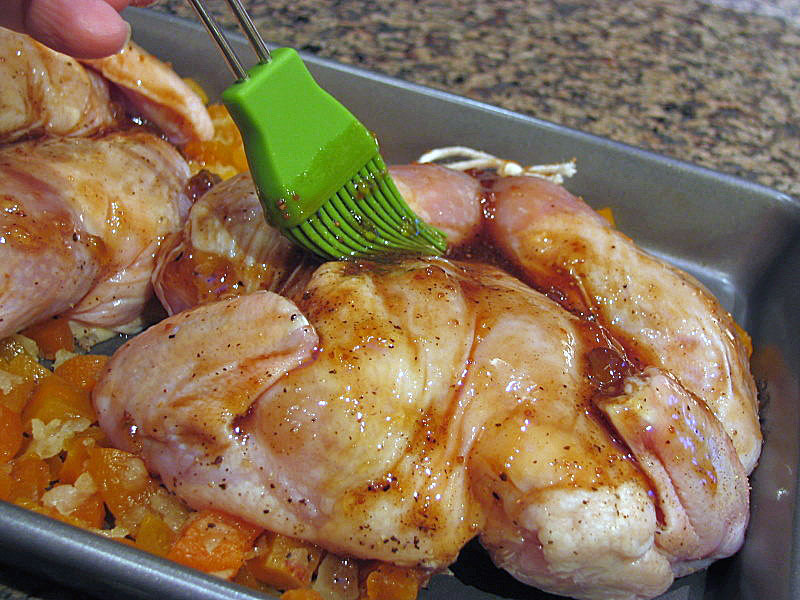
Sautee the onions in oil until very soft. Stir in the apricots, then spread the apricot-onion mixture in a baking dish.  Season the hens with black pepper, and lay them on top.  You may tie the legs together to keep them in a nice shape.

Mix the jam and balsamic vinegar in a small bowl, then brush most of the mixture on the hens.  Place them in the oven, add a little water to the baking dish to prevent burning the apricot mixture.  Bake for about 45 minutes, brushing with the leftover jam mixture as well as the liquid accumulating in the roasting pan.  After 45 minutes turn on the broiler to crisp the skin, but watch closely, because the sugar in the jam will easily burn.

Remove the hens, tent them with aluminum foil, and if you find the apricot mixture too watery, then return it to the oven or transfer it to a pan and reduce it slightly on top of the stove.  Stir in the pistachios and parsley, and serve with the hens.

ENJOY!

to print the recipe, click here

Comments: A few weeks ago I bought a pair of kitchen shears, and wish I’d done so long, long ago… Butterflying hens (or chickens) with a chef’s knife has always been too difficult, but my new toy made this step fast and easy. The backbones and wing tips are in the freezer awaiting their opportunity in my next batch of homemade stock.

Many side dishes jive with this recipe: mashed potatoes, soft cooked polenta, saffron rice or couscous, but this time I just cooked some orzo, served with a light olive oil and lemon dressing. Homemade crusty potato bread was a perfect complement.

Word of caution: the dressing is quite sweet, so go light on the amount you spoon alongside the meat. I intend to play around with the recipe a little, to come up with a slightly less sweet version.

Apart from shelling the pistachios (a tough job when you need 1/2 cup but they keep disappearing in thin air), the recipe is a breeze to make, and will certainly impress whoever is sharing the meal with you…

para a receita em portugues, visite a pagina seguinte