Long post, not food related.
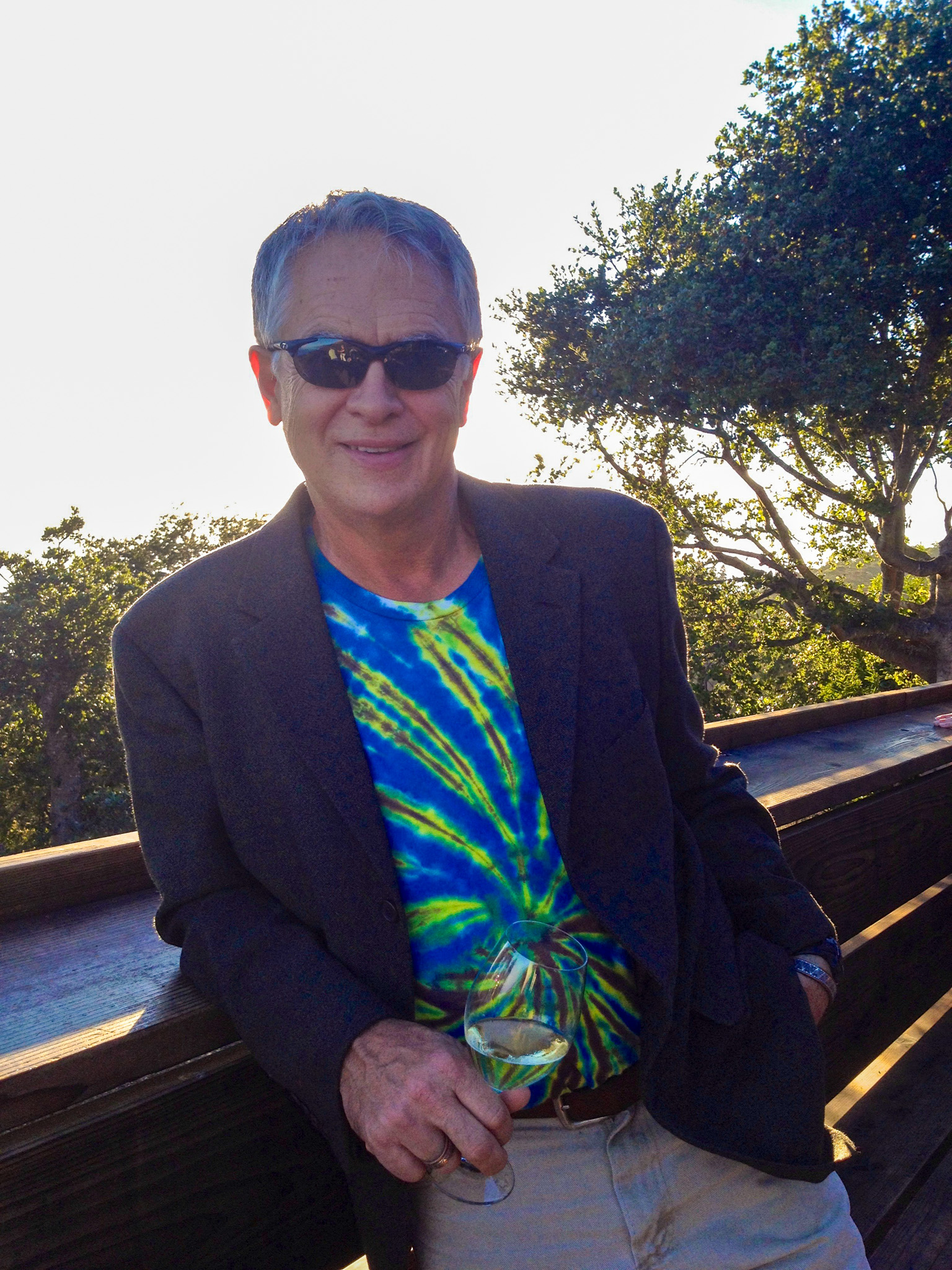
If you’ve been following my blog over the years, you probably know a few things about my husband, Phil. He cooks dinner every other day. He is an avid (and pretty darn good) golfer. He is a biochemist and a Professor at Kansas State University. But maybe there a few things you don’t know. And I am here to share them with you, as we approach the day we’ll both retire from academia and research. Things I admire and cherish about the man who started as a co-worker and became my very best perfect match.
ON MENTORING STUDENTS
Maybe one of the things I admire the most. Quite often, in academia, faculty members subscribe to the idea that a graduate (or undergraduate) student should be solely responsible for their progress. In other words, they have high expectations and sets of rules to accept a student into their research group. Phil has a completely different approach. To join our group, all that he expected was enthusiasm for our research subject and the commitment to work hard. Anything else would be irrelevant. I’ve been around scientists from many parts of the world, and I can tell you, this is not usual. But it is absolutely wonderful, and super gratifying.
x
A PASSION FOR THE SUBJECT
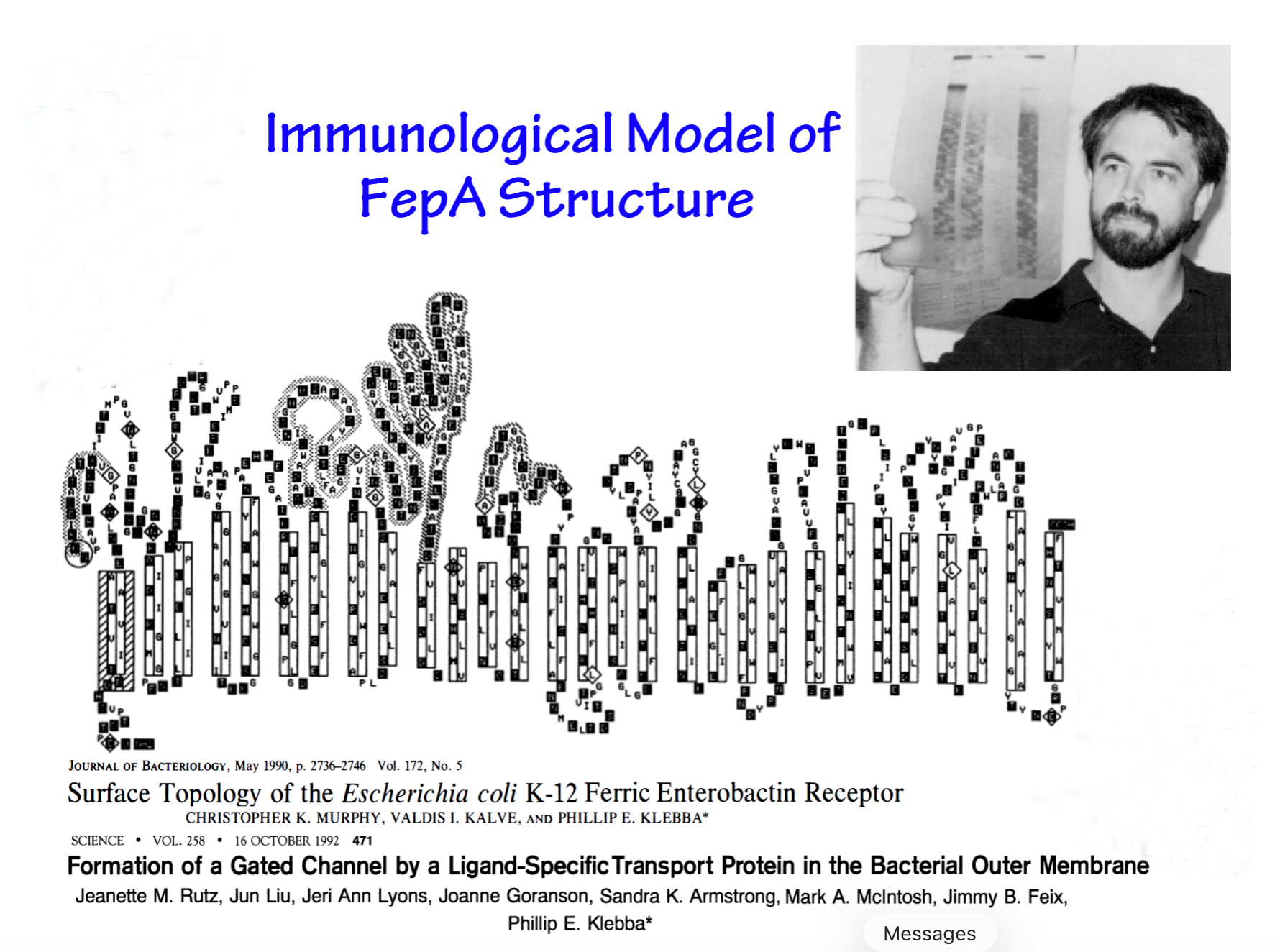
Phil has devoted his whole scientific career to a single subject: understand how bacteria capture iron from the environment. In the microbiological world, Escherichia coli is by far the most studied bacteria, and his decades of research revolved around a fascinating protein (FepA) that resides in the membrane of E.coli and scavenges iron with tremendous efficiency. I’ve been working in research since I was 20 years old. Phil started when he was 24. I’ve changed subjects several times, from genetic instability in Proteus mirabilis (my PhD thesis in Brazil), to bacterial flagellin, biotechnology of vaccines, and a decade after that I joined Phil’s research on iron uptake. Phil has been fascinated and absolutely committed to iron for all these years. I tell you a little story from our days working at Oklahoma University, in Norman.
.
This was our research group at the time…
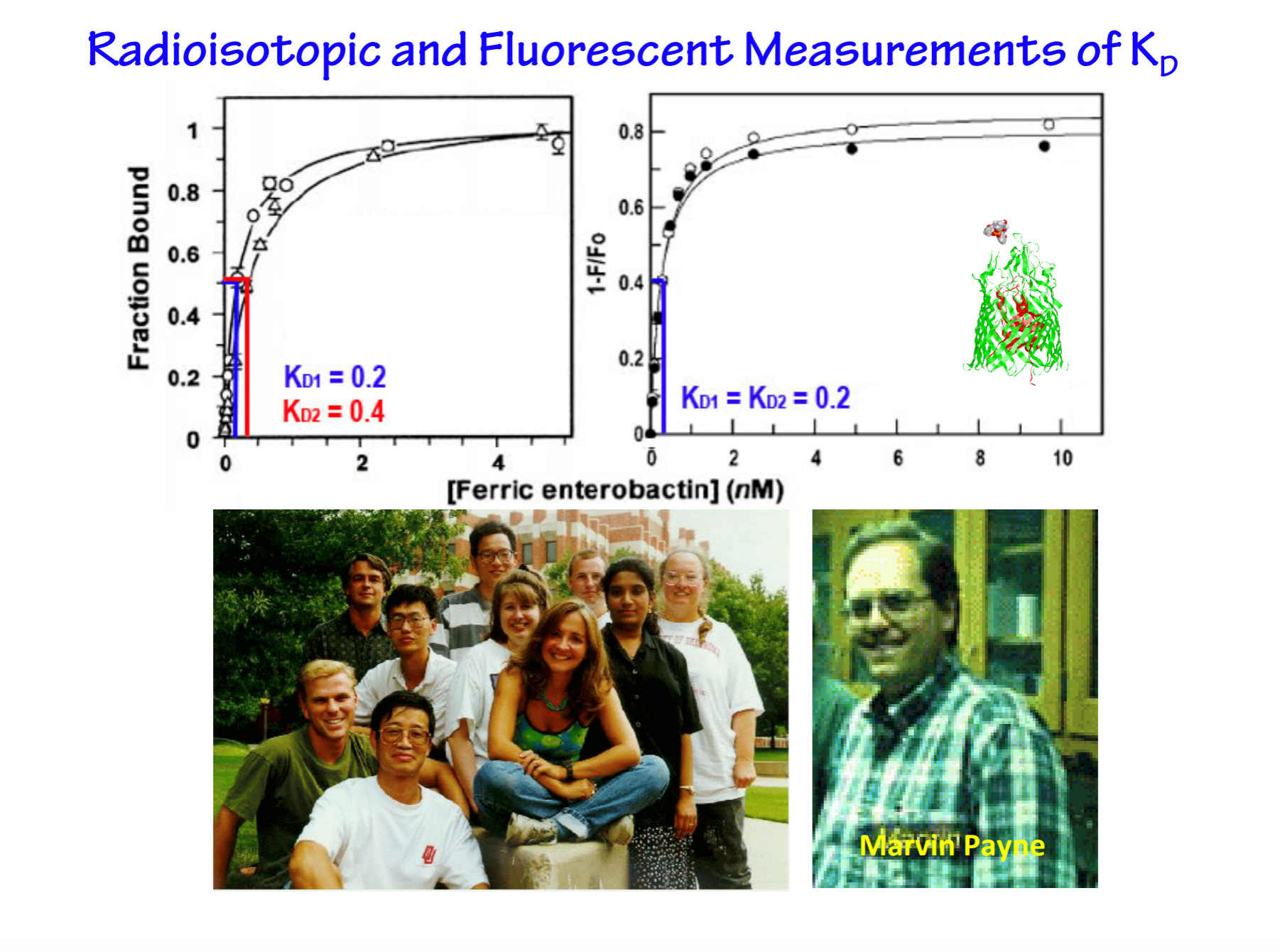
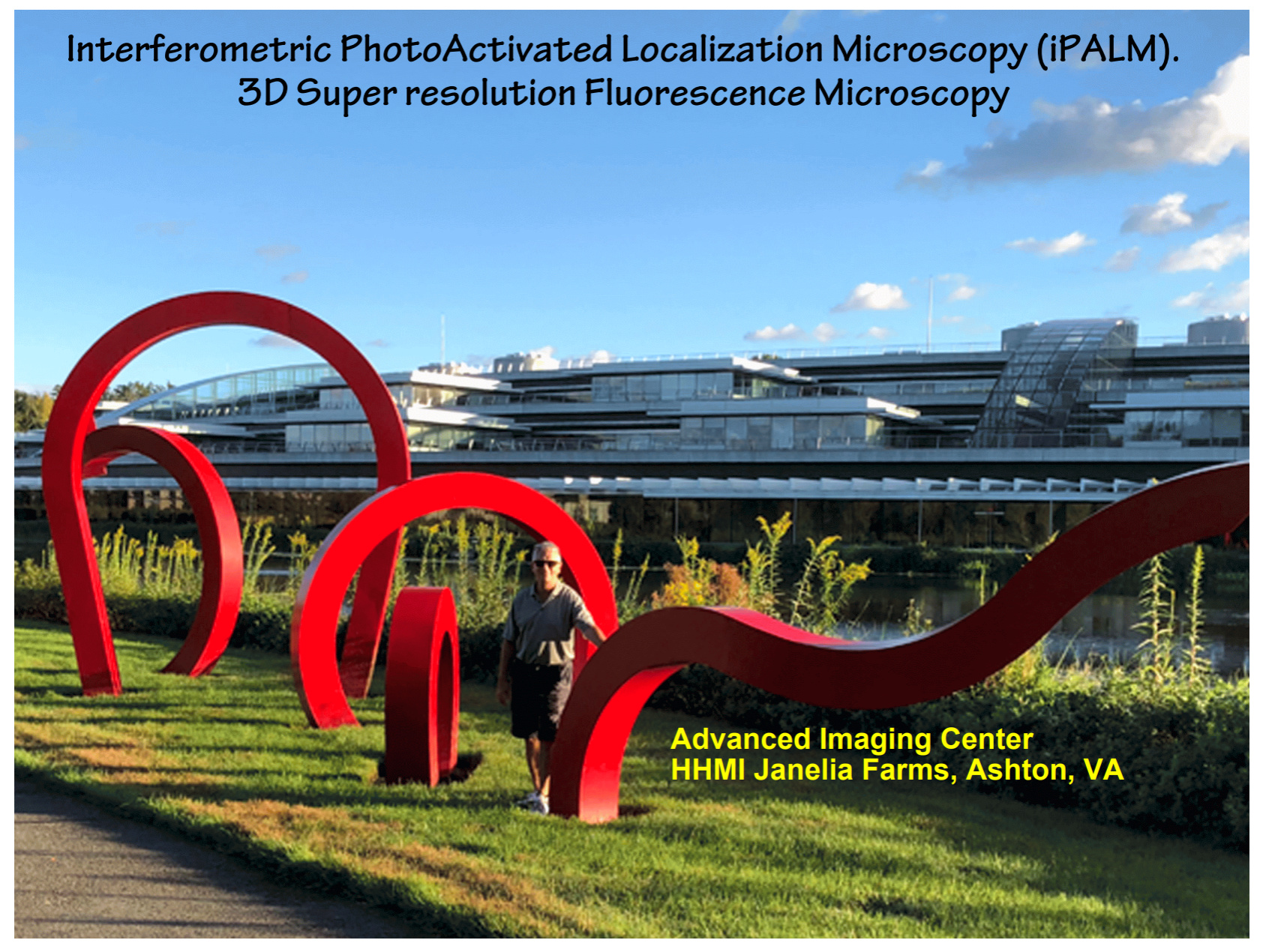
We had undergraduates, graduate students and a wonderful pos-doc (Marvin Payne, first author of this article). Some students stayed with us for several years, completed their thesis, some left for one reason or another. One of the students who left came back to visit us maybe 4 or 5 years down the line. He had left science to get what he called “a real job”. During his visit, he asked me “sooo, you guys STILL work on FepA and all that iron stuff?” There was as a clear derogatory tone, it was a snide remark by definition, as if only fools would “still” be doing the same old stuff. I just smiled, and said that yes, we were still working on it and still pretty excited about it all. Today, probably 20 years have passed and I can say that what that former student considered a flaw, I find the definition of awesome… To devote your career to figuring out a mechanism because you are so intrigued and so fascinated by it? It is what makes waking up every day and go to work absolutely worth it. Quite likely because of his passion and commitment for the subject, Phil has developed this amazing ability to visualize the bacterial receptor and devise the right experiments to answer the most relevant questions. He expanded our research into new areas, joining biophysics, fluorescence spectroscopy, 3D imaging, in ways that sometimes made me a bit insecure and almost skeptical – should we really venture into this totally new experimental area? His answer was always: why not? it will be fun… And he has been right, every single time.
.
ON PUBLISH OR PERISH
This is a real big one. In academia, you are evaluated by how many papers you publish per year. Most scientists will try to spread their findings into several articles, to increase that number. Phil has refused to do it from the very beginning of his career. He had zero interest in numbers but instead went for publications that would tell the most complete story possible. Our late friend and collaborator Alain Charbit, from Institut Pasteur, used to joke that we did not publish papers, we published treatises… I confess that at times I tried to convince Phil to change his ways on this, but I am glad he never did.
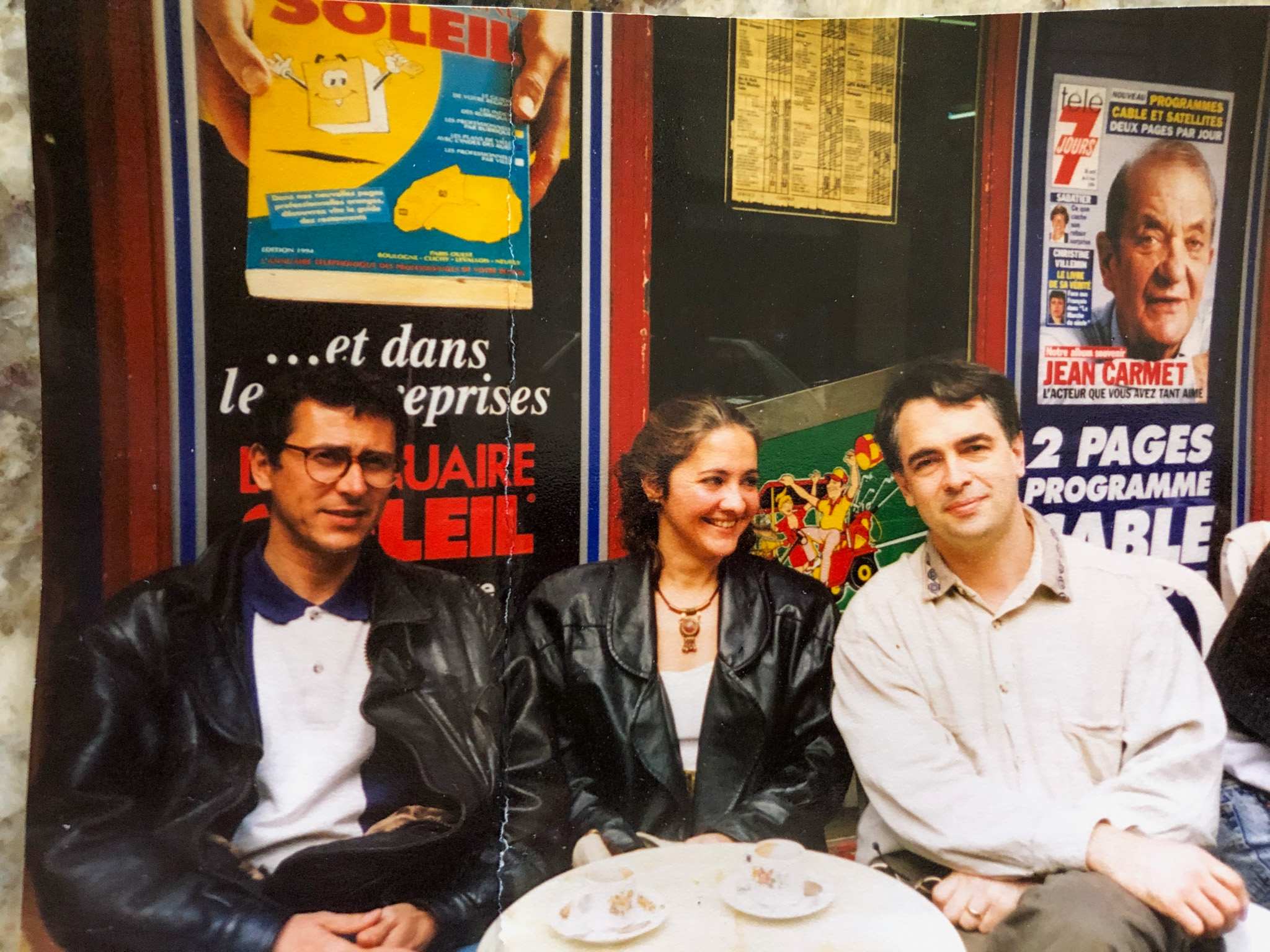
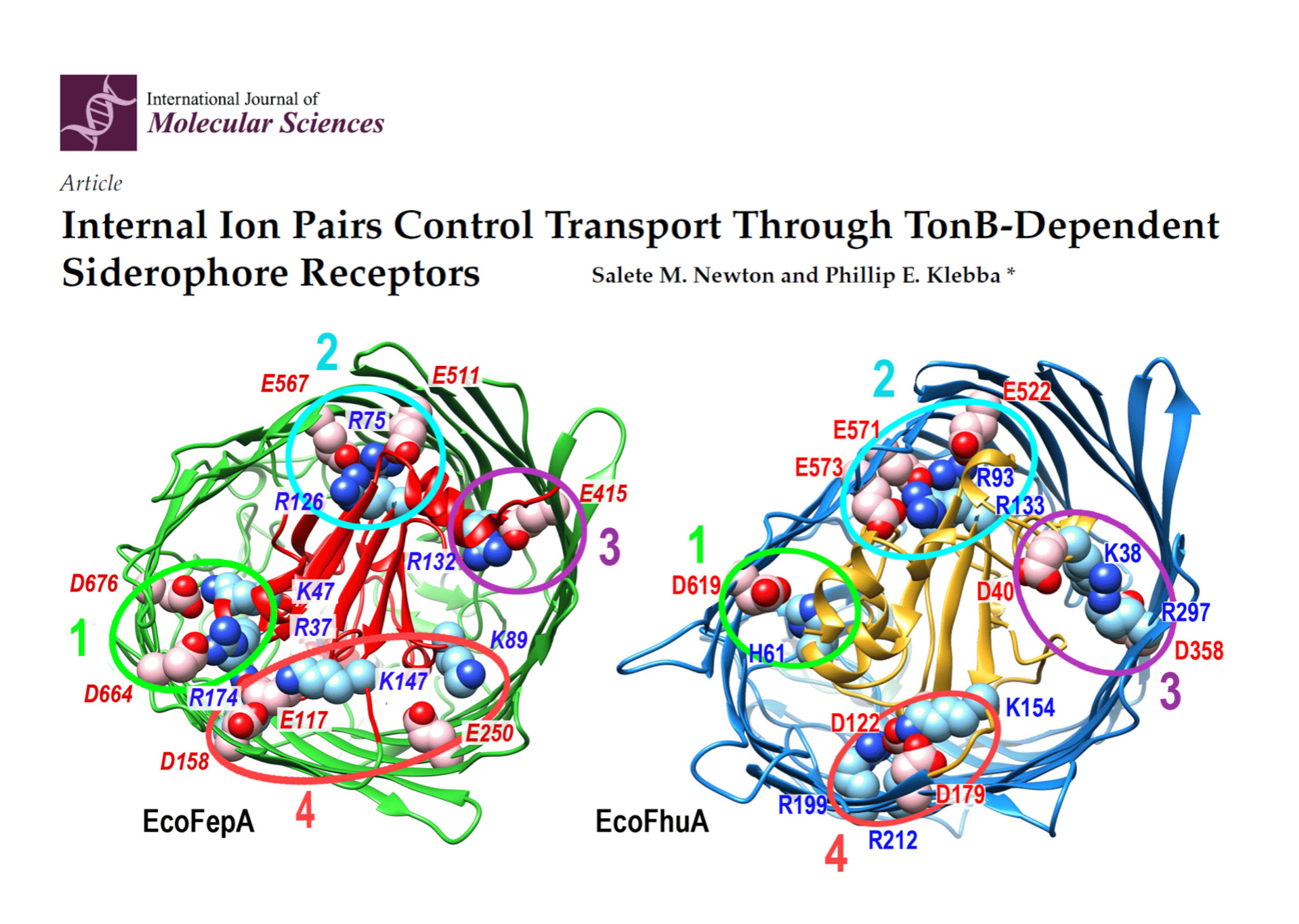
And speaking of publications, what might end up as our last scientific paper was accepted for publication by the International Journal of Molecular Sciences. Just the two of us as authors, which in a way makes it even more special…
..
x
ON GIVING CREDIT
About a week ago, Phil gave his final seminar at Kansas State University, in which he covered all he did during the past 50 years (!!!!) working on iron uptake. To give you an idea of how much things changed, this was the way bacterial membrane was depicted in 1975, when he started working on his PhD in Berkeley with Dr. Joe Neilands (not only was he an amazing scientist, but a raging liberal, once stood side by side with Jane Fonda in Vietnam to protest the war).
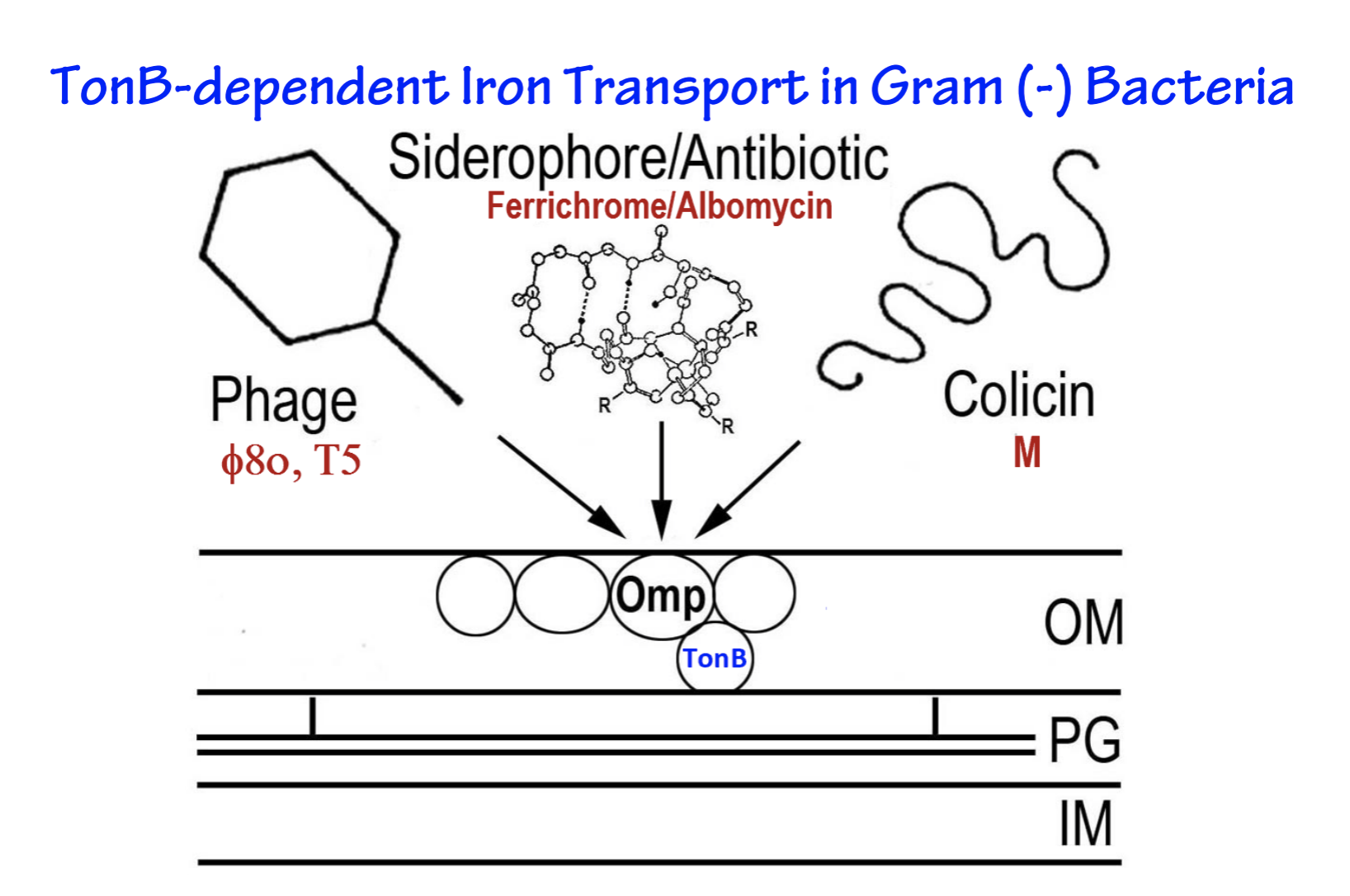
And this is how we visualize it now, with all the proteins that have been crystallized (in other words, their tri-dimensional structures defined and shown in detail). In the figure, OM stands for outer membrane, and IM is inner membrane. Bacteria such as E.coli have two membranes surrounding the cell. They are unicellular organisms.
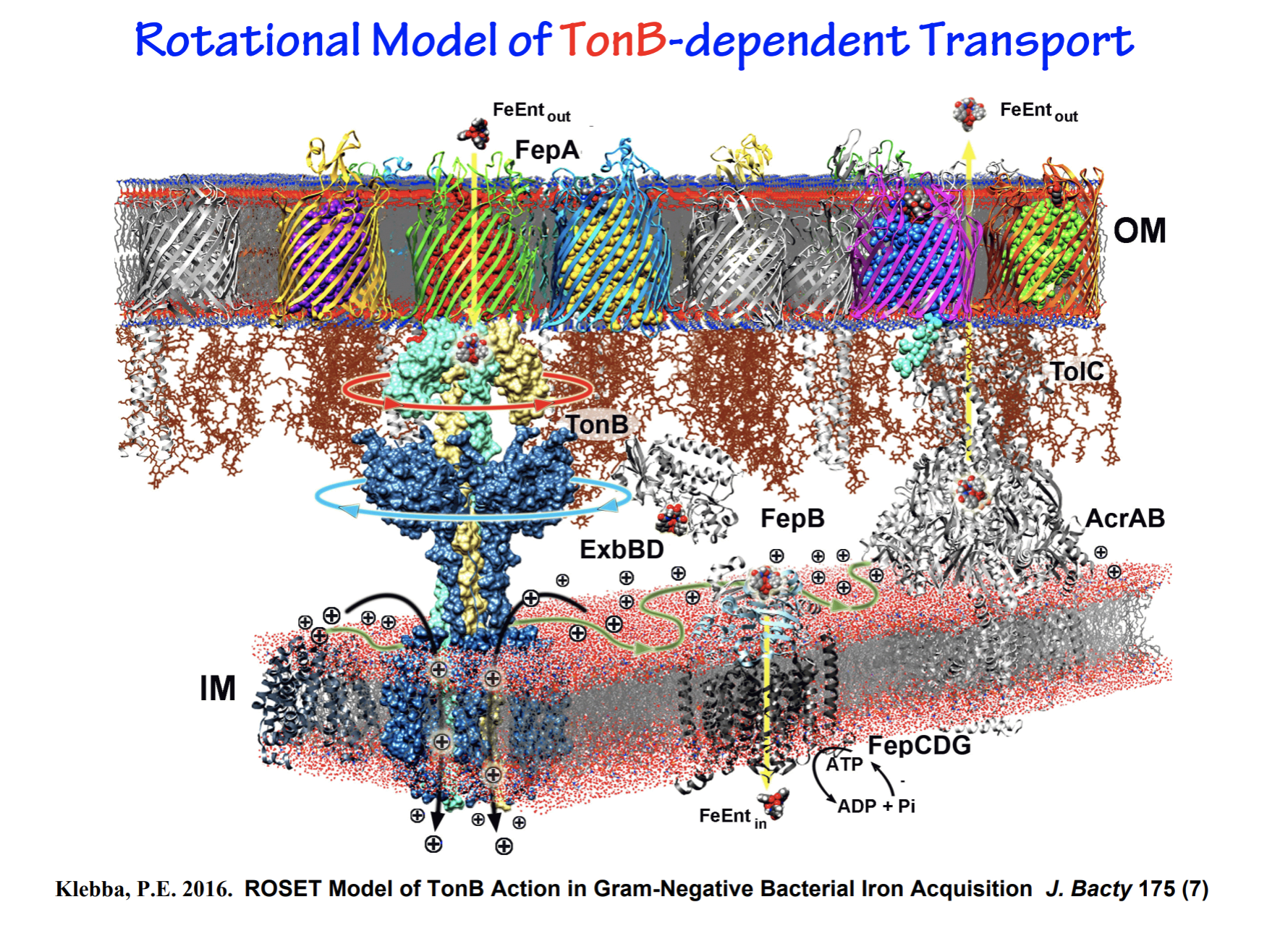
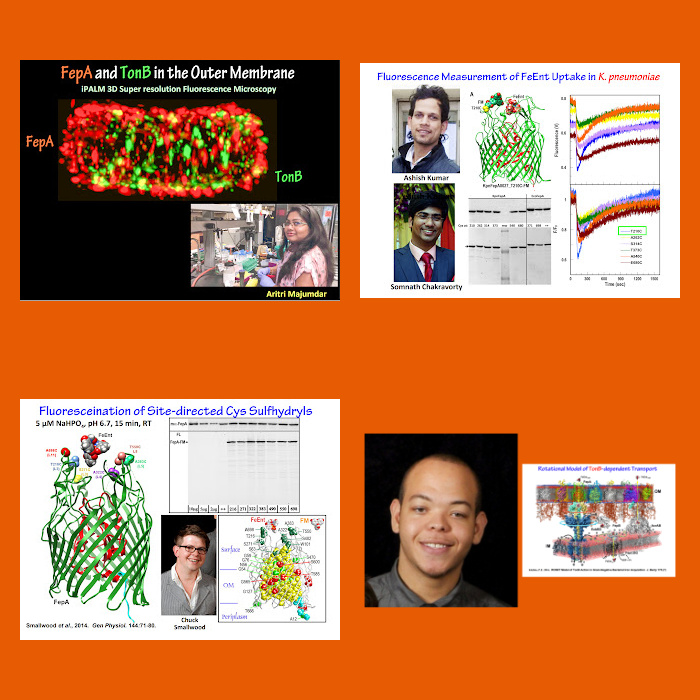
We have never worked with crystallography, so no credit goes to our group for the structures shown above, but thanks to the availability of the structures, we could devise experiments to shed light on the mechanism of iron transport. In his talk, Phil gave credit to all the students and pos docs who did the work over the years. I share just a few here.
.x
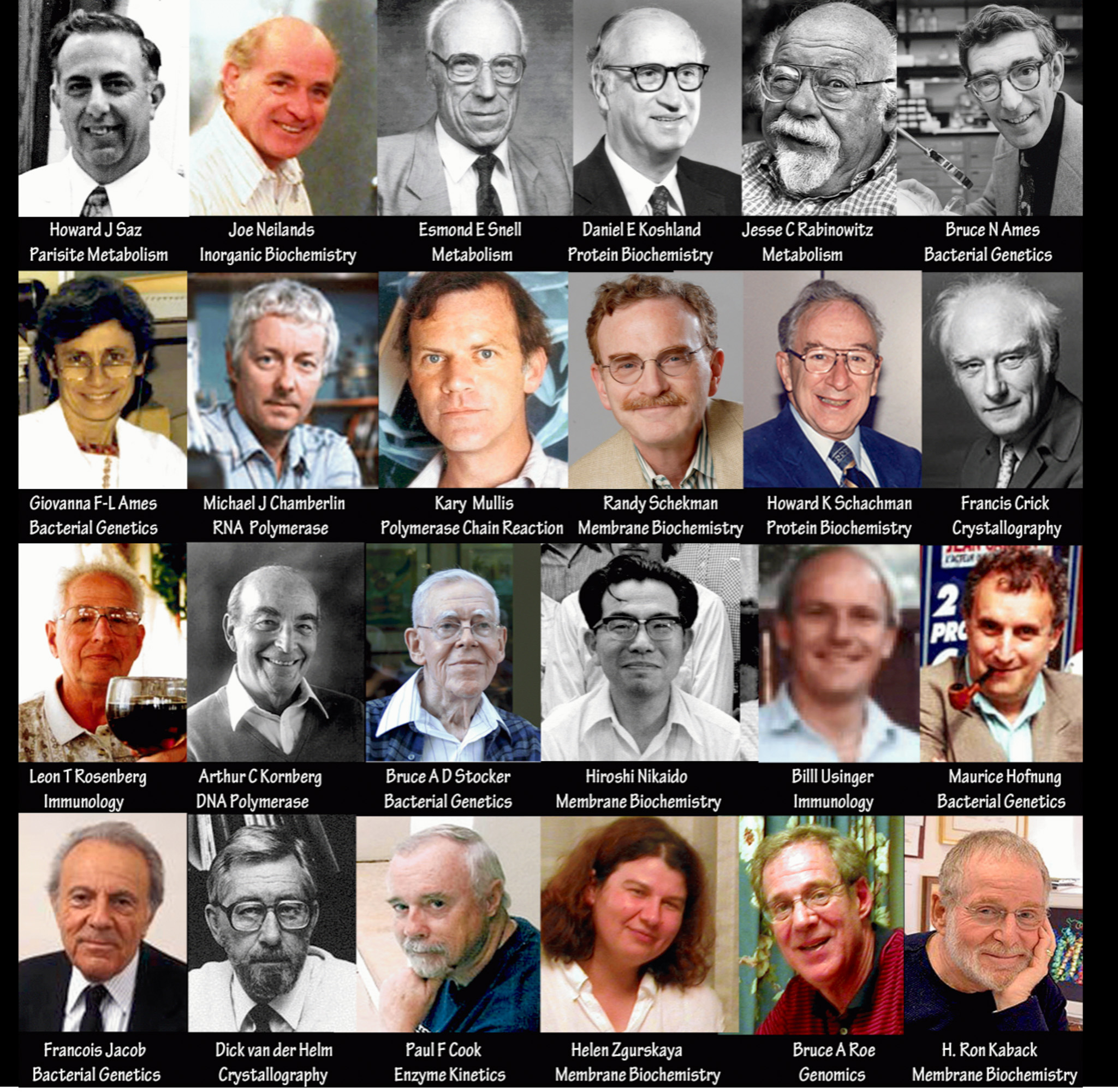
He closed the seminar, not with the usual – thanking funding agencies for their financial support – but instead thanking those who helped him become the scientist he is today.
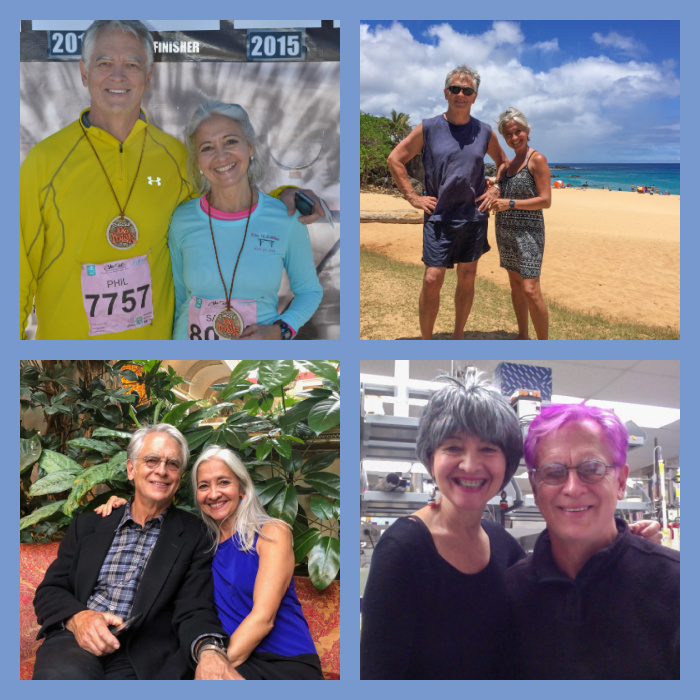
It was an amazing seminar. A real wonderful way to wrap things up. Our retirement is set for the last week of May, but we have a couple of experiments planned because… why not? It will be FUN! As we get ready for a new phase in our life, I have a ton of mixed emotions, but one thing is certain, I look forward to enjoying life with my Iron Man.
x
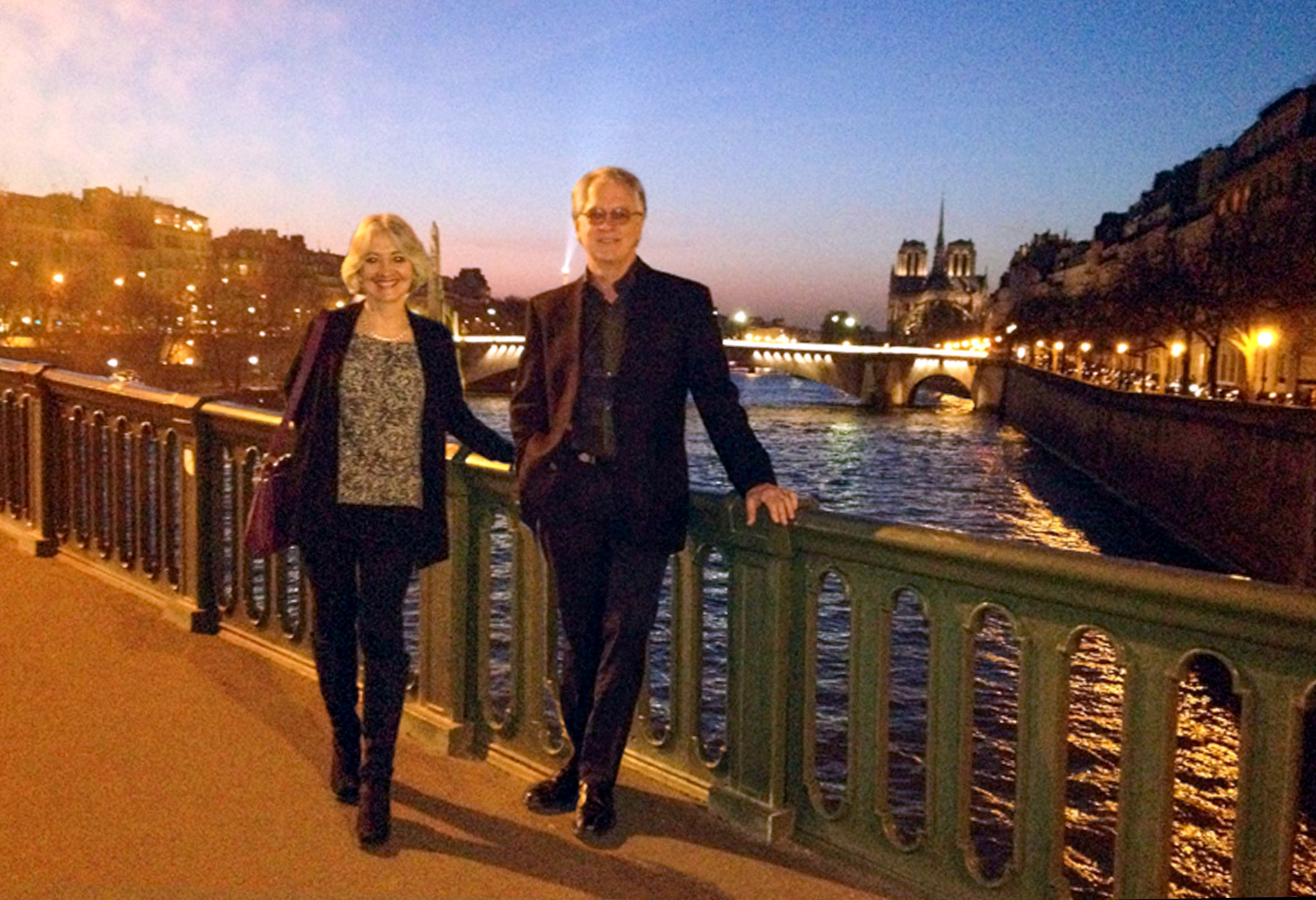
We will always have Paris…
ONE YEAR AGO: Faye Palmqvist and Mini-Loaf Cakes
TWO YEARS AGO: For the Love of Broccoli
THREE YEARS AGO: Spanakopita, Crackers and the Adventure of Phyllo Dough
FOUR YEARS AGO: Chicken Noodle Soup
FIVE YEARS AGO: Floral Chocolate Stick Cookies
SIX YEARS AGO: Sally’s Spicy Mango and Coconut Macarons
SEVEN YEARS AGO: Bouillabaise for a Chilly Evening
EIGHT YEARS AGO: Bergamot-Cherry Macarons
NINE YEARS AGO: Roasted Veggies with Queso Cotija Dressing
TEN YEARS AGO: Creamy Broccoli and Mushroom Casserole
ELEVEN YEARS AGO: Maple Walnut Biscotti
TWELVE YEARS AGO: Barley Risotto with Peas
THIRTEEN YEARS AGO: Oatmeal Fudge Bars
FOURTEEN YEARS AGO: Cauliflower Steaks
FIFTEEN YEARS AGO: Soft Spot for Chevre
SIXTEEN YEARS AGO: Quick sun-dried Tomato Crostini
 Bewitching Kitchen