CORNISH HENS FOR A SUNDAY DINNER

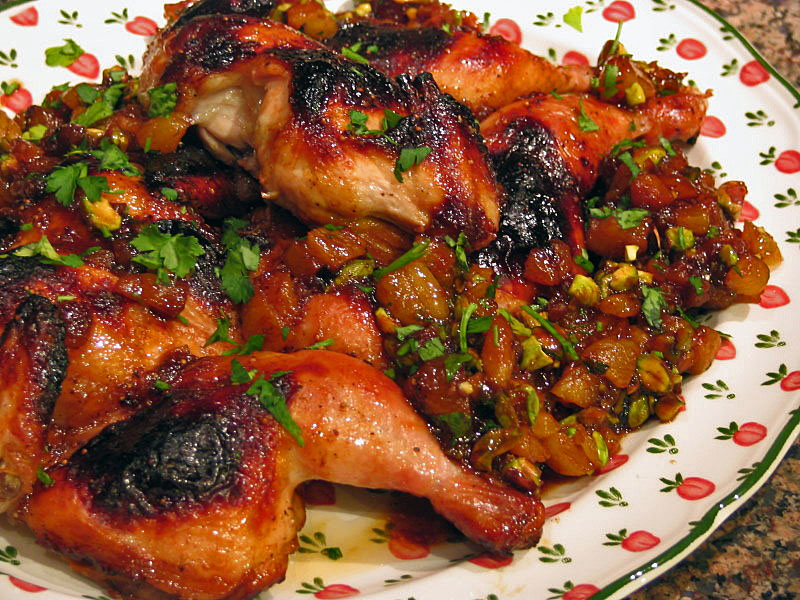
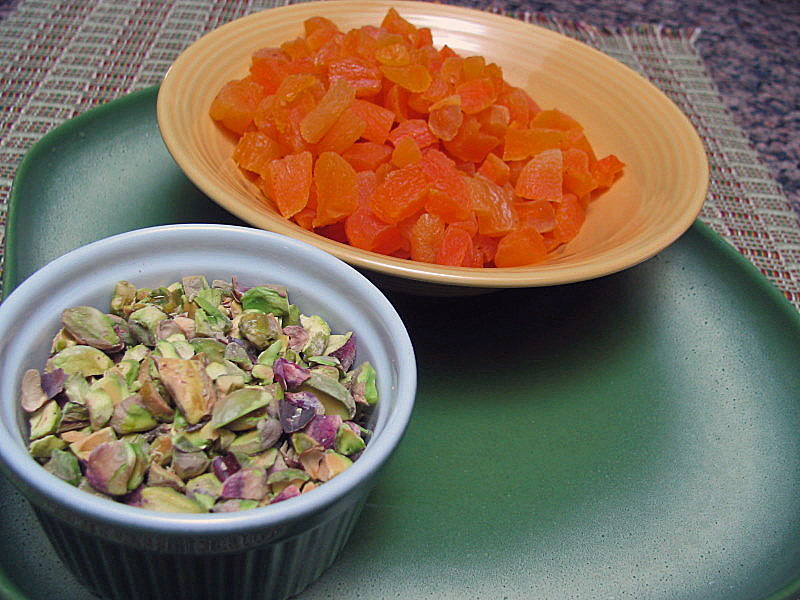
Cornish hens always create a special occasion: they are festive and elegant, but simple to prepare.  After a long session of browsing through cookbooks the pistachio dressing in a recipe from Pam Anderson grabbed my attention.  Pistachio nuts.  I adore them so much that I actually avoid buying them, because after opening the bag with the intention of having just three or four, I usually end up eating them until my fingers are bruised from opening the shells! They are the antithesis of “Everything in moderation”.   Now, imagine a recipe that pairs pistachio nuts and dried apricots… Irresistible!

BUTTERFLIED CORNISH HENS with APRICOT-PISTACHIO DRESSING
(adapted from Pam Anderson)

2 Cornish hens
1 cup kosher salt
salt and pepper for seasoning
2 T olive oil
1 large onion, diced
1 cup dried apricots, diced
1/4 cup apricot jam (I substituted fig jam)
1/8 cup balsamic vinegar
1/2 cup pistachio nuts, chopped
1/2 cup minced parsley

Heat the oven to 450F.

Butterfly the hens but cutting through the middle of the backbone and removing it.  Lay the hens on a cutting board, breast side up, and flatten them using the palm of your hand.

Dissolve the kosher salt in 2.5 quarts of cold water to make a brining solution.  Brine the birds in the fridge for 1.5 hours.   Remove them from the brine, rinse, and dry them.

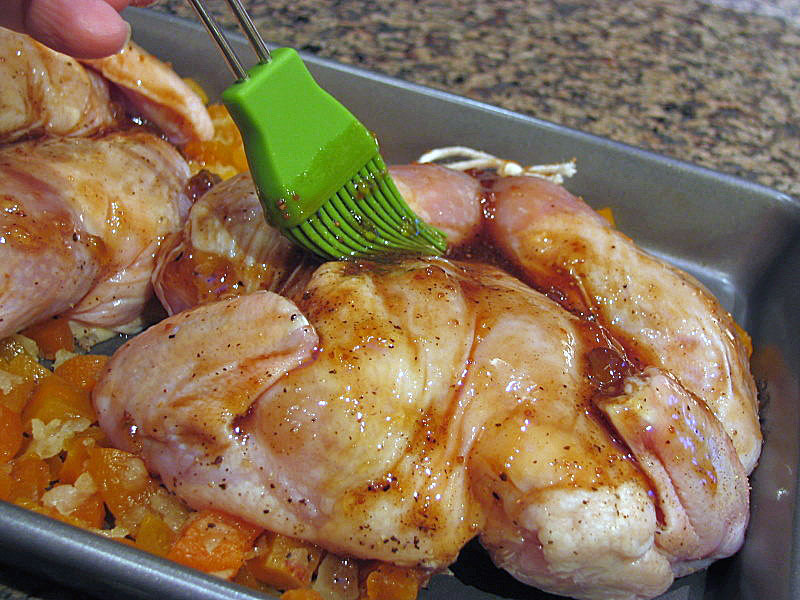
Sautee the onions in oil until very soft. Stir in the apricots, then spread the apricot-onion mixture in a baking dish.  Season the hens with black pepper, and lay them on top.  You may tie the legs together to keep them in a nice shape.

Mix the jam and balsamic vinegar in a small bowl, then brush most of the mixture on the hens.  Place them in the oven, add a little water to the baking dish to prevent burning the apricot mixture.  Bake for about 45 minutes, brushing with the leftover jam mixture as well as the liquid accumulating in the roasting pan.  After 45 minutes turn on the broiler to crisp the skin, but watch closely, because the sugar in the jam will easily burn.

Remove the hens, tent them with aluminum foil, and if you find the apricot mixture too watery, then return it to the oven or transfer it to a pan and reduce it slightly on top of the stove.  Stir in the pistachios and parsley, and serve with the hens.

ENJOY!

to print the recipe, click here

Comments: A few weeks ago I bought a pair of kitchen shears, and wish I’d done so long, long ago… Butterflying hens (or chickens) with a chef’s knife has always been too difficult, but my new toy made this step fast and easy. The backbones and wing tips are in the freezer awaiting their opportunity in my next batch of homemade stock.

Many side dishes jive with this recipe: mashed potatoes, soft cooked polenta, saffron rice or couscous, but this time I just cooked some orzo, served with a light olive oil and lemon dressing. Homemade crusty potato bread was a perfect complement.

Word of caution: the dressing is quite sweet, so go light on the amount you spoon alongside the meat. I intend to play around with the recipe a little, to come up with a slightly less sweet version.

Apart from shelling the pistachios (a tough job when you need 1/2 cup but they keep disappearing in thin air), the recipe is a breeze to make, and will certainly impress whoever is sharing the meal with you…

para a receita em portugues, visite a pagina seguinte

SLOW-ROASTED CHICKEN THIGHS: an ICE BREAKER

Ice storm. Two little words that I’ve come to respect (and fear) since the big one that hit us in December 2007. When the weather gurus forecast another this past week, we braced ourselves in preparation. Groceries, candles, firewood, cash… and indeed, it arrived. We’re now locked inside, with two happy dogs who don’t quite understand why they can stay in the house all day, snoozing in the comfort of their beds. At least, the 2010 version didn’t disrupt our power, so the fire in our fireplace is for pleasure, not necessity.

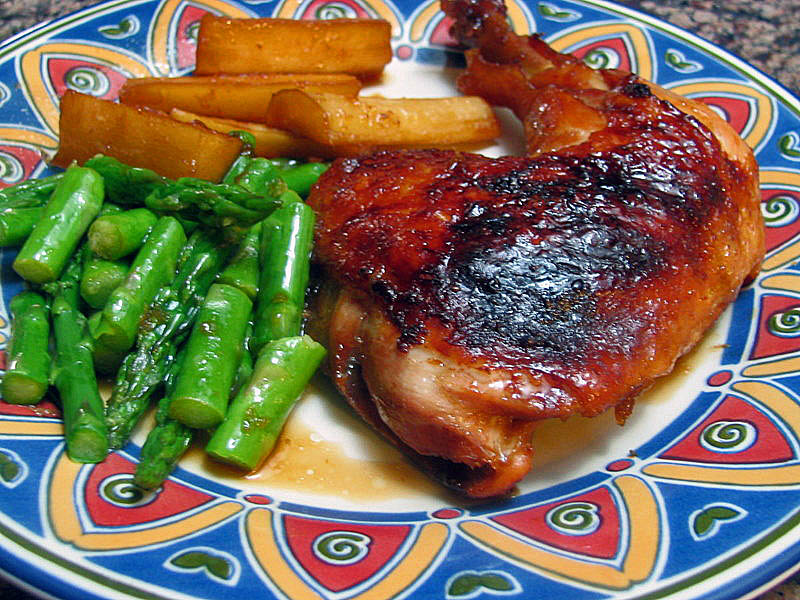
This weather calls for comfort food! For the first icy evening, I prepared a recipe from the latest Fine Cooking, described therein as “elegant enough for entertaining, but simple enough to make anytime.” It calls for a cut-up chicken, but I used packaged chicken thighs instead, which are so under-appreciated and inexpensive, but so full of flavor!

CHICKEN THIGHS WITH OLIVES AND LEMON
(adapted from Fine Cooking #103; recipe by Melissa Pellegrino)

6 chicken thighs, bone-in
2 medium lemons
1 Tbs. unsalted butter
1 Tbs. extra-virgin olive oil
3 shallots, peeled and quartered lengthwise
3/4 cup jarred brined olives, rinsed, pitted, and halved
6 fresh sage leaves
2 dried bay leaves
1 tsp thyme (I used dry, could not find fresh)

Position a rack in the center of the oven and heat the oven to 350F.

Blot the chicken absolutely dry with a paper towel before you begin, then season it on all sides with salt and pepper.

Cut the ends off the lemon, stand it on one end, carefully peel it, and release the lemon segments from the membranes, dropping them in a small bowl. Cut the segments in two or three pieces.

Heat the butter and the oil in a large skillet over medium-high heat. Working in batches if necessary, cook the chicken skin side down until golden-brown, 5 to 6 minutes. Transfer the chicken to a baking dish with the browned side up. Pour off all but 2 Tbs. of the fat. Add the shallots, olives, sage, bay leaves, thyme sprigs, and lemon segments, and cook for a couple of minutes.

Add the lemony sauce to the roasting pan; cover with aluminum foil. Bake for 45 minutes, then remove the foil and increase the heat to 400F for 10 minutes to ensure the skin is crisp (alternatively, run the roasting pan under the broiler for a few minutes).

ENJOY!

to print the recipe, click here

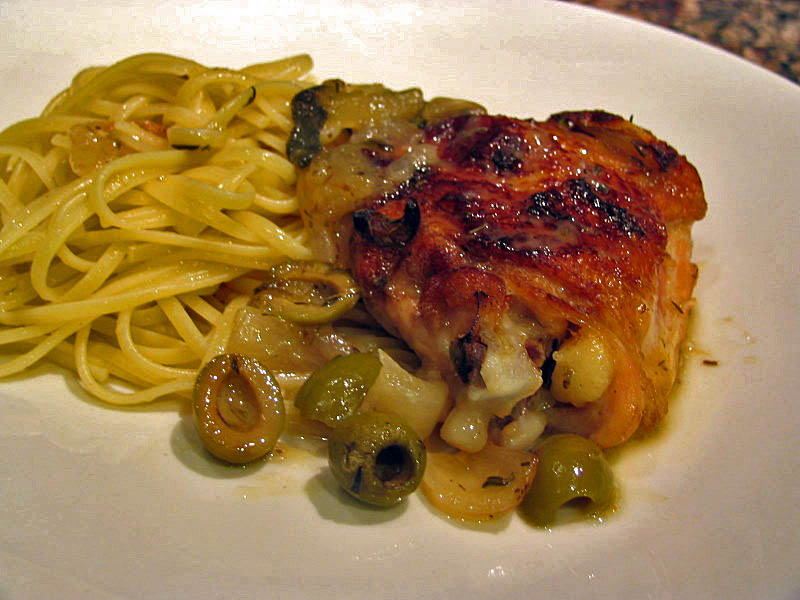
Comments: The original recipe “pan-roasts” the chicken. That is, after browning the skin and sauteing the flavor ingredients, the chicken is returned to the pan and placed in a high temperature oven (450F) for 18-20 minutes, or until the meat reached 165F. I’ve cooked chicken this way before and was always disappointed by the results. The high heat toughens the meat, blocking the juicy texture that I enjoy, especially in the thighs. I adapted the recipe for slow-roasting, almost a braise, as covering the pan with foil created the perfect environment.


Pasta dressed with the lemony sauce from the slow-roasting was an excellent side for this dish, that made us forget the icy evening outside. This is a “Perfect Sunday Dinner“,  even if the only ice you want to melt is that of a first dinner at home with a special date.

Variations to try: we felt that mushrooms will nicely complement the dish, so next time I’m definitely adding some.  Reducing the amount of olives and substituting some capers could work too.

TURKISH CHICKEN KEBABS

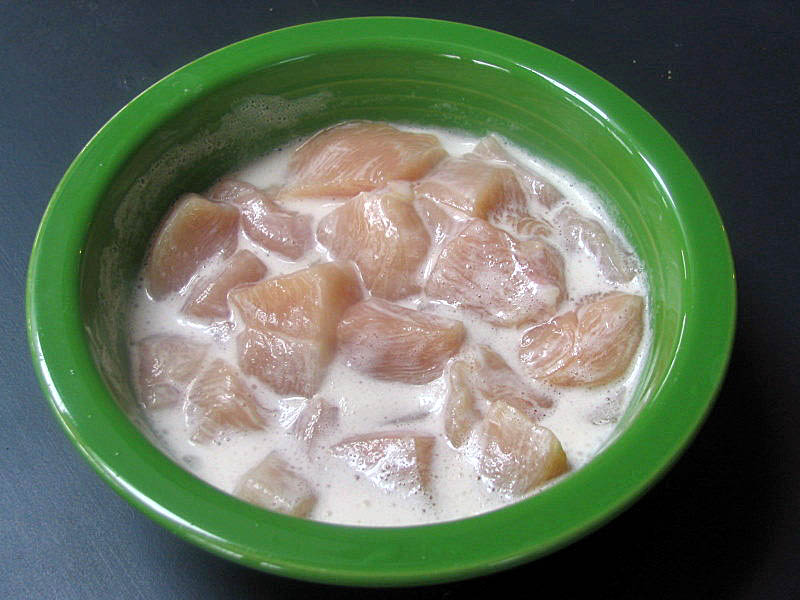
It’s hard to find a simpler recipe that ranks as high in the taste department as this one.   Either place the meat in the yogurt mixture  an hour before cooking, or do as I did, and prepare it in the morning for a stress-free dinner later.   A yogurt-based marinade with the right spices  does wonders for chicken and pork, as this dish deliciously confirms.

A friend pointed me to this recipe, one of her favorites of 2009.  It’s  from Steven Raichlen,  in Bon Appetit. You can read about it here.

YOGURT-MARINATED CHICKEN KEBABS WITH ALEPPO PEPPER

(adapted from Bon Appetit, July 2009)

1 1/2 Tbs Aleppo pepper
1 cup yogurt
3 Tbs olive oil
2 Tbs red wine vinegar
2 Tbs tomato paste
2 tsp salt
1 tsp black pepper
2 garlic cloves, smashed
1 lemon, unpeeled, thinly sliced
2.5  pounds skinless, boneless chicken breasts, cut in large cubes
Bamboo skewers, soaked in water for at least 30 minutes before using

Place the Aleppo pepper in a bowl an add 1 Tbs of warm water, letting it stand for a few minutes to form a paste.  Add the yogurt, olive oil, vinegar, tomato paste, salt and pepper, whisking to blend.  Stir in the garlic and lemon slices, add the chicken and mix enough to coat all the pieces.  Leave the chicken in the fridge at least an hour, up to overnight.

Thread the chicken pieces onto pre-soaked bamboo skewers, sprinkle with salt, and grill until golden brown, turning once.  For chicken breasts, about 8 to 10 minutes total.

Serve with lemon wedges.

ENJOY!

to print the recipe, click here

(receita em portugues na pagina seguinte)


Add to FacebookAdd to DiggAdd to Del.icio.usAdd to StumbleuponAdd to RedditAdd to BlinklistAdd to TwitterAdd to TechnoratiAdd to Yahoo BuzzAdd to Newsvine

jump for more

CHICKEN PARMIGIANA 101

parmigg1

When a person has a cookbook addiction, planning meals can be stressful.  Like a dog with five balls to fetch, I go from one cookbook to another, saying to myself “this might be pretty good“, or  “wow, I’ve got to make this one instead“…   But, the thing is that the meals we love to eat, the ones we crave the most, are not from cookbooks.  When I ask my husband what he’d like to have for dinner, he often says “you haven’t made chicken parmiggiana in a while“….  The truth is, I sometimes ask the question hoping for exactly that  answer, as I also love it and crave it.   My Mom used to make some type of parmiggiana all the time, chicken, beef,  so I have lots of fond memories.  Once I started making it for my own family, they also loved it, closing a wonderful cycle.

This post is written with a special someone in mind, my youngest stepson who is in college and starting to cook  for himself and for friends.  He’s had my chicken parmiggiana many times, I know he’l love to make it, so I’ll be going through every step showing exactly how I do it, in a  Crash-Course: Chicken Parmiggiana 101.

Alex, this one’s for you!  😉

CHICKEN PARMIGGIANA
(family recipe; step by step photos after the jump)

ready2

3 boneless chicken breasts, preferably organic

salt and pepper

2 eggs, beaten with 2T water and a pinch of salt

1 cup flour

1 cup bread crumbs

1/4 cup vegetable oil

2 cups tomato sauce (bottled or homemade)

shredded cheese (mozzarella or another melting cheese of your choice)

Butterfly the chicken breasts (see comments for explanation), season both sides with a little salt and pepper. Pound the fillets gently with the flat side of a meat mallet or the handle of a table knife, protecting the meat with plastic (Saran Wrap or similar).

Place three bowls or trays side by side, add flour to the first, season the flour with 1/2 tsp salt and a little black pepper. Add the beaten eggs to the second, and bread crumbs to the third.  Coat the chicken fillets with flour, transfer to the egg mixture, coating both sides with it. Allow the excess to drip out, transfer the meat to the bread crumbs tray.  Pat the bread crumbs well all over the meat, to make it stick.

Heat vegetable oil in a large frying pan until  very hot but not smoking. Fry each piece of chicken on the first side until golden, 90 seconds to 2 minutes. Turn to fry the second side for a similar amount of time.  Remove from the oil and place over absorbent kitchen paper to blot excess oil.  When all pieces are fried, place them in an oven-proof baking dish or cookie sheet, add tomato sauce and shredded cheese on top.

Place in a 350F oven for 15 minutes. If you like, turn the broiler on high for a couple of minutes to get a nice browning.  Serve immediately with cooked pasta in tomato sauce, or any other side dish of your preference.

ENJOY!

to print the recipe, click here


Continue reading

A CLASSIC ROAST CHICKEN

From Thomas Keller’s Ad Hoc at Home

roastchx

I confess to a love-hate relationship with roasted chicken: Love to eat it, hate to make it, because some recipes that promised “the best roast chicken you’ll ever eat” gave me only grievance instead.   Here are two examples.  One famous recipe calls for blasting the bird in a 500F  oven, which made an unbelievable mess, set off every smoke alarm in the house, and left a lingering smell of roast chicken for days.   I also fell for a recipe that insisted the best way to roast a chicken is to first sear it in a frying pan, and then move  it into a hot oven.  That method resulted in both the stove AND the oven covered in oily splatter.  I dealt with it in the hope of  “… the best ever“, but… it wasn’t.

Every recipe in Keller’s book makes me want to jump to the kitchen to start working on it, so I couldn’t resist his take on roast chicken.   I’m glad that I didn’t, it was simple to prepare and finished with a happy ending.  This recipe is a full  meal in itself:  you’ll have a nice roast chicken, crispy and moist, with a bonus side dish accompanying it.  It was satisfying home-cooking at its best.

(para receita em portugues, clique aqui)

ROAST CHICKEN WITH ROOT VEGETABLES
(adapted from Thomas Keller’s Ad Hoc)

1 whole chicken, preferably organic (4 – 4.5 pounds)
2 cloves garlic, mashed
fresh thyme sprigs
salt and pepper
3 rutabagas
2 turnips
6 carrots
12 small yellow or red new potatoes
1/3  cup canola oil
4 T butter at room temperature or 2 T duck fat
1/2 lemon

If you are particularly fond of crispy skin, leave the bird uncovered  in the fridge for a couple of days.  Remove the chicken from the refrigerator 1.5 hours before roasting (important step, don’t skip it).

Heat the oven to 475F.

Season the chicken inside and out with salt and pepper, add the garlic, 4 thyme sprigs, and the lemon half in the cavity.  For a nicer presentation, truss the chicken (see how to do it here, but you may omit this step if you prefer – read my comments).

Cut the rutabagas and turnips in similar sized pieces, about 3/4 inch wedges. Cut the carrots in half crosswise and again lengthwise. Keep the young potatoes whole, or, if they are a bit too big cut them in half.  Place all veggies in a large bowl, add  1/4 cup of canola oil,  2-3 thyme sprigs, salt, pepper, and toss well.  Transfer them to a roasting pan, make a small space in the center to place the chicken.  Rub the remaining canola oil all over the skin of the chicken, seasoning it again with salt and pepper.

Just before roasting, add pats of butter over the breast, or brush with some duck fat (it gives a deeper flavor to the chicken,).

Roast at 475F for 25 minutes, lower the temperature to 400F and roast for 1 hour, but check the internal temperature after 45 minutes, if it reaches 160F remove the chicken from the oven.  Allow the chicken to rest under an aluminum foil tent for 20 minutes before carving.

A few minutes before serving, place the roasting dish on the stove and heat the vegetables, moving them around to coat with the juices accumulated during roasting.

Enjoy!

to print the recipe, click here


Jump for final comments and additional photos

Continue reading